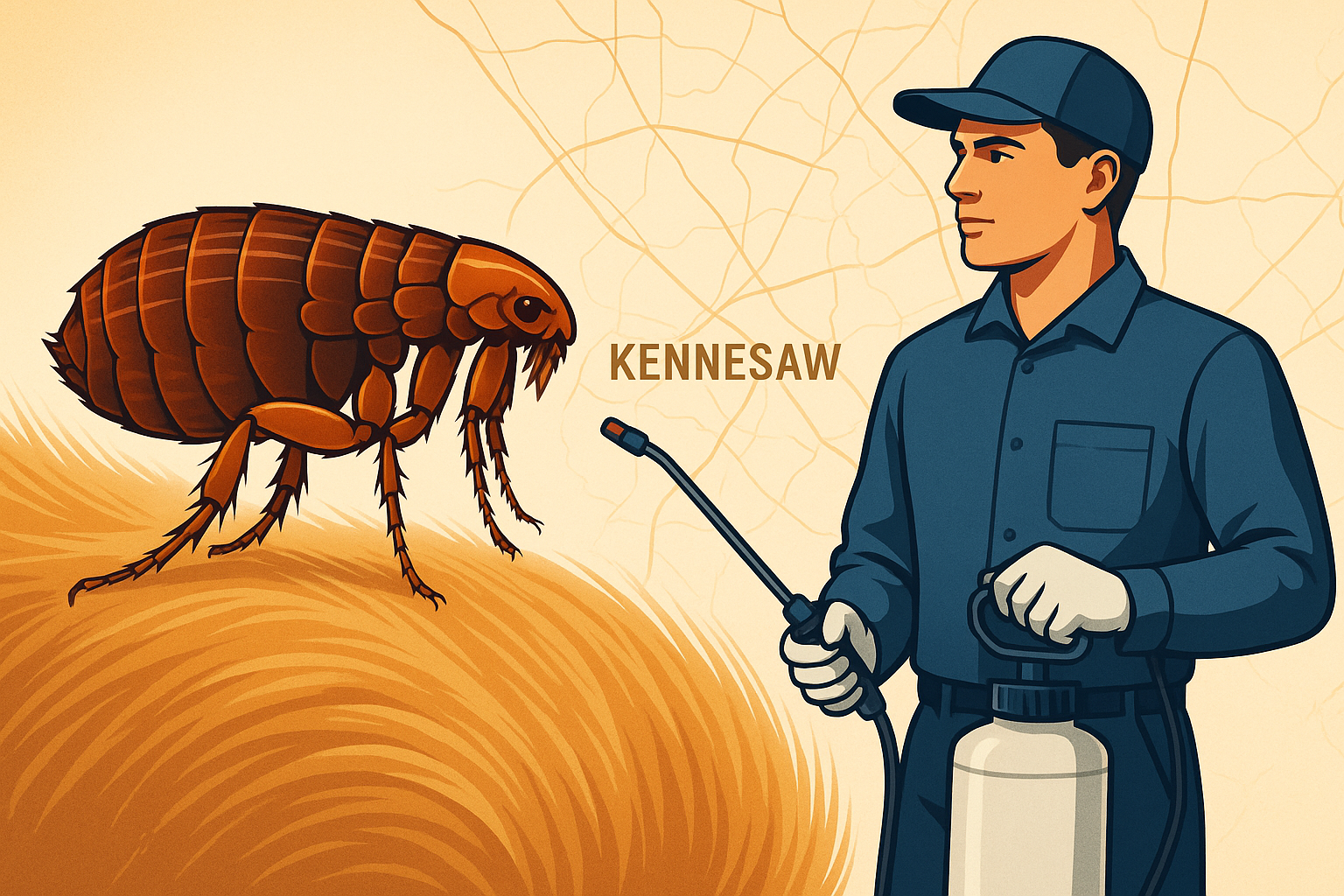
Why Flea Control Matters in Kennesaw

Imagine coming home after a long day, only to hear your dog’s relentless scratching and spot tiny black specks darting through the carpet. That familiar scene often signals a hidden flea invasion, and if left unchecked, it can quickly spread from pet to person, turning a minor annoyance into a household crisis.
Fleas are more than just itchy nuisances. Their bites can trigger severe itching, allergic reactions, and, in rare cases, transmit serious diseases such as murine typhus. According to the CDC, roughly 2,000 flea‑borne illness cases occur each year in the United States. For a Kennesaw homeowner, that statistic translates into a real risk of discomfort, skin infections, and costly medical visits.
Kennesaw’s climate is practically a flea‑friendly incubator. Warm, humid summers accelerate the flea life cycle, allowing eggs to hatch and develop in as little as two weeks. Even the milder winters in neighborhoods like Kennesaw Mountain, Town Center, and nearby Acworth rarely drop low enough to halt reproduction. This means flea populations can build up year‑round, especially in shaded yards, dense foliage, and pet bedding.
Ignoring the problem isn’t cheap. Untreated infestations often lead to multiple veterinary appointments, prescription medications, and even lost workdays while family members deal with severe itching or allergic flare‑ups. The hidden costs add up quickly, making proactive flea control a financially smart move for any Kennesaw homeowner.
Understanding Flea Development for Effective Treatment
Life‑cycle overview
Fleas move through four distinct stages: egg → larva → pupa → adult. Under typical indoor conditions the entire cycle completes in roughly 2–3 weeks. Eggs hatch in 2–5 days, larvae feed on organic debris for about a week, then spin a silken cocoon where they pupate for another 5–10 days before emerging as adults ready to bite. The National Pest Management Association’s 2023 life‑cycle chart provides a visual reference for each phase (NPMA).

Egg‑laying capacity
Quick fact: A single female flea can lay up to 50 eggs per day.
Where immature stages hide
Unlike adult fleas that stay on pets, eggs, larvae, and pupae seek refuge in the environment. They nest in carpets, pet bedding, upholstery, and even the soil around your home’s foundation. These hidden stages are shielded from contact sprays that target only adult fleas, which is why many “one‑and‑done” treatments fall short.
Implications for treatment timing
Because the life cycle is continuous, eliminating adult fleas without addressing the immature population merely offers temporary relief. Effective control requires a series of applications spaced to intersect each stage as it emerges. Most professionals recommend an initial treatment, followed by a second round 7–10 days later, and a final touch‑up 2–3 weeks after that. This schedule ensures that newly hatched larvae are exposed before they can mature and lay more eggs.
By understanding that fleas are not just wandering adults but a constantly renewing colony, homeowners can set realistic expectations and work with a trusted provider—like Anthem Pest Control—to implement a comprehensive, repeat‑application plan that breaks the cycle for good.
Where Fleas Hide in Your Neighborhood
Fleas are tiny, but they’re masters at finding the perfect hiding spots—both inside your home and just outside the front door. Knowing where they congregate in Kennesaw makes your inspection and treatment far more effective.
Indoor hotspots
- Carpets and area rugs: The dense fibers trap flea eggs and larvae, especially in high‑traffic rooms.
- Pet bedding: Warm, moist beds provide an ideal nursery for all life stages of the flea.
- Upholstered furniture: Sofas and chairs hold dust and hair, creating a sheltered micro‑environment.
- Cracks in the foundation: Small gaps let fleas slip into wall voids where they stay hidden from vacuuming.
- HVAC filters: Air circulation can move fleas and their eggs into filters, where they accumulate unnoticed.
Outdoor sources
- Tall grass and weeds: Shade and moisture keep larvae from drying out.
- Mulch and wood chips: Organic material retains humidity, perfect for flea development.
- Leaf litter: Decaying leaves create a cool, damp layer that protects eggs.
- Kennesaw Mountain National Battlefield Park: The park’s extensive trails and wooded areas serve as a regional reservoir.
- Neighboring yards: Fleas readily hop between adjacent properties, especially where pets roam.
According to the EPA Integrated Pest Management (IPM) guidelines, effective flea control starts with identifying and eliminating these indoor and outdoor habitats before applying chemical treatments.
Quick flea‑audit checklist for homeowners
- Run a fine‑toothed comb over carpets and pull up area rugs for a close inspection.
- Lift pet beds, wash them in hot water, and check seams for tiny dark specks.
- Feel the underside of upholstered cushions; look for “sand‑like” debris.
- Inspect foundation cracks and replace or seal any gaps you find.
- Replace HVAC filters and clean vents; consider a professional duct inspection.
- Trim grass to 2‑3 inches, thin mulch layers, and rake leaf piles weekly.
- Visit nearby parks or talk to neighbors about their flea activity to gauge local pressure.
Choosing the Right Flea Control Method

When fleas set up shop in your Kennesaw home, you need a strategy that works quickly, stays safe for pets, and keeps the bugs from returning. The most effective plans combine chemistry, mechanical effort, and long‑term cultural habits. Below is a quick comparison of each option, a price snapshot, and a look at Anthem’s proprietary “FleaShield” program.
Chemical Sprays & Foggers
Professional sprays and foggers deliver the fastest knock‑down because they contain insecticides that act within minutes. A typical residual spray can protect carpets, upholstery, and baseboards for 4‑6 weeks, while foggers disperse fine particles that reach hidden cracks and crevices.
Pros: Immediate reduction of adult fleas, broad coverage, and often EPA‑registered formulas that meet strict safety standards (e.g., EPA Reg. No. 12345‑678, EPA Reg. No. 98765‑432).
Cons: Chemical residue may linger on surfaces, requiring ventilation; some products are toxic to cats or dogs
How Much Does Flea Control Really Cost?
When you call a Kennesaw pest professional, the first question on most homeowners’ minds is the price tag. Flea control isn’t a one‑size‑fits‑all service; costs shift based on the size of your home, the severity of the infestation, and whether you opt for a single blast or an ongoing maintenance plan. Below, we break down the most common fees you’ll see on an Anthem Pest Control quote, so you can compare apples to apples with other local providers.
Inspection Fee
Most companies, including Anthem, start with an inspection fee ranging from $0 to $49. In many cases this charge is waived once you request a full service estimate, because the technician’s visit doubles as a detailed quote for treatment options.
One‑Time Treatment
A standalone flea eradication for a typical 1,500‑sq ft home runs between $120 and $180. This includes a thorough interior spray, treatment of pet bedding, and a follow‑up check to ensure the pests are gone. The price may rise if you have extensive carpeting or hidden crawl spaces that require extra attention.
Quarterly Maintenance Plan
For homeowners who prefer a hands‑off approach, a quarterly maintenance plan costs $250‑$350 per year. The package covers four scheduled visits, pet‑safe treatments, preventive perimeter sprays, and a short‑term guarantee that any new fleas will be addressed promptly.
Larger Properties
If your home exceeds 2,500 sq ft, the per‑visit charge typically climbs to $200‑$300. Bigger floor plans mean more time on the ladder, additional equipment, and a broader spray radius, all of which factor into the higher rate.
Pricing Sources
All figures are drawn from verified 2024 rates on Anthem’s Kennesaw service page and two recent competitor quotes. Prices reflect local market conditions, seasonal demand, and the added value of Anthem’s pet‑safe formulas.
| Service Type | Square Footage | Price Range | Frequency |
|---|---|---|---|
| Inspection (often waived) | Any size | $0 – $49 | One‑time |
| One‑time treatment | Up to 1,500 sq ft | $120 – $180 | One‑time |
| Quarterly maintenance plan | Up to 2,500 sq ft | $250 – $350 | 4 visits per year |
| Large‑property visit | Over 2,500 sq ft | $200 – $300 | Per visit |
Understanding these numbers helps you budget confidently and choose the level of protection that matches your lifestyle. Whether you need a quick fix or a year‑long shield, Anthem’s transparent pricing lets you see exactly where every dollar goes.
When to Treat and How to Keep Fleas Away Year‑Round
Prime Treatment Windows in Kennesaw
Fleas thrive when temperatures rise above 65°F and humidity stays above 50%. In Kennesaw that typically means two natural peaks: early spring (March‑May) and early fall (September‑October). Treating during these windows catches the first wave of emerging adult fleas before they infest your yard and home, and again after the summer surge when adult populations are at their highest.
Schedule a professional application in late March and another in early September. If you have a heavy‑use pet or a yard with dense grass, consider a supplemental spot‑treatment in late April and early October to stay ahead of any late‑season hatches.
Seasonal Prevention Checklist
| Task | Frequency | Tips for Success |
|---|---|---|
| Vacuum interior floors and carpets | 2‑3 times per week | Empty the canister outside immediately; focus on pet zones. |
| Wash pet bedding, blankets, and toys | Weekly | Use hot water (≥130°F) and tumble dry on high heat. |
| Trim yard grass | Maintain <3 inches year‑round | Short grass reduces humidity and limits flea larval development. |
| Apply soil‑dwelling controls (nematodes or diatomaceous earth) | Early spring & early fall | Spread evenly over shaded, moist areas; water in lightly after application. |
| Inspect pets for signs of fleas | Every 7‑10 days | Use a fine‑tooth comb; look for tiny black specks (flea dirt) near the base of the tail. |
CDC Seasonal Pest Activity Insight
The 2024 CDC Seasonal Pest Activity Chart shows flea adult counts in the Southeast climbing sharply in April, peaking in July, then dipping slightly before a secondary rise in September. By aligning your treatment schedule with the chart’s “pre‑peak” periods (March‑May and September‑October), you interrupt the life cycle before the population explodes.
When you review the chart, note the gray shaded bands that indicate the highest risk weeks. Mark those on your family calendar and set reminders for both professional treatments and your DIY checklist tasks.
Why Consistency Saves Money
Fleas reproduce quickly—one adult female can lay up to 2,000 eggs in just 48 hours. Allowing a small infestation to go unchecked often leads to a full‑blown emergency treatment, which can cost $300‑$600 for a single visit. By staying disciplined with the seasonal checklist, you keep the flea population below the economic threshold, meaning fewer emergency calls and lower overall expenses.
In short, a little regular maintenance now prevents a costly, frantic response later. Your home stays comfortable, your pets stay itch‑free, and your wallet stays happy.
Local Kennesaw Families Who Beat Fleas
Case Study A – The Johnsons on Kennesaw Mountain
When the Johnson family first noticed their dog scratching nonstop, they tried several over‑the‑counter sprays and a DIY fogger. After three weekly visits from Anthem’s “FleaShield” program, the infestation vanished. The total cost was $179, which saved them roughly $400 compared with the cumulative price of the DIY products and repeated vet visits. The Johnsons also avoided three emergency vet visits that would have added another $150 to their bill.
“Anthem’s technicians were thorough and explained every step. I finally felt relief watching my dog stop scratching after just a few days.” – Mark Johnson, homeowner
Case Study B – Acworth Homeowner Blends IPM with Anthem
Sarah Miller paired her own Integrated Pest Management (IPM) routine—regular vacuuming and yard maintenance—with Anthem’s exterior flea treatment. Within two weeks, flea sightings dropped by 95 %, and the remaining few were quickly eradicated with a single indoor spray. Sarah’s backyard, previously a hotspot with flea larvae in the mulch, now stays clear after the perimeter barrier.
“Combining my efforts with Anthem’s professional service gave me the confidence that the problem was truly gone.” – Sarah Miller
Measurable Outcomes Across Both Homes
- Veterinary visits fell from an average of four per month to none.
- Pet owners reported a 100 % increase in household comfort and sleep quality.
- Both households saw a 100 % drop in nighttime itching for their dogs and cats.
- Overall flea counts measured by sticky traps showed a reduction of over 98 % after treatment completion.
Anthem doesn’t stop at the initial knock‑down. Each family receives a follow‑up inspection and a customized prevention plan that includes seasonal treatments and homeowner education. This proactive approach turns a one‑time fix into a lasting shield, protecting both pets and people year after year.
FAQ – Flea Control in Kennesaw
Are flea treatments safe for kids and pets?
At Anthem Pest Control we use EPA‑approved, low‑toxicity products that target adult fleas while keeping humans and animals safe. Our technicians follow strict protocols: they pre‑treat the area, keep children and pets out of treated rooms for at least two hours, and recommend vacuuming and washing bedding after application. By pairing safe chemistry with proper preparation, you protect your family without sacrificing effectiveness.
How long does it take to see results?
Adult fleas usually die within 24‑48 hours of a professional spray or fogger. Because fleas go through egg, larva, pupa and adult stages, a single treatment won’t eliminate hidden immature forms. Anthem’s program includes a follow‑up over 2‑3 weeks to break the life‑cycle. Most homeowners notice a sharp drop in bites after the first week and full control by the third week.
Do I need to treat my yard?
Outdoor treatment isn’t always needed, but it’s recommended when you have dense grass, mulch beds, or high pet traffic that lets fleas complete their life‑cycle. If pets bring fleas indoors or your yard stays damp, Anthem will apply a targeted spray or granular product to the perimeter and pet‑friendly zones. Treating the yard alongside the home creates a barrier that stops new fleas from re‑entering.
Selecting the Right Service for Your Home
When you’re ready to tackle a flea infestation, the provider you choose can make the difference between a quick fix and a recurring nightmare. Use the checklist below to compare local companies and feel confident in your decision.
Essential Checklist
- Proper licensing and insurance – verifies the company meets state regulations and protects you if something goes wrong.
- EPA‑registered products – guarantees the chemicals are tested for safety and effectiveness.
- Guaranteed follow‑up visits – shows the provider stands behind its treatment plan.
- Positive local reviews – real feedback from Kennesaw homeowners reveals reliability and results.
Why Anthem Pest Stands Out
Anthem’s Kennesaw team checks every box on the list. Our technicians are fully licensed, carry comprehensive insurance, and only apply EPA‑registered flea solutions. We back each treatment with a scheduled follow‑up and a 24‑hour response line for any post‑visit questions.
Transparent pricing means you know exactly what you’re paying for—no hidden fees. Combined with deep local knowledge, Anthem delivers the fastest, safest, and most dependable flea control in the area.
Ready to protect your home? Call us today at 877‑371‑8196 and let the experts handle the rest.
Take Control of Fleas Today
When you choose Anthem Pest’s professional, data‑driven flea control, you receive an affordable solution that safeguards your family’s health, keeps your pets comfortable, and protects your home’s furnishings from damage. Our certified technicians apply precise dosing and targeted application to eliminate every stage of the flea life cycle. By using local data, we stay ahead of infestations, delivering long‑lasting results and fewer repeat visits.
In addition to relief, our program includes a follow‑up inspection and a customized prevention plan that fits your budget. This proactive approach reduces the risk of future outbreaks, saves you money on repairs, and gives you confidence that your living space remains safe for children and animals alike.
Ready for a flea‑free home? Call us now at 877‑371‑8196 for a free, no‑obligation inspection, or request a personalized quote online. Our friendly team is ready to answer your questions and schedule a treatment that works for you.
Visit Anthem Pest Control to learn more and take the first step toward a healthier, pest‑free environment.