Recognizing Carpet Beetles and Their Signs
Carpet beetles might be tiny, but they can cause big problems if you don’t spot them early. In Suwanee, Georgia, the most common culprits are the black carpet beetle (Attagenus unicolor), the varied carpet beetle (Anthrenus verbasci), and the common carpet beetle (Anthrenus flavipes). All three are roughly the size of a grain of rice—about 2 to 5 mm long—and have a rounded, oval shape. The black carpet beetle is, as the name suggests, uniformly dark, while the varied and common species sport mottled patterns of brown, white, and yellow scales that give them a “speckled” appearance.

Typical Indoor Habitats
These insects are opportunistic indoor explorers. They love the soft, fibrous environments that most homes provide: carpets, area rugs, upholstered furniture, stored blankets, and even pet bedding. The larvae—often the real damage‑makers—hide in the seams, under cushions, and within the folds of clothing or drapery. Because they thrive in places where natural fibers accumulate, a rarely‑used attic chest or a forgotten sweater in a closet can become a perfect nursery.
Common Signs of Infestation
Before you see a live beetle scurrying across the floor, you’ll likely notice several tell‑tale clues:
- Shed skins: As larvae grow, they molt, leaving behind translucent, papery exoskeletons.
- Fecal pellets: Tiny, dark specks that look like pepper—often found near the edges of carpets or on the underside of furniture.
- Damaged fibers: Small, irregular holes or a “shredded” look on wool, silk, or fur items.
- “Pepper‑like” specks: These are the beetle’s excrement mixed with shed hair and fabric fragments, creating a dusty, reddish‑brown residue.
Health and Aesthetic Impacts
Beyond the obvious loss of cherished fabrics, carpet beetles can trigger allergic reactions in sensitive individuals. Their shed skins and feces release microscopic particles that irritate the respiratory system, especially during spring and summer when infestations tend to peak. Moreover, the damage they cause can attract secondary pests—like moths or rodents—seeking shelter in the weakened fibers, compounding the problem.
Early Detection and Integrated Pest Management (IPM)
Spotting these signs early is the cornerstone of an effective control plan. The EPA’s Integrated Pest Management (IPM) principles recommend a three‑step approach: monitor, identify, and act. Regular visual inspections, especially in high‑risk rooms like bedrooms and living areas, help you catch a fledgling infestation before it spreads. Once you’ve confirmed the presence of carpet beetles, a professional service like Anthem Pest Control can tailor a safe, targeted treatment that respects your home’s occupants and pets.
How Carpet Beetles Damage Your Home and Belongings
Life‑cycle overview
Carpet beetles follow a four‑stage life cycle: egg → larva → pupa → adult. The adult beetle is relatively harmless—its primary job is to lay eggs on or near a food source. Those eggs hatch into tiny, cream‑colored larvae that hide in dark, undisturbed areas. Over weeks to months, the larvae molt several times before entering the pupal stage, where they transform into the adult beetle that you may eventually see fluttering near windows.
Why larvae cause the most harm
It’s the larval stage that does the real damage. Carpet‑beetle larvae are voracious feeders that thrive on protein‑rich fibers. They chew through keratin, wool, silk, feathers, and even many synthetic fabrics because these materials contain the amino acids they need to grow. While an adult beetle might nibble on pollen or nectar, it’s the hidden larvae that gnaw away at the fibers in your home.
Materials most at risk
Any household item that contains natural or blended fibers can become a target. Common victims include:
- Clothing made of wool, cashmere, or silk
- Blankets, comforters, and throws
- Rugs and carpets, especially those with a high wool content
- Curtains and drapery
- Stored linens, heirloom quilts, and even upholstered furniture
Even items you keep in closets or attics for years are vulnerable because larvae prefer dark, undisturbed environments.
Recognizing damage patterns
Carpet‑beetle damage is often subtle at first. Look for irregular, ragged holes and “chewed” edges on fabric surfaces. The holes may be surrounded by frayed fibers that look as if a tiny pair of scissors worked at them. In rugs, you might notice small, circular patches where the pile has been stripped away, revealing the backing material underneath.
Economic impact
Replacing damaged fabrics can quickly become expensive. A high‑quality wool rug can run several thousand dollars, while a set of silk curtains may cost as much as a new sofa. Beyond monetary loss, there’s the emotional toll of losing sentimental items—family heirloom blankets, vintage clothing, or a cherished quilt passed down through generations. The longer an infestation goes untreated, the greater the cumulative cost.
Urgency and safe treatment considerations
Because larvae are hidden and can survive for months without food, early detection is crucial. Prompt professional treatment not only stops further damage but also reduces the amount of pesticide needed, keeping exposure to you and your family lower. For homeowners who choose DIY methods, the CDC’s NIOSH pesticide safety guidance offers essential tips on handling chemicals safely. When in doubt, trust a licensed pest‑control specialist—like Anthem Pest Control—to apply the right product at the right time, protecting both your belongings and your health.
Effective Treatment Options for Carpet Beetle Control
Integrated Pest Management (IPM) Overview
At Anthem Pest Control we start every carpet‑beetle job with a solid Integrated Pest Management (IPM) framework. IPM isn’t a single “magic spray”; it’s a step‑by‑step process that maximizes results while minimizing chemicals. First, a thorough inspection pinpoints where larvae, adults, and eggs are hiding—often in closets, under furniture, or within stored fabrics. Next, precise identification confirms the culprit is a carpet beetle rather than moths or silverfish.
Once we know what we’re dealing with, we move to sanitation and exclusion. Removing food sources (like lint, pet hair, and dead insects), vacuuming cracks, and sealing gaps around windows and baseboards deprives beetles of shelter and entry points. The final IPM step is a targeted treatment that addresses the infestation where it exists, using either chemical or non‑chemical tools based on the homeowner’s preferences.
Professional Chemical Treatments
When an infestation is moderate to severe, a licensed technician will apply EPA‑registered residual sprays, foggers, or spot treatments. Residual sprays create a protective barrier on baseboards, under furniture, and around entryways, killing beetles that crawl over them for weeks. Foggers disperse a fine mist that reaches hidden crevices, while spot applications focus directly on heavily infested areas such as carpet edges or upholstery seams.
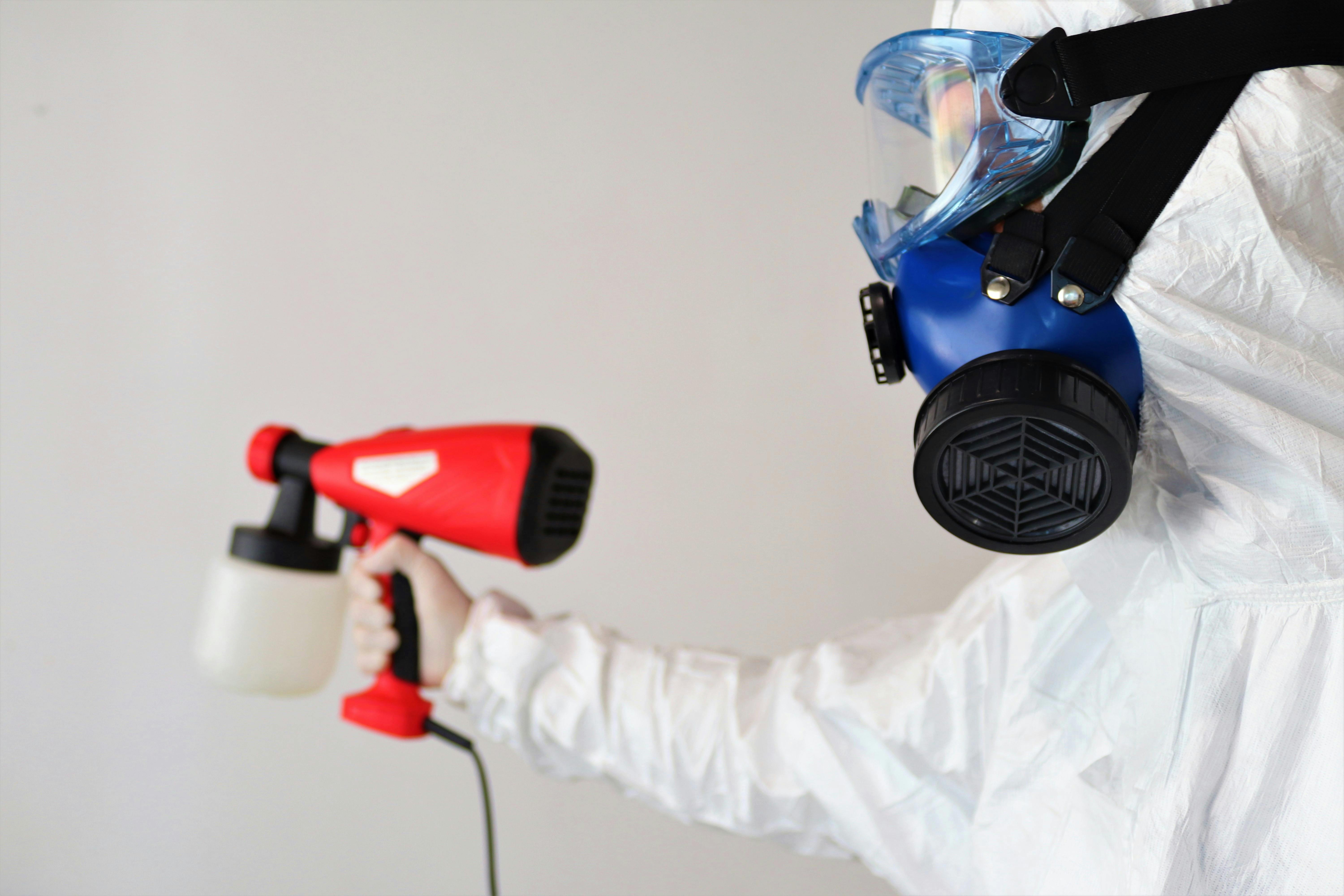
All chemical work follows strict safety protocols: technicians wear protective gear, use calibrated equipment, and apply the lowest effective dose. This ensures the treatment is potent against beetles yet safe for occupants and pets when the recommended re‑entry time is observed.
Non‑Chemical Alternatives
Homeowners who prefer a chemical‑free approach have several proven options. Heat treatment raises room temperatures to 120–130 °F for several hours, a range that instantly kills all life stages of carpet beetles without leaving residues. Vacuuming with a HEPA‑rated unit physically removes larvae and eggs from carpets, rugs, and upholstery; it’s essential to empty the canister outdoors after each pass.
Steam cleaning delivers moist heat directly into fabric fibers, eliminating hidden insects while also refreshing the material. For smaller items—like sweaters, blankets, or delicate décor—freezing at 0 °F for at least 72 hours is an effective kill method that requires no chemicals at all.
Preparation: Setting the Stage for Success
Regardless of the treatment route, proper preparation dramatically improves outcomes. Begin by decluttering rooms: move boxes, toys, and stored clothing away from walls to expose hidden corners. All washable fabrics should be laundered on the hottest cycle safe for the material, or dry‑cleaned if necessary. Finally, seal cracks around baseboards, windows, and door frames with caulk to block beetles from re‑entering after treatment.
Safety Considerations for Occupants and Pets
Both EPA and CDC guidelines stress the importance of ventilation and restricted access after chemical applications. Keep children, pets, and anyone with respiratory sensitivities out of treated zones until the label‑specified re‑entry period lapses—typically 2–4 hours for sprays and up to 24 hours for foggers. When opting for heat or steam, ensure that temperature‑sensitive items (electronics, certain plastics) are removed to prevent damage.
If you have concerns about specific ingredients, ask your technician for a Material Safety Data Sheet (MSDS). Anthem’s technicians are trained to explain any potential risks and to recommend the safest option for your household composition.
Technician Certification and Quality Assurance
Our team members are not just “pest guys”—they are NPMA Certified Operators. This certification means they have completed rigorous training on pest biology, safe pesticide handling, and the latest IPM strategies. Choosing a certified professional gives you confidence that the treatment plan follows industry‑best practices and complies with all local regulations.
Comparing Carpet Beetle Control Plans and Pricing
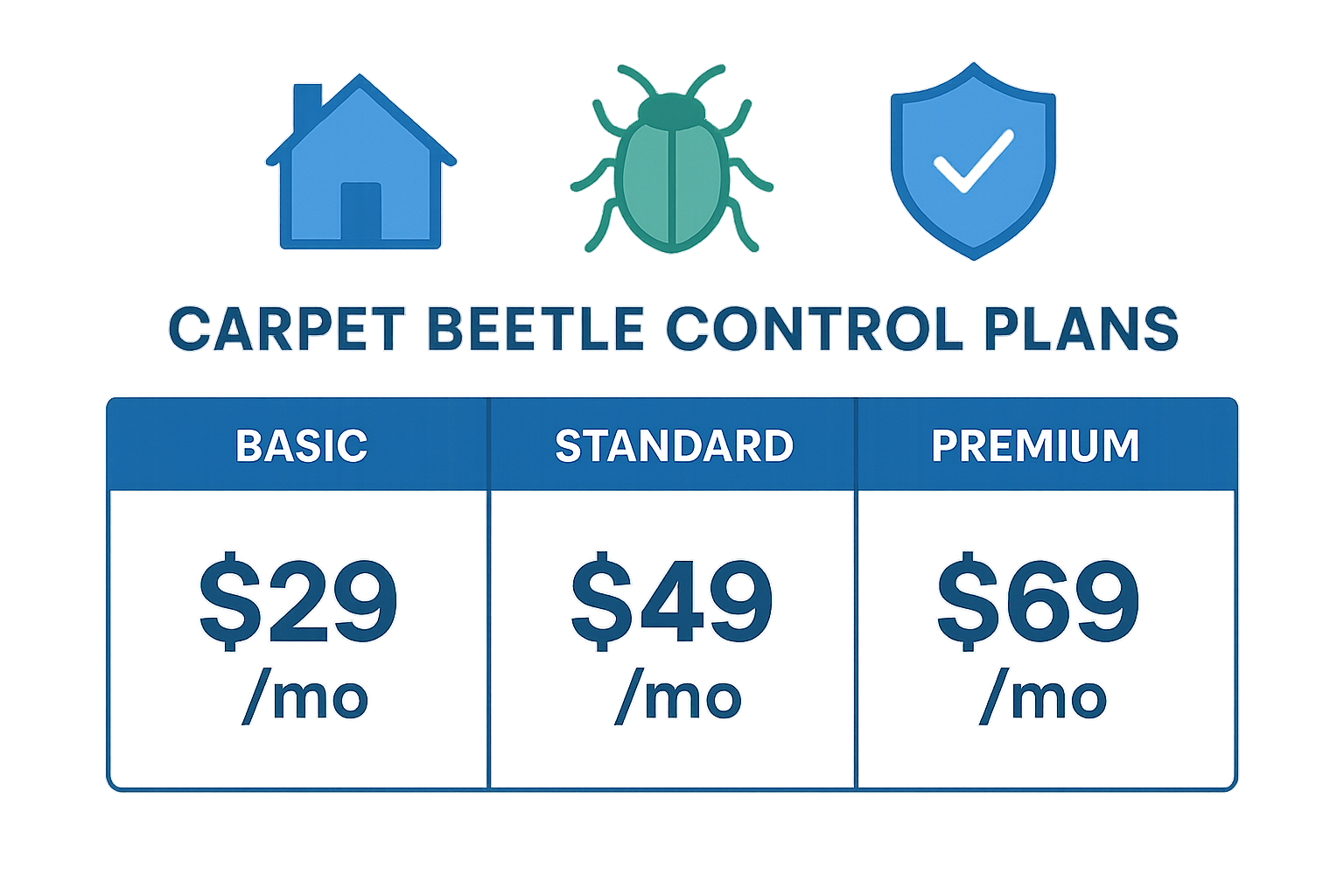
When it comes to carpet beetles, one size does not fit all. That’s why Anthem Pest offers three clear‑cut service tiers—Basic, Standard, and Premium—so you can match protection to your home’s size, the severity of the infestation, and your budget.
What each tier includes
- Basic Plan
- One initial interior treatment focused on high‑risk zones (carpets, closets, and upholstered furniture).
- Two follow‑up inspections spaced three weeks apart.
- Standard insecticide application with a 30‑day warranty.
- Ideal for small homes or a first‑time, low‑level infestation.
- Standard Plan
- Three interior visits: initial treatment, a mid‑cycle boost, and a final “seal‑in” application.
- Quarterly follow‑up inspections for six months.
- Combination of spot treatments and a whole‑home barrier spray.
- Six‑month warranty covering re‑infestation.
- Best for medium‑sized homes with moderate beetle activity.
- Premium Plan
- Four comprehensive visits, including exterior perimeter treatment and interior barrier.
- Monthly follow‑up inspections for a full year.
- Advanced, low‑odor EPA‑registered products plus a protective barrier on all flooring and baseboards.
- One‑year warranty with complimentary re‑treatment if beetles return.
- Designed for large homes, historic properties, or severe infestations.
Quick‑Reference Table
| Plan | Visits | Treatment Type | Follow‑up Inspections | Warranty | Typical Price (USD) |
|---|---|---|---|---|---|
| Basic | 1 | Spot treatment (interior only) | 2 (3‑week intervals) | 30 days | $149 – $199 |
| Standard | 3 | Spot + whole‑home barrier (interior) | 4 (quarterly for 6 months) | 6 months | $279 – $349 |
| Premium | 4 | Exterior perimeter + interior barrier | 12 (monthly for 12 months) | 12 months | $449 – $549 |
How to pick the right plan for your home
Home size matters. A 1,200‑sq‑ft bungalow can often be protected with the Basic or Standard plan, while a 3,000‑sq‑ft colonial benefits from the Premium tier’s whole‑home barrier.
Infestation severity. If you’ve only spotted a few beetle larvae in a single closet, the Basic plan’s targeted approach may be enough. But when you notice damage across multiple rooms, the Standard plan’s added boost visit and extended inspections become a safer bet.
Budget considerations. The Basic plan offers the most affordable entry point, but remember that a lower price may mean more frequent re‑treatments down the line. The Premium plan carries a higher upfront cost but includes a full year of monitoring, which often translates to fewer surprise expenses.
In short, match the plan to your square footage, the level of beetle activity you’re seeing, and how much you’re willing to invest now versus later. Our technicians will walk you through each option during the free estimate, ensuring you leave with a clear picture of protection and price.
Seasonal Activity of Carpet Beetles and Timing Your Treatment
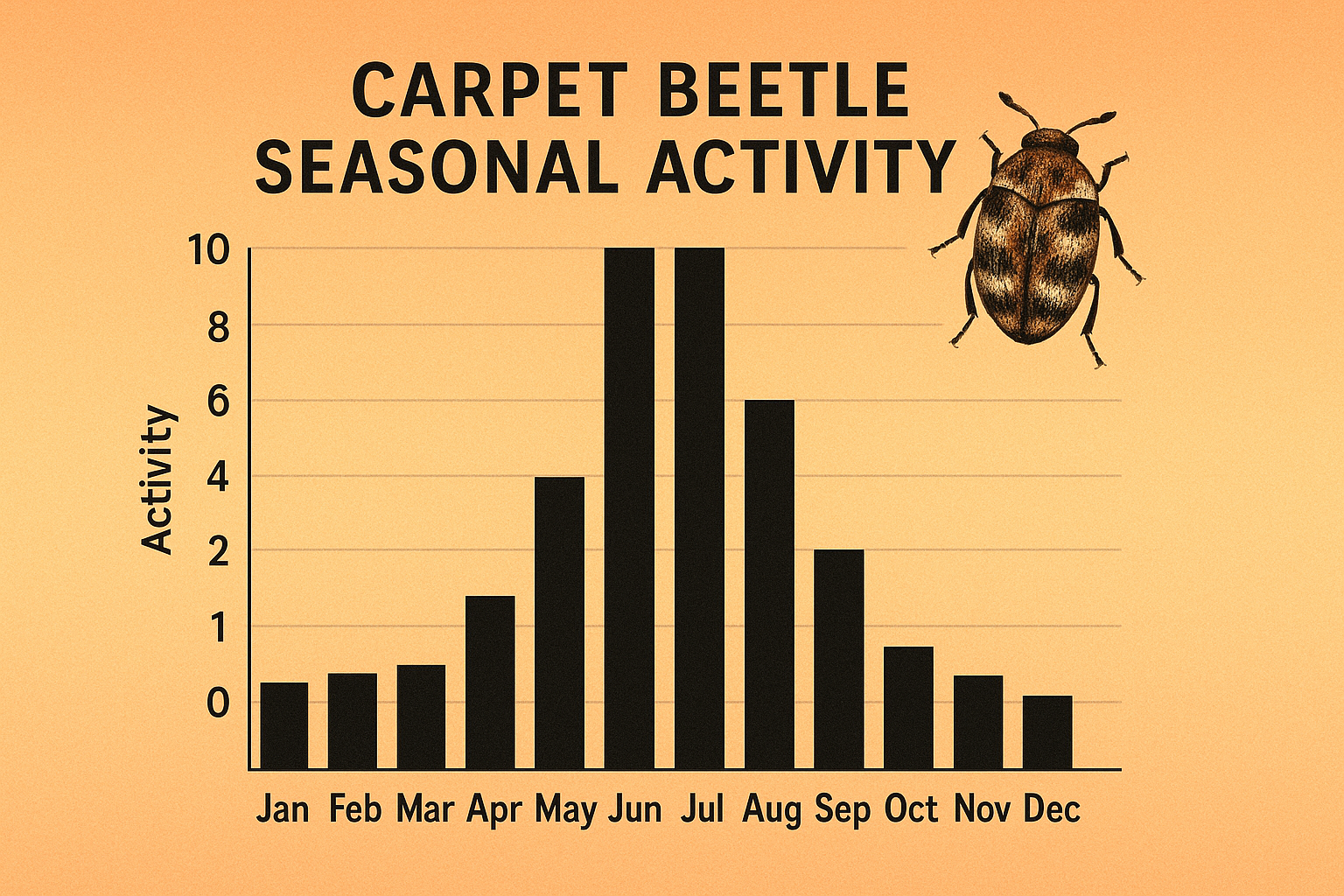
The bar chart above paints a clear picture of carpet beetle dynamics throughout the year. Activity stays near the baseline in the cold months of January and February, begins a modest climb in March, and reaches its first peak in May and June. After a brief lull in midsummer, a second surge appears in September and October before the numbers tumble again in November and December. Understanding these fluctuations helps you anticipate when beetles are most likely to invade your home.
Why Late Spring and Early Fall Trigger the Biggest Outbreaks
Carpet beetles are ectothermic; their metabolism speeds up as ambient temperatures rise. In Suwanee, average daytime highs of 70‑85°F (21‑29°C) during late spring and early fall provide the perfect thermal window for adult beetles to emerge, mate, and lay eggs. Humidity also plays a role—moderate moisture levels keep larvae hydrated and accelerate development. The combination of warm days and comfortable humidity creates a brief “golden period” when populations explode.
Scheduling Inspections and Treatments for Maximum Impact
To stay ahead of the curve, plan a professional inspection just before each peak. Early March gives you a head‑start before the May‑June surge, allowing any hidden infestations to be treated before they spread. A second check in early August positions you to intervene before the September‑October wave. By targeting the beetles when they’re still low in number, you reduce the amount of insecticide needed and keep treatment costs down.
Year‑Round Preventive Actions
- Vacuum regularly: Use a HEPA‑equipped vacuum on carpets, upholstery, and storage areas at least once a week. Empty the canister outdoors to prevent re‑infestation.
- Store fabrics properly: Seal seasonal clothing, blankets, and rugs in airtight containers or vacuum‑sealed bags, especially during the high‑risk months.
- Seal entry points: Inspect doors, windows, and utility openings for gaps. Caulk cracks and install weather‑stripping to block beetles from entering.
- Monitor humidity: Keep indoor humidity between 30‑50% with a dehumidifier or proper ventilation to make your home less inviting to larvae.
Integrating Timing with Integrated Pest Management (IPM)
IPM emphasizes early detection and minimal chemical reliance. By scheduling inspections before the spring and fall peaks, you give your technician the chance to use non‑chemical tactics—such as thorough cleaning, pheromone traps, and targeted spot treatments—rather than resorting to broad‑spectrum sprays. Early intervention not only protects your family’s health but also preserves the effectiveness of any chemicals you do apply.
Set Calendar Reminders for Quarterly Checks
Make the timing habit automatic. Add quarterly reminders to your digital calendar—March 1, June 1, September 1, and December 1. When the alert pops up, schedule a quick visual inspection or call Anthem Pest Control for a professional review. Consistency turns a reactive response into a proactive shield, keeping carpet beetles at bay year after year.
Secure Your Home with Professional Carpet Beetle Protection
Carpet beetles may seem harmless at first, but an unchecked infestation can quickly turn into costly damage to clothing, upholstery, and even the structural integrity of your home. Early identification, prompt treatment, and timing your intervention to match seasonal activity are the three pillars of lasting protection. Spotting the tell‑tale signs—tiny shed skins, irregular holes in fabrics, or a fine powdery residue—gives you a head start, while a well‑planned treatment schedule ensures the beetles never get a chance to rebound.
Why Anthem Pest Control Is the Smart Choice
When it comes to defending your home, Anthem Pest Control brings a blend of local knowledge and industry‑leading expertise that few can match:
- Certified technicians: Every technician holds state‑approved certifications and completes ongoing training on the latest carpet beetle biology and control tactics.
- EPA‑compliant methods: We use products that meet strict environmental standards, protecting your family, pets, and the surrounding ecosystem while delivering a lethal blow to beetles at every life stage.
- Transparent pricing: Our detailed plan comparison lets you see exactly what you’re paying for—no hidden fees, no surprise add‑ons. You’ll know the cost of inspection, treatment, and any follow‑up visits before we even start.
- Local focus: Serving Suwanee and the surrounding Georgia neighborhoods, we understand the regional climate patterns that drive beetle activity, allowing us to tailor timing and product selection for optimal results.
Safe, Effective, and Affordable Solutions Tailored to You
Anthem’s approach begins with a thorough inspection to pinpoint infestation hotspots. From there, we design a customized treatment plan that may include targeted spot‑applications, whole‑home sprays, or integrated pest‑management (IPM) strategies that reduce reliance on chemicals over time. Our solutions are calibrated to each homeowner’s unique situation—whether you need a one‑time eradication, ongoing seasonal protection, or a combination of both—so you never pay for services you don’t need.
Take the First Step Toward a Beetle‑Free Home
Ready to protect your carpets, blankets, and cherished heirlooms without breaking the bank? Request a free, no‑obligation quote today. Our friendly staff will walk you through the process, answer any questions, and schedule a convenient inspection at your convenience.
Call us now at 877‑371‑8196 or visit Anthem Pest Control online to get started. We’re here to keep your home safe, clean, and beetle‑free—one professional treatment at a time.