Stink Bug Threats in Suwanee, GA
The brown marmorated stink bug (BMSB) is a bright‑green to brown‑ish insect originally from East Asia that has become one of the Southeast’s most unwelcome guests. First spotted in the United States in the late 1990s, it quickly spread across multiple states, thriving in suburban neighborhoods like Suwanee. Unlike native stink bugs, the BMSB is highly adaptable, reproduces rapidly, and has few natural predators, making it a formidable invasive species.
Why Suwanee Is a Perfect Stink Bug Habitat
Suwanee’s humid subtropical climate—warm summers, mild winters, and abundant rainfall—creates an ideal environment for BMSB development. The city’s mix of mature trees, ornamental shrubs, and well‑kept lawns provides the shelter and food sources these bugs crave. Additionally, the proximity to agricultural fields and the city’s extensive green spaces act as corridors, allowing stink bugs to move freely between outdoor feeding sites and indoor refuges.
Typical Damage You’ll Notice
When BMSB populations surge, the damage becomes unmistakable. Outdoors, they pierce fruit, vegetables, and ornamental plants, leaving puncture wounds that turn into rot or deformities. Home gardeners often see wilted tomatoes, blemished peaches, and chewed leaves on roses or azaleas. Indoors, stink bugs seek warmth during cooler months, clustering in wall voids, attics, and even kitchen cabinets. Their presence translates into a constant nuisance: you’ll find them on countertops, in light fixtures, or crawling across bedsheets.
Health Considerations for Your Family
Beyond the visual annoyance, stink bugs emit a pungent odor when disturbed—a defensive spray that can linger on fabrics and upholstery. While the smell itself isn’t toxic, it can trigger headaches or nausea in sensitive individuals. Some homeowners report mild skin irritation after handling the bugs, and in rare cases, allergic reactions can develop. The psychological discomfort of knowing these insects are inside your home—especially when they appear in large numbers—can also add stress to an already busy household.
Economic Impact on Homeowners
Dealing with BMSB isn’t just a matter of cleaning up a few bugs; it can affect your budget. Frequent cleaning to remove dead insects and odor‑absorbing treatments can add up. In severe infestations, the bugs may infiltrate building envelopes, forcing homeowners to seal cracks, replace damaged insulation, or even repair structural components compromised by moisture buildup from repeated spray applications. When ornamental plants or garden produce are damaged, the cost of replacement or lost harvest further strains family finances.
Understanding these threats is the first step toward protecting your Suwanee home. Recognizing the BMSB’s habits and the specific challenges they pose helps you make informed decisions about treatment and prevention—topics we’ll explore in the sections that follow.
Identifying the Brown Marmorated Stink Bug
The brown‑marmorated stink bug (BMSB) is one of the most recognizable invaders in Georgia homes, but you have to know what to look for. An adult measures roughly ½ inch (12 mm) long and sports a shield‑shaped back that tapers toward the rear. Its coloration is a mottled blend of brown and gray, giving it a “marbled” appearance that blends well with bark and foliage. The most reliable field mark is the white band across the base of each antenna—a tiny stripe that native stink bugs simply don’t have.
How BMSB differs from native stink bugs
- Size: Native species such as the green stink bug are slightly larger, often exceeding ¾ inch.
- Color pattern: Native bugs display a more uniform green or brown hue without the mottled “marble” effect.
- Antennae: Only the brown‑marmorated variety shows a distinct white band at the antenna base.
- Shape: BMSB’s shield is flatter and broader, while native bugs tend to have a more rounded profile.
Where you’ll most likely spot them
During the growing season, BMSBs hang out in garden beds, especially around fruiting plants, and they love the warm bark of tree trunks. As temperatures drop in fall, they seek shelter in the smallest cracks they can find—behind siding, under eaves, and on indoor windowsills. It’s not unusual to see a cluster of them gathering near exterior lights, using the illumination as a navigation cue.
Signs that an infestation is taking hold
- Groups of bugs clustered together on walls or windows.
- Shedding of exoskeletons (tiny, translucent shells) as they molt.
- A faint, unpleasant “stink” when the insects are disturbed—often a warning sign that they feel threatened.
Safely capturing a specimen for verification
If you’re unsure whether you’re dealing with BMSB, a simple capture can help a professional confirm the ID. Follow these steps:
- Place a clean glass jar near the bug’s activity area.
- Gently coax the insect onto a piece of cardboard or a folded paper.
- Slide the jar over the bug, then seal the lid without crushing it.
- Label the jar with the date and location, then store it in a cool place until you can show it to a technician.
Handling the bug this way prevents the release of its defensive odor and protects you from accidental bites.

Seasonal Activity and Timing for Treatment
Understanding the BMSB Life Cycle
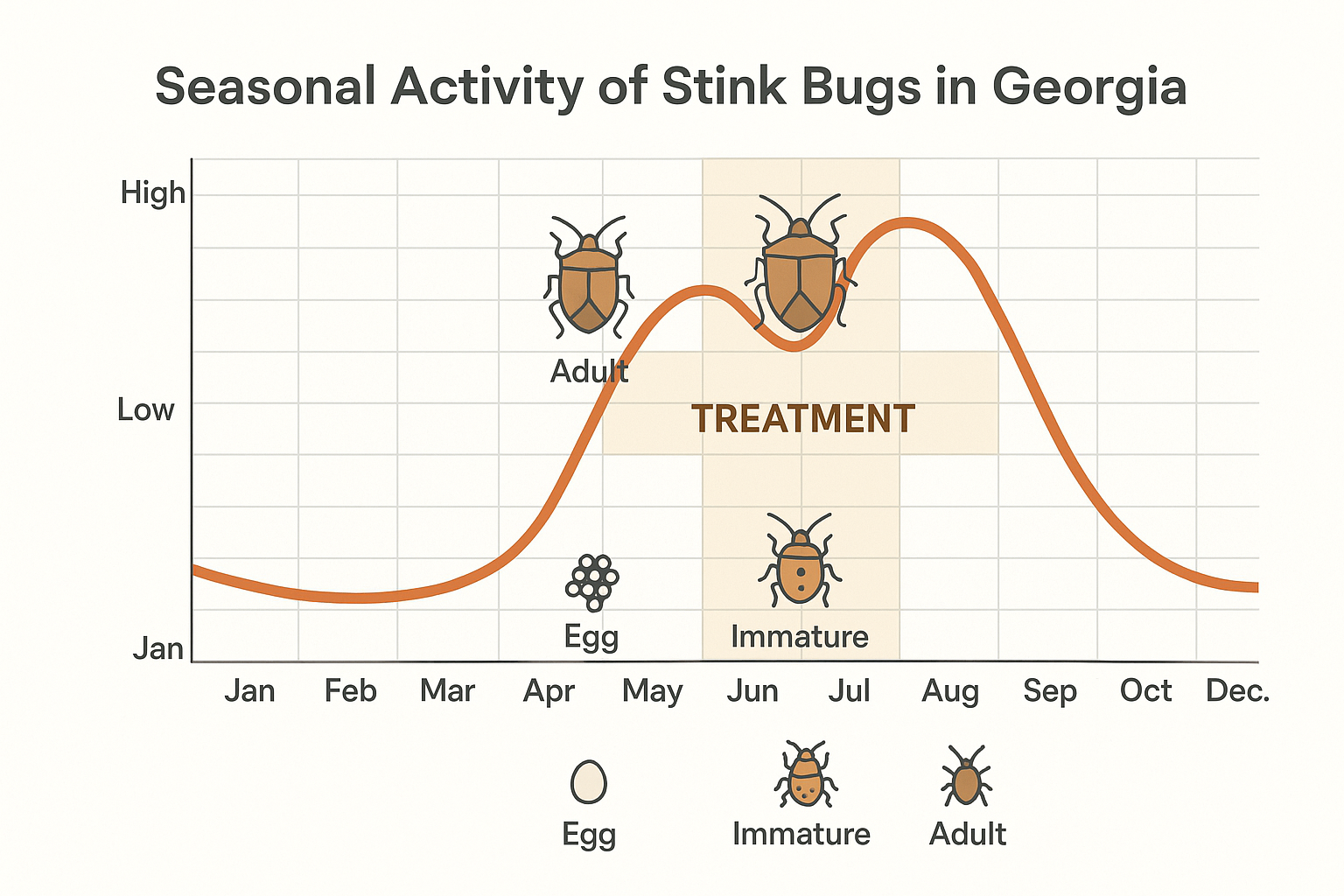
The brown marmorated stink bug (BMSB) follows a predictable four‑stage life cycle that drives when you’ll see them inside your home. Females lay flat, barrel‑shaped egg masses on the undersides of leaves in late summer. After about a week, the eggs hatch into first‑instar nymphs, which look like tiny, translucent versions of adults. Nymphs molt five times, each stage becoming larger and gaining the characteristic stink‑bug “shield.” By late summer, the final molt produces fully winged adults ready to seek shelter for the winter.
Georgia’s Seasonal Timeline
In Suwanee and the surrounding Georgia region, the BMSB’s calendar aligns closely with our climate:
- Nov – Jan: Overwintering – adults cluster in warm, dry spaces such as attics, wall voids, and crawl spaces.
- Feb – Mar: Spring emergence – as temperatures rise above 55 °F, bugs become active, seeking food and mates.
- May – July: Peak outdoor activity – nymphs mature, and adults disperse across yards, feeding on fruits, vegetables, and ornamental plants.
- Sept – Oct: Fall aggregation – insects return to indoor refuges to prepare for overwintering.
Why Timing Matters
Applying treatment at the right moment can dramatically reduce the next season’s infestation. An early‑spring spray, timed just as adults emerge (late February to early March), knocks down the breeding population before nymphs have a chance to develop. This pre‑emptive strike curtails the exponential growth that typically occurs in May and June.
Conversely, a fall treatment in late September or early October targets the insects that have already moved indoors. By sealing off entry points and treating these overwintering sites, you prevent a massive “spring surge” of bugs re‑entering your home.
Monitoring Tips for Homeowners
Staying ahead of the stink bug requires a little vigilance:
- Visual inspections: Check window sills, door frames, and exterior lights weekly during peak months. Look for the characteristic shield‑shaped bugs or fresh egg masses.
- Light traps: Set up a simple LED or fluorescent light trap near a wall. BMSBs are attracted to bright lights at night, making traps an easy way to gauge activity levels.
- Exterior sweep: During May‑July, walk the perimeter of your property and note any heavy feeding damage on fruit trees or ornamental shrubs—signs that a large population is present.
Optimal Treatment Windows
| Season | Typical Dates | Purpose of Treatment |
|---|---|---|
| Early Spring | Feb 15 – Mar 15 | Target emerging adults before they reproduce |
| Late Summer | Jul 15 – Aug 31 | Suppress late‑season nymphs and reduce fall aggregation |
| Fall | Sept 15 – Oct 31 | Eliminate indoor overwintering adults and seal entry points |
By aligning your pest‑management plan with the BMSB’s life cycle, you’ll keep these invasive insects from turning your home into a summer nuisance. If you spot activity outside the windows above, or need a professional assessment, Anthem Pest Control is ready to tailor a treatment schedule that fits your calendar and budget.
Treatment Options and Professional Services
DIY Methods: What You Can Do Yourself
Many homeowners start with a hands‑on approach. The most common do‑it‑yourself tactics for stink bugs include:
- Vacuuming – Quickly removes bugs from walls, ceilings, and light fixtures. Pros: Immediate results, no chemicals. Cons: Vacuums can become a breeding ground if not emptied promptly.
- Sealing entry points – Caulking cracks, installing door sweeps, and repairing screens keep bugs from slipping inside. Pros: Long‑term barrier, low cost. Cons: Requires diligent inspection of the entire home’s exterior.
- Insecticidal soaps – Applied directly to visible bugs on plants or indoor surfaces. Pros: Low toxicity, safe around pets when used as directed. Cons: Only kills bugs on contact; offers no residual protection.
- Residual sprays – Over‑the‑counter aerosols that claim to linger for weeks. Pros: Easy to apply, can reduce numbers temporarily. Cons: Often lack EPA‑approval for indoor use, and effectiveness wanes quickly against a large infestation.
DIY solutions work for a light‑touch problem, but they rarely eradicate a well‑established stink‑bug population.
Professional Chemical Treatments
When the infestation spreads beyond a few dozen insects, a licensed technician brings a calibrated arsenal:
- Perimeter sprays – A fine mist applied around the foundation, siding, and landscaping creates a protective moat that intercepts bugs before they cross the threshold.
- Interior residual applications – EPA‑approved products are placed in cracks, voids, and baseboards where stink bugs hide, delivering a slow‑release kill that lasts several weeks.
- Targeted spot treatments – Focused bursts of insecticide on hot spots such as window frames, light fixtures, and attic vents where bugs congregate.
Structural Exclusion Techniques
Even the most potent chemicals lose their edge if bugs can slip through gaps. Professional exclusion includes:
- Caulking all exterior cracks, especially around utility penetrations.
- Installing door sweeps on all exterior doors to block low‑level entry.
- Repairing or replacing damaged window screens, vent covers, and attic gable vents.
- Ensuring that siding is properly sealed and that any weather‑stripping is intact.
These measures turn your home into a sealed fortress, making chemical treatments far more effective.
Integrated Pest Management (IPM) Approach
Anthem Pest Control follows an IPM philosophy that blends monitoring, thresholds, and follow‑up visits:
- Monitoring – Technicians set up sticky traps and conduct visual inspections to gauge population density.
- Threshold‑based treatment – Treatment is triggered only when bug numbers exceed a pre‑determined level, avoiding unnecessary pesticide use.
- Follow‑up visits – Scheduled after the initial application to assess residual activity, re‑treat hotspots, and reinforce exclusion measures.
This systematic strategy maximizes control while minimizing chemical exposure.
Safety Considerations
Whether you’re handling a spray can or a professional is on the job, safety should never be an afterthought:
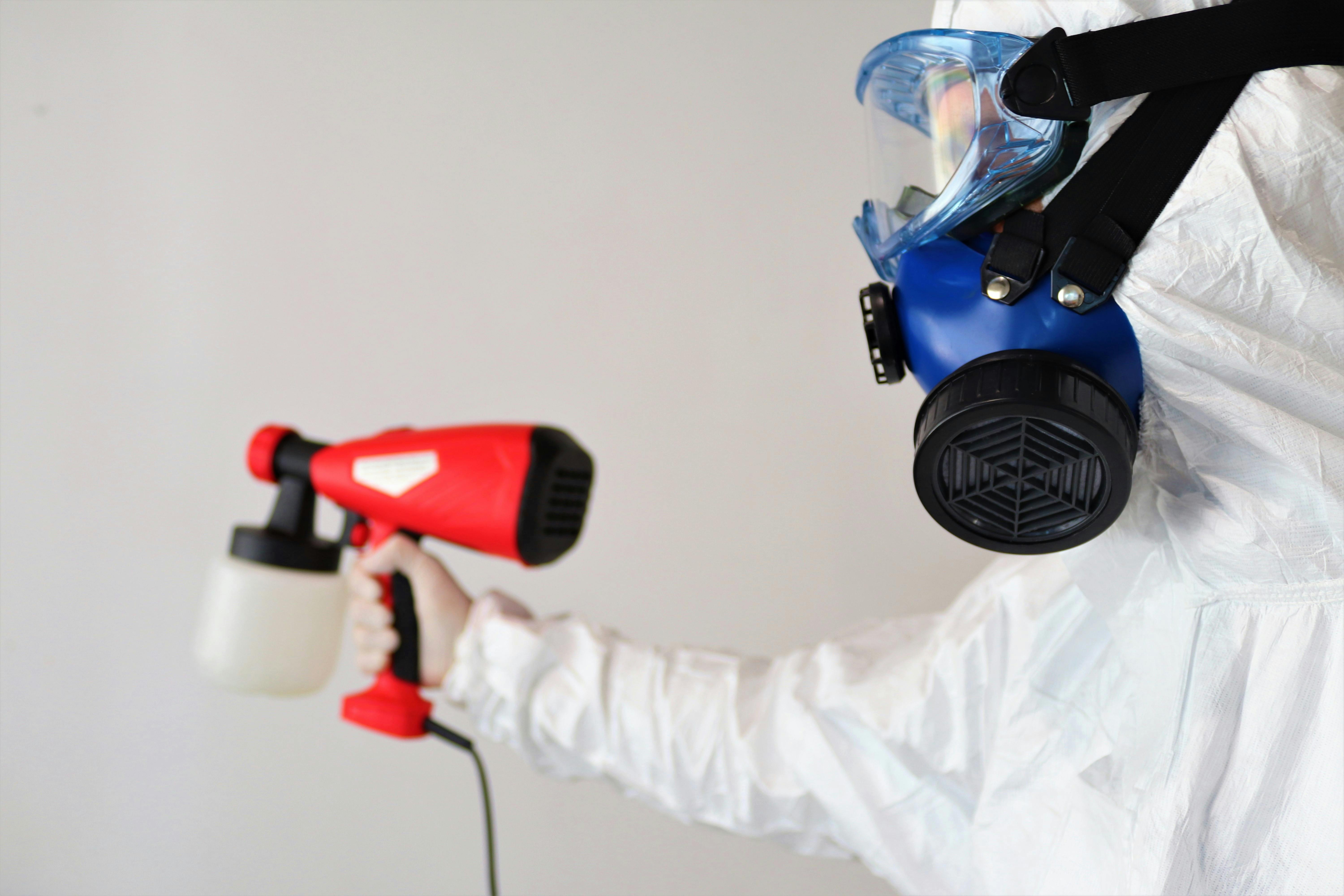
- Wear protective gloves, goggles, and a mask when applying any pesticide.
- Choose EPA‑approved products that are labeled for indoor use and have clear pet‑ and child‑safety data.
- Ask your technician to explain product ingredients and post‑treatment ventilation requirements.
- Keep pets and children out of treated zones until the label’s re‑entry interval has elapsed.
By combining smart DIY steps, robust professional treatments, and a disciplined IPM plan, you can keep stink bugs at bay without compromising the safety of your family or the environment.
Pricing Overview and Regional Cost Comparison
Core Cost Drivers
When you request stink‑bug control, the final invoice reflects several key variables. Property size sets the baseline—larger homes need more product and longer service times. Infestation severity determines how many treatment cycles are required; a light sighting costs far less than a full‑blown invasion. The type of treatment (e.g., perimeter spray, indoor residual, or heat treatment) and the frequency of service (single visit vs. quarterly maintenance) also shift the price up or down.
Typical Price Range in Suwanee
For most homeowners in Suwanee, a single‑visit residential treatment targeting the brown‑marmorated stink bug (BMSB) falls between $150 and $250. This range covers the essential steps—inspection, targeted application, and a post‑treatment walkthrough—while keeping the service affordable for a typical 2,000‑sq‑ft home. The figure is sourced from a recent market analysis by Anthem Pest Control’s pricing team: Stink Bug Control Cost in Suwanee, GA.
Why Suwanee Pricing May Differ from Neighboring Cities
Even a few miles away, rates can vary noticeably. Suwanee’s higher labor costs stem from a competitive local market where certified technicians command premium wages. Additionally, Fulton County’s specific pesticide regulations require extra documentation and safety measures, which add to the overhead. In contrast, nearby towns with lower minimum wages or fewer licensing hurdles often see modestly reduced fees.

How to Read the Chart
The bar‑chart visualizes average monthly costs for Suwanee and its surrounding markets. Higher peaks indicate premium months—typically late summer when stink‑bug activity spikes and demand for treatments surges. Lower bars represent off‑season discounts, often seen in early spring or late fall when fewer homeowners request services. Use this visual cue to plan your treatment during a price‑friendly window without compromising effectiveness.
Getting Transparent Quotes – What to Ask
- Can you break down the estimate by property size, treatment type, and number of visits?
- Do you include a written warranty or guarantee for re‑infestation?
- What are the labor rates, and do they differ from neighboring counties?
- Are there any seasonal promotions or discounts for bundled services?
- Will you provide a detailed post‑treatment report outlining product usage and safety precautions?
Arming yourself with these questions ensures you receive a clear, no‑surprise invoice and helps you compare offers across the region with confidence.
Choose Anthem Pest Control for Reliable Protection
When it comes to the brown marmorated stink bug, catching the problem early, treating it promptly, and relying on seasoned professionals are the three pillars of lasting control. Homeowners who wait until the bugs have multiplied often face higher costs and more invasive treatments. A trained technician can identify hidden entry points, choose the right EPA‑approved product, and apply it safely, keeping your family and pets out of harm’s way.
Anthem Pest Control brings a national network of licensed technicians right to Suwanee, backed by a reputation for consistency and accountability. Its key strengths include:
- Fully certified technicians who follow strict safety protocols.
- Use of EPA‑approved products that target stink bugs while protecting indoor air quality and beneficial insects.
- Transparent, up‑front pricing with no hidden fees.
- A satisfaction guarantee that ensures the job isn’t considered complete until you’re happy.
Anthem’s stink‑bug program in Suwanee starts with a thorough on‑site inspection, during which the technician maps out infestation hotspots and identifies structural vulnerabilities. Based on that assessment, a customized treatment plan is created—often a combination of perimeter sprays, indoor residual applications, and targeted crack‑and‑crevice treatments. Seasonal follow‑ups are scheduled to catch any late‑season hatches, and each visit includes a brief performance review so you always know what’s been done and what’s next.
Ready to see the difference a professional approach can make? Request a free, no‑obligation quote today and let Anthem’s experts map out a plan that fits your schedule and budget.
Give us a call at 877‑371‑8196 or visit anthempest.com to schedule your inspection.
By choosing Anthem Pest Control, you’re investing in a bug‑free season for your family, your garden, and your peace of mind. Let the experts handle the stink‑bug invasion so you can focus on what matters most—enjoying a comfortable home without the nuisance of unwanted pests.