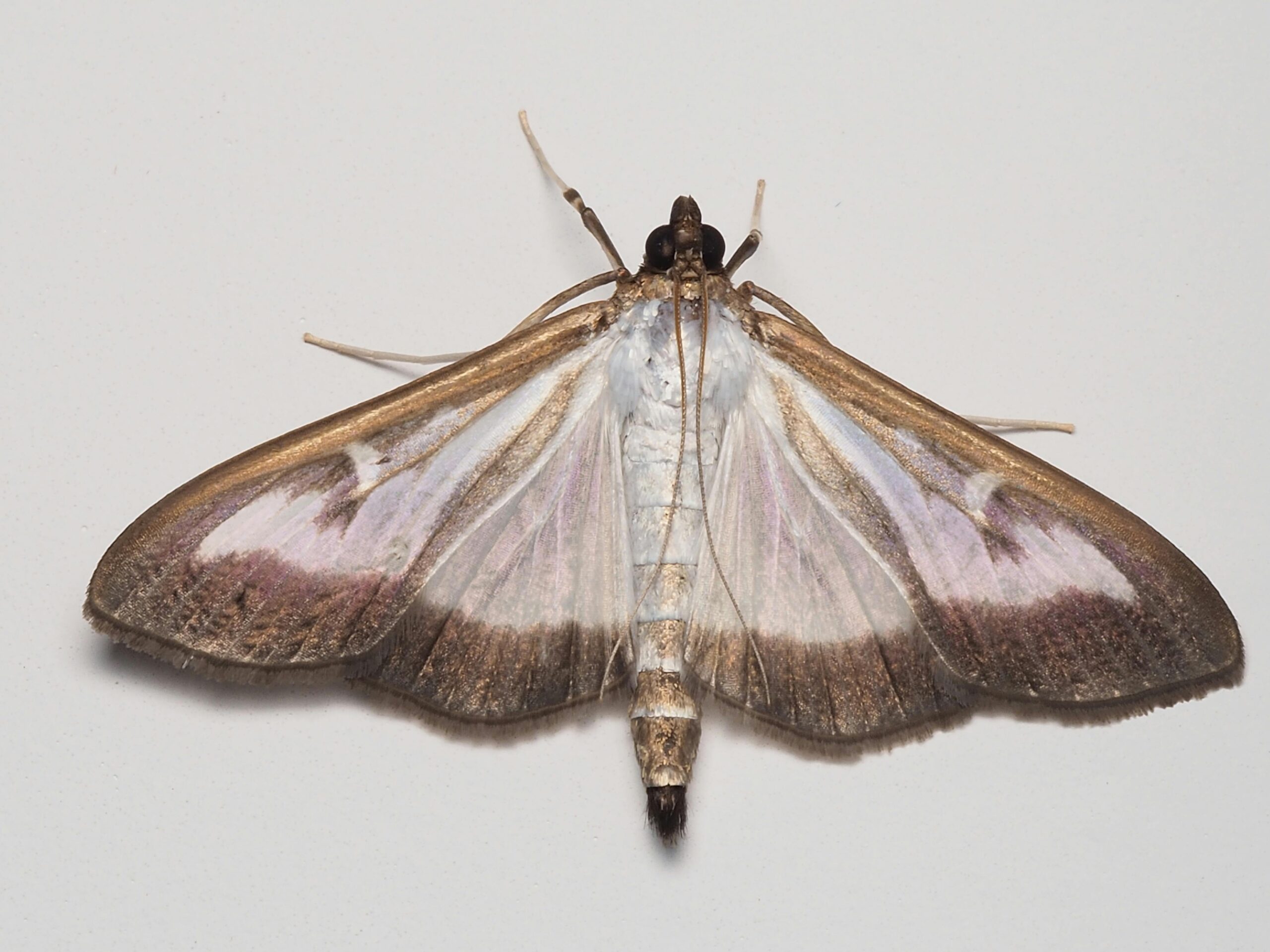
Why Moth Infestations Matter in Peachtree City

When you hear “moth,” many homeowners picture a harmless fluttering insect that’s more of a nuisance than a threat. In Peachtree City, however, those tiny flyers can quickly become a costly problem. The region’s warm, humid summers and well‑insulated homes create an ideal environment for two of the most common household moths in Georgia: the clothes moth (Tineola bisselliella) and the pantry moth (Plodia interpunctella). Both species are adept at exploiting the fabrics and food supplies we keep inside our homes.
How to Spot an Early Infestation
Detecting moth activity before it spreads saves you time, money, and the frustration of replacing cherished items. Look for these tell‑tale signs:
- Fine, silvery webbing in the seams of closets, drawers, or pantry shelves.
- Small, cream‑colored larvae moving in slow, looping motions.
- Irregular holes or “eaten‑away” patches on wool, cashmere, or stored grains.
- Clusters of discarded cocoons, often found near the base of clothing or in the corners of pantries.
These indicators are usually the first red flags that a moth population has taken root. Ignoring them can let the infestation expand exponentially.
Economic and Health Impacts
While a few damaged sweaters might seem trivial, the cumulative effect of a moth outbreak can be financially draining. Clothes moths can destroy entire wardrobes, especially items made from natural fibers, leading to replacement costs that run into hundreds of dollars. Pantry moths, on the other hand, contaminate dry goods—cereals, nuts, spices—forcing homeowners to discard large quantities of food. This waste not only hits the budget but also contributes to unnecessary landfill waste.
Beyond the monetary loss, moths can affect indoor air quality. Their shed skins, droppings, and the fine dust from damaged fabrics act as allergens, aggravating asthma and triggering allergic reactions in sensitive individuals. For families with young children or pets, these hidden health hazards are especially concerning.
Why Peachtree City Is Particularly Vulnerable
The climate in Peachtree City—characterized by mild winters, hot summers, and a relatively high humidity level—mirrors the conditions moths thrive in. Moreover, many homes in the area feature spacious, carpeted basements and well‑sealed attics that trap heat, creating micro‑environments perfect for moth development. The prevalence of open‑concept living spaces also means that food storage areas are often close to clothing storage, facilitating cross‑infestation.
“In the Southeast, the combination of warm, humid weather and modern, energy‑efficient housing has led to a noticeable uptick in moth activity. Homeowners who act early can prevent costly damage and health issues.” – American Pest Management Association
Understanding the local dynamics helps you recognize that moths aren’t just a fleeting annoyance—they’re a genuine threat to your home’s integrity and your family’s well‑being. By staying alert to the signs and acting promptly, you can keep your Peachtree City residence moth‑free and protect both your possessions and your peace of mind.
How Seasonal Patterns Drive Moth Activity
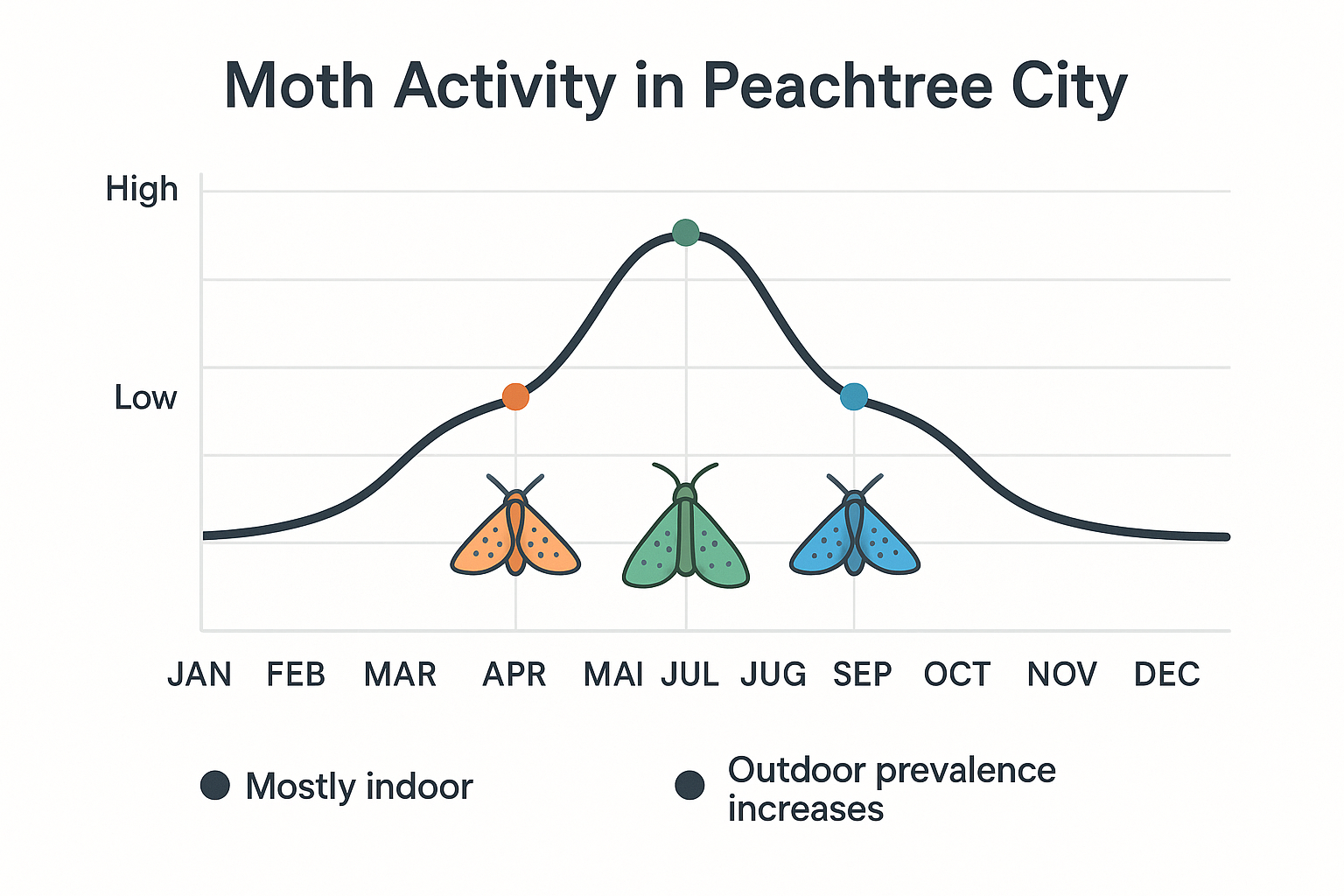
In Peachtree City, moths don’t appear at random—they follow a predictable, year‑long rhythm that mirrors the local climate. Understanding this rhythm lets you spot the warning signs before a small nuisance turns into a full‑blown infestation.
Year‑Round Overview
The seasonal chart above breaks the calendar into twelve distinct windows. From January through March, moth activity hovers near the baseline because cooler nights and low humidity stall egg development. April and May see a modest uptick as temperatures climb above 60 °F (15 °C), creating a more hospitable environment for larvae to emerge from their winter hideouts.
Why Late Summer and Early Fall Are the Real Peaks
Peak activity typically lands in August and September. Two climate factors converge at this point:
- Temperature: Consistently warm days (mid‑80s °F/29‑30 °C) accelerate the life cycle, allowing eggs to hatch, larvae to feed, and adults to emerge in rapid succession.
- Humidity: Summer rain and higher nighttime moisture boost fungal growth on organic debris, providing a richer food source for moth larvae.
By October, the drop in nighttime temperature and the drying of leaf litter slow the cycle again, but a secondary mini‑spike can occur if a warm, damp spell extends into early November.
Indoor vs. Outdoor Activity Trends
Outdoor moths follow the chart closely—most are attracted to natural food sources like dead leaves, stored grain, or outdoor lighting. Indoor populations, however, are driven by a different set of variables. During the cooler months (December‑February), indoor moths may actually be more visible because they seek the warmth of heated homes. Conversely, the late‑summer outdoor surge often spills indoors when homeowners leave windows open or store seasonal clothing without airtight containers.
Practical Tips for Homeowners During High‑Risk Months
When the chart signals a peak, a few proactive steps can keep moths at bay:
- Inspect stored fabrics and pantry items weekly; discard any that show webbing or damage.
- Use airtight containers for grains, flour, and pet food to eliminate food sources.
- Seal cracks around windows, doors, and utility openings to block adult moth entry.
- Deploy pheromone traps in closets and pantries to monitor adult activity and catch early infestations.
- Schedule a professional inspection with Anthem Pest Control before September to apply targeted treatments that disrupt the moth life cycle.
By aligning your preventive actions with the seasonal patterns shown in the chart, you’ll reduce the chances of a surprise moth outbreak and keep your home comfortable all year long.
Identifying Moth Species and Early Warning Signs

Clothes Moths (Tineola bisselliella)
Clothes moths are the classic culprits behind ruined sweaters, scarves, and other natural‑fiber garments. The adult moth is small—about ½ inch long—with a slender, tan‑gray body and a wingspan that appears almost leaf‑shaped when at rest. Their wings lack the bright patterns seen on pantry moths; instead, they are a muted, silky hue that blends into wool or cotton.
It’s the larva that does the real damage. These cream‑colored caterpillars grow up to ¼ inch, sporting a brown head capsule and a slightly hairy body. They spin fine, silken tunnels in the fibers of clothing, feeding on keratin and natural oils. Over time, you’ll notice irregular holes, a faint “cobweb” residue, and a faint, musty odor.
Pantry Moths (Plodia interpunctella)
Also known as Indian meal moths, pantry moths thrive in kitchens and pantries. Adults are slightly larger than clothes moths, with a wingspan of about ¾ inch. Their forewings are a striking mix of reddish‑brown and amber, while the hindwings are a contrasting pale gray, making them easy to spot when they flutter around stored food.
The larvae are creamy‑white, tapering at the head, and they grow up to ½ inch. They conceal themselves in food packages, creating irregular webs and leaving behind tiny frass (droppings). A common sign of infestation is the presence of webbing on the tops of cereal boxes, flour bags, or pet food containers.
Visual Cues to Watch For
- Adult moths: Look for the distinct wing patterns—subtle tan for clothes moths, bold amber‑brown for pantry moths.
- Larvae: Creamy bodies, often hidden in seams, folds, or food packages.
- Webbing: Fine silk threads on fabrics, in pantry corners, or atop stored goods.
- Egg clusters: Tiny, off‑white specks laid near food sources or in garment folds.
- Damage: Small, irregular holes in wool, silk, or dried goods; a faint, stale smell may accompany heavy infestations.
Where You’ll Find Them in a Peachtree City Home
Peachtree City homes often feature spacious closets, walk‑in wardrobes, and well‑stocked pantries—perfect habitats for both species.
Clothes moths gravitate toward dark, undisturbed areas: under beds, inside cedar chests, and behind baseboards where natural fibers are stored. They also like the insulation in attic spaces if textiles are tucked away.
Pantry moths set up shop in kitchens, especially near grain‑based products, dried fruit, nuts, and pet foods. Look behind pantry shelves, in the crevices of cabinets, and even in cardboard boxes that have been left open for months.
Quick Inspection Checklist
- Open all closets and pull out clothing; check seams and folds for larvae or webbing.
- Inspect stored fabrics for tiny holes and a powdery residue.
- Examine pantry items—especially cereals, flour, and pet food—for webbing on the surface or inside packages.
- Look for adult moths near windows, light fixtures, and vents where they may be attracted to light.
- Check baseboards, attic corners, and under furniture for egg clusters or silken threads.
- Use a flashlight to spot hidden larvae in dark corners and behind appliances.
If you spot any of these signs, don’t wait for the damage to spread. Our local experts can verify the infestation and recommend a targeted treatment plan. Schedule a professional inspection today and protect your home from moth damage before it becomes costly.
Moth Extermination Packages and Pricing Explained
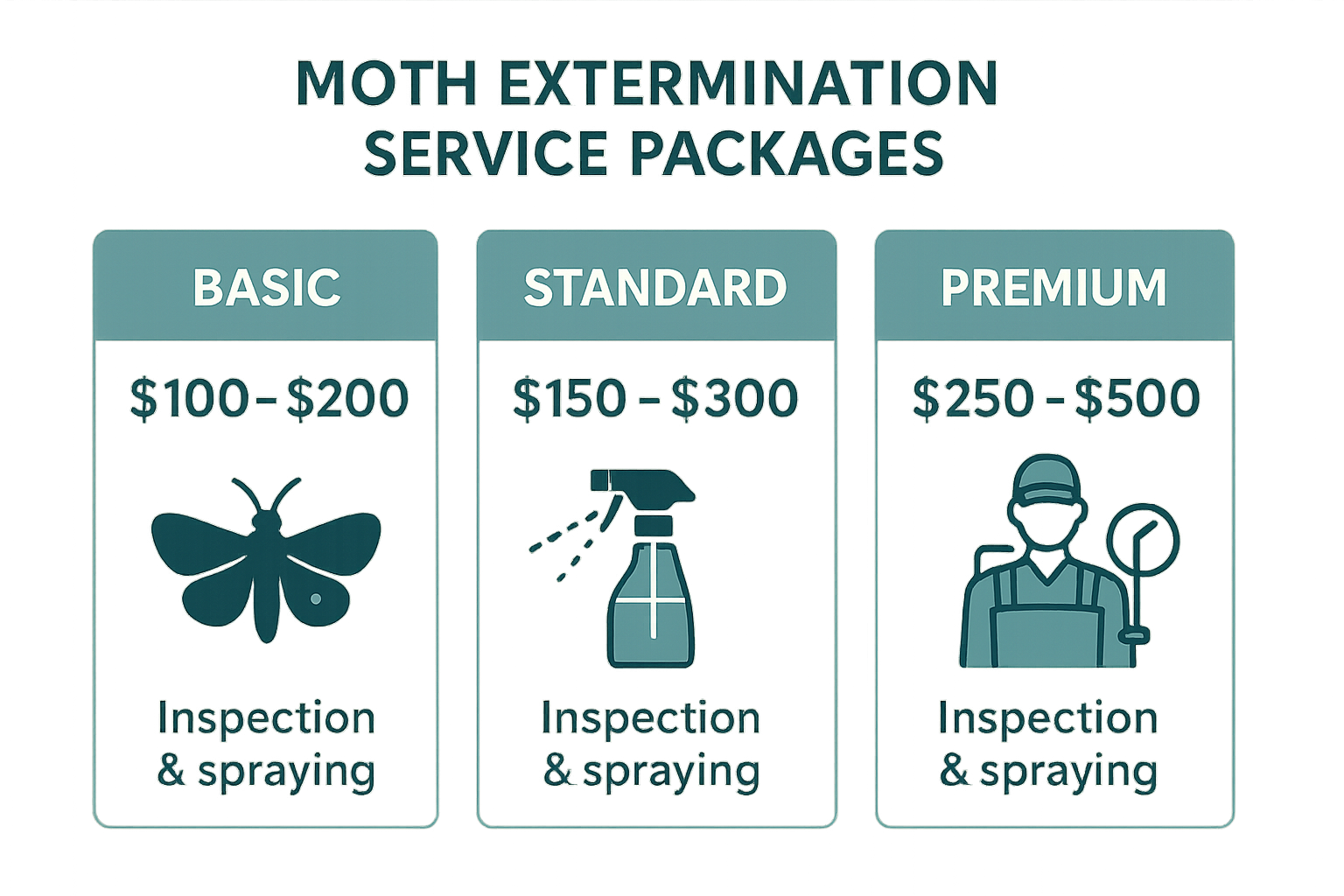
Anthem Pest Control structures its moth‑control offerings into three clear tiers—Basic, Standard, and Premium—so homeowners in Peachtree City can choose the level of protection that fits their budget and lifestyle. Each package bundles the most effective treatment methods for moths with a transparent price range, so you never face surprise fees after the job is done.
Basic Package
The Basic package is designed for households that have spotted a few moth infestations but haven’t yet seen widespread damage. It includes:
- Spot‑treatment of affected areas using targeted insecticide sprays.
- One‑time whole‑home fogging to reach hidden crevices.
- 30‑day post‑treatment guarantee—if moths return within a month, we’ll re‑treat at no extra cost.
Price range: $120 – $180. This entry‑level option gives you immediate relief while keeping costs low.
Standard Package
The Standard package steps up protection for homes where moth activity is moderate or where preventive care is a priority. It adds:
- All Basic services plus a second fogging session scheduled six weeks after the first.
- Installation of pheromone traps in closets and attics for ongoing monitoring.
- Two follow‑up inspections during the first year to ensure the colony is fully eradicated.
- 60‑day guarantee with free re‑treatment if moths reappear.
Price range: $250 – $320. Homeowners gain a more comprehensive approach without committing to a full‑service plan.
Premium Package
The Premium package is the all‑inclusive solution for families that want long‑term peace of mind. It comprises:
- All Standard services plus quarterly whole‑home fogging for the first year.
- Installation of preventive barrier treatments around exterior entry points.
- Annual preventive inspection and trap replacement for three years.
- Lifetime moth‑damage guarantee—any future moth‑related damage is covered.
Price range: $480 – $560. This tier delivers the highest frequency of visits, the most robust preventive measures, and the longest warranty.
Value Comparison
Moving up a tier isn’t just about paying more; it’s about gaining tangible benefits. The Basic plan tackles the immediate problem with a single fogging, while the Standard plan adds monitoring tools that catch hidden larvae before they spread. The Premium plan, however, transforms treatment into a preventive program—regular fogging, exterior barriers, and annual inspections keep moths from ever establishing a foothold. Homeowners who choose Premium typically see fewer repeat visits, lower long‑term pest‑related costs, and the confidence that their home is protected year after year.
Transparent Pricing in Peachtree City
Anthem’s pricing reflects the local cost factors unique to Peachtree City—such as seasonal humidity, typical home construction styles, and the average distance our technicians travel. All rates are quoted up front, and the price ranges above include labor, materials, and the guarantee period. There are no hidden service fees, and any additional work (for example, treating a newly discovered infestation) is discussed before it’s performed.
Quick Reference Table
| Package | Price Range | Treatment Method | Visits per Year | Guarantee |
|---|---|---|---|---|
| Basic | $120 – $180 | Spot‑treat + one fogging | 1 | 30‑day re‑treat |
| Standard | $250 – $320 | Spot‑treat + two foggings + traps | 2 | 60‑day re‑treat |
| Premium | $480 – $560 | Spot‑treat + quarterly fogging + barriers + traps | 4 (plus annual check) | Lifetime coverage |
Choosing the Right Professional and DIY Tips
What to Look for in a Pest‑Control Company
When you start searching for “moth exterminator near me” in Peachtree City, the first step is to vet the companies that appear. A reputable provider should display:
- Proper certifications: Look for licenses from the Georgia Department of Agriculture and certifications from the National Pest Management Association (NPMA) or similar bodies.
- Local experience: Companies that have served Peachtree City for several years understand the regional moth species, seasonal patterns, and the construction styles that attract infestations.
- Transparent customer reviews: Real‑world feedback on platforms such as Google, Yelp, and the Better Business Bureau reveals how consistently a firm delivers results and respects homeowners.
- Clear service agreements: Detailed contracts that outline treatment methods, follow‑up visits, and warranty terms protect you from hidden fees.
Why Certified Technicians Matter
Certified technicians bring more than a badge; they carry up‑to‑date training on the biology of moths and the safest, most effective control products. The inspector photo you might see on a pest‑control website isn’t just for show—those uniforms indicate that the worker has completed rigorous coursework on:
- Identifying larval hotspots in closets, pantries, and attic spaces.
- Choosing low‑toxicity treatments that protect children, pets, and indoor air quality.
- Applying integrated pest‑management (IPM) strategies that combine chemical, mechanical, and cultural controls.
When a certified pro handles the job, you reduce the risk of a half‑effective spray that merely pushes the problem deeper into your home.
Safe DIY Measures for Early‑Stage Infestations
Before you call a professional, there are several low‑cost actions you can take that often keep a moth problem from exploding:
- Deep clean closets and drawers: Remove all clothing, vacuum seams, and wash fabrics in hot water (at least 130°F) to kill hidden larvae.
- Freeze infested items: Seal small articles in a zip‑top bag and place them in a freezer for 72 hours. The prolonged cold kills eggs and caterpillars.
- Store food properly: Keep grains, cereals, and pet food in airtight containers. Moth larvae love loose, unsealed packaging.
- Set pheromone traps: Commercial moth traps use a synthetic sex‑pheromone lure to capture adult males, giving you a visual gauge of infestation severity.
When DIY Isn’t Enough
DIY steps are effective for minor, isolated sightings. However, you should call a professional if you notice any of the following:
- Repeated moth sightings despite cleaning and trapping.
- Evidence of larvae in hard‑to‑reach areas such as wall voids, ceiling joists, or HVAC ducts.
- Significant damage to clothing, upholstery, or stored food that threatens your budget.
- Allergic reactions or respiratory irritation from over‑the‑counter sprays.
At this point, a licensed exterminator can apply targeted treatments—such as residual insecticides, heat‑treatment, or professional-grade pheromone dispensers—that reach the hidden colonies your DIY methods miss.
Why Anthem Pest Control Is the Local Choice
Anthem Pest Control combines the certification standards you expect with deep knowledge of Peachtree City’s unique pest pressures. Their technicians are NPMA‑certified, have served the community for years, and tailor each moth‑control plan to the specific layout of your home. Whether you need a one‑time treatment or a seasonal prevention program, Anthem offers transparent pricing, a satisfaction guarantee, and a friendly approach that puts homeowner safety first.
Ready to move from DIY frustration to a moth‑free home? Give Anthem Pest Control a call at 877‑371‑8196 or visit anthempest.com to schedule a free inspection.
Protect Your Home Today with Anthem Pest Control
Early detection and seasonal awareness are the cornerstones of effective moth control. Catching an infestation before it spreads saves you time, money, and the frustration of dealing with damaged fabrics and wood. By staying vigilant during peak moth months, Peachtree City homeowners can keep their homes comfortable and pest‑free year‑round.
Transparent Pricing & Three Tailored Packages
- Basic Shield – Essential treatment for occasional moth sightings, priced clearly with no hidden fees.
- Seasonal Guard – Quarterly inspections and preventive applications to stay ahead of seasonal spikes.
- Premium Protect – Full‑home coverage, including moth‑specific treatments, ongoing monitoring, and a guaranteed response time.
Each package is outlined up front, so you know exactly what you’re paying for and how it protects your property.
Anthem Pest Control is committed to delivering safe, effective, and affordable moth solutions tailored to Peachtree City homes. Our technicians use EPA‑approved products that target moths without compromising the health of your family or pets, and we back every service with a satisfaction guarantee.
Ready to safeguard your home? Schedule a free home inspection or request a personalized quote today. Call us at 877‑371‑8196 or email our friendly team—no pressure, just expert advice.
Visit Anthem Pest Control to learn more and book your free assessment.