Why Cockroaches Are a Growing Concern in Decatur, GA

German cockroaches have become a familiar—and unwelcome—guest in many Decatur neighborhoods, making cockroach control Decatur an increasing concern for local homeowners. Their tiny, light-brown bodies allow them to slip through cracks in cabinets, behind appliances, and even the tiniest gaps around plumbing. Because they thrive in the warm, humid climate of the Atlanta metro area, they multiply quickly, turning a single sighting into a full-blown infestation in just weeks.
Health hazards are the most compelling reason to act fast. These insects carry allergens that can trigger asthma attacks, especially in children and the elderly. Their shed skins, feces, and saliva contain proteins that become airborne, irritating respiratory pathways. Moreover, cockroaches are notorious vectors for bacteria such as Salmonella and E. coli. When they crawl over food, utensils, or surfaces, they contaminate meals, increasing the risk of food‑borne illness for the entire household.
The problem isn’t just medical; it also hits your wallet. Property damage from cockroach activity includes gnawed wiring, stained fabrics, and ruined food supplies. Homeowners often find themselves spending extra on deep cleaning, replacing infested pantry items, and even repairing damage to cabinets or countertops caused by the insects’ secretions. In Decatur, the average cleanup cost after a moderate infestation can climb to $250–$400, not counting professional treatment fees.
Common signs of an infestation are easy to miss if you’re not looking. Keep an eye out for:
- Dark, coffee‑ground‑like droppings in cabinets, drawers, or behind appliances.
- Small, tan egg casings (oothecae) attached to the underside of objects or in hidden crevices.
- A faint, oily odor that becomes noticeable when you open a pantry or kitchen cabinet.
- Live or dead cockroaches near food sources, especially after lights are turned off.
Statistics underline the urgency for cockroach control Decatur homeowners. The Decatur Health Department recorded a 27% increase in cockroach-related complaints in 2023 compared to the previous year. One local homeowner shared that she discovered a “trail of tiny brown specks” across her kitchen counter—later identified as droppings—only after her teenage son reported a sudden asthma flare-up. By the time the problem was recognized, the infestation had already spread to three adjacent rooms.
Because German cockroaches reproduce rapidly—each female can produce up to 40 eggs at a time—delaying action gives them a massive advantage. Early detection and prompt professional treatment are the most effective ways to protect your family’s health, preserve the integrity of your home, and avoid escalating costs. If you notice any of the signs above, reaching out to a trusted local service like Anthem Pest Control can stop the invasion before it becomes a costly, long‑term battle.
Spotting a German Cockroach – Identification Guide

Physical clues you can’t miss
The German cockroach is the smallest of the common household roaches, measuring only about ½‑¾ inch (12‑19 mm) from head to the tip of the abdomen. Its body is a uniform light‑brown or tan color, and the most reliable field mark is the pair of dark, parallel stripes that run across the pronotum—the shield‑like segment right behind the head. These stripes look like tiny racing stripes on a sports car and are visible even without magnification.
Wing and body shape details
In a close‑up photograph, you’ll notice that the German cockroach’s wings are short and lie flat against the back, covering only the rear half of the abdomen. The wings are translucent, with a faint amber hue, and they do not extend past the end of the body. The overall silhouette is sleek and oval, lacking the pronounced “hump” you see on larger species. When the insect is startled, it may raise its wings slightly, but they never fully unfold for flight.
How it differs from its larger cousins
Compared with the American cockroach (Periplaneta americana), the German is less than half the size and prefers indoor environments, while the American roach often hangs out in damp basements, sewers, or around exterior lights. The Oriental cockroach (Blatta orientalis) is similarly sized to the American but sports a glossy, dark brown to black body and prefers cool, damp places like crawl spaces. Neither the American nor the Oriental displays the distinctive pronotal stripes that give the German its signature “two‑line” look.
Where they love to hide
German cockroaches are true indoor specialists. They thrive in warm, humid spots where food and water are readily available. Typical hiding places include:
- Kitchens: behind appliances, under sinks, in pantry cracks, and inside cabinets.
- Bathrooms: around the base of the toilet, under the bathtub, and in grout lines.
- Appliance voids: inside refrigerators, dishwashers, and microwave ovens.
- Wall voids and floor cracks: especially near plumbing penetrations.
Because they reproduce quickly—up to 40 eggs in a single ootheca—these micro‑habitats can become bustling nurseries within weeks of an initial introduction.
Grab a sample safely
If you think you’ve found a German cockroach, it’s wise to capture a live specimen for verification before calling a professional. Use a clean, clear plastic container with a tight‑fitting lid. Gently coax the roach into the container with a piece of paper or a small brush—avoid crushing it, as a smashed specimen is hard to identify and can release allergens. Once captured, seal the lid, label the container with the date and location, and keep it in a cool place until you can show it to your pest‑control technician. This simple step helps the exterminator confirm the species and choose the most effective treatment plan for your home.
Seasonal Patterns of Cockroach Activity in Decinaur
Decatur’s humid subtropical climate is a perfect playground for cockroaches. Warm summers, mild winters, and year‑round moisture give these pests the conditions they need to breed, hide, and multiply inside our homes. Understanding how temperature and humidity shape their life cycle helps you anticipate spikes in activity and act before a minor sighting turns into a full‑blown infestation.
Why Decatur’s Weather Keeps Cockroaches Busy
In Decatur, average high temperatures sit between 70°F (21°C) in the winter and 90°F (32°C) in the summer. At the same time, relative humidity often hovers around 60‑70 %, especially after a summer rainstorm. Cockroaches thrive in environments where:
- Temperature stays above 68°F (20°C) – speeds up egg development and shortens the time it takes for nymphs to become adults.
- Humidity exceeds 50 % – prevents their exoskeletons from drying out, allowing them to stay active for longer periods.
- Food and water sources are abundant – kitchen crumbs, pet dishes, and leaky pipes become nightly buffets.
Because Decatur rarely experiences prolonged cold snaps, cockroaches can remain active throughout the year, slipping into cracks, wall voids, and even the warm interior of heated homes during winter.
Peak Months: June – September
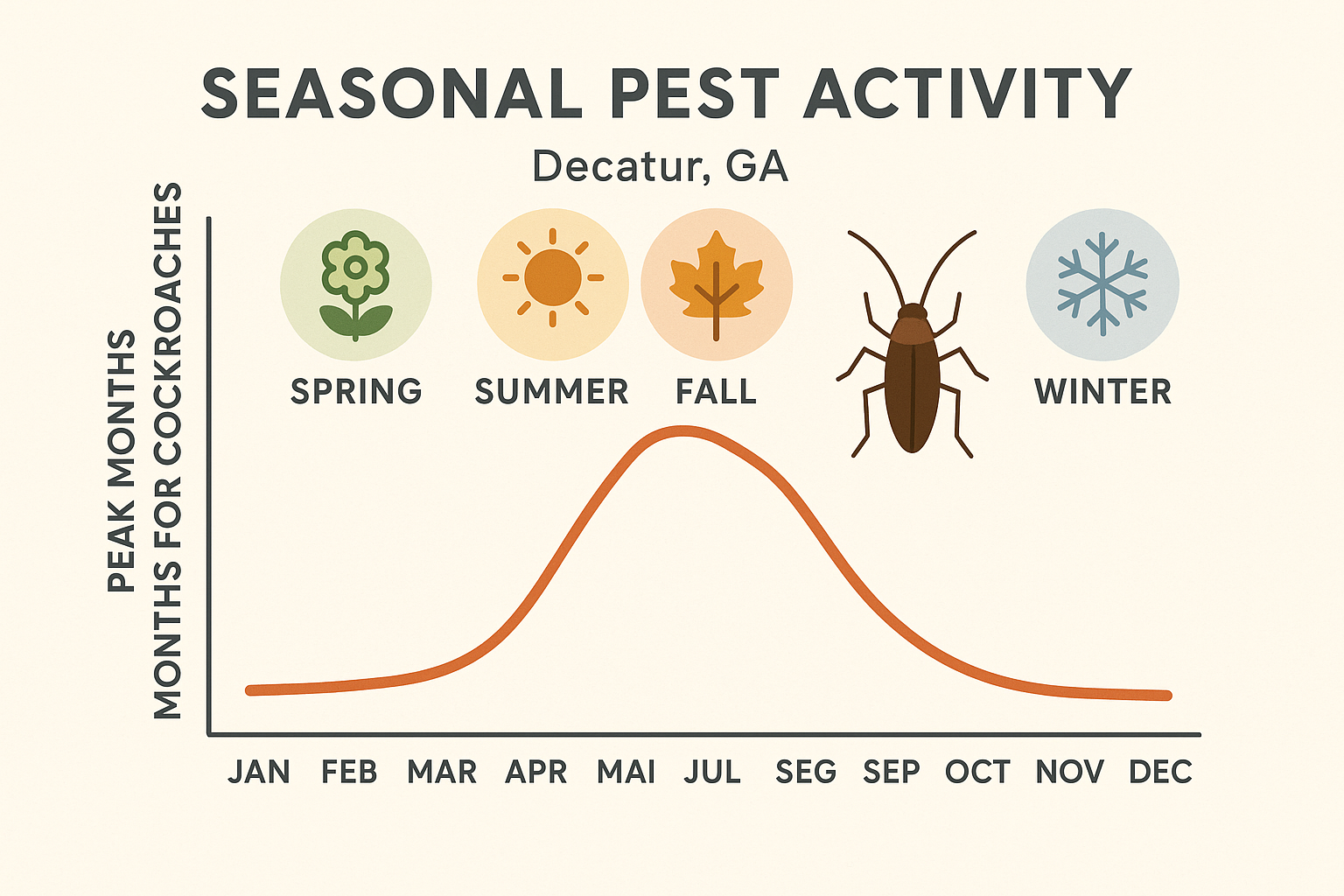
Local pest‑monitoring data collected by Anthem Pest Control shows a clear surge in cockroach sightings from early June through the end of September. During these months:
- Temperatures consistently top 80°F (27°C), accelerating egg hatching.
- Summer thunderstorms raise indoor humidity, creating ideal shelter conditions.
- Homeowners tend to open windows and doors, unintentionally inviting outdoor roaches inside.
In fact, the number of service calls for cockroach problems spikes by roughly 45 % compared with the rest of the year. The line graph below illustrates this summer peak, with icons marking the months of highest activity.
Low‑Activity Periods: Winter Doesn’t Mean Safe
Even when outdoor temperatures dip below 50°F (10°C) in December and January, indoor environments stay warm enough for cockroaches to survive. They retreat into heated spaces—kitchens, laundry rooms, and HVAC ducts—where they can overwinter in a dormant yet viable state. This is why homeowners often see a “second wave” of activity in late winter, just as the thermostat is turned down and moisture from melting snow begins to seep into basements.
Key reasons winter remains risky:
- Heated homes provide constant warmth. Cockroaches can live for weeks without food, relying on water from condensation or leaky pipes.
- Reduced human activity means fewer chances to spot early signs, allowing populations to grow unnoticed.
- Structural cracks formed by freeze‑thaw cycles create new entry points for roaches seeking shelter.
Practical Timing Tip: Inspect Before the Summer Surge
To stay ahead of the seasonal boom, schedule a professional inspection early May as part of a proactive cockroach control Decatur plan, before temperatures consistently climb above 75°F (24°C). This timing gives you two advantages:
- Early detection. A technician can locate hidden nests, seal entry points, and apply a pre‑emptive treatment that interrupts the breeding cycle.
- Cost efficiency. Addressing the problem before the peak reduces the amount of insecticide needed, translating into lower service fees.
During the inspection, ask the pest professional to:
- Check for moisture sources—dripping faucets, condensation around appliances, and clogged drains.
- Identify common harborages such as under sinks, behind appliances, and inside wall voids.
- Set up monitoring stations that can alert you to any early summer activity.
By aligning your maintenance schedule with Decatur’s climate patterns, you turn the seasonal advantage into a proactive defense. A brief May inspection can keep cockroaches at bay throughout the hot months, giving you peace of mind and a pest‑free home all year long.
Treatment Options and Pricing for Cockroach Control
When it comes to kicking cockroaches out of a Decatur home, the right treatment method can make all the difference for effective cockroach control Decatur homeowners can rely on. At Anthem Pest Control, we combine proven products with a strategic approach, so you know exactly what you’re paying for and why it works.
Common Treatment Modalities
Below is a quick rundown of the four primary tools we use, along with the strengths and limitations you’ll want to weigh before deciding.
- Bait Stations – Small containers filled with slow‑acting poison that roaches carry back to their colonies.
- Pros: Excellent residual action, low visibility, safe around pets and children when placed correctly.
- Cons: Takes 3‑7 days to see a noticeable drop, less effective if roaches avoid the bait locations.
- Gel Applications – A concentrated gel applied in cracks, crevices, and behind appliances.
- Pros: Fast‑acting (often within 24 hours), can be targeted to high‑traffic hideouts, works well for heavy infestations.
- Cons: Requires precise placement, may need re‑application after cleaning, caution around food‑prep areas.
- Dusts (Silica, Boric Acid) – Powdery products that desiccate or poison roaches on contact.
- Pros: Long‑lasting residual effect, ideal for voids and wall voids where liquids can’t reach.
- Cons: Can be messy, not recommended in areas where pets or small children play, effectiveness drops if the dust is disturbed.
- Integrated Pest Management (IPM) – A holistic program that blends monitoring, sanitation advice, and multiple treatment types.
- Pros: Addresses the root cause, reduces future outbreaks, often uses eco‑friendly products.
- Cons: Requires homeowner cooperation on cleaning and exclusion, may involve a higher upfront cost.
Service Tiers Explained
We recognize that every home and budget is different, so we’ve built three clear‑cut service tiers. All tiers include a professional inspection and a detailed action plan.
- Basic – One‑time treatment using the most appropriate modality for your situation, plus a limited follow‑up call to confirm results.
- Standard – Includes the Basic treatment plus a monitoring visit, two scheduled follow‑up treatments, and a 90‑day warranty that covers any re‑infestation.
- Premium – Our most comprehensive option: a full IPM program, unlimited technician visits for one year, preventive education for the household, and a lifetime guarantee on the treated area.

Factors That Can Affect the Final Price
While the infographic gives a solid baseline, real-world pricing for cockroach control Decatur can shift based on a few key variables:
- Home Size – Larger square footage or multi‑level homes require more product and longer technician time.
- Infestation Severity – A light sighting may be handled with a single bait placement, whereas a heavy infestation could need multiple gels, dusts, and repeat visits.
- Custom Plans – Some homeowners request specialized eco‑friendly formulas, pet‑safe products, or integration with other pest‑control services, which can adjust the cost.
Evaluating Value Beyond the Price Tag
Choosing a pest‑control partner isn’t just about the dollar amount on the invoice. Consider these value drivers when comparing quotes:
- Technician Expertise – Certified technicians who understand cockroach biology can pinpoint nesting sites faster and apply the right product at the right concentration.
- Guarantees & Warranties – A robust warranty signals confidence in the treatment’s durability and saves you money if the roaches return.
- Eco‑Friendly Products – Low‑toxicity options protect your family and pets while still delivering a lethal blow to the infestation.
- Education & Prevention – The Premium tier includes a home‑owner guide on sanitation, moisture control, and exclusion techniques—knowledge that pays dividends long after the last visit.
By weighing the modality pros and cons, matching the service tier to your home’s needs, and looking beyond the headline price, you’ll secure a solution that truly eliminates cockroaches and keeps them out for good. Ready to get a personalized quote? Give Anthem Pest Control a call at 877‑371‑8196 or visit our website for a free, no‑obligation estimate.
Protect Your Home Today with Anthem Pest Control
German cockroaches aren’t just a nuisance; they carry allergens, trigger asthma, and can contaminate food with bacteria that make families sick. Because they reproduce quickly—an adult can lay up to 40 eggs at a time—delaying treatment lets a tiny sighting explode into a full‑blown infestation. Acting fast protects your loved ones and keeps your kitchen safe.
The ideal window for decisive action is early spring through late summer, when the insects are most active and searching for food and water inside your home. During this period, the most effective treatments combine a targeted gel bait that workers carry back to hidden harborages with a residual spray applied to cracks, crevices, and baseboards. This two‑pronged approach eliminates the current generation and prevents the next one from emerging.
When you choose Anthem Pest Control, you’re partnering with a team that knows Decatur’s unique housing styles, climate patterns, and common cockroach hideouts. Our certified technicians use EPA‑approved, low‑toxicity products that safeguard children and pets while delivering lasting results. And because we believe in transparency, you’ll receive a clear, upfront price list—no hidden fees, no surprise add‑ons.
Ready to take the next step? Contact us for a free, no-obligation quote and let our experts provide reliable cockroach control Decatur homeowners can trust before the roach season gets out of hand. Call us today at 877-371-8196 or visit our website to schedule your service.