Emergency Ant Situations in Vinings Homes
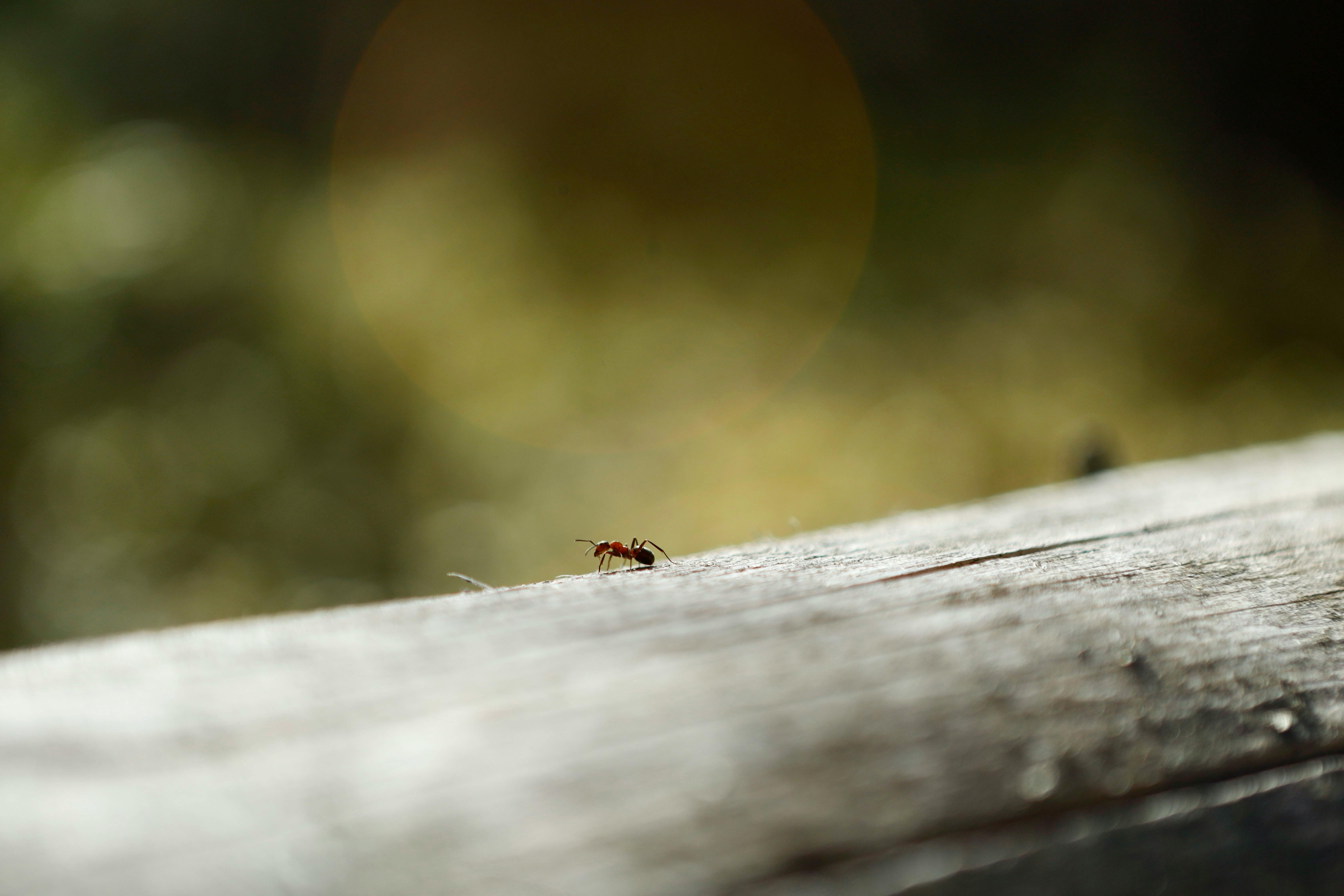
When a handful of ants appears in the kitchen, most homeowners think it’s a minor nuisance that can be swept away with a quick wipe. In Vinings, however, that small line can quickly turn into an emergency ant control Vinings situation—a scenario where the infestation expands beyond a single room, contaminates food supplies, and threatens the structural integrity of the home.
An emergency ant situation typically exhibits three tell‑tale signs:
- Large colonies: Hundreds to thousands of workers moving in coordinated trails, often visible on walls, countertops, and even in attic spaces.
- Food contamination: Ants forage for sugars, proteins, and grease, leaving behind bacterial residues that can spoil pantry items and create health hazards.
- Rapid spread: Colonies that leap from the kitchen to bedrooms, bathrooms, and crawl spaces within days, indicating a species with aggressive foraging behavior such as carpenter or odorous house ants.
Unchecked ant activity is more than an inconvenience. The health risks stem from the microbes ants transport on their bodies and in their gut. When they infiltrate food containers, they can introduce Salmonella, E. coli, and other pathogens that jeopardize family health, especially for children and seniors. Beyond food safety, certain ant species—most notably carpenter ants—excavate wood to create satellite nests. Over time, this can weaken structural supports, cause unseen damage to framing, and lead to costly repairs.
The urgency isn’t just a local perception; it’s backed by national data. According to the CDC, approximately 1 in 5 U.S. households reports ant problems each year. That statistic translates to thousands of homes in the Vinings area facing potential emergencies, especially during the warm, humid months when ant colonies thrive.
Because ant infestations can evolve from a few trail followers to a full‑blown emergency in a matter of days, immediate action is essential. Prompt identification allows you to:
- Secure food storage by sealing containers and cleaning surfaces.
- Locate the colony’s entry points and prevent further spread.
- Decide whether a DIY approach can contain the problem or if professional intervention is required.
In the sections that follow, we’ll walk you through the step‑by‑step process of recognizing ant species, assessing the severity of the infestation, and choosing the right treatment—whether it’s a targeted bait, a perimeter spray, or a comprehensive professional service from Anthem Pest Control. By the end, you’ll have a clear action plan that protects both your food safety and the structural health of your home.
Remember, the longer you wait, the more the colony expands, the more food it contaminates, and the deeper it may tunnel into wood. Acting now isn’t just about eliminating pests; it’s about safeguarding your family’s health and preserving the value of your Vinings property.
Common Ant Species Threatening Vinings
Vinings sits in the heart of Cobb County, where a mix of urban landscaping and mature woodlands creates the perfect backdrop for several ant species that can turn a routine nuisance into an emergency. Knowing which ants you’re dealing with—and where they tend to show up—helps you act fast and choose the right treatment before damage spreads.
1. Pavement Ants (Tetramorium caespitum)
Pavement ants are the classic “tiny brown” visitors you’ll spot marching along sidewalks, driveways, and the cracks of concrete foundations. Workers are usually 2‑3 mm long, uniformly brown, and form conspicuous trails that lead back to shallow nests under pavement or in the soil just beneath foundations. While they prefer the outdoors, they’ll slip inside through foundation gaps, especially in homes built on older slab foundations.
Why they become an emergency: A single colony can quickly expand to hundreds of thousands of workers, overwhelming a kitchen or bathroom floor. Their preference for moist, shaded cracks means they often appear near entry points that also attract termites, compounding structural concerns.
2. Carpenter Ants (Camponotus spp.)
Carpenter ants are the heavyweight champions of the ant world—large, ranging from 6 mm to 13 mm, with a glossy black or reddish‑brown exoskeleton. Unlike termites, they don’t eat wood; instead, they excavate it to create galleries for their nests. These galleries are often hidden inside decks, window frames, or the undersides of floor joists.
Why they become an emergency: Their nesting habits can silently undermine the structural integrity of decks, porches, and even load‑bearing beams. Homeowners may not notice damage until a deck sags or a ceiling panel cracks, at which point remediation becomes far more invasive and costly.
3. Pharaoh Ants (Monomorium pharaonis)
Pharaoh ants are the stealthy, light‑tan invaders that love indoor environments. Workers are minuscule—about 2 mm long—and their colonies can split and merge, forming sprawling networks across a home. They thrive in warm, humid spaces such as kitchens, hospitals, and laundry rooms, where food residues or sugary spills are abundant.
Why they become an emergency: Their ability to nest in wall voids, electrical outlets, and even HVAC systems makes them difficult to eradicate with DIY measures. Moreover, they are known vectors for bacteria, posing health risks in food‑preparation areas.
Geographic Hotspots in Cobb County
The map above, based on data from the local extension service, pinpoints three neighborhoods where each species is most frequently reported:
- Vinings proper: Pavement ants dominate the older, paved streets and sidewalks.
- West Cobb (including The Country Club): Carpenter ants are most common, thanks to the abundance of mature trees and wooden decks.
- The Country Club subdivisions: Pharaoh ants thrive in the tightly packed, climate‑controlled homes with extensive indoor plumbing.
Homeowners in these areas should keep a closer eye on the tell‑tale signs—tiny trails near foundations, wood that sounds hollow when tapped, or sudden ant swarms in kitchens.
Linking Species Traits to Treatment Strategies
Understanding each ant’s biology sets the stage for the control methods we’ll discuss later. Pavement ants respond well to perimeter baiting and sealing foundation cracks. Carpenter ants often require targeted wood‑boring treatments combined with structural repairs, while Pharaoh ants demand a combination of baits placed in wall voids and professional dust applications to reach hidden colonies.
By matching the ant’s habits to the right approach, Vinings homeowners can move from panic to a proactive plan—saving time, money, and peace of mind.
Immediate DIY Steps While Awaiting Professional Help
Discovering an ant invasion can feel like an emergency, especially when you’re waiting for a certified technician to arrive. While you hold the line, a few focused actions can shrink the colony, protect your family, and give the pest‑control pro valuable clues. Follow this step‑by‑step protocol, and you’ll stay safe, keep the ants at bay, and help the technician work faster and smarter.
1. Light the Trail
Grab a flashlight and dim the lights in the affected room. Ants travel in well‑defined trails that glow under a narrow beam. Walk the beam along countertops, baseboards, and around windows until you locate the most active path. Follow the line back to its source—usually a tiny crack, vent, or gap where the insects are slipping indoors.
2. Seal the Entry Points
Once you’ve pinpointed a crack or opening larger than ¼ inch, seal it immediately. Use a silicone‑based caulk for concrete or wood, and weather‑stripping for door frames and windows. This simple barrier cuts off the ants’ highway and forces any remaining workers to look for a new route, buying you precious time.
3. Eliminate Food Attractants
Ants are opportunistic feeders. Clear every potential buffet:
- Wipe down countertops and sweep floors to pick up crumbs.
- Store pet food in sealed containers or move dishes to a garage or pantry.
- Cover sugary drinks, fruit bowls, and open snack packages with lids or foil.
- Empty trash cans daily and use bins with tight‑fitting lids.
When food sources disappear, the colony’s foraging activity drops dramatically.
4. Deploy a Temporary Bait
Mix 1 part boric acid with 3 parts sugar water (e.g., ¼ cup sugar dissolved in ¾ cup warm water, then stir in a teaspoon of boric acid). Soak small pieces of cardboard or thick paper in the solution, then place them directly on or beside the ant trail—ideally within 12 inches of the entry point.
This DIY bait mimics the sweet foods ants love, while the boric acid disrupts their digestive system. A 2023 NPMA study found that similar homemade baits can shrink a colony by up to 60 % within 48 hours (NPMA, 2023).
5. Safety First
Never spray indoor chemical insecticides without proper personal protective equipment (gloves, goggles, and a mask). These products can linger on surfaces, posing inhalation or skin‑contact risks, especially for children and pets. Keep the boric‑acid bait out of reach—store it on a high countertop or in a sealed container when not in use.
6. Document What You See
Before the technician arrives, create a quick log of your DIY actions. Use a notebook or a phone note to record:
- Location of each ant trail (room, near window, under sink, etc.).
- Exact spots where you placed bait.
- Any changes in activity after 12‑hour intervals (more ants, fewer ants, no movement).
- Sealed entry points and the materials used.
This record helps the professional map the colony’s network, focus treatment on the most active zones, and avoid unnecessary chemicals.
7. Hold the Line Until the Pro Arrives
Maintain a tidy kitchen, keep food sealed, and refresh the bait every 24 hours if you notice the liquid drying out. Resist the urge to over‑spray or use harsh aerosols—your temporary bait and sealed gaps are already doing the heavy lifting. When the technician shows up, hand over your log and point out the sealed cracks; they’ll appreciate the groundwork and can tailor a targeted, long‑lasting solution for your Vinings home.
Why Professional Emergency Ant Service Is Essential
When an ant invasion hits your Vinings home, the first instinct is often to reach for store‑bought sprays or bait stations. While those products can provide temporary relief, they rarely address the root of the problem. Ant colonies build hidden nests deep within wall voids, floor joists, or even behind appliances. The queen, the colony’s reproductive engine, is fiercely protected; she can relocate to a new chamber if the nest is disturbed. Many species—such as carpenter ants, fire ants, and pavement ants—have distinct foraging patterns and moisture requirements that DIY solutions simply cannot target with precision.
Attempting to eradicate an infestation without professional insight often leads to a false sense of security. Homeowners may see a few workers disappear after applying a spray, yet the colony’s satellite nests remain untouched, allowing the ants to rebound within days. Moreover, some ant species release pheromones when threatened, which can actually attract more workers and expand the infestation. Without knowledge of these species‑specific behaviors, a DIY approach can inadvertently make the problem worse.
Anthem Pest’s Rapid‑Response Edge
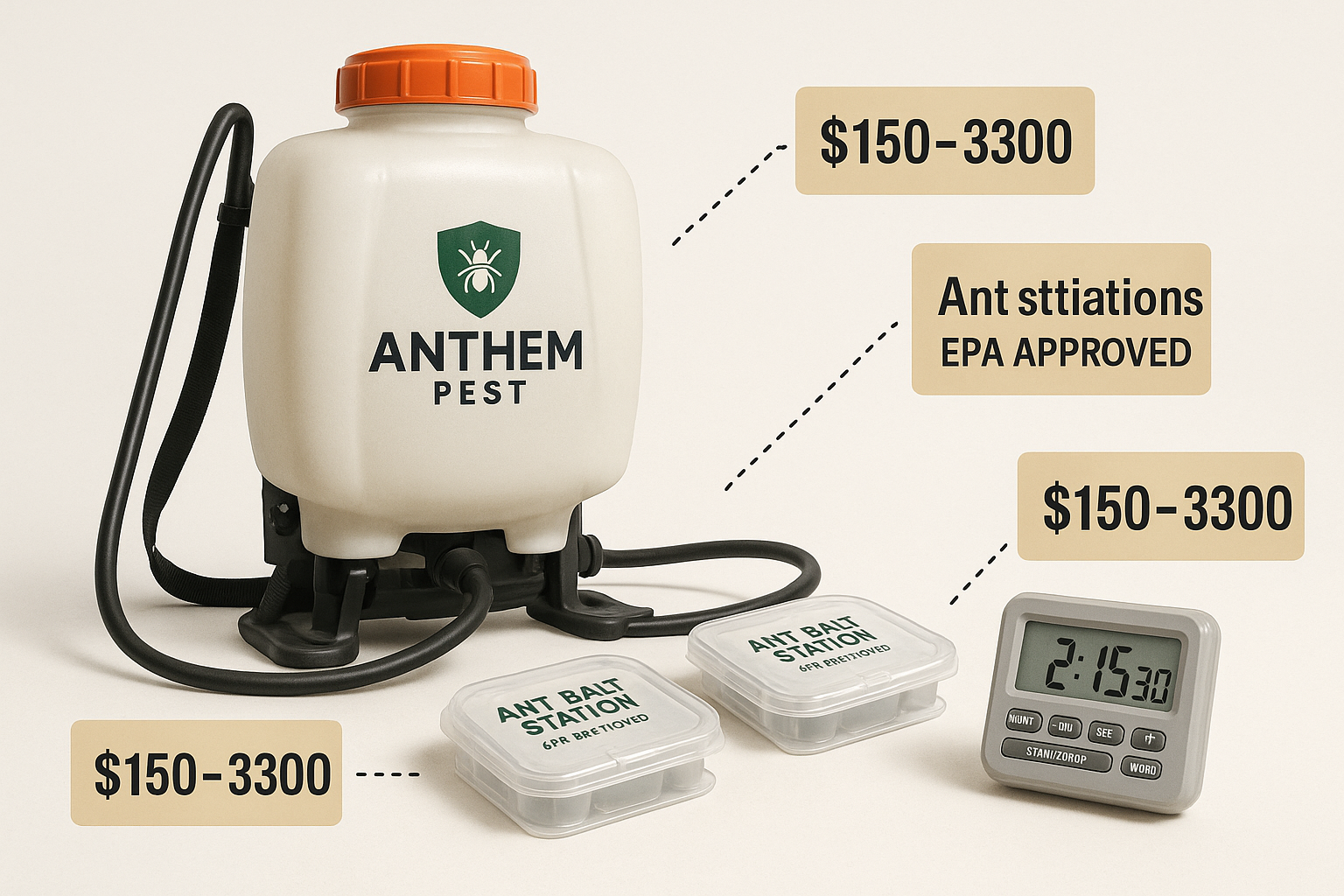
Anthem Pest understands that ant emergencies demand immediate action. Our team guarantees a 24‑hour response window, meaning a licensed technician will be at your door within a day of your call. All technicians are fully certified and use only EPA‑registered products that are proven effective against the most stubborn ant species while remaining safe for children and pets. This rapid containment strategy protects both your food supplies and the structural integrity of your home, preventing costly wood damage that carpenter ants can cause in as little as a few weeks.
Transparent Pricing You Can Trust
We believe homeowners should never be surprised by hidden fees. Our pricing structure starts with a $75 emergency call‑out fee, which covers the initial inspection, species identification, and a tailored treatment plan. Full treatment costs then range from $150 to $300, depending on the ant species involved and the size of the infestation, as outlined in the 2024 Georgia Pest Industry Association guide. This clear, upfront pricing lets you weigh the cost of professional service against the potential expense of ongoing DIY attempts that often fail.
“We prioritize rapid containment to protect food safety and structural integrity.” – Anthem Pest
Professional Tools and Guarantees
Our technicians arrive equipped with industry‑grade backpack sprayers that deliver a uniform coating into hard‑to‑reach cracks and voids—areas a consumer spray can never penetrate. Calibrated bait stations are placed strategically based on the colony’s foraging trails, ensuring that worker ants carry the toxicant back to the queen and eliminate the nest from the inside out. After the initial treatment, Anthem Pest schedules follow‑up visits at no extra charge to verify that the colony has been fully eradicated and to address any lingering activity.
Choosing a professional emergency ant service isn’t just about killing a few visible ants; it’s about breaking the entire colony’s life cycle, safeguarding your home’s health, and doing so with a transparent price tag you can rely on. In Vinings, where humid summers and mild winters create a perfect breeding ground for multiple ant species, the expertise and rapid response of Anthem Pest can be the decisive factor between a one‑time fix and a long‑term peace of mind.
The Ant Treatment Process from Inspection to Follow‑Up
When an ant invasion shows up at your doorstep, the fastest way to stop it is a clear, step‑by‑step service plan. At Anthem Pest Control we begin every job with a data‑driven inspection, move to a targeted treatment that matches the species you’re dealing with, and finish with a warranty‑backed follow‑up that guarantees lasting peace of mind making emergency ant control Vinings simple and reliable for every homeowner.
1. Inspection – Finding the Hidden Colony
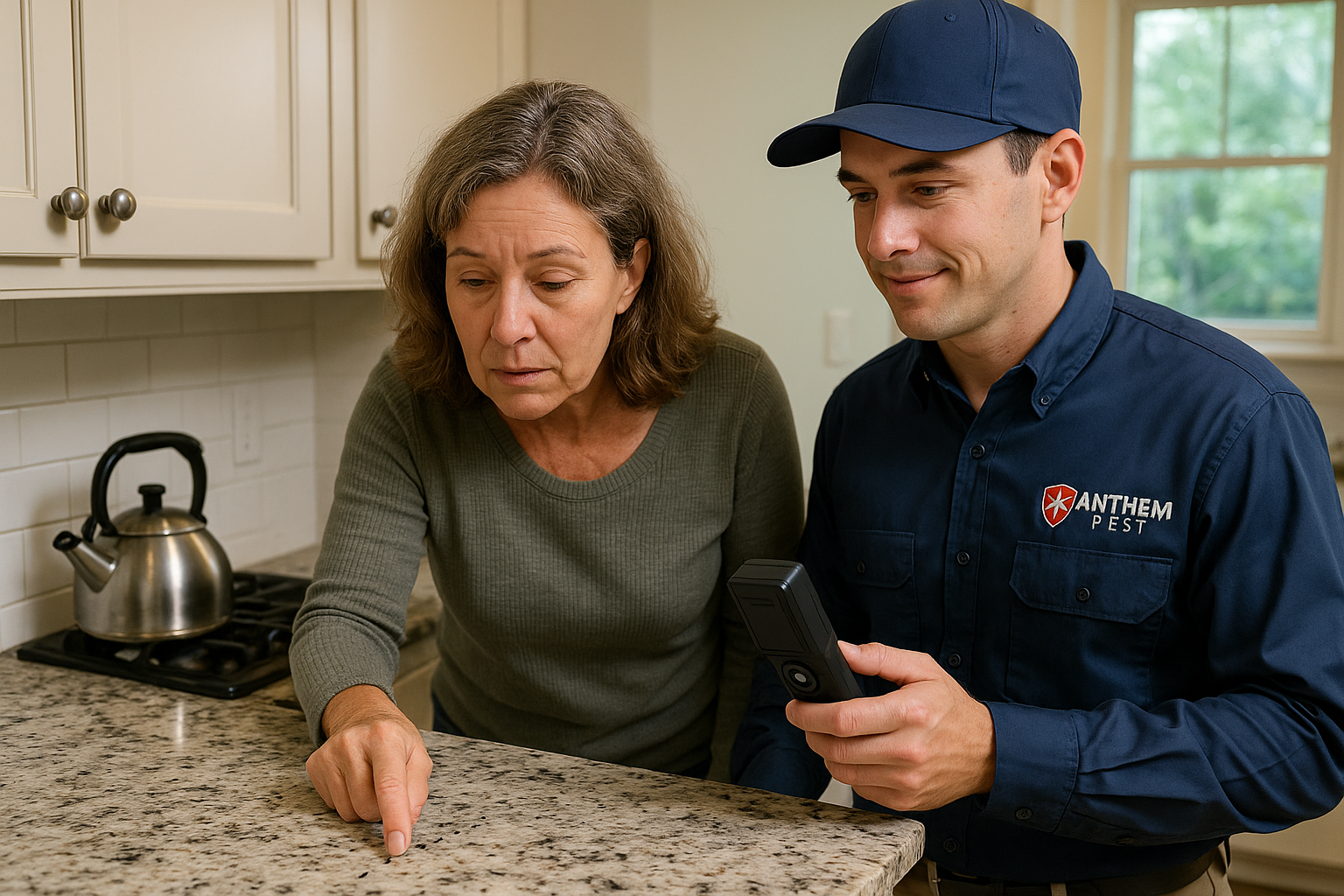
Our certified technicians arrive equipped with three core tools that turn a guess‑work job into a precise operation:
- Moisture meter: Ants love moisture. The meter pinpoints damp spots in foundations, crawl spaces, and under decks where colonies often nest.
- Infrared camera: Heat signatures reveal active tunnels inside walls and floor voids, even when you can’t see a single ant.
- Ant‑trail mapping: Using a small, non‑toxic powder, we trace the exact routes workers follow from the entry point to the colony. This map becomes the blueprint for the treatment.
While we’re on site, we also identify the ant species—whether it’s the fast‑moving pavement ant, the moisture‑loving carpenter ant, or the invasive Argentine ant. Knowing the species is the key to choosing the right product and placement strategy, a point we covered in Part 2.
2. Treatment Options – Tailored to the Species
Once the inspection is complete, we move to the “action” phase. Our toolbox includes three primary methods, each selected based on the colony’s location and the ant’s biology:
- Perimeter spray: A low‑odor, EPA‑registered solution is applied around the home’s foundation, driveway, and landscaping edges. This creates a barrier that repels foraging ants before they can cross onto your property.
- Targeted bait stations: For species that rely on worker‑carried food (like odorous house ants), we place bait stations directly along the mapped trails. The workers take the bait back to the queen, collapsing the colony from the inside.
- Dust applications: In wall voids, under decks, and other concealed spaces we use a dust formulation that stays active for months. The dust settles into cracks and crevices, killing ants that wander through.
For example, if the inspection reveals a carpenter ant colony nesting in a dry wood void, we prioritize dust applications and a few bait stations near the void entrance. Conversely, a pavement ant infestation that’s primarily outdoors calls for a robust perimeter spray and strategic bait placement along sidewalks.
3. Follow‑Up Schedule – Proof That It Works
Ant control doesn’t end when the spray can is emptied. Our warranty‑backed follow‑up ensures the job stays done:
- 7‑day check: A quick revisit to confirm the immediate efficacy of the treatment. We look for any surviving workers, re‑apply dust if needed, and adjust bait placement.
- 30‑day check: This visit verifies residual activity. We assess whether the colony has fully collapsed and whether the perimeter barrier is still intact.
- Written warranty: All treatments come with a documented guarantee. If ants reappear within the warranty period, we return at no extra charge.
Every visit is recorded in a service log that includes temperature, humidity, and any new ant sightings. This documentation not only protects you under the warranty but also creates a baseline for future preventive planning.
4. Real‑World Success – A Vinings Case Study
Homeowner profile: A family in the West Cobb area of Vinings reported more than 200 ant sightings over a two‑week span, primarily along the kitchen baseboards and under the deck.
What we did: After a thorough inspection, our technician identified an Argentine ant colony thriving in a moist crawl‑space void. We applied a perimeter spray around the foundation, installed five bait stations along the mapped trails, and dusted the crawl‑space voids.
Results: The 7‑day check showed a 90 % reduction in visible ants. By the 30‑day visit, the homeowner reported zero sightings. Two weeks after the final check, the service log confirmed a clean environment, and the written warranty was issued for the next 12 months.
This case illustrates how a data‑driven approach—inspection, species‑specific treatment, and disciplined follow‑up—delivers measurable results, even for high‑volume infestations.
5. Why Documentation Matters
Every ant problem leaves a trail of data: moisture readings, infrared images, trail maps, and post‑treatment counts. By keeping these records, Anthem can:
- Identify recurring problem areas before they become full‑blown infestations.
- Adjust future treatment plans based on seasonal trends unique to Vinings.
- Provide you with a transparent report that shows exactly what was done, why, and how effective it was.
Think of the service log as a health record for your home. When you call us for the next pest concern, we can instantly reference past findings and skip straight to the most effective solution.
In short, the ant treatment process at Anthem Pest Control blends cutting‑edge inspection tools, species‑specific products, and a rigorous follow‑up schedule. The result? A home that stays ant‑free, backed by a warranty you can trust.
Year‑Round Preventive Measures for Ant‑Free Homes
Even after a successful ant treatment, the battle isn’t over. Ants are opportunistic and will return the moment they find a food source or a crack to slip through. By establishing a year‑round maintenance routine, you deny them the conditions they need to rebuild a colony, saving you time, money, and the frustration of another emergency call.
Landscape Maintenance
Plants, mulch, and irrigation are the most common bridges between your yard and the interior of your home. Keep all vegetation trimmed at least 2 feet away from the foundation; this creates a dry, open buffer that discourages ants from using roots as highways. Remove excess mulch or wood chips that sit directly against the house, and replace them with a narrow gravel strip if you need a decorative ground cover. Finally, inspect your irrigation system each month and repair any leaky lines or sprinkler heads, because moisture‑laden soil is a magnet for ant activity. Also,
Local Resources, Regulations, and Helpful Links
When an ant invasion strikes, knowing where to turn for reliable information can save you time, money, and frustration. Below are the top resources that every Vinings homeowner should bookmark, plus a quick rundown of the regulations that keep our treatments safe and effective.
Key Resources for Vinings Homeowners
- Cobb County Extension Service – Ant Fact Sheet
The Extension Service provides a concise, species‑specific guide that helps you identify the ant you’re dealing with and outlines practical control steps. The fact sheet is downloadable in PDF format for offline reference. Download the Cobb County Ant Fact Sheet - EPA Indoor Pest‑Management Guidelines
The U.S. Environmental Protection Agency outlines best practices for indoor pest control, emphasizing integrated pest management (IPM), reduced pesticide exposure, and proper ventilation. These guidelines are the benchmark for all professional pest‑control companies in the United States, including Anthem Pest. Read the EPA Indoor Pest‑Management Guidelines - CDC Ant‑Related Health Information
While ants are rarely disease vectors, certain species can trigger allergic reactions or exacerbate asthma. The Centers for Disease Control and Prevention offers a clear overview of health risks, symptoms to watch for, and steps to protect your family. Visit the CDC Ant Health Page
Understanding Local and Federal Regulations
The state of Georgia, in partnership with the EPA, enforces strict rules on pesticide registration, application methods, and record‑keeping. These regulations ensure that any treatment performed in your home minimizes environmental impact and protects occupants from unnecessary chemical exposure.
Anthem Pest adheres to every applicable regulation:
- All products used are EPA‑approved for indoor residential use.
- Our technicians are certified through the Georgia Pest Management Board and receive ongoing training on the latest IPM techniques.
- We maintain detailed treatment logs, which are available to you upon request, to demonstrate compliance with state reporting requirements.
How to Make the Most of These Resources
Start by downloading the Cobb County Extension fact sheet. It includes a handy identification key—look for the size of the worker ant, the shape of its thorax, and the pattern of its antennae. Knowing whether you’re facing pavement ants, carpenter ants, or fire ants will dictate the most effective treatment approach.
Next, skim the EPA’s indoor pest‑management guidelines. The document highlights three core principles you can apply yourself:
- Prevention first: Seal cracks, eliminate standing water, and keep food stored in airtight containers.
- Monitor regularly: Use bait stations or sticky traps to detect early activity before colonies explode.
- Targeted treatment: Apply pesticides only where needed, following label directions and safety precautions.
Finally, check the CDC page if you notice any unusual skin reactions, respiratory symptoms, or if you have vulnerable family members such as children or seniors. The CDC’s quick‑reference checklist can help you decide whether a professional inspection is warranted.
Why Trust Anthem Pest with Your Ant Problems?
Because we blend local expertise with national standards. Our technicians use EPA‑approved products, follow Georgia’s strict pesticide regulations, and apply an integrated pest‑management strategy that reduces chemical reliance. When you call Anthem Pest, you’re getting a partner who respects both your home’s safety and the environment.
Keep these links handy, download the fact sheet, and feel confident that you have the tools and knowledge to tackle ant issues—whether you’re handling a minor sighting yourself or calling in the pros for a rapid, regulated response.
Take Action Now – Fast Ant Relief with Anthem Pest Control
When ants appear in your Vinings home, the problem rarely stays small. Some species carry bacteria that can contaminate food, while others, like carpenter ants, tunnel through wood and jeopardize structural integrity. Waiting even a few days can turn a manageable nuisance into a serious situation—this is why emergency ant control Vinings is essential to protect your home and family.
Ants are more than a nuisance; carpenter ants can hollow out beams, fire ants can sting, and odorous house ants can contaminate surfaces. Left unchecked, colonies multiply exponentially, making eradication harder and more expensive.
Quick DIY Steps You Can Start Today
- Locate the trail and wipe it with soapy water to erase pheromone scents.
- Seal entry points with caulk or weather‑stripping to block further access.
- Set up ant bait stations in corners, under sinks, and near outdoor lights; replace them every 48 hours.
- Keep countertops, floors, and pet dishes free of crumbs; store food in airtight containers.
These actions buy you time, but they are only a stop‑gap. Even with diligent baiting, a hidden nest can stay out of sight for weeks. Professional technicians locate the queen and treat the entire colony, ensuring the problem doesn’t reappear.
Why Choose Anthem Pest’s 24‑Hour Emergency Service?
Anthem Pest Control understands that ant emergencies don’t wait for business hours. Our 24‑hour response team arrives within the hour, evaluates the infestation, and applies a targeted treatment plan that eliminates the colony at its source. We pride ourselves on transparent pricing—you’ll receive a detailed quote before any work begins, with no hidden fees. Our technicians use EPA‑approved products that are safe for children and pets, and our success rate is backed by thousands of satisfied homeowners across the country.
We stand behind every treatment with a satisfaction guarantee—if ants return within 30 days, we’ll re‑treat at no extra charge.
Get a Free Emergency Quote Today
Ready to protect your family and home? Call us now at 877‑371‑8196 for a free emergency ant control Vinings quote or to schedule a same‑day inspection. Our friendly staff will walk you through the process, answer any questions, and set up a treatment that fits your schedule and budget.