
Why Earwigs Suddenly Appear in Druid Hills Homes
Earwigs may seem like harmless night‑crawlers, but understanding their biology explains why they can turn a tidy yard into a surprise infestation. These insects are nocturnal omnivores; they hunt for decaying plant matter, insects, and even the tender roots of seedlings under the cover of darkness. Their flattened, moisture‑loving bodies allow them to slip into tight cracks, crawl beneath siding, and hide in the damp mulch of garden beds.
Georgia’s climate is a perfect match for that lifestyle. The state’s hot, humid summers and frequent spring showers keep soil and leaf litter consistently moist—exactly the environment earwigs need to lay eggs and develop. When a rainstorm raises the ground moisture, female earwigs can deposit up to 70 eggs in a single clutch, and the hatchlings emerge within weeks. In Druid Hills, where residential lawns are lush and irrigation is common, those conditions become a year‑round breeding ground.
Data from the 2024 University of Georgia Extension pest‑survey backs this up: Georgia ranked in the top five states for earwig sightings during the rainy months of April through July. The survey recorded a 42 % increase in reports compared with the previous year, highlighting a clear correlation between precipitation spikes and earwig activity.
Why act fast? Earwig populations can double in as little as two weeks when food and moisture are abundant. That rapid growth means they can quickly move from harmless garden guests to pests that chew young seedlings, damage ornamental plants, and even gnaw at the mortar of home foundations. Left unchecked, a small night‑time nuisance can evolve into a visible problem that costs you time and money.
Because the window for effective intervention closes quickly, the emergency steps that follow are designed to stop the surge before it spreads. In the next section, we’ll walk you through a proven, homeowner‑friendly plan to reclaim your yard and protect your home’s structural integrity.
Spotting the Signs of a Growing Infestation
When the sun sets, earwigs become active and you may start to notice small, dark insects darting across walls, skittering along the floor of a basement, or gathering near outdoor lights. These nocturnal visitors are usually ½‑inch long, with a flattened body and the signature pair of pincers at the rear. If you see a sudden flurry of them after a rainy night, it’s a clear signal that a population is establishing itself inside or just outside your home.
Earwig droppings are another early clue. Look for tiny, black specks that resemble pepper grains on windowsills, along baseboards, or in the mulch surrounding your garden beds. In addition, earwigs love tender foliage; you may notice chewed seedlings, ragged leaf edges, or wilting young plants. The damage is often superficial, but a steady pattern of bite marks tells you the insects are feeding and reproducing nearby.
Understanding where they get in is half the battle. Common entry points include:
- Basement vents and exhaust fans that lack proper screens.
- Cracks around doors, especially where weather‑stripping is worn.
- Gaps in window screens or loose screen frames.
- Seams in the foundation where mortar has deteriorated.
Each of these openings provides a dark, humid pathway that earwigs love.
Consider the experience of a homeowner in the Druid Hills Historic District. After a heavy July thunderstorm, they awoke to find roughly 200 earwigs clustered on their kitchen counter and in the pantry. The sudden surge was traced back to a cracked vent cover in the basement that had gone unnoticed during routine cleaning.
| Indicator | What to look for |
|---|---|
| ✓ Night sightings | Small, dark insects moving on walls, floors, or near lights after dark |
| ✓ Droppings | Fine, black specks on baseboards, windowsills, or mulch |
| ✓ Seedling damage | Chewed edges, wilted young plants, ragged leaves |
| ✓ Entry points | Cracks around doors, open vent covers, screen gaps, foundation seams |
Keeping an eye on these signs will let you act before the infestation spreads. A quick visual scan of the areas above, paired with the checklist, gives you a practical, homeowner‑friendly way to catch earwigs early and call Anthem Pest Control for a targeted, safe solution.
What to Do Right Now – 5 Quick Steps

Step 1 – Reduce Moisture
Earwigs thrive in damp environments, so the first line of defense is to dry out any excess moisture around your home. Start by repairing leaky pipes, faucets, and roof leaks. Clean gutters and downspouts so water is directed at least six inches away from the foundation. If indoor humidity is above 60 %, run a dehumidifier in basements, crawl spaces, and closets until the EPA indoor moisture guideline (30‑50 %) is reached. A drier house removes the shelter earwigs need to reproduce.
Step 2 – Clear Hiding Spots
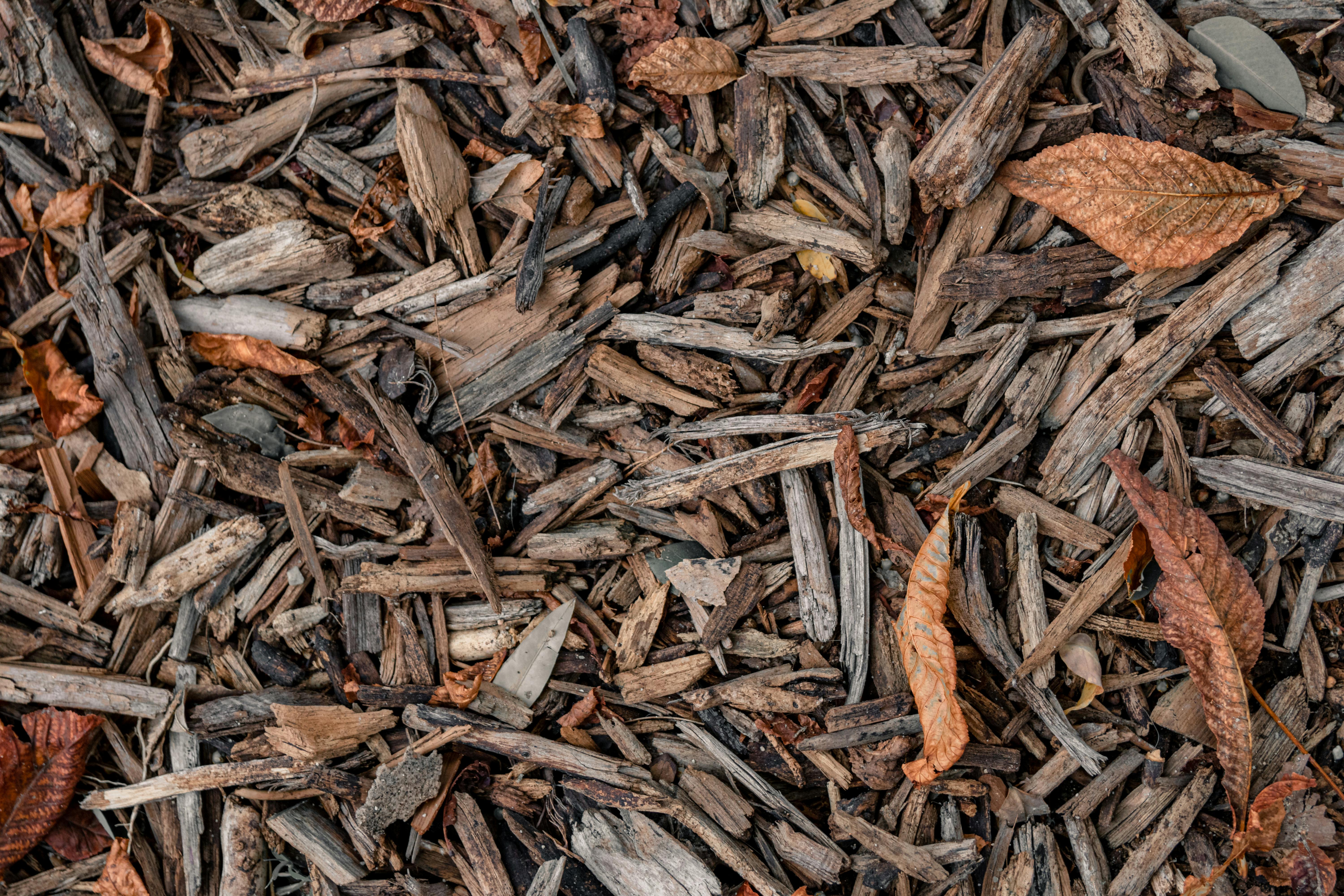
Outdoor debris provides perfect night‑time shelters. Remove leaf litter, fallen branches, and any wood piles that sit within 10‑20 ft of the foundation. Druid Hills’ local landscaping ordinance limits mulch depth to 2 inches near the house; excess mulch should be pulled back or replaced with a thinner layer. Keep lawn edges trimmed and avoid stacking firewood against the exterior walls. By eliminating these refuge zones you cut the earwig population before it can spill indoors.
Step 3 – Seal Entry Points
Earwigs can squeeze through cracks as small as a pencil lead. Inspect the perimeter for gaps around windows, utility penetrations, and the base of exterior walls. Apply a bead of silicone caulk (costing roughly $5‑$15 per tube) to seal each opening. Install door sweeps on all exterior doors; a standard sweep runs $20‑$35 and blocks the low‑lying entry points earwigs favor. Use a flashlight and a mirror to locate hidden cracks behind siding or under siding trim.
Step 4 – Deploy Traps
While you’re sealing the house, set up simple traps to catch any earwigs that have already entered. Roll damp newspaper into tight cylinders, secure them with a rubber band, and place one every 100 sq ft of floor space—roughly one trap per 10‑12 ft of wall. Sticky traps purchased at a hardware store work equally well; position them along baseboards, under sinks, and near entry points. Check traps daily, dispose of captured insects in a sealed bag, and replace the traps until activity drops.
Step 5 – Hold Off on Chemicals
Resist the urge to spray insecticides yourself. Chemical treatments can be hazardous to pets, children, and the environment, and they often mask the true extent of an infestation. Waiting for a professional assessment lets Anthem Pest Control recommend a targeted, low‑risk solution that addresses the problem without unnecessary exposure. Documenting what you’ve done also gives the technician a clear picture of your home’s current condition.
Tools & Estimated Cost
- Caulk gun and silicone caulk ($5‑$15)
- Dehumidifier (rental or purchase, $30‑$50 for a weekend)
- Gloves and safety goggles ($5‑$10)
- Door sweeps ($20‑$35 each)
- Newspaper rolls or sticky traps ($10‑$15)
Overall, a homeowner can expect to spend roughly $50‑$100 on supplies for an effective emergency response.
Document the Infestation
Take photos of the areas where earwigs are most active, note the locations of traps, and keep a short log of dates and observations. This documentation speeds up the professional evaluation, helps the technician pinpoint hot spots, and may even qualify you for a discounted follow‑up service from Anthem Pest Control.
Why Call Anthem Pest Immediately
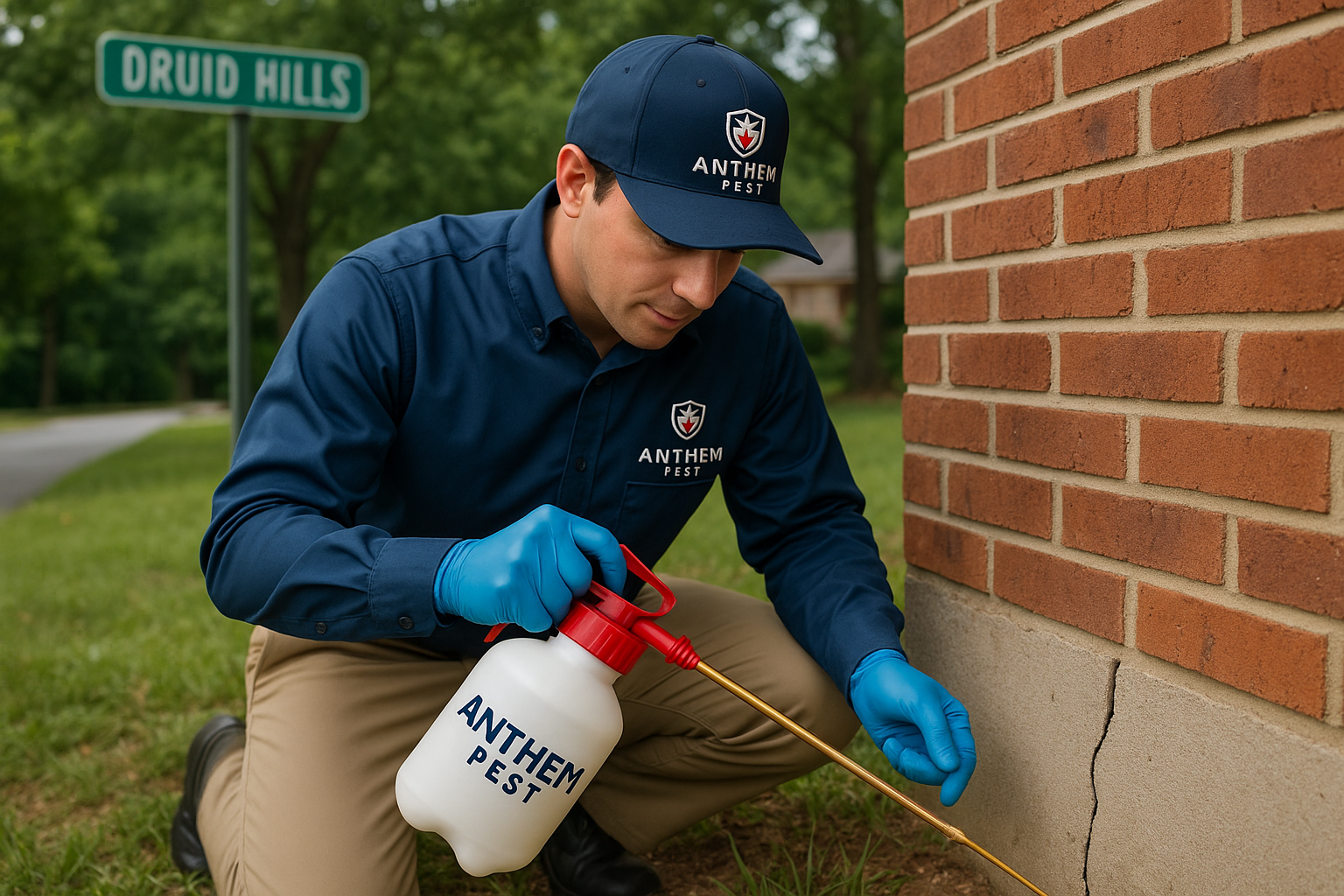
When earwigs invade your Druid Hills home, every minute counts. Anthem Pest’s same‑day response guarantees that a fully licensed technician will be at your door within hours—not days—so you can stop the damage before it spreads to your garden, decks, or indoor spaces.
All of our technicians are state‑licensed and EPA‑registered, meaning they use only products that meet strict federal safety standards. This protects your family, pets, and the environment while delivering rapid, effective eradication of earwig colonies.
Our emergency earwig treatment is priced transparently at $150‑$250 for a standard 1,500‑sq‑ft home. If your property requires additional services—such as attic or crawl‑space treatment—we bill a straightforward $75 per hour. There are no hidden fees, and you’ll receive a detailed invoice before any work begins.
After the initial treatment, Anthem Pest conducts a guaranteed follow‑up inspection within 7‑10 days. Our technician will verify that the infestation is fully resolved and, if needed, apply a supplemental dose at no extra charge. This ensures you’re not left guessing whether the problem truly disappeared.
How Anthem Stands Apart from the Competition
| Company | Response Time | Pricing Transparency | Technician Certification |
|---|---|---|---|
| Anthem Pest | Same‑day (within 4 hrs) | Flat rate $150‑$250 + $75/hr extras | State‑licensed, EPA‑registered |
| Smart Solutions | Next‑day (24‑48 hrs) | Estimate after inspection | General pest license |
| Peachtree Pest | Same‑day (8‑12 hrs) | Variable pricing, hidden fees possible | State‑licensed |
| Noble Pest | 48‑72 hrs | Flat rate but no hourly add‑ons disclosed | EPA‑registered (limited) |
“I called Anthem Pest after discovering earwigs in my kitchen cabinets. They arrived the same afternoon, treated the whole house, and followed up a week later. The problem was gone, and the price was exactly what they quoted. I couldn’t have asked for faster service.” – Emily R., Druid Hills, GA
Beyond emergency relief, Anthem Pest can weave the treatment into a long‑term maintenance contract. This means you’ll receive regular inspections and preventative applications, keeping earwigs—and other pests—off your property year after year. The contract locks in today’s rates, so future emergencies won’t surprise you with higher costs.
Choosing Anthem Pest isn’t just about fixing a problem today; it’s about securing peace of mind for tomorrow. With unmatched response speed, clear pricing, certified technicians, and a follow‑up guarantee, we’re the fastest, most reliable option for Druid Hills homeowners facing an earwig emergency.
Druid Hills Weather Patterns That Trigger Earwigs
In Druid Hills, the rhythm of rain and temperature dictates when earwigs emerge from their hidden hideouts. Homeowners who understand these local patterns can act before the insects turn a harmless nuisance into a full‑blown infestation. The neighborhood’s micro‑climate, shaped by nearby creeks and mature trees, creates the perfect breeding ground for these nocturnal pests.
Spring Rain Peaks
Typical spring in Druid Hills brings two pronounced rain spikes: a late‑March to early‑April burst, followed by a second surge in mid‑May. These showers raise soil moisture to the level earwig females need to lay their egg capsules, kick‑starting the season’s first generation.
Summer Rain Peaks
Summer doesn’t let up. July and August often see heavy afternoon thunderstorms that saturate the loamy soils around historic homes. Consistently damp conditions prolong the larvae’s development, allowing multiple overlapping generations to flourish through September.
Breeding Cycle Sync
The earwig life cycle is tightly synced to moisture. Eggs hatch in 7‑10 days when the ground stays above 60 °F and remains wet. Larvae require nightly humidity to avoid desiccation, so each rain event essentially fuels a new wave of activity.
Emory University’s Green Spaces
Emory University’s 630‑acre campus borders the north side of Druid Hills, offering expansive lawns, ornamental gardens, and dense shrub borders. Those lush, irrigated areas act as a reservoir for earwigs, which readily migrate into adjacent residential yards during peak moisture periods.
Historic District Foundations
The historic district’s older homes sit on porous brick and stone foundations that retain water longer than modern concrete slabs. Cracks and mortar joints become highways for earwigs seeking shelter, especially after a week of steady rain.
High‑Risk Calendar
| Month | Risk Level |
|---|---|
| May | High |
| June | High |
| July | Very High |
| August | Very High |
| September | High |
| October | Moderate |
| November‑April | Low |
Targeted Preventative Tips
Armed with that timeline, homeowners can take a few neighborhood‑specific steps to keep earwigs at bay:
- Trim azalea bushes near the Decatur‑Druid Hills border to reduce low‑lying cover where earwigs hide.
- Keep the Peachtree Creek drainage swales clear of leaf litter and standing water.
- Avoid over‑watering ornamental beds; aim for deep, infrequent watering that allows the soil surface to dry between applications.
- Seal foundation cracks and apply a thin layer of sand around the perimeter to deter burrowing.
By matching your yard‑maintenance schedule to Druid Hills’ rain patterns, you cut off the moisture earwigs need to reproduce, turning a potential emergency into a routine preventive task.
Keep Earwigs Out Year‑Round
Earwigs may seem harmless, but when they multiply they can damage tender seedlings, chew on mulch, and create unsightly tunnels in your garden beds. The most reliable way to keep them at bay isn’t a one‑time spray—it’s a year‑round, integrated pest‑management (IPM) strategy that blends regular professional oversight with simple homeowner actions.
Quarterly Professional Inspections
Schedule a qualified technician to walk your property every three months. During each visit the expert will:
- Inspect moisture‑prone zones where earwigs love to hide.
- Check for cracks in foundations, siding, and walkways that provide easy entry points.
- Set and monitor low‑impact traps to gauge population levels.
- Provide a concise report with any recommended adjustments.
These inspections catch early activity before it escalates into an emergency call‑out.
Seasonal Mulch Replacement
Mulch is a favorite shelter for earwigs, especially when it stays damp for months on end. Replacing or turning over your mulch every 2–3 years disrupts their habitat and reduces the food sources they rely on. When you refresh the mulch, choose a coarse, well‑draining variety and spread it no deeper than three inches to discourage burrowing.
Landscape Fabric Under New Plantings
Installing a high‑quality landscape fabric beneath fresh beds creates a physical barrier that earwigs cannot easily penetrate. The fabric also improves drainage, which further deters moisture‑loving insects. Secure the edges with garden staples and cover the fabric with a thin layer of mulch for a tidy, long‑lasting solution.
Anthem’s Annual Maintenance Contract
For homeowners who want a hands‑off approach, Anthem offers a straightforward $199 per year maintenance package. The contract includes two visits per year, during which our technicians will:
- Perform a thorough moisture assessment and recommend corrective actions.
- Seal foundation cracks, gaps around windows, and entry points that earwigs exploit.
- Inspect and service all earwig traps, resetting them as needed.
- Provide a written summary of findings and any supplemental recommendations.
This proactive service often saves families the higher costs of repeated emergency treatments, which can run $250‑$400 per incident.
Evidence‑Based Practices
Our approach aligns with the NPMA 2023 earwig IPM fact sheet, which emphasizes regular monitoring, habitat modification, and targeted, low‑toxicity interventions as the most effective long‑term controls.
Why Prevention Pays Off
Investing in a structured IPM plan costs a fraction of what you’d spend on multiple emergency calls. By addressing moisture, sealing entryways, and maintaining clean planting beds, you cut earwig numbers before they become visible. In the long run, the $199 annual contract not only protects your garden’s health but also preserves the aesthetic appeal of your Druid Hills home, letting you enjoy a pest‑free yard all year long.
Quick Answers for Druid Hills Homeowners
-
Q: Are earwigs harmful to pets?
A: No known disease transmission, but they may bite if handled. Earwigs are primarily outdoor insects that feed on decaying organic matter. They rarely enter homes in large numbers, and they do not carry pathogens that affect dogs or cats. The only risk is a bite if a curious pet tries to chew or play with an earwig; the bite is usually a brief pinch that may cause minor redness. To keep pets safe, discourage them from hunting earwigs by sealing cracks and removing debris where earwigs hide. -
Q: How long does treatment last?
A: Residual protection typically 4‑6 weeks under normal moisture conditions. Professional earwig programs use a combination of perimeter sprays and soil‑active granules that continue to work as long as the environment stays moist enough for the product to stay active. In Druid Hills, where summer humidity can be high, you may see the protective window extend toward the upper end of that range. Excessive rain or a sudden dry spell can shorten effectiveness, so a follow‑up inspection after 4 weeks is a good practice to ensure the barrier remains intact. -
Q: Can I use DIY insecticide?
A: Low‑risk baits are acceptable, but professional products deliver stronger, safer results. Over‑the‑counter sprays may knock down a few earwigs, yet they often lack the residual chemistry needed to keep the population suppressed for weeks. If you choose a DIY route, select a label that specifically mentions earwigs, apply it to cracks, mulch and the garden perimeter, and wear protective gloves. For most Druid Hills homeowners, calling Anthem Pest means you get a formulation that penetrates the soil, a calibrated application, and a guarantee that the product meets state safety standards while protecting children and pets.
Take Action for Earwig Protection Today
When earwig spikes appear, every hour counts. The infestation can spread indoors, damage plants, and create noisy nights that keep you up. Acting fast can limit the damage, and these five quick DIY steps will buy you valuable time.
- Seal cracks around doors and windows.
- Clear mulch, leaves, and other debris.
- Place damp newspaper or cardboard traps under lights.
- Apply a low‑toxicity perimeter insecticide.
- Use yellow‑spectrum bulbs or reduce outdoor lighting.
Even with rapid DIY action, a full outbreak often needs professional help. Anthem Pest provides same‑day emergency service in Druid Hills, with transparent pricing and technicians who understand the quirks of local homes. Our crew arrives within hours, fully equipped to treat safely and set up a lasting barrier.
Call 877‑371‑8196 for a free, no‑obligation quote or to schedule a same‑day inspection. One call brings peace of mind and stops the earwig surge before it reaches your home.
We’re ready to protect your family and garden—no pressure, just reliable expertise when you need it. Enjoy a pest‑free yard and restful nights.