Why Every Minute Counts When Termites Invade
Vinings homeowners face a perfect storm of conditions that accelerate this damage. The area’s clay‑rich soil retains moisture, creating a highway for termite foragers. Warm, humid summers keep colonies active year‑round, and many neighborhoods contain homes built in the 1970s‑1990s whose foundations lack modern termite barriers.
These local factors matter because the United States loses an estimated $5 billion in property damage each year to termites, according to the 2024 EPA report. In Vinings, that national figure translates to countless families confronting costly repairs, lost home value, and the stress of living with a hidden infestation.
When termites breach a wall or floor joist, the structural integrity deteriorates long before any visible signs appear. Moisture‑damaged wood softens, screws loosen, and the load‑bearing capacity of a beam can drop dramatically in a matter of days. That is why every minute you wait to act increases both the repair bill and the risk of a catastrophic failure.
The financial math is simple: a targeted termite bait or localized foam treatment can cost between $800 and $1,200, while repairing a compromised joist or foundation crack often exceeds $5,000. Moreover, many insurance policies exclude termite damage, leaving the homeowner to foot the entire bill. Acting within hours of a suspected breach therefore protects both your budget and your peace of mind.
In the sections that follow, you will learn how to spot the earliest warning signs, why professional emergency treatment beats DIY shortcuts, and which localized strategies Anthem Pest Control uses to halt a Vinings infestation fast and safely. Armed with this knowledge, you can stop termites in their tracks before they turn your home into a costly demolition site.

Red Flags: Spotting a Termite Emergency
When termites move from a hidden colony to the structural wood of your home, the signs appear quickly and often look harmless until damage is already underway. Knowing the visual cues that scream “emergency” can save you weeks of costly repairs and protect the value of your Vinings residence.
Mud Tubes
Termites build ear‑shaped mud tubes as protected highways from the soil to wood above ground. In Vinings, you’ll commonly see them along foundation walls, under decks
What to Do Right Now Before the Pros Arrive
When termites turn an emergency, every minute counts. While you wait for Anthem Pest’s emergency crew, there are a few safe steps you can take to stop the problem from getting worse.
Quick‑Reference Checklist
- Step a: Stop water intrusion. Repair any leaking pipes, faucets, or roof spots, and make sure the area around your home drains away from the foundation. Moisture attracts termites, so eliminating standing water buys you valuable time.
- Step b: Avoid DIY chemical sprays. Resist the urge to spray over‑the‑counter insecticides. Not only can you spread termites deeper into hidden voids, but improper handling can expose you and your family to hazardous chemicals. Follow CDC guidance on safe chemical handling here.
- Step c: Isolate affected areas. Close doors to rooms where termites have been seen, and cover vents or cracks with plastic sheeting. This limits their movement and prevents them from hitching a ride on foot traffic or pets while you wait for the pros.
- Step d: Document damage with clear photos. Use your phone to capture the infestation from multiple angles, include a date‑stamp or a clock in the frame, and note any visible mud tubes or wood damage. Detailed photos speed up the inspection and help your technician plan the right treatment.
- Step e: Call a licensed emergency service. Dial Anthem Pest Control at 877‑371‑8196 and let the dispatcher know you have a termite emergency. Provide the photo files, describe the steps you’ve already taken, and confirm the earliest arrival window.
These actions are not a substitute for professional treatment, but they create a safer environment for both your home and the technicians who will be on site. By cutting off moisture, keeping chemicals out of the mix, and sealing off the infestation, you reduce the risk of termites spreading to unseen joists or crawl spaces. The photos you provide become a visual record that helps the exterminator pinpoint colonies faster, which often translates to a shorter treatment time and lower overall cost.
The Value of a Certified Emergency Technician
When a termite invasion hits your home, time is the enemy. A DIY spray or over‑the‑counter bait might feel empowering, but the odds of truly eradicating the colony are slim. Certified emergency technicians bring a blend of training, equipment, and legal authority that simply cannot be replicated with a household sprayer.
According to the National Pest Management Association’s 2023 study, homeowners who attempt a DIY fix see a success rate of roughly 45 %. In contrast, licensed professionals achieve an average success rate of about 80 %. Those numbers translate into fewer repeat visits, lower long‑term repair costs, and, most importantly, a safer structure for you and your family.
Professional technicians are the only ones legally permitted to apply EPA‑registered termiticides. These chemicals undergo rigorous testing for efficacy and human safety, and they must be handled by individuals who have completed specific training modules approved by the Environmental Protection Agency. Without that certification, using these products is both illegal and risky.
Key Certifications Required for Emergency Technicians
- EPA Section 3 certification – authorizes the use of restricted‑use termiticides.
- State pest‑control license – ensures compliance with Georgia’s regulatory standards.
- NPMA Certified Pest Control Professional – validates ongoing education and adherence to industry best practices.
- Continuing education in termite biology and structural assessment – keeps technicians current on emerging threats.
Anthem Pest backs its expertise with a 24‑hour response guarantee for Vinings residents. That promise means a certified technician will be on your property within a day of your call, assess the infestation, and begin a treatment plan using only EPA‑registered products. The rapid response not only curtails damage but also prevents the colony from spreading to neighboring units. Our technicians also perform a detailed moisture assessment to identify hidden damage that termites often leave behind.
Finally, it’s worth noting that the NPMA efficacy data cited above is publicly available for verification. Homeowners can request the full study report, cross‑check the methodology, and see exactly how the success percentages were calculated. Transparency reinforces trust—something Anthem Pest strives to deliver with every emergency call.
Fast‑Acting Solutions: From Liquids to Heat
Liquid Termiticides
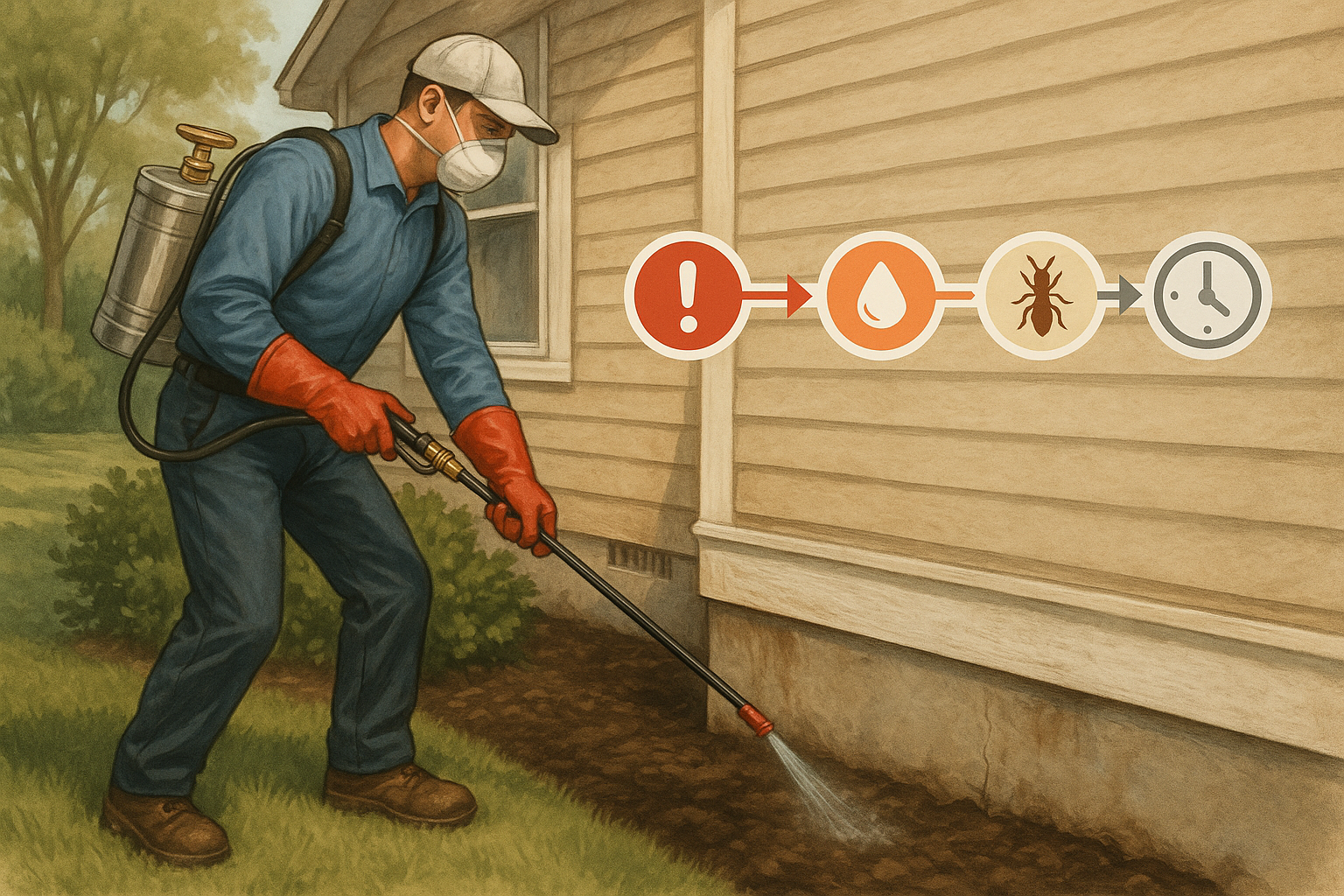
Liquid termiticides are the workhorse of emergency termite control. A certified technician drills a shallow trench around the foundation and injects a barrier solution that contains either fipronil or imidacloprid. These chemicals disrupt the termites’ nervous system, delivering a rapid knock‑down that usually becomes evident within two weeks. Because the barrier remains active for years, you get both immediate relief and long‑term protection. In Vinings, the typical price tag ranges from $2,300 to $3,500, depending on square footage and soil conditions.
Baiting Systems
Baiting systems take a more strategic approach. Small monitoring stations are placed at key entry points, each housing a cellulose matrix laced with a slow‑acting growth regulator. Worker termites carry the bait back to the colony, eventually wiping it out over four to six weeks. This method shines in historic homes where drilling a chemical barrier could damage delicate masonry or original woodwork. Prices in the Vinings area hover between $2,800 and $4,200, reflecting the number of stations needed and the ongoing monitoring visits.
Structural Fumigation (Tenting)
Structural fumigation, often called tenting, is reserved for severe infestations that have breached the foundation and spread throughout the structure. A gas—typically sulfuryl fluoride—is pumped into an airtight tent that covers the entire house, killing every termite on contact within a few hours. Safety protocols are strict: all occupants, pets, and plants must vacate the home for 24‑48 hours, and the property must be aerated before re‑entry. While the upfront cost is higher—$4,500 to $7,000—it offers a complete reset for homes where other methods would miss hidden galleries.
Heat Treatment
Heat treatment provides a chemical‑free alternative that many families prefer. Professionals raise the interior temperature to at least 120 °F and hold it for four continuous hours, a range lethal to all life stages of termites. The heat penetrates wood, wall voids, and subfloor spaces, ensuring no survivor remains. Because no pesticides are used, the process is pet‑ and child‑friendly, and there’s no residue to worry about after the job. In Vinings, expect to pay between $3,500 and $5,5 00, a price that reflects the equipment, labor, and precise temperature monitoring required.
| Method | Typical Timeline | Pros | Cons | Price Range |
|---|---|---|---|---|
| Liquid Termiticides | 2‑week knock‑down | Immediate barrier, long‑term protection | Requires trenching, chemical exposure | $2,300‑$3,500 |
| Baiting Systems | 4‑6 weeks to colony elimination | Minimal structural disturbance, ideal for historic homes | Slower results, ongoing monitoring needed | $2,800‑$4,200 |
| Structural Fumigation | Hours of exposure, 24‑48 hr vacancy | Complete eradication, reaches hidden galleries | High cost, temporary home displacement | $4,500‑$7,000 |
| Heat Treatment | 4 hrs at 120 °F | Chemical‑free, pet‑ and child‑safe | Requires power, may not reach all voids in large homes | $3,500‑$5,500 |
Understanding the Investment: Emergency Termite Control Costs
What you’re actually paying for
At Anthem Pest, the price breaks down into four clear components: the initial inspection fee, the treatment application, any required follow‑up visits, and the warranty coverage that protects your home for years to come.
The inspection fee, typically $75‑$120, covers a certified technician’s travel, a visual assessment and moisture‑meter reading to spot hidden galleries. Treatment application depends on the method—liquid termiticide, bait stations or foam—and usually runs $1,200‑$1,800 for a 2,000‑sq ft home. Follow‑up visits, scheduled at three‑ and twelve‑month intervals, are $100 each to verify the colony stays suppressed. Warranty coverage, up to five years, adds $250 for long‑term protection.
Sample quote for a 2,000‑sq ft Vinings home
| Service | Description | Cost (USD) |
|---|---|---|
| Inspection | Travel, visual assessment, moisture‑meter reading | $95 |
| Treatment Application | Liquid termiticide + foam for perimeter & voids | $1,650 |
| Follow‑up Visits (2) | 3‑month and 12‑month checks | $200 |
| 5‑Year Warranty | Full coverage against re‑infestation | $250 |
| Total | $2,195 |
Anthem Pest’s no‑hidden‑fees policy means the numbers you see are the numbers you pay. To keep emergency treatment affordable, we partner with reputable lenders to offer low‑interest financing, 0 % options for qualified buyers, and flexible monthly plans that can be customized to fit most budgets.
For perspective, the EPA Economic Impact Report 2023 cites an average national cost of $2,500 – $4,200 for a full termite eradication and warranty package. Our Vinings sample sits comfortably within that range, delivering professional service without premium mark‑ups.
By separating each cost element, showing a transparent quote, and offering financing, Anthem Pest ensures you can act quickly during an emergency while staying in control of your budget.
Vinings, GA: Soil, Climate, and Home Styles that Influence Termite Activity
Soil Type – The Moisture Magnet
Vinings sits on a predominately clay‑loam soil. This mixture holds water longer than sandy soils, creating a damp environment that subterranean termites love. The moisture‑rich layers act like a highway, allowing colonies to travel underground and reach the wooden components of a home without surfacing. If your foundation or footing shows signs of cracking or water pooling, it could be a sign that the soil is feeding a hidden termite network.
Climate – Humidity Meets Mild Winters
The Southern Georgia climate delivers high humidity most of the year, with average summer relative humidity hovering around 70 %. Warm, moist air accelerates termite metabolism, meaning colonies stay active year‑round. Winters are mild; temperatures rarely dip below freezing long enough to slow the insects. This consistent climate eliminates the seasonal lull that many other regions enjoy, so you need a proactive inspection plan even in December.
Common Construction – Brick Veneer with Wood Framing
Many Vinings homes feature a brick veneer exterior that hides a wood‑stud frame. While brick itself is termite‑resistant, the wooden studs, roof joists, and especially deck footings that sit close to the soil provide ample food sources. Decks that extend directly onto the ground, or are supported by concrete piers without a moisture barrier, become prime bridges for termites to move from the yard into the house.
Neighborhood Focus – Hotspots to Watch
Within Vinings, the Village at Vinings, Vinings Overlook, and the Cumberland area show higher termite reports. These neighborhoods combine mature landscaping, dense tree canopies, and older construction—perfect conditions for colonies to thrive. Homeowners in these zones should schedule annual inspections and consider barrier treatments around foundations and decks.
Additionally, the proximity of community pools and irrigation systems keeps the ground consistently damp, further encouraging termite movement.
For a visual reference, check the Google Maps overlay of local pest‑hotspot zones. It pinpoints the areas where termites have been most active, helping you prioritize inspections and treatments.
Keeping Termites Out for Good
Even after a successful emergency treatment, termites will try to find a way back into your home. A proactive, year‑long maintenance plan is the most reliable defense against a repeat invasion. Below is a simple schedule you can follow, plus a few landscaping habits that make your property less inviting to these silent destroyers.
12‑Month Maintenance Schedule
- Quarterly inspections – Every three months, a licensed technician walks the perimeter, probes vulnerable wood, and verifies the treatment barrier remains intact.
- Bait station checks – Bait stations around the foundation are inspected and replenished each quarter. Fresh bait keeps the colony distracted from your home.
- Moisture audits – Termites love damp wood. At each visit we measure moisture in crawl spaces, under slabs, and in any wood touching the ground. High readings trigger dehumidification or drainage fixes.
Landscaping Tips that Deter Termites
What you plant and where you store it can either block or invite termites. Follow these easy rules:
- Keep firewood, lumber, and mulch at least 6 feet away from the foundation. This creates a dry buffer zone that termites can’t cross easily.
- Maintain proper grading so water flows away from the house. A gentle slope of 5 percent (about a half‑inch drop per foot) prevents water pooling against the walls.
- Trim vegetation that touches the house. Vines and overgrown shrubs provide a direct bridge for termites to reach the wood.
Research backs up these practices. According to the National Pest Management Association (NPMA, 2022), homes that receive annual inspections experience 60 % fewer repeat termite infestations compared with those that rely solely on one‑time treatments.
By pairing a disciplined inspection calendar with smart landscaping, you turn your home into a hostile environment for termites. Anthem Pest Control can handle each step— from quarterly visits to moisture mitigation— so you can enjoy peace of mind all year long.
Quick Answers for Worried Homeowners
How fast can treatment stop damage?
Professional termiticides applied by certified technicians begin acting within minutes, and most EPA‑registered products create a barrier that halts active feeding within 24‑48 hours. In a typical emergency call, we can schedule a same‑day inspection and start treatment within 2‑4 hours of arrival, effectively stopping further structural loss.
Are pets safe during/after treatment?
All EPA‑approved termite products we use are low‑toxicity to mammals when applied according to label directions. Pets should be kept away from treated zones for at least 2 hours, after which normal household activity can resume. Our technicians also provide a written safety sheet outlining any specific waiting period.
Does homeowners insurance cover termite damage?
Standard homeowners policies generally exclude termite damage because it is considered a preventable maintenance issue. However, some policies offer optional endorsements. We recommend reviewing your policy and contacting your insurer for clarification.
What if a follow‑up appointment is missed?
Missing a scheduled follow‑up can leave a gap in the protection plan, allowing survivors to rebuild colonies. Anthem Pest will attempt to reschedule within 48 hours and may charge a nominal fee if the missed visit exceeds 7 days without notice.
Length and coverage of the warranty
Our standard warranty provides a 2‑year guarantee on structural damage and a 5‑year guarantee on the treatment barrier, provided all recommended inspections and maintenance visits are completed on time. The warranty is backed by EPA‑registered product performance and Anthem Pest’s service agreement.
Source: EPA Termite Treatment Guidelines; Anthem Pest Service Policy.
Act Now – Protect Your Vinings Home
Termites are relentless; once they establish a colony inside your home, they can chew through wood, wiring, and structural supports. Delaying treatment lets the infestation spread, raising repair costs and risking safety.
That’s why Anthem Pest’s dedicated 24‑hour emergency line (877‑371‑8196) is staffed around the clock. A trained technician can be dispatched within hours, giving you fast, professional relief before the damage worsens.
Simply visit our website and fill out the quick emergency request form to schedule a free, no‑obligation inspection. Our team will arrive promptly, assess the situation, and outline the exact steps needed to eliminate the termites.
Anthem Pest Control has served Vinings homeowners for years, combining local knowledge with industry‑leading treatment protocols. We pride ourselves on transparent pricing, safe products, and a guarantee that protects your investment for the long term.