Why Ticks Are a Growing Concern for Homeowners

Health risks from tick bites are not theoretical. The CDC reports that ticks are vectors for several potentially severe illnesses, such as:
- Lyme disease – the most common tick‑borne illness in the U.S.
- Rocky Mountain spotted fever – a bacterial infection that can be fatal if untreated.
- Southern tick‑associated rash illness (STARI) and ehrlichiosis – both causing flu‑like symptoms.
When a tick bites, it can inject pathogens within minutes, and the symptoms often mimic everyday ailments, delaying diagnosis. For homeowners, that means a simple walk in the yard could turn into a costly medical episode and a prolonged period of worry.
So how do these pests infiltrate a suburban lawn? Ticks hitch rides on wildlife that use natural corridors—raccoons, deer, foxes, and even neighborhood cats. Once an infected animal passes through, ticks drop into the grass, leaf litter, or mulch. Tall, unmowed grass and piles of leaves provide the humid micro‑environment ticks need to survive and quest for a new host. In Decatur, GA, the mix of temperate climate, abundant oak‑hickory forests, and well‑kept residential yards creates an ideal backdrop for tick activity.
When a homeowner discovers a sudden surge of ticks—perhaps after a storm that scattered leaf litter or after noticing a spike in wildlife visits—standard lawn care isn’t enough. This is where emergency tick control comes into play. Unlike routine seasonal treatments, an emergency response is a rapid, targeted application of acaricides and habitat‑modification tactics designed to reduce tick numbers within 24–48 hours. The goal is to protect families and pets before the tick population reaches a tipping point.
For Decatur residents, the threat is especially personal. The city’s historic neighborhoods feature mature trees and shaded yards that attract deer, while community parks provide additional wildlife corridors. Recognizing the local ecology helps Anthem Pest Control tailor an emergency plan that addresses the specific entry points and habitats unique to each property.
Understanding the biology, health implications, and pathways of entry is the first step toward a proactive defense. In the sections that follow, we’ll explore the most effective treatment methods, timing considerations, and how a quick professional response can keep your home tick‑free.
Identifying Tick Hotspots in Your Yard
Ticks love the quiet corners of your property where moisture, shade, and a steady supply of hosts intersect. Spotting these micro‑habitats early gives you a fighting chance to break the life cycle before a single bite reaches your family.
Typical Tick Hide‑outs
In Decatur’s humid climate, ticks gravitate toward:
- Shaded leaf piles and compost heaps where humidity stays high.
- Edges where woods meet lawns—especially under low‑lying branches.
- Garden borders, particularly near mulch or stone pathways.
- Pet bedding and outdoor crates that retain warmth and moisture.
Step‑by‑Step Visual Inspection Checklist
- Dress for safety. Slip on long sleeves, gloves, and closed shoes to protect your skin.
- Bring a tick‑removal tool. Fine‑point tweezers or a dedicated tick tweezer make extraction easier.
- Survey the perimeter. Walk the yard slowly, scanning the ground and vegetation at knee‑height.
- Examine high‑risk zones. Pause at leaf piles, garden edges, and pet resting spots; use a flashlight for better visibility.
- Check your clothing. After each segment, shake out sleeves and pant legs; inspect fabric for any hitchhikers.
- Record findings. Jot down locations where you spot ticks or suspect activity—this helps a professional treat the right zones.
Confirming Tick Identification
If you locate a tiny, dark speck, use a macro view (a close‑up photo or a magnifying lens) to check for the characteristic eight‑legged shape and the distinct “shield” behind the head. Accurate identification ensures you’re dealing with a tick, not a harmless beetle.
Early Warning Signs
- Sudden increase in bite reports from family members or neighbors.
- Pets scratching more than usual, especially after outdoor play.
- Visible signs of deer, mice, or other wildlife frequenting your yard.
- Sticky, damp leaf litter that never seems to dry out.
Regular inspections—at least once a month during tick season—let you catch these signs before they turn into a full‑blown infestation. For detailed guidance on tick identification and prevention, visit the CDC’s tick resources.
Seasonal Tick Activity and What It Means for Treatment Timing
Understanding the Tick Life Cycle
How Temperature and Humidity Drive Activity
Ticks are ectothermic—they rely on external heat to become active. When daily highs consistently sit between 55°F and 85°F, and relative humidity stays above 60%, you’ll see a surge in questing behavior (the moment ticks climb grass blades to latch onto a passing animal or person). Conversely, extreme heat or prolonged dry spells reduce activity because ticks risk desiccation. This temperature‑humidity dance creates predictable peaks and valleys in tick populations throughout the year.
Reading Decatur’s Seasonal Tick Chart
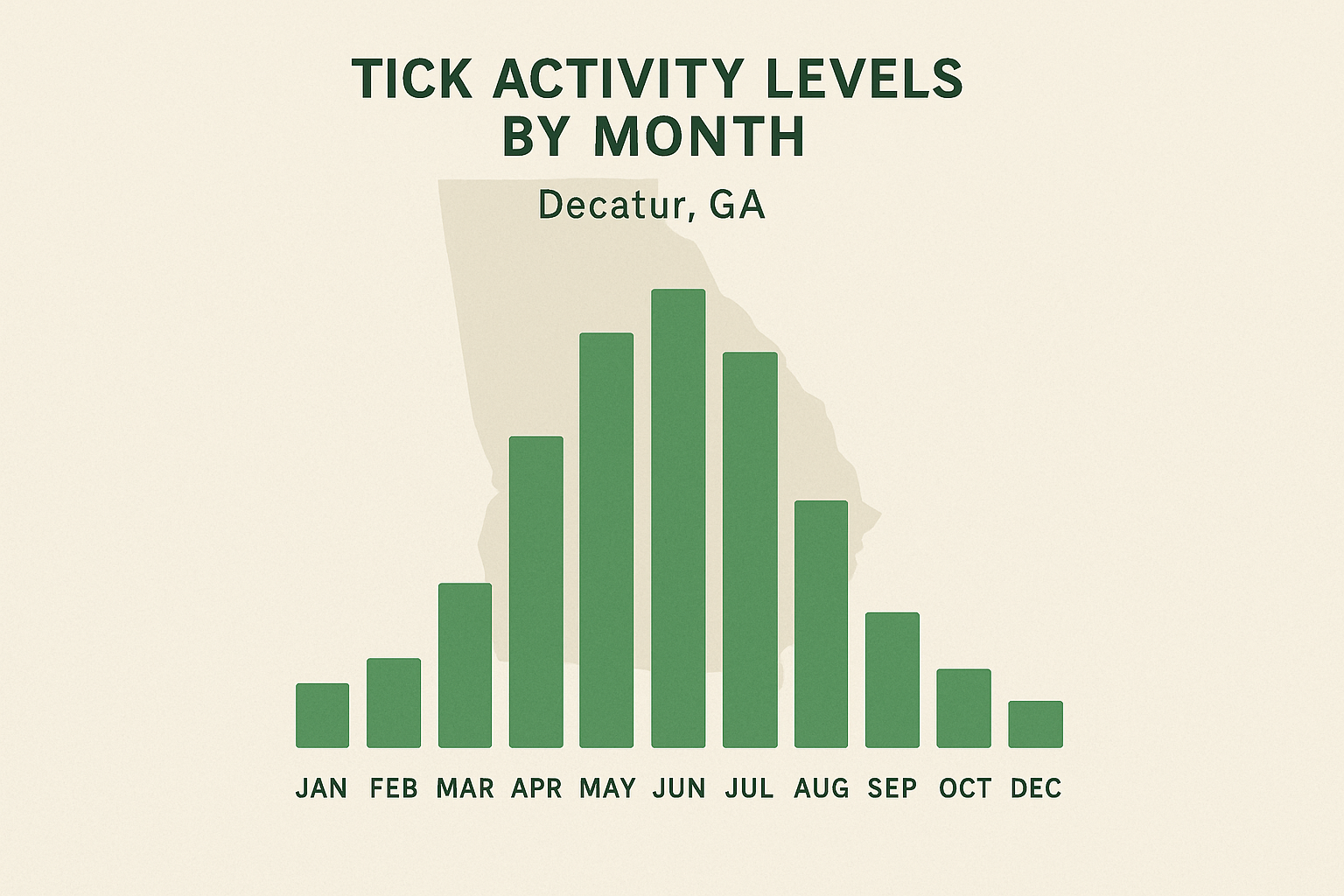
The bar chart above visualizes historic tick counts for Decatur. Two clear windows of heightened activity emerge: late spring (April – June) and early fall (September – October). April through June consistently registers the highest bars, reflecting optimal temperature and moisture. October shows a secondary rise as cooler evenings and lingering humidity revive nymphs that survived summer. Homeowners should treat these months as the “high‑risk” windows for both prevention and rapid response.
When to Schedule Routine vs. Emergency Treatments
Routine tick control is best timed just before the first peak—early March or late February—so residual chemicals protect your yard throughout the spring surge. A follow‑up in late August prepares the property for the October resurgence. Emergency treatment should be called the moment you notice a cluster of ticks on pets, children, or in high‑traffic zones, especially if the sighting coincides with a weather spike (e.g., an unexpected warm, humid week). Prompt action prevents a small problem from ballooning into a full‑blown infestation.
Weather’s Role in Spray Efficacy and Safety
Application success hinges on calm, moderate conditions. Spraying during rain or high winds can wash away or drift chemicals, reducing coverage and increasing the risk of runoff into storm drains—something the EPA warns against. Aim for temperatures between 65°F and 80°F with low wind and no forecasted rain for at least 24 hours. This window maximizes absorption into foliage and soil while protecting nearby water sources.
For detailed EPA guidance on environmental considerations for pesticide use, visit the EPA’s tick‑control page. Following these timing and weather recommendations ensures you stay ahead of the tick cycle, safeguard your family, and keep your yard pest‑free.
Emergency Tick Control Methods and What to Expect
Fast‑Acting Treatment Options
- Spot‑spray adulticide: A concentrated, EPA‑registered spray is applied directly to the areas where ticks have been seen—under decks, along fence lines, and in shaded grass. The formulation kills adult ticks within minutes and prevents nearby nymphs from maturing.
- Perimeter barrier: We create a chemical shield around the home’s exterior, typically a 5‑foot band that stops ticks from entering high‑traffic zones such as patios, play areas, and entryways. This barrier remains effective for 2‑4 weeks, depending on weather conditions.
- Pet‑safe options: For households with dogs or cats, we can use low‑toxicity, pet‑approved products that target ticks on surfaces without posing a risk to your animals. These are often combined with a short‑term pet‑protective spray for added peace of mind.

During the visit, a certified technician dons protective clothing, including gloves and a mask, then uses a handheld sprayer to coat the identified hotspots. The spray is directed at the soil surface, leaf litter, and any low‑lying vegetation where ticks hide. This targeted approach minimizes chemical use while maximizing impact, ensuring that the adult ticks you’ve seen are eliminated on the spot.
Safety Precautions for Residents and Pets
While our products are fast‑acting, we advise homeowners to keep children and pets away from treated zones for at least 30 minutes after application. Open windows and doors to improve ventilation, and avoid mowing or raking the treated area until the spray has dried. If you have a pet that spends time outdoors, keep it indoors during the drying period and rinse its paws before letting it back onto the lawn.
Timeline, Results, and Follow‑Up
Most homeowners notice a dramatic reduction in tick activity within 24‑48 hours. Nymphs that were already present may take a few days to succumb, but the adulticide’s residual effect continues to suppress new hatches for up to three weeks. We schedule a follow‑up inspection 7‑10 days after the initial visit to verify that the population has been contained and to apply a secondary barrier if needed.
For a deeper dive into industry standards, consult the NPMA best practices for tick management. Our emergency service follows these guidelines to deliver swift, safe, and effective relief for Decatur homeowners facing an unexpected tick surge.
Comparing Pricing Options for Emergency Tick Control
1. Per‑Treatment Fee
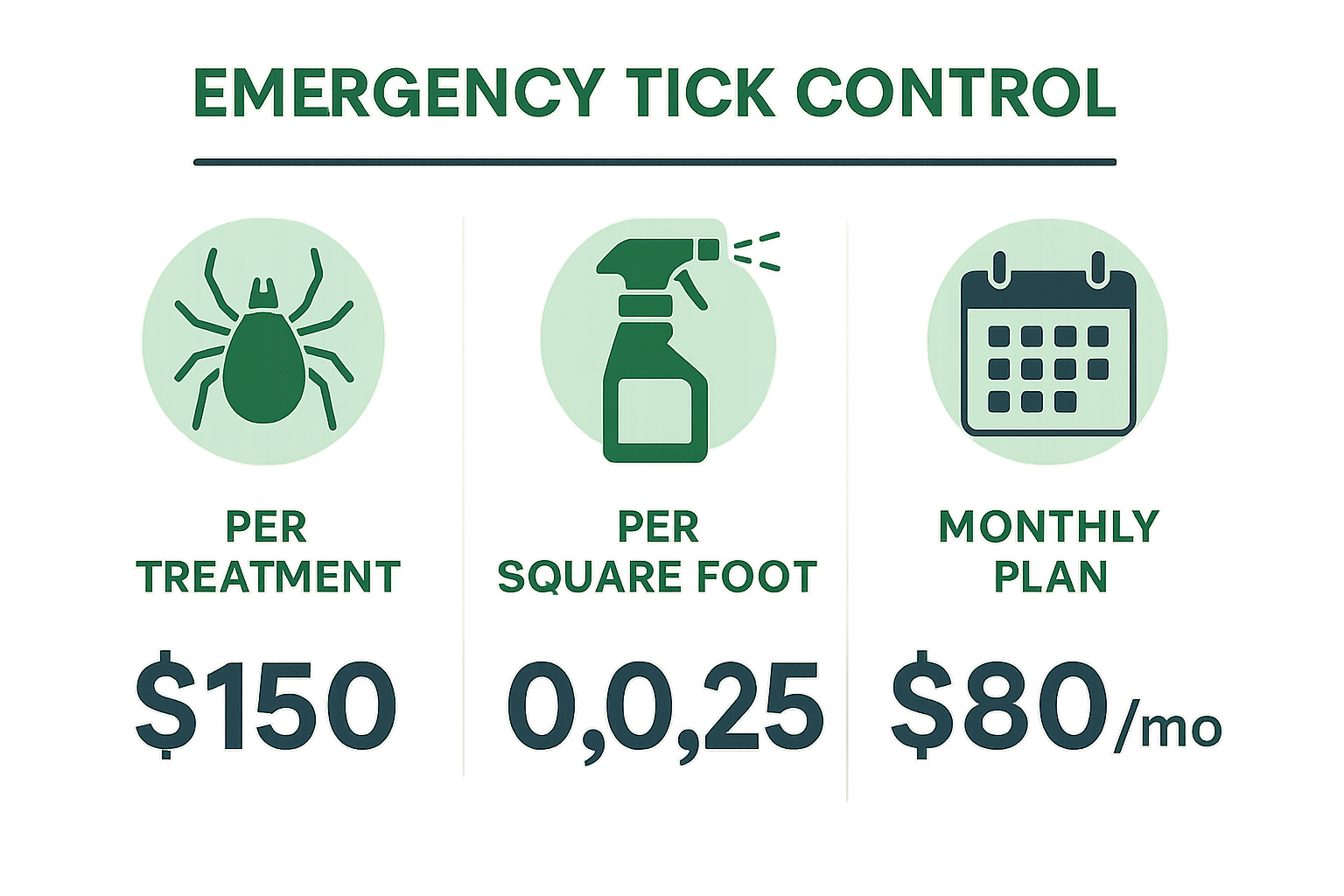
This flat‑rate model charges a single price for each service visit, regardless of yard size. Typical costs in the Decatur area range from $150 to $250 per treatment. The fee usually includes a comprehensive spray, a detailed inspection, and a one‑time follow‑up within 7‑10 days. It’s ideal for homeowners who need an immediate knock‑down and don’t anticipate recurring tick pressure.
2. Per‑Square‑Foot Rate
Here the price is calculated based on the total square footage of the treated area, often falling between $0.30 and $0.55 per square foot. This model scales with larger properties, ensuring you only pay for the space that actually needs treatment. It typically covers the initial spray, a thorough perimeter check, and a complimentary re‑treatment if ticks reappear within 30 days. It works best for medium‑to‑large yards where a flat fee would be disproportionately high.
3. Monthly Monitoring Plan
Monthly plans bundle regular inspections, preventive sprays, and a guaranteed response to any tick resurgence. Pricing usually starts at $80 per month for up to 5,000 sq ft, with discounts for larger homes. The long‑term savings become evident after the first year, especially in neighborhoods with persistent tick activity. This option offers peace of mind and continuous protection.
| Pricing Model | Typical Cost Range | What’s Included | Best Scenario |
|---|---|---|---|
| Per‑Treatment Fee | $150 – $250 | One‑time spray, inspection, 7‑day follow‑up | Urgent knock‑down, small yards |
| Per‑Square‑Foot Rate | $0.30 – $0.55 / sq ft | Spray, perimeter check, 30‑day re‑treatment | Medium/large properties |
| Monthly Monitoring Plan | From $80 / month | Regular inspections, preventive sprays, guaranteed response | High‑risk areas, long‑term budgeting |
Pros and Cons at a Glance
- Per‑Treatment: Quick action, no ongoing commitment – but higher cost if ticks return.
- Per‑Square‑Foot: Scales with property size, fair for larger yards – requires accurate measurements.
- Monthly Monitoring: Predictable budgeting, continuous protection – higher upfront monthly expense.
Tips for Evaluating Quotes
- Verify the company’s license and insurance; a legitimate pest‑control business will display these proudly.
- Look for written guarantees that cover re‑treatments or follow‑up visits.
- Ask what’s included in the price—equipment, chemicals, labor, and post‑treatment monitoring.
- Compare the total cost over 12 months, not just the headline price.
At Anthem Pest Control, transparent pricing isn’t a buzzword—it’s a promise. Every estimate breaks down the service components, so you know exactly where your dollars are going and can make an informed decision that protects your family and your lawn.
Protect Your Home Today with Professional Tick Control
Ticks aren’t just a nuisance; they carry Lyme disease, Rocky Mountain spotted fever, and other serious illnesses that can affect anyone who steps onto your lawn. Their activity spikes in late spring and early summer, so the window for effective intervention is narrow. Acting now means you stay ahead of the seasonal surge and keep your family, pets, and neighbors safe.
Quick reminder: a thorough visual inspection of shaded areas, leaf litter, and pet bedding can reveal early infestations. If you spot a cluster of ticks, an emergency treatment—often a same‑day spray or fogger—creates an immediate barrier that stops the problem from spreading. Our transparent pricing lets you choose a one‑time emergency visit, a seasonal protection package, or a year‑round maintenance plan that fits any budget.
Why Choose Anthem Pest Control?
- Local expertise: Our technicians know the Decatur tick hotspots and the best timing for each treatment.
- Safe‑first approach: We use EPA‑approved products that protect people and pets while eliminating ticks.
- Nationwide coverage: Whether you own a single‑family home or manage multiple properties, we have the resources to respond quickly.
Our pricing structure is designed for transparency: a one‑time emergency service starts at $X, a seasonal barrier treatment is $Y, and our comprehensive annual plan bundles inspections, treatments, and a guaranteed tick‑free guarantee. No hidden fees, and you can upgrade at any time.
By partnering with Anthem, you benefit from a licensed team that follows Integrated Pest Management (IPM) principles, prioritizing low‑toxicity options and targeting ticks at every life stage—from eggs in the soil to adult questing on grass blades.