What Are Gnats and Why They Invade Your Home
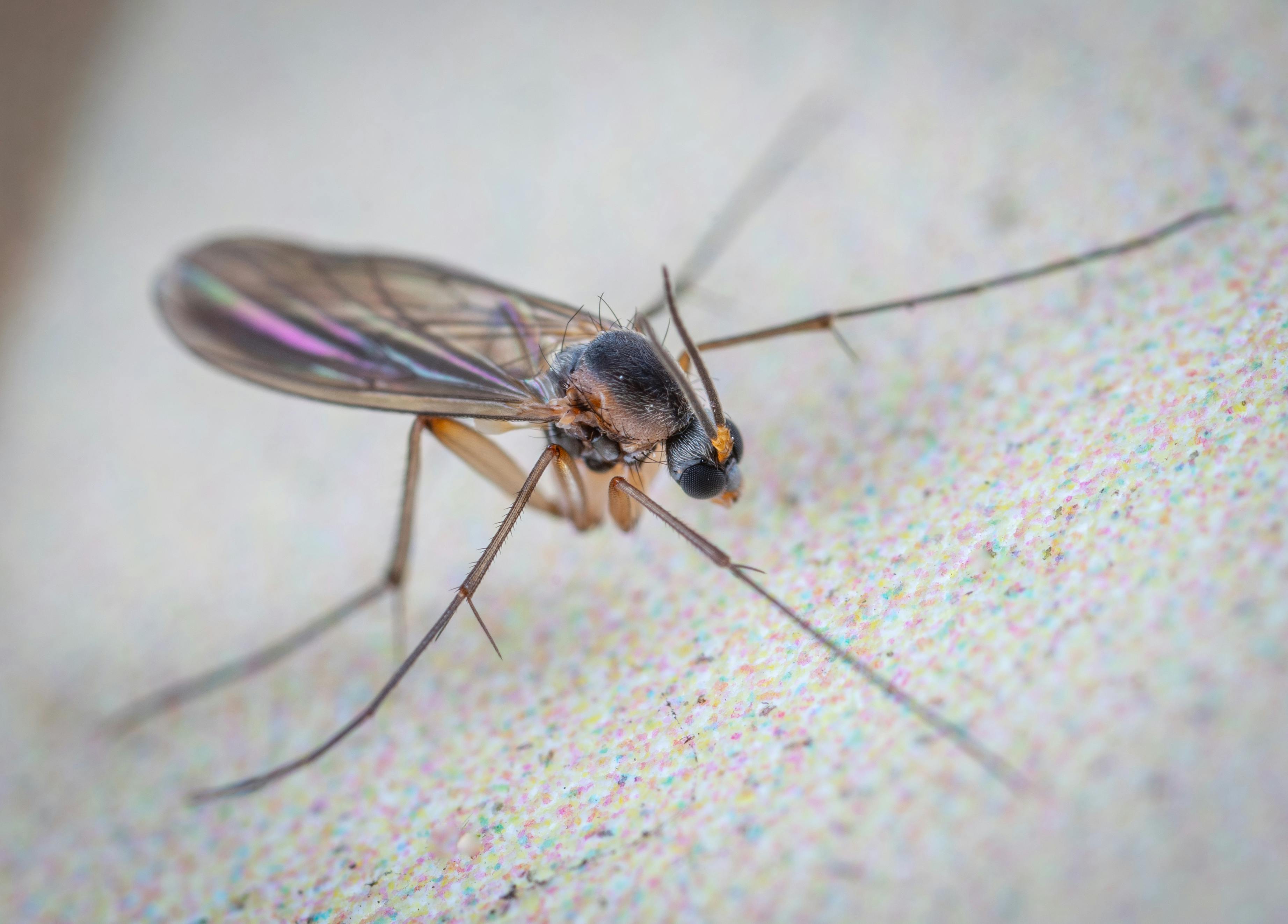
When you notice a delicate, buzzing cloud hovering over your sink or a faint trail of tiny flies on your kitchen counter, you’re likely dealing with gnats and may start looking for a gnat exterminator near me Peachtree City. Though they’re small, gnats can quickly become a nuisance, especially when they find the right conditions inside your home. Understanding exactly what a gnat is—and how it differs from other miniature flies—helps you spot the problem early and take decisive action.
Defining “gnat” and the most common culprits
The term “gnat” is a catch‑all for several families of tiny, winged insects in the order Diptera. In residential settings three groups dominate:
- Fungus gnats – usually 1‑3 mm long, they thrive in moist soil and feed on fungal spores. Their larvae are slender, translucent, and live right in the potting mix of houseplants.
- Fruit flies (Drosophila spp.) – often called “vinegar flies,” they are attracted to fermenting fruit, sugary liquids, and even the residue left in drains.
- Other small dipterans – this category includes phorid flies and drain flies, which prefer damp, organic‑rich environments such as bathroom tiles or garbage disposals.
Typical indoor habitats
Gnats are opportunists. They gravitate toward any area that offers moisture, organic matter, and a food source. The most common indoor hotspots include:
- Kitchens – overripe fruit, sugary spills, and the organic film inside sink drains provide a buffet.
- Bathrooms – standing water, soap scum, and clogged drains create perfect breeding grounds.
- Potted plants – over‑watered soil or low‑quality potting mix harbors fungus gnat larvae.
- Drains and garbage disposals – the slimy buildup inside these fixtures is a magnet for fruit flies and drain flies.
How gnats gain entry
Unlike larger insects, gnats can slip through the tiniest openings. Common pathways are:
- Open windows and doors – a gentle breeze can carry adult gnats straight into your living space.
- Hitchhiking on groceries – fruits, vegetables, and even fresh herbs can bring eggs or larvae inside.
- Transport on pets or clothing – a quick brush against a contaminated surface can transfer gnats to your home.
Visual cues that indicate a problem
Early detection saves you from a full‑blown infestation. Keep an eye out for these telltale signs:
- Swarming near lights, especially in the evening when adult gnats are attracted to illumination.
- Small, speck‑like flies landing on food, countertops, or plant leaves.
- Visible larvae—tiny, white, worm‑like creatures—wriggling in the top layer of potting soil.
- Faint, sweet or musty odors coming from drains, a sign that organic matter is decomposing.
Quick checklist for homeowners
Use this short list to confirm whether gnats have taken up residence:
- Do you see tiny flies hovering near indoor lights?
- Are there visible larvae in the soil of houseplants?
- Do kitchen or bathroom drains emit a faint, sour smell?
- Is there an increase in fruit or vegetable spoilage?
- Have you recently brought in fresh produce or potted plants?
If you answer “yes” to two or more of these questions, it’s time to act. Recognizing the species, pinpointing their favorite habitats, and noting the entry points give Anthem Pest Control the information needed to design a targeted, safe, and affordable treatment plan that eliminates gnats and prevents their return.
Health and Property Risks of Gnat Infestations
Disease vectors lurking in tiny bodies
Gnats may look harmless, but they often spend part of their life cycle in decaying organic matter—compost piles, damp soil, or rotting fruit. In those environments they pick up bacteria such as Escherichia coli and fungi like Aspergillus. When the adult flies wander into your kitchen or bathroom, they can transfer these microbes onto countertops, utensils, and even directly onto food. The result is a hidden pathway for food‑borne illness that most homeowners never consider.
Allergic reactions and respiratory irritation
Unlike mosquito bites, gnat bites are usually painless, but the saliva they inject can trigger localized itching, redness, or swelling in sensitive individuals. For people with existing allergies or asthma, the constant presence of swarming gnats can aggravate respiratory passages, leading to coughing, sneezing, or shortness of breath. The irritation isn’t limited to bites; simply brushing against a swarm can release tiny particles that act as allergens in the air.
Contamination of food and surfaces
In a kitchen where gnats congregate, they often land on open dishes, cutting boards, and even stored pantry items. Their legs and wings carry microbes, and the insects may deposit droppings that go unnoticed until the food is prepared. This contamination risk escalates in dining areas where food is left uncovered, turning a pleasant meal into a potential health hazard.
Damage to indoor plants
The larval stage of many gnat species feeds on the roots of houseplants. As the larvae chew through fine root hairs, the plant’s ability to absorb water and nutrients diminishes. Homeowners notice wilting leaves, stunted growth, and a general decline in vigor—signs that are often mistaken for over‑watering or nutrient deficiency. In severe cases, the entire plant may die, forcing costly replacements.
Psychological impact of persistent swarms
Beyond the physical risks, a relentless gnat swarm creates an unsettling atmosphere. The buzzing sound, the visual annoyance of insects hovering around faces, and the fear of bites can increase stress levels and reduce overall comfort at home. Studies show that prolonged exposure to indoor pests can lower perceived quality of life, making even a well‑maintained house feel uninviting.
Official guidance on indoor pest health risks
The U.S. Environmental Protection Agency (EPA) emphasizes that indoor insects, including gnats, can compromise health and sanitation. Their recommendations stress prompt identification and professional treatment to minimize exposure to disease‑carrying pests. For detailed guidelines, visit the EPA’s Pesticides page.
Effective Treatment Options for Homeowners

DIY Traps That Actually Work
Simple, low-cost traps can reduce a gnat population before it overwhelms your home, especially while you decide whether a gnat exterminator near me Peachtree City is needed for long-term control. A classic apple-cider vinegar trap uses a shallow bowl filled with the vinegar, a few drops of dish soap, and a piece of plastic wrap punctured with tiny holes. Gnats are drawn to the scent, slip through the holes, and drown. Sticky yellow cards—available at garden centers—act like a billboard for flying gnats; the insects land and become immobilized. For a sugar-water lure, dissolve one cup of sugar in warm water, add a splash of apple-cider vinegar, and place the mixture in a shallow container. These DIY solutions are safe around children and pets when used as directed.
Environmental Controls: The First Line of Defense
Gnats thrive in moisture. Eliminating excess water is often the most effective single step you can take. Inspect your kitchen and bathroom for leaky faucets, drippy pipes, and standing water in plant saucers. Replace old, damp sponges with fresh ones, and ensure garbage cans have tight‑fitting lids. Proper waste disposal—especially compost and food scraps—removes the organic material gnats love to breed in. By keeping surfaces dry and clutter‑free, you make your home an inhospitable environment for these pests.
Over‑the‑Counter Sprays and Foggers
When traps and moisture control aren’t enough, OTC products can provide a quick knock‑down. Look for sprays that list pyrethrin, permethrin, or neem oil as active ingredients. Apply the spray to window screens, door frames, and any cracks where gnats may enter. Foggers are useful for larger rooms; however, they should be used only when the space is empty, and you must follow the label’s ventilation instructions. Always wear gloves and keep pets out of the treated area until the product has dried.
Biological Controls for the Green‑Thumbed
Home gardeners often battle fungus gnats in potting soil. Bacillus thuringiensis israelensis (BTI) is a naturally occurring bacterium that targets gnat larvae without harming plants, pets, or beneficial insects. Sprinkle a BTI granule or liquid formulation into the top inch of soil, water it in, and repeat every two weeks during the growing season. This method is especially effective for indoor containers, hanging baskets, and greenhouse benches.
Professional Services: When to Call a Licensed Technician
Licensed exterminators bring tools and expertise that go beyond consumer‑grade products. Indoor spray applications can reach hidden cracks, voids, and ceiling voids where gnats hide. Fogging machines disperse a fine mist that penetrates upholstery, drapes, and HVAC ducts. For severe infestations, heat treatments raise ambient temperatures to levels that are lethal to all life stages of gnats, without leaving chemical residues. Anthem Pest Control’s technicians are EPA‑certified, ensuring each treatment complies with federal safety standards.
Safety Considerations and the Value of a Pro
While DIY methods are safe when used correctly, extensive infestations may require chemicals that demand precise handling. Certified professionals are trained to assess exposure risks, select the appropriate formulation, and apply it in a way that minimizes contact with occupants and pets. They also provide a written guarantee and follow‑up inspections, giving you peace of mind that the problem won’t return.
EPA‑Approved Pesticide Regulations for Indoor Use
All indoor pesticides must be registered with the Environmental Protection Agency (EPA) and labeled for residential use. The label is the law: it details required personal protective equipment, ventilation periods, and re‑entry times. When you choose a product, verify that it carries the EPA registration number and that it is specifically approved for indoor gnat control. If you’re ever unsure, a quick call to a licensed pest professional can clarify which products meet these strict standards.
Comparing Gnat Extermination Service Plans and Costs
Choosing the right plan can feel overwhelming, but breaking it down into clear tiers makes the decision simple when working with a gnat exterminator near me Peachtree City. Anthem Pest Control offers three distinct packages—Basic, Standard, and Premium—each designed to match different infestation levels, property sizes, and budget preferences.

Service Tier Details
| Tier | Price (Annual) | Coverage Area | Treatment Frequency | Warranty Length |
|---|---|---|---|---|
| Basic | $199 | Up to 1,500 sq ft | One‑time treatment | 30‑day |
| Standard | $349 | Up to 3,000 sq ft | Quarterly visits | 90‑day |
| Premium | $549 | Up to 5,000 sq ft | Monthly monitoring & treatment | 180‑day |
Key Features at a Glance
The Basic plan is ideal for a one‑off gnat flare‑up—think a single backyard pond that’s suddenly buzzing. The Standard tier adds quarterly visits, which keep the population in check during peak summer months and include a longer warranty for peace of mind. Premium goes further with monthly monitoring, proactive barrier applications, and the longest warranty, making it the best choice for larger landscapes or homes with valuable plants that can’t afford repeated loss.
Evaluating Value for Your Home
If your yard includes water features, ornamental grasses, or fruit‑bearing plants, gnats can cause more than a nuisance—they can damage foliage and reduce harvests. In such cases, the Premium tier’s monthly monitoring often pays for itself within a single season by preventing plant loss. Homeowners with smaller patios or occasional outdoor gatherings may find the Standard plan’s quarterly visits sufficient, while a simple one‑time treatment from the Basic tier works for renters or properties with minimal outdoor exposure.
Cost‑Benefit Analysis
While the Premium package carries the highest upfront cost, it often saves money over time. For example, a homeowner with an extensive garden may lose dozens of seedlings after each gnat outbreak; replacing them can quickly eclipse the $549 annual fee. Likewise, the Standard plan prevents repeat emergency visits, which Anthem charges $120 per extra treatment. In many cases, upgrading from Basic to Standard reduces total annual spend by 20‑30% when you factor in avoided re‑treatments.
How to Request a Personalized Quote
Pricing can shift based on square footage, severity of the infestation, and any special landscaping features. To get an accurate quote, simply call 877‑371‑8196 or fill out the request form on anthempest.com. A technician will assess your property, ask about recent gnat activity, and tailor the plan to fit your exact needs.
Factors That Influence Final Pricing
Anthem tailors each quote to three primary variables: the square footage of the treated area, the current severity of the gnat problem, and any special considerations such as irrigation systems or nearby wetlands. Larger homes or properties with extensive landscaping naturally require more product and labor, raising the base price. Severe infestations may need supplemental treatments, which are billed separately. Finally, seasonal promotions or bundled services (e.g., adding mosquito control) can lower the overall cost.
Infographic: For a visual side‑by‑side comparison, refer to the infographic above.
When to Treat – Seasonal Activity and Timing Guide
Gnats move through four distinct stages—egg, larva, pupa, and adult—and temperature is the master switch that speeds or slows each phase. When daytime highs climb above 68 °F (20 °C), eggs hatch within 24–48 hours and larvae develop rapidly, leading to a surge in adult emergence. Conversely, cooler nights below 55 °F (13 °C) stall breeding, causing populations to dip. Understanding this temperature‑driven cycle lets you anticipate when gnats are most likely to invade your yard or home.
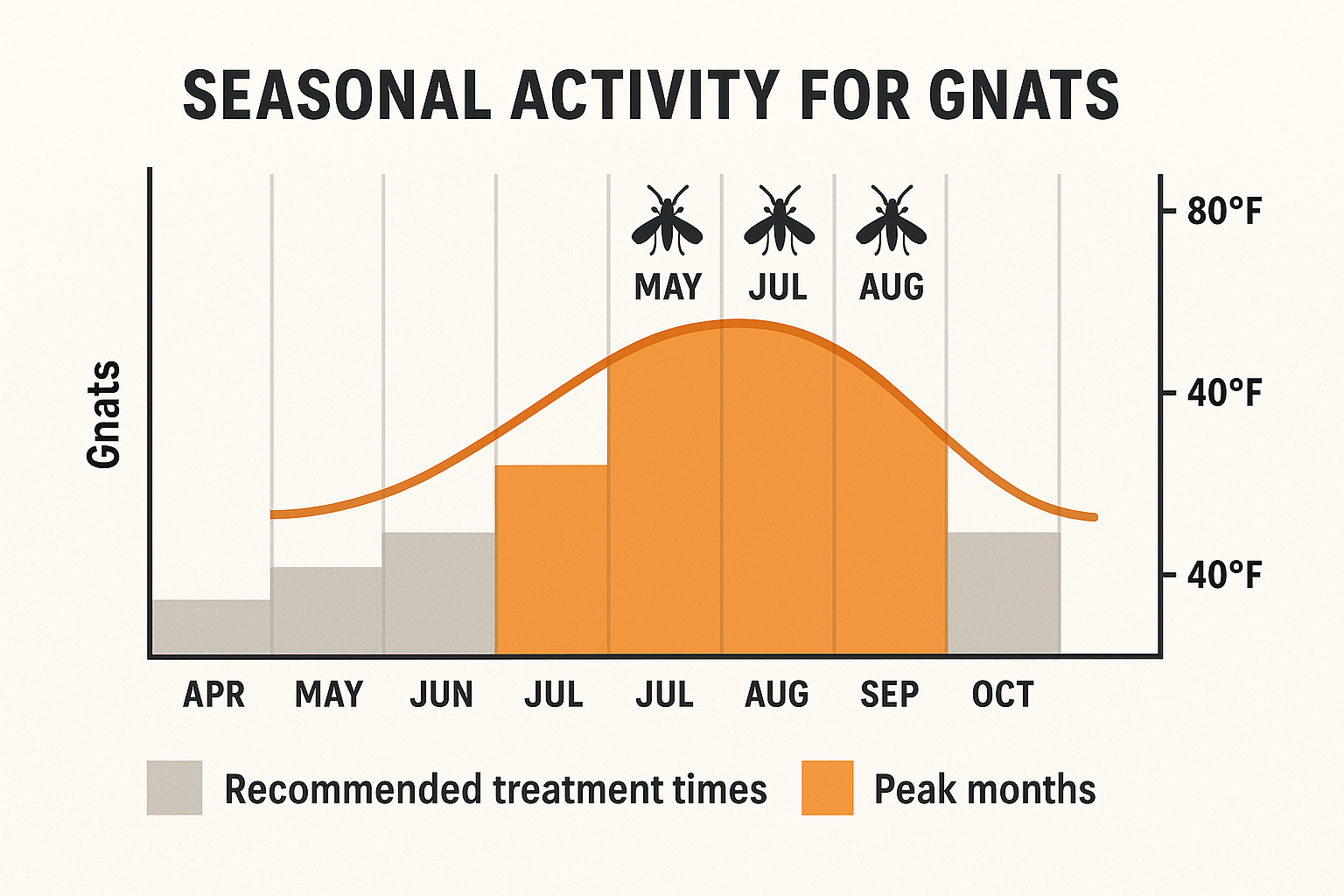
The chart below summarizes typical activity levels in Peachtree City, GA, highlighting the peak window from May through September.
| Month | Activity Level |
|---|---|
| January | Low |
| February | Low |
| March | Low‑to‑Moderate |
| April | Moderate |
| May | High |
| June | High |
| July | High |
| August | High |
| September | Moderate‑to‑High |
| October | Low‑to‑Moderate |
| November | Low |
| December | Low |
Recommended Treatment Timing
Early Spring (late March‑early April): Apply a pre‑emptive, residual spray around outdoor lighting, patio furniture, and moist soil zones. This creates a barrier before the first wave of eggs hatch.
Midsummer (mid‑July): Conduct a follow‑up treatment targeting any hot spots that survived the spring barrier, especially shaded garden beds and compost piles where larvae thrive.
Early Fall (late September): Perform a final inspection and spot‑treat any lingering activity before temperatures dip, preventing overwintering adults from laying a late‑season batch of eggs.
Regional Variations
Peachtree City sits in USDA Hardiness Zone 7a, but micro‑climates—such as low‑lying wetlands or sun‑baked concrete patios—can shift the peak by a week or two. If you live near the northern edge of the city, expect the high‑activity window to start in late May; residents closer to the southern, warmer fringe may see peaks as early as early May. Adjust your spray schedule accordingly to stay one step ahead.
DIY Alignment Tips
- Check the chart weekly; when a month is marked “High,” increase trap density by 25 %.
- Place sticky traps near outdoor lights during the first two weeks of May, then move them to shaded garden corners in July.
- Record trap catches in a simple log; a sudden jump of > 30 % signals it’s time for a professional follow‑up.
- Keep watering schedules consistent—over‑watering creates breeding grounds that defeat even the best traps.
Why Schedule a Pro Service Before the Peak?
Even the most diligent DIY routine can miss hidden larval colonies in soil or under deck boards, which is why many homeowners turn to a gnat exterminator near me Peachtree City for complete control. A licensed Anthem Pest Control technician applies industry-grade, residual products that remain effective for weeks, dramatically reducing the chance of a massive summer infestation. Booking your service before the May-September surge ensures you enjoy a gnat-free backyard while your family relaxes outdoors.
Prevention Tips to Keep Gnats Away Year‑Round
Eliminate Standing Water
Gnats breed in any source of moisture, so the first line of defense is to dry it out. Check under sinks, around the dishwasher, and behind appliances for leaky pipes or drips, and repair them promptly. Outdoor pet water dishes should be emptied and refilled with fresh water each day. In damp basements or crawl spaces, run a dehumidifier to keep humidity below 50 %—a level most gnats find inhospitable.
Proper Waste Management
Food scraps and organic waste are a buffet for adult gnats. Keep trash cans tightly sealed and clean the lids regularly to remove residue. Inside the kitchen, wipe down countertops, sweep crumbs, and rinse out recyclables before they sit in the sink. Compost bins should be stored in a cool, ventilated area and emptied often to deny gnats a breeding ground.
Smart Plant Care
Houseplants are a common gnat hotspot because the soil stays moist. Allow the top inch of potting mix to dry out between waterings; over‑watering is the biggest mistake. Adding a thin layer of sand or fine gravel as mulch helps the surface dry faster and discourages larvae from emerging. If a pot feels constantly soggy, replace the mix with a well‑draining blend designed for indoor plants.
Screen Doors and Windows
Even the tiniest opening can let gnats slip inside. Inspect all exterior doors and windows for gaps, and install fine‑mesh screens (no larger than 1 mm) where they are missing. Repair torn screens promptly—gnats can squeeze through holes the size of a pinhead. For screened-in porches, consider adding a secondary door sweep to create a double barrier.
Drain Maintenance
Organic buildup in bathroom and kitchen drains provides a perfect nursery for gnat larvae. Once a month, pour a kettle of boiling water down each drain to melt grease and flush debris. For tougher clogs, use an enzyme‑based cleaner that breaks down food particles without harming your pipes. Follow the product instructions, and repeat the process regularly to keep the drain environment hostile to gnats.
Annual Professional Inspections
Even the most diligent homeowner can miss a hidden infestation. Scheduling a yearly inspection with a qualified pest‑control provider, such as Anthem Pest Control, gives you a professional eye on potential problem areas before gnats become a nuisance. Technicians can spot moisture pockets, identify early signs of gnat activity, and recommend targeted treatments that complement your DIY prevention efforts.
Get Professional Gnat Control from Anthem Pest Today
Gnats may seem like a minor annoyance, but an unchecked infestation can quickly turn your yard, patio, or indoor space into a breeding ground for disease‑carrying microbes. Their swarms not only disrupt outdoor enjoyment, they can infiltrate homes, contaminating food and irritating skin. Prompt, effective treatment is essential to protect your family’s health and preserve the comfort of your living environment.
Why Choose Anthem Pest?
Anthem Pest offers three flexible service plans designed to match any homeowner’s needs and budget:
- Basic Shield – One‑time treatment targeting current gnat hotspots, ideal for immediate relief.
- Seasonal Guard – Quarterly applications that stay ahead of gnat cycles throughout spring and summer.
- Full‑Coverage Protection – Year‑round monitoring and treatment, ensuring gnats never gain a foothold.
Our technicians are seasoned in Peachtree City’s seasonal pest patterns, so you’ll receive a plan that aligns perfectly with local gnat activity peaks.
Safe, EPA‑Compliant Methods & Transparent Pricing
All treatments use EPA‑approved products that are safe for children, pets, and the surrounding environment. We never hide fees; every quote breaks down the cost of materials, labor, and any follow‑up visits, so you know exactly what you’re paying for.
Request Your Free, No‑Obligation Quote
Ready to reclaim your outdoor spaces? Simply reach out for a complimentary, customized quote that reflects the size of your property, the severity of the infestation, and your preferred service plan. No pressure, no hidden commitments—just a clear roadmap to a gnat‑free home.
Our certified technicians are ready to restore comfort to your home with fast, reliable gnat control—contact us today and breathe easier tomorrow.
Call now: 877‑371‑8196
Visit our website to learn more about our full range of pest services and schedule your free quote with a trusted gnat exterminator near me Peachtree City: Anthem Pest Control.