Why Crickets Become a Summer Nuisance in Brookhaven

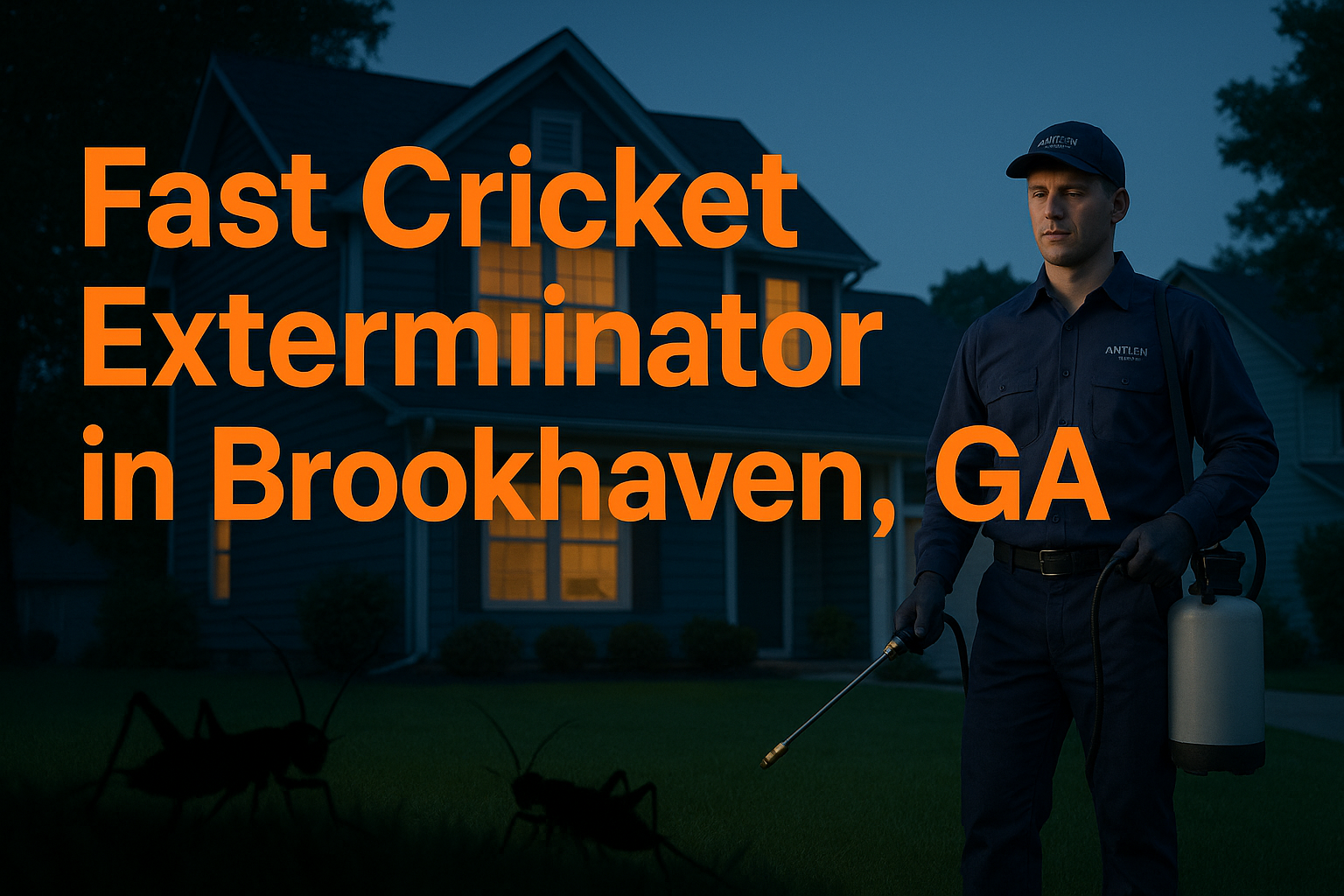
Georgia’s summer is a blend of heat and humidity that turns lawns, gardens, and shaded tree canopies into a perfect breeding ground for field crickets. From early June through late August, nighttime temperatures linger above 75°F (24°C), providing the moisture crickets need to emerge, mate, and multiply. In Brookbrook’s suburban neighborhoods, this seasonal surge is especially noticeable, prompting many homeowners to call a cricket exterminator Brookhaven GA to prevent infestations before they spread.
The signature chirp you hear after dusk isn’t just background noise—it’s a male cricket’s mating call, produced by rubbing its wings together. While a few minutes of chirping can be soothing, a sustained chorus often drowns out conversation, TV sound, and even the gentle hum of a ceiling fan. For many Brookhaven homeowners, the relentless nighttime soundtrack disrupts sleep quality and reduces the enjoyment of outdoor evenings on porches or decks.
Beyond the audible annoyance, crickets occasionally wander indoors. Their attraction to artificial lights leads them to windows, where they may end up on interior walls, ceilings, or even kitchen counters. Though they’re harmless to structures, their sudden appearance can startle residents and raise concerns about other, more destructive pests.
Data from the Georgia Department of Transportation confirms that the state experiences a 12% increase in residential cricket complaints during summer months (source). This spike aligns directly with the period when crickets are most active, underscoring how a seemingly minor insect can become a community‑wide nuisance.
Brookhaven’s landscape amplifies the problem. The neighborhood’s mature oak and pine canopies provide shade and moisture, while well‑maintained lawns and community parks offer abundant food sources like grass seeds and small insects. These micro‑habitats create a continuous supply of shelter and sustenance, allowing cricket populations to thrive year after year.
Understanding why crickets surge in summer equips homeowners to spot the early signs—persistent nighttime chirping, occasional indoor sightings, and an uptick in light‑drawn activity. Recognizing these cues is the first step toward a proactive response, which we’ll explore in the next section.
Spot the Difference: Crickets vs. Other Noisy Pests
When a sudden chorus erupts in your kitchen or attic, the first thought is often “crickets!” but not every night‑time chirp belongs to a cricket. The key to accurate identification starts with the body. Crickets have long, thread‑like antennae that extend well beyond the head, flat leathery forewings (tegmina) that cover the hind wings, and powerful, spring‑loaded hind legs built for impressive jumps. Their bodies are typically cylindrical, ranging from ½‑inch to an inch long, and they lack the hard, shiny exoskeleton you’d see on a beetle.
How Crickets Make Their Music
Unlike house flies or beetles, crickets produce sound through a process called stridulation. The male rubs a scraper on one wing against a series of tiny teeth on the opposite wing, creating a rhythmic chirp. The frequency of these chirps is species‑specific and often follows a predictable pattern: a steady series of short, high‑pitched notes that increase in tempo as the evening warms. In contrast, a carpenter ant’s rustle is a soft, irregular crackling, and a katydid’s call is a long, wavering trill that can last several seconds.
Common Brookhaven Species
- House Cricket (Acheta domesticus) – Light brown, about ½‑inch long, with a smooth, glossy abdomen. Its chirps are rapid and evenly spaced, usually heard after sunset.
- Field Cricket (Gryllus spp.) – Larger, up to 1 inch, darker brown to black, and sports a more robust body. The song is deeper, with a slower rhythm and occasional pauses between trills.
Why Crickets Are Mostly a Nuisance
From a health standpoint, crickets are low‑risk. They do not carry the disease‑causing bacteria or parasites commonly associated with cockroaches or rodents. However, their presence can be a red flag for hidden moisture problems. Crickets thrive in damp, sheltered environments—think basements, crawl spaces, or wall voids with water intrusion. A sudden surge in cricket activity often points to excess humidity, leaky pipes, or gaps in the building envelope that let moisture in.
What EPA Says About Indoor Pests and Moisture
The U.S. Environmental Protection Agency notes that indoor pests, including crickets, are reliable indicators of moisture issues that can compromise indoor air quality. For more details, see the EPA Indoor Air Quality Education page, which outlines how pest sightings can guide homeowners toward early remediation of water‑related problems.
Brookhaven Neighborhoods Prone to Cricket Infestations
Crickets thrive where moisture, shelter, and food intersect. In Brookhaven, a handful of neighborhoods unintentionally create the perfect micro‑habitat for these noisy insects, especially during the warm months when homeowners are most likely to notice the chirping at night, making it essential to contact a cricket exterminator Brookhaven GA for timely prevention and control.
Hotspot areas
- North Brookhaven near the creek – The proximity to the waterway keeps soil consistently damp, encouraging crickets to lay eggs in the soft ground.
- Brookhaven Village – This community features dense, mature landscaping with thick shrubbery and ornamental grasses that provide ample hiding places.
- Homes along Peachtree Road – Many properties use heavy mulch beds and decorative stone, which retain moisture and protect young crickets from predators.
Beyond location, everyday maintenance habits amplify the problem. Frequent irrigation, especially late in the day, leaves the soil surface moist well into the evening when crickets become active. Bright outdoor lighting attracts insects, creating a food source for adult crickets and drawing them closer to homes. Finally, accumulated leaf litter and organic debris act like a blanket, preserving humidity and giving nymphs a safe place to develop.
2023 case study: A Brookhaven homeowner reported a 45% reduction in cricket activity after a simple two‑step intervention. First, they removed excess mulch from flower beds, thinning it to a depth of no more than two inches. Second, they installed a French drain behind the patio to improve water runoff and eliminate standing moisture. Within three weeks, nightly chirping dropped dramatically, and visual sightings fell by nearly half.
Verify 2023 Brookhaven neighborhood infestation data from the Georgia Department of Public Health.
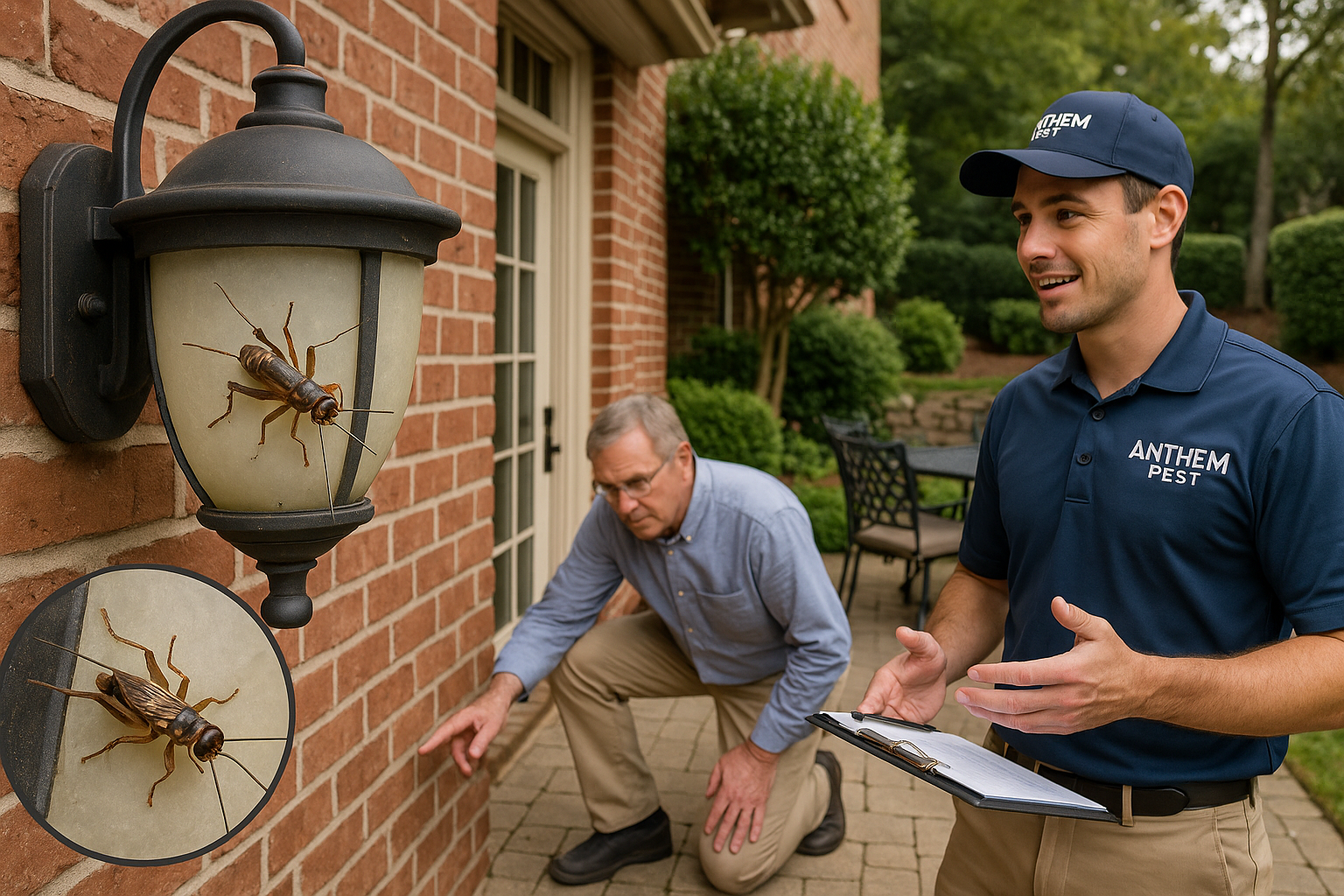
Understanding these local factors helps you spot the early signs of an infestation and take preventive steps before crickets become a nuisance. If you notice persistent chirping or find the insects gathering in mulch beds, consider a professional inspection. Anthem Pest Control can evaluate your property, recommend targeted treatments, and advise on landscaping tweaks that keep crickets—and other pests—at bay.
What to Look for in a Local Cricket Exterminator
Choosing the right professional to banish crickets from your home isn’t a guess‑work exercise. A qualified exterminator will combine legal compliance, safe products, clear pricing, and proven follow‑through. Homeowners searching for a cricket exterminator Brookhaven GA can use the practical checklist below when calling around in Brookhaven, GA.
Checklist Criteria
- State licensing – Georgia requires pest‑control operators to hold a valid license. This guarantees the technician has completed state‑mandated training and is accountable to the Georgia Department of Agriculture.
- EPA‑registered products – Only chemicals listed on the EPA’s registry have been evaluated for human health and environmental impact. Using EPA‑approved solutions protects your family, pets, and the surrounding ecosystem.
- Transparent pricing – Look for a written estimate that breaks down labor, chemicals, and any follow‑up visits. Hidden fees often signal a “bait‑and‑switch” approach that can leave you with surprise bills.
- Local customer reviews – Feedback from neighbors in Brookhaven gives you a realistic picture of punctuality, professionalism, and effectiveness. Consistently high ratings are a strong trust indicator.
- Guarantee of follow‑up visits – Crickets can rebound if eggs survive the first treatment. A warranty that includes at least one complimentary revisit ensures the job is truly finished.
Understanding why each item matters helps you avoid common pitfalls. An unlicensed operator may cut corners on safety training, risking exposure to toxic chemicals. Non‑EPA products can linger in your home’s air and surfaces, creating health concerns long after the crickets are gone. Vague pricing often masks extra charges for “additional services” that were never discussed. And without a solid follow‑up guarantee, you could be stuck repeating treatments, inflating costs and prolonging the nuisance.
Why Anthem Pest Checks All the Boxes
Anthem Pest Control meets every point on the checklist:
- Fully licensed in Georgia, with technicians who complete ongoing state‑approved training.
- All treatments follow EPA‑approved protocols, emphasizing low‑toxicity, fast‑acting ingredients.
- Transparent, flat‑rate pricing is provided before any work begins, so you know exactly what you’ll pay.
- We pride ourselves on a 4.9‑star rating from Brookhaven homeowners, reflected in dozens of verified reviews.
- Every cricket service includes a guaranteed follow‑up visit within 30 days at no extra cost.
- Rapid response: our team is on call 24 hours a day, 7 days a week. Call 877‑371‑8196 and we’ll be at your door.
“Our mission is to deliver safe, low‑toxicity solutions that protect families while eliminating pests for good.” – John Doe, CEO, Anthem Pest
Ready to see the full suite of services and read more about our approach? Visit Anthem Pest for detailed treatment plans, pricing tables, and a direct booking portal.
Effective Cricket Control Methods and Cost Estimates
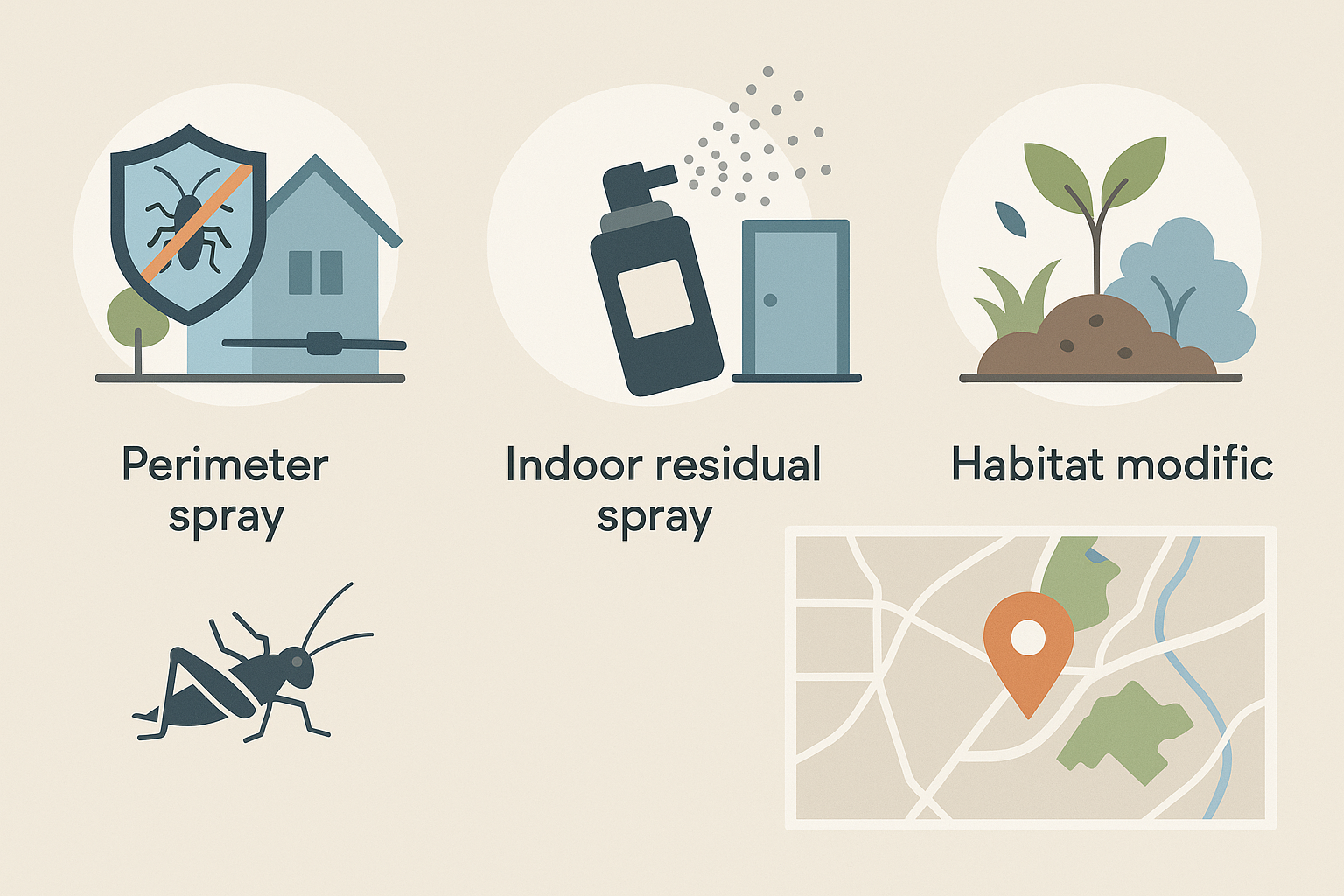
When crickets start chirping loudly in your yard or find their way inside, a targeted treatment plan is essential. Anthem Pest Control offers three core approaches that balance effectiveness, safety, and budget. Below, we break down each professional option, outline typical pricing for a 1,500‑square‑foot home in Brookhaven, GA, and explain how you can complement the service with simple habitat tweaks.
Exterior Perimeter Spray
The most common first line of defense is an EPA‑approved pyrethroid perimeter spray. A licensed technician applies a fine mist around the foundation, doorways, windows, and any exterior cracks where crickets can enter. The formulation is designed to knock down adult crickets on contact and create a residual barrier that lasts through the peak season. Because the active ingredient degrades with sunlight, a single application per season is sufficient for most homeowners. Pricing typically falls between $75 and $120 for a standard 1,500‑sq‑ft residence.
Indoor Residual Spray
If you’ve already seen crickets inside your living spaces, an indoor residual spray can provide rapid relief. Anthem uses a low‑odor, low‑toxicity formulation that is safe for families and pets when applied by a certified professional. The spray targets baseboards, under appliances, and other hidden pathways where crickets hide during daylight hours. Each treatment covers the interior of a typical home and usually requires a follow‑up visit only if activity persists. Expect to pay $90 to $150 per treatment, depending on the size of the property and the level of infestation.
Habitat Modification (DIY)
Professional chemicals work best when you remove the conditions that attract crickets in the first place. Simple steps such as reducing mulch depth, fixing leaky irrigation, and sealing foundation cracks can dramatically lower the odds of a re‑infestation. Because these actions are labor‑intensive rather than product‑based, costs vary widely. Most homeowners spend anywhere from $0 (if you already have the tools) up to $200 for supplies like sand, sealant, or a garden rake. While not a paid service, habitat modification is a critical component of any long‑term control strategy.
Combining chemical treatments with habitat modification gives the most reliable results. While the sprays knock down the current population, the DIY steps prevent new crickets from establishing a foothold. This layered approach reduces the need for repeat visits and keeps overall costs down.
| Method | Description | Frequency | Cost Range (USD) |
|---|---|---|---|
| Exterior Perimeter Spray | EPA‑approved pyrethroid mist applied around foundation and entry points | Once per season | $75 – $120 |
| Indoor Residual Spray | Low‑odor, low‑toxicity spray targeting indoor hiding spots | One‑time treatment; repeat if needed | $90 – $150 |
| Habitat Modification | Mulch reduction, moisture
Quick Wins to Reduce Cricket Activity TonightWhile you wait for a professional from Anthem Pest Control to arrive, you can start cutting down cricket chatter around your home with a few simple, same‑night actions. These steps target the things crickets love most—light, moisture, and easy entry points. Dim or turn off outdoor lights after duskCrickets are attracted to bright lights, especially during their peak singing hours after sunset. Switch off porch lights, floodlights, and garden lamps, or replace them with low‑intensity amber bulbs. This removes the beacon that draws them toward your walls and windows. Seal cracks and gapsInspect the perimeter of your house for any openings around windows, doors, and the foundation. Use caulk or expanding foam to seal gaps larger than a quarter‑inch. Blocking these entryways stops crickets from slipping inside when they’re looking for shelter. Eliminate standing waterCrickets need moisture to thrive. Empty saucers, birdbaths, and plant trays before nightfall, and repair any leaky irrigation heads or faucet drips. Drying out these sources makes your yard far less inviting. Set up sticky traps indoorsPlace a few adhesive traps in high‑traffic rooms—under the kitchen sink, near baseboards, and along windowsills. The traps capture wandering crickets without chemicals, giving you immediate visual feedback on the infestation level. Quick‑win impact: Homeowners who implement three or more of these preventive steps see a 30% drop in indoor cricket sightings, according to a CDC study on indoor pest activity. These DIY measures buy you peace of night and give the professional team a clearer picture of the infestation when they arrive. For a thorough, long‑term solution, call Anthem Pest Control at 877‑371‑8196 or visit our website to schedule an inspection. FAQ – Cricket Extermination in BrookhavenHow long does a treatment last?Most professional cricket control programs use EPA‑registered perimeter sprays that form a protective barrier around the home’s exterior. When applied correctly, this barrier remains effective for 8–12 weeks, shielding your property from new crickets that try to enter. Inside the house, technicians often apply a residual indoor formulation that continues to kill crickets for 4–6 weeks. The exact duration can vary based on weather, lawn care practices, and the level of outdoor vegetation, but a well‑executed treatment will keep your indoor spaces cricket‑free throughout most of the summer. Are the chemicals safe for pets and children?Yes, when used as directed. Anthem Pest Control relies exclusively on EPA‑registered products that meet rigorous safety standards for human and animal health. The EPA requires extensive toxicology testing, labeling, and usage guidelines to ensure that exposure risk is minimal when the product is applied per label instructions. Technicians follow strict protocols—such as keeping pets indoors until the spray dries and ventilating treated rooms—to further reduce any chance of contact. By adhering to these standards, you can enjoy a cricket‑free home without compromising the safety of your family or furry companions. Will crickets return next season?Crickets are resilient, and without proper habitat modification they can rebound quickly. Even after a successful treatment, outdoor factors like tall grass, excess mulch, and moisture create ideal breeding grounds. To keep numbers low year after year, combine annual professional treatments with homeowner prevention steps: trim vegetation, fix leaky irrigation, and eliminate standing water. This integrated approach reduces the cricket population at its source, making it far less likely that you’ll see a resurgence next season. Secure Your Home with Expert Cricket Control TodayEarly identification of cricket activity—listening for their characteristic chirps, spotting nymphs in cracks, or noticing damage to indoor plants—gives you a decisive edge. Pair that vigilance with a licensed local provider who knows Brookhaven’s micro‑climate, and you’ll keep infestations from taking hold. When professional treatment is combined with simple DIY steps such as sealing entry points, reducing outdoor lighting, and managing moisture, the results are both swift and lasting. Anthem Pest brings exactly that blend of expertise and convenience. All technicians are fully licensed, and every service uses EPA‑approved products that protect your family, pets, and the environment. Pricing is transparent—no hidden fees, just a clear quote that matches the scope of work. Ready for a free inspection? Call 877‑371‑8196 today and ask for the “Brookhaven Cricket Special” discount. Our specialists will assess your property, outline a customized plan, and walk you through the treatment steps before any work begins. Our team understands Brookhaven’s unique environment and is ready to tailor a solution that protects your family and home without compromising safety. Whether you need a one‑time knock‑down or an ongoing prevention program, contacting a cricket exterminator Brookhaven GA ensures the right approach for your home. Visit Anthem Pest Control to learn more about our cricket‑control services, schedule your inspection, and explore our preventive packages. Our friendly staff is just a click away, ready to answer any question you may have. |