
Recognizing Early Signs of a Mouse Infestation
Mice are opportunistic foragers, and your kitchen is their favorite buffet—one of the main reasons homeowners often search for a mouse exterminator Suwanee residents trust. Open pantry doors, uncovered food bowls, and even tiny crumbs on countertops create a scent trail that draws rodents straight to the heart of your home. Warmth, shelter, and easy access to water make kitchens a perfect launchpad for a growing mouse population.
Visual clues you can’t ignore
- Droppings: Small, dark, rice‑shaped pellets often appear along baseboards, behind appliances, or near food storage.
- Gnaw marks: Look for fresh chew marks on wood, plastic, or wiring—mice need to keep their teeth trimmed.
- Shredded packaging: Torn paper, crinkled snack bags, or ragged cardboard are signs they’ve been rummaging through your supplies.
- Faint rustling: A soft scurrying sound, especially at night, usually indicates active movement behind walls or under cabinets.
Subtle signs that often slip by
Beyond the obvious, mice leave behind quieter hints. A fine film of water droplets on your faucet or sink rim can result from tiny paws dragging moisture as they explore. Unexplained crumbs on countertops—even after a thorough cleaning—are a tell‑tale sign that tiny noses are returning for more.

Health risks you should take seriously
Rodent droppings and urine carry a host of pathogens—one of the most common reasons homeowners contact a mouse exterminator Suwanee residents trust. According to the U.S. Environmental Protection Agency (EPA), mouse droppings can harbor Hantavirus, while the Centers for Disease Control and Prevention (CDC) warns that bacteria such as Salmonella and Leptospira thrive in rodent waste. Inhaling aerosolized particles from disturbed droppings can lead to respiratory issues, and direct contact may cause skin irritation or more severe infections.
Quick inspection checklist
Run through each room with this short list. If you spot any of the items below, it’s time to call a professional.
- Check baseboards, especially behind appliances, for droppings or gnaw marks.
- Inspect pantry shelves, cereal boxes, and stored snacks for shredded packaging.
- Listen for rustling sounds in walls, ceilings, or under cabinets after dark.
- Look for water droplets on faucets, under sinks, and around the dishwasher.
- Sweep countertops and tabletops for unexplained crumbs or tiny footprints.
- Examine electrical cords for chew damage—this can pose a fire hazard.
Understanding Mouse Behavior and Seasonal Activity
Typical Mouse Habits
House mice (Mus musculus) are opportunistic survivors. They build nests in hidden corners—behind insulation, inside wall voids, or beneath stored boxes—using shredded paper, fabric, and plant material. Their foraging routine is a constant quest for grains, seeds, and any food crumbs left on countertops or floors. Because mice are primarily nocturnal, you’ll hear scurrying in the walls after dark, while daylight hours are spent resting and grooming.
Why Seasons Matter
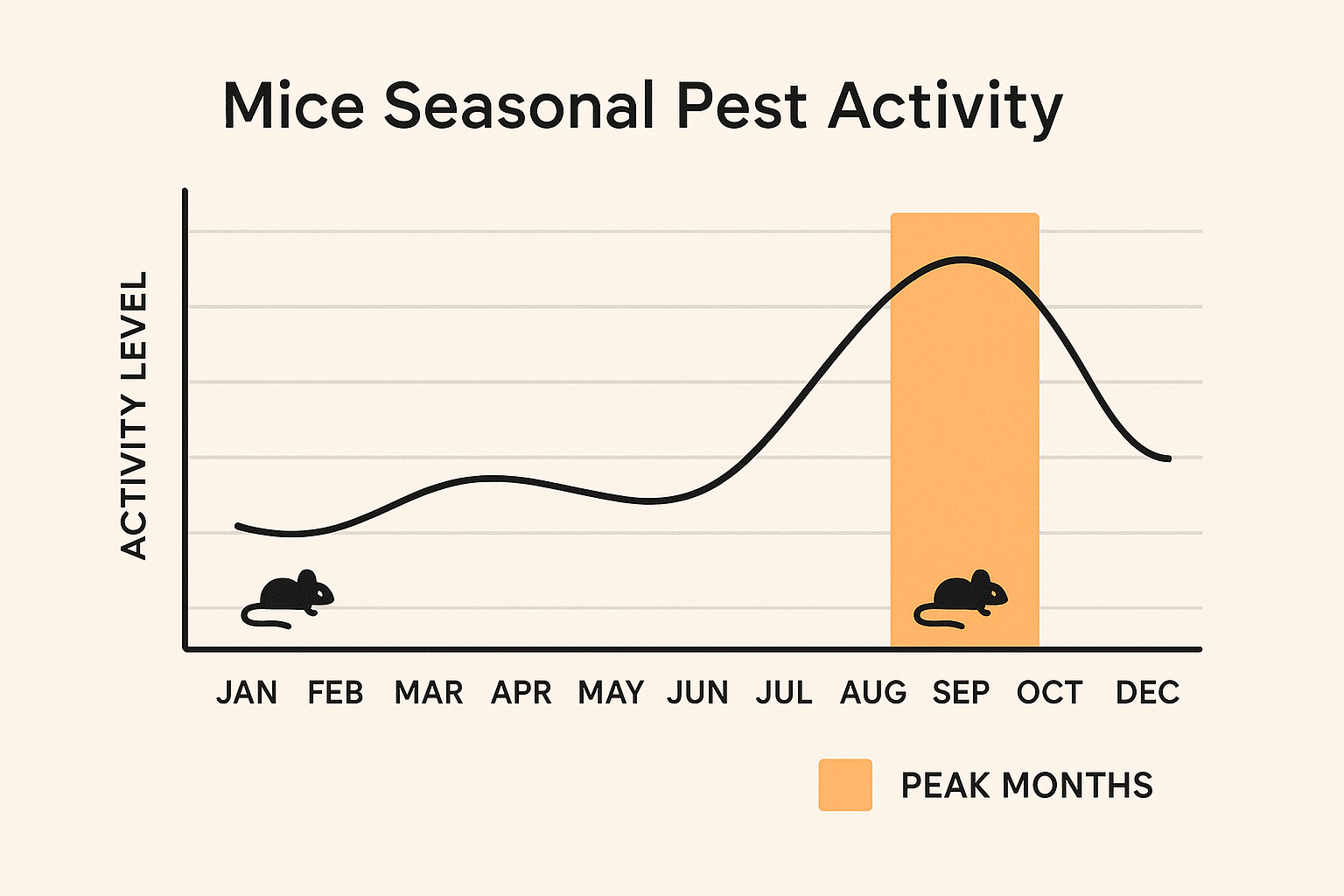
Temperature and food availability are the twin engines that drive mouse activity throughout the year. In late summer, abundant outdoor harvests and warm nights give mice a chance to multiply rapidly. As autumn approaches and outdoor food sources dwindle, they seek shelter inside homes, leading to a noticeable surge in indoor sightings. Winter’s cold pushes them deeper into heated spaces, but the extreme cold of early spring can temporarily slow reproduction until temperatures rise again.
Regional Climate and Home Maintenance Links
Suwanee’s humid subtropical climate amplifies these patterns. Warm, wet summers keep outdoor vegetation lush, providing ample cover and food for mice. When the first frost hits in October, the temperature dip combined with leaf litter creates perfect hiding spots at the foundation of a house. Homeowners who delay sealing cracks and gaps during this window often find mice slipping through the very openings they intended to protect.
What the Numbers Say
The National Pest Management Association (NPMA) reports that rodent complaints spike by 35% during the October‑December period in the Southeast United States. Their data also show a secondary rise in March, as milder temperatures encourage new generations to venture outdoors for breeding. These statistics confirm that mouse activity isn’t random—it follows predictable seasonal curves that align with local weather trends.
Seasonal Prevention Checklist
- Fall seal‑up: Inspect the exterior for gaps around utility lines, vents, and the foundation; use steel‑wool and caulk to block entry points before temperatures drop.
- Trim vegetation: Keep shrubs, tree branches, and mulch at least 18 inches away from the house to eliminate bridge pathways for mice.
- Secure food storage: Transfer pantry items to airtight containers and clean up crumbs nightly, especially after holiday meals.
- Eliminate water sources: Repair leaky faucets, clear clogged gutters, and ensure basement dehumidifiers are functioning.
- Inspect attics and crawl spaces: Look for shredded insulation, droppings, or gnaw marks; address any signs immediately.
- Schedule a professional inspection: Have Anthem Pest Control perform a pre‑winter assessment to identify hidden entryways and apply targeted rodent‑proof treatments.
Treatment Options: Traps, Baits, and Professional Services
Snap Traps, Live‑Catch Traps, and Electronic Traps
Snap traps are the classic “click-and-kill” device most homeowners recognize and are often recommended by a mouse exterminator Suwanee residents consult for quick, targeted control. They’re inexpensive, require no electricity, and can eliminate a mouse in a single strike when placed correctly. The downside? They’re visible, can be unsettling for children or pets, and need regular checking to remove dead rodents.
Live‑catch traps offer a humane alternative. They capture mice without harming them, allowing you to release the animal far from your home. However, they demand frequent monitoring—otherwise, a trapped mouse can die from stress or dehydration, creating an odor problem.
Electronic traps combine the speed of a snap with the cleanliness of a sealed chamber. A low‑voltage shock kills instantly, and the interior lights up to confirm a catch. These units are pricier and need a power source, but they’re child‑proof and eliminate the mess of traditional traps.
Placement tips: Position any trap along walls, behind appliances, and near suspected entry points. Mice travel close to surfaces, so a perpendicular line of traps perpendicular to the wall maximizes encounters. Use a thin layer of peanut butter or chocolate as bait, and reset traps daily for the first 48 hours.
Bait Stations: How They Work and What to Know
Bait stations are sealed containers that house anticoagulant or non‑anticoagulant rodenticides. Mice enter, feed on the bait, and carry the poison back to hidden nests, extending control beyond the immediate area. Because the poison is enclosed, the risk of accidental ingestion by children or pets is dramatically reduced.
Safety is paramount. Always place stations in tamper‑resistant locations—under sinks, behind cabinets, or in wall voids—out of reach of non‑target animals. Follow the EPA’s Rodenticide Guidance, which mandates proper labeling, usage limits, and disposal procedures.
Regulatory guidance also requires that you keep a record of the product’s active ingredient, batch number, and application date. If you’re unsure about handling rodenticides, it’s a clear sign that a licensed professional should step in.
When Professional Intervention Is the Smart Choice
Professional pest‑control technicians bring tools and expertise that DIY methods simply can’t match. Fogging, for example, disperses a fine aerosol of rodenticide throughout hard‑to‑reach voids, ensuring coverage in wall cavities, attics, and crawl spaces where mice hide.
Targeted rodenticide applications—performed by certified applicators—allow for precise dosing, minimizing environmental impact while maximizing efficacy. Technicians also implement Integrated Pest Management (IPM), a systematic approach that combines inspection, exclusion, sanitation, and monitoring to keep rodents out long‑term.

DIY Limits: Signs It’s Time to Call a Pro
Even the most diligent homeowner can hit a wall with DIY control. Look for these red flags:
- More than a handful of droppings or gnaw marks—indicating a large, established population.
- Evidence of damage to structural components, insulation, or wiring.
- Repeated sightings despite active trap or bait placement.
- Presence of nests in concealed spaces like HVAC ducts or behind drywall.
When any of these signs appear, a professional assessment can prevent costly repairs and health hazards associated with rodent‑borne diseases.
Decision Tree: When to Call a Pro
- Identify the problem. Have you seen live mice, droppings, or damage?
- Assess the scale. Is the activity limited to one room or spread throughout the house?
- Try DIY for 48 hours. Set appropriate traps and bait stations in strategic locations.
- Evaluate results. If you catch fewer than three mice or see no decline, move to the next step.
- Check for structural damage. Any gnawed wires, insulation, or compromised framing?
- Call Anthem Pest Control. Our technicians will perform a full inspection, recommend fogging or IPM, and provide a clear, upfront quote.
Pricing Structures and What to Expect from a Service Plan
Common Pricing Models
When you call a mouse exterminator in Suwanee, you’ll typically encounter three pricing structures:
- One‑time service: A single visit that includes inspection, trap placement, and a follow‑up call. Ideal for homeowners who need an immediate knock‑down.
- Monthly monitoring: A recurring schedule (usually every 30 days) where a technician checks traps, resets baits, and adjusts the treatment plan as needed.
- Annual contracts: A full‑year agreement that bundles quarterly visits, unlimited trap service, and a guarantee against re‑infestation. This is the most cost‑effective route for long‑term peace of mind.
Understanding the Infographic

The graphic breaks down each model by three key factors: total cost, frequency of visits, and what’s included (technician time, traps, follow‑up). Use it as a quick reference when you’re comparing quotes from different providers.
Hidden Fees to Watch For
Transparent pricing is a hallmark of Anthem Pest Control, but not every company is that clear. Keep an eye out for these extra charges:
- Additional visits: Some firms charge a “service call” fee for any visit beyond the agreed schedule.
- Equipment rental: Certain high‑tech traps or monitoring devices are billed per month instead of being included.
- Disposal fees: Removing dead rodents or contaminated materials can add a modest surcharge.
- Travel surcharges: If your home is outside the provider’s normal service radius, mileage fees may appear.
Preventative Plans vs. Reactive Treatments
A reactive, one‑time fix might cost $150‑$250, but it only addresses the mice you see today. Preventative plans, on the other hand, spread the expense over time and reduce the likelihood of a repeat invasion. Think of it like a health insurance policy for your home: you pay a predictable amount each month, and you avoid the higher, unexpected costs of emergency treatments.
Sample Price Ranges (National Averages)
According to the National Pest Management Association (NPMA), the United States sees the following average costs for mouse control:
| Service Model | Typical Cost (USD) | What’s Included |
|---|---|---|
| One‑time service | $150‑$250 | Inspection, traps, 1‑2 follow‑up calls |
| Monthly monitoring | $30‑$50 per month | Technician visit, trap reset, bait replenishment |
| Annual contract | $300‑$550 per year | Quarterly visits, unlimited traps, full warranty |
These figures give you a solid baseline for budgeting. Local providers in Suwanee may be slightly higher due to travel costs, but the range should stay within these national parameters.
Tips for Evaluating Quotes
- Request a detailed breakdown: A reputable company will list each component—inspection, labor, traps, follow‑up—in the estimate.
- Ask about guarantees: Look for a “no‑re‑infestation” promise and understand the time frame it covers.
- Compare service frequency: A cheaper quote that only includes one visit may leave you paying extra later for follow‑ups.
- Check for hidden fees upfront: Ask the provider to spell out any potential extra charges before signing.
- Read reviews and verify licensing: A well‑rated, fully licensed pest control firm—like Anthem Pest Control—will be more likely to honor the quoted price.
By using these checkpoints, you can confidently choose a pricing plan that fits your budget while ensuring your home stays mouse‑free year after year.
Protect Your Home with Anthem Pest Control
Early detection, seasonal awareness, and the right treatment plan are the three pillars that keep a mouse invasion from turning into a full‑blown infestation. Spotting fresh droppings, gnaw marks, or hearing nocturnal scurrying as soon as the cooler months arrive gives you a crucial window to act before the pests multiply. Choosing a treatment that matches the species, entry points, and your home’s layout ensures you eliminate the problem without unnecessary chemicals or repeated visits.
Why Anthem Pest Control Is Your Best Ally
Anthem’s technicians are trained to identify every rodent species common to Georgia, from the house mouse to the more elusive roof rat. That knowledge lets them place bait stations in the safest, most effective locations—out of reach of children and pets while targeting the exact pathways the critters use. Each service plan is customized: we assess structural vulnerabilities, recommend sealing options, and schedule follow‑up checks that fit your calendar, not the other way around.
Transparent Pricing, Eco‑Friendly Solutions, Nationwide Reach
- Transparent pricing: No hidden fees. You receive a clear, itemized quote before any work begins.
- Eco‑friendly methods: We prioritize low‑toxicity baits and integrated pest‑management practices that protect your family and the environment.
- Nationwide coverage: Whether you own a suburban home in Suwanee or a vacation cabin elsewhere, Anthem’s network of licensed professionals delivers the same high standard of service.
Our technicians also conduct a thorough sanitation review, recommending simple steps homeowners can take to deter future invasions.
Take the First Step—No Obligation, No Pressure
Ready to see how a professional inspection can give you peace of mind? Our team will walk through your property, point out any hidden risks, and provide a free, no‑obligation quote that outlines exactly what’s needed. There’s no sales script—just honest advice and a clear path to a mouse‑free home.
Give us a call today at 877-371-8196 or request your free inspection online with a mouse exterminator Suwanee homeowners trust at Anthem Pest Control. Let us put our expertise to work so you can enjoy a quiet, pest-free living space.