Understanding Spider Risks in Peachtree City

Peachtree City’s warm, humid summers and mild winters create a perfect backdrop for spiders to thrive. The region’s abundant vegetation, plentiful water sources, and frequent outdoor gatherings give these arachnids plenty of food and shelter. As a result, homeowners often find webs in corners, garages, and even inside living spaces, especially after the rainy season.
Common Misconceptions About Spiders
- All spiders are dangerous. In reality, most species found in Peachtree City are harmless and actually help control other insects.
- Spiders only appear in dirty homes. Even the cleanest houses can host spiders because they follow prey, not cleanliness.
- Removing a single web solves the problem. A single web is often a sign of an active colony; without proper treatment, new webs will quickly replace the old ones.
Understanding these myths helps homeowners appreciate the balance spiders bring while recognizing when a population becomes a nuisance. Beneficial species, like the common house spider, capture flies and mosquitoes, reducing the need for chemical sprays. However, species such as the brown recluse or black widow pose real health risks and require professional attention.
Health and Property Concerns
Spider bites are rare, but when they occur, they can lead to localized pain, swelling, and in some cases, allergic reactions that mimic more serious conditions. The brown recluse, for example, can cause necrotic lesions that need medical care. Beyond bites, dense webs can damage property by collecting dust, moisture, and even attracting other pests that feed on the trapped debris.
Allergic individuals may experience heightened reactions to spider silk or venom, resulting in respiratory irritation or skin rashes. While most homeowners won’t experience severe symptoms, the uncertainty and anxiety of a potential bite often prompt a call to a pest professional.
Why Early Detection and Regular Inspections Matter
Spotting the first signs of spider activity—tiny silk strands in corners, occasional egg sacs, or a lone adult—allows you to act before an infestation spreads. Regular seasonal inspections, especially after the spring rains, let professionals identify vulnerable entry points such as cracks, gaps around windows, and unscreened vents.
Proactive control not only reduces the likelihood of painful bites but also minimizes the long‑term cost of extensive treatments. A modest, scheduled inspection can catch a budding spider colony early, enabling targeted, low‑impact treatments that preserve the beneficial insects while eliminating the harmful ones.
At Anthem Pest Control, we combine local knowledge of Peachtree City’s spider species with safe, effective treatment plans. By partnering with a trusted neighbor‑to‑neighbor service, you gain peace of mind, protect your family’s health, and keep your home free from unwanted eight‑legged guests.
Identifying Common Spiders Found Locally

Living in Peachtree City means sharing your home and yard with a handful of spider species that are both familiar and, at times, a little unsettling. Knowing which critter you’re looking at helps you decide whether a simple clean‑up will do or if professional help from Anthem Pest Control is warranted.
Brown Recluse (Loxosceles reclusa)
The brown recluse is the most medically significant spider in the region. Adults measure 6–12 mm (about the length of a pencil eraser) and sport a uniformly light‑brown body with a characteristic dark violin‑shaped marking on the cephalothorax. Their legs are long, slender, and often appear slightly darker at the tips.
- Web type: Irregular, flat sheet tucked into corners, closets, or under furniture.
- Preferred habitat: Dark, undisturbed indoor spaces—basements, attics, and closets are prime real estate.
- Indoor vs. outdoor: Mostly indoor; you’ll rarely see them outdoors unless they’ve been inadvertently brought in.
While bites are rare, the brown recluse’s venom can cause necrotic lesions. If you suspect a bite, seek medical attention promptly.
Black Widow (Latrodectus mactans)
Black widows are instantly recognizable by their glossy black bodies and the iconic red hourglass shape on the underside of the abdomen. Females grow up to 15 mm, while males are considerably smaller and less dangerous.
- Web type: Sticky, tangled cobwebs often draped in low‑lying corners, garden sheds, and woodpiles.
- Preferred habitat: Warm, dry, and sheltered spots—think garage corners, outdoor storage boxes, and dense shrubbery.
- Indoor vs. outdoor: Both; you’ll find them inside basements or crawl spaces as well as in outdoor debris.
Black widow bites are medically significant, causing muscle cramps, sweating, and nausea. Prompt treatment reduces complications.
Orb Weaver (Araneidae family)
Orb weavers are the architects of the classic round, wheel‑shaped webs you see glistening in morning dew. Sizes vary from 5 mm to 30 mm, and many sport bright yellows, oranges, or whites with striking patterns on their abdomen.
- Web type: Large, circular orb webs usually positioned between trees, shrubs, and fence lines.
- Preferred habitat: Open outdoor areas—garden beds, porch railings, and the edges of lawns.
- Indoor vs. outdoor: Primarily outdoor, though occasional indoor webs appear in sun‑lit corners of basements or attics.
Orb weavers are harmless to humans; their bites are rare and typically cause only mild irritation.
House Spider (Parasteatoda tepidariorum)
Also known as the common cobweb spider, the house spider is a small, brownish‑gray creature, about 5–7 mm long. Its body is unremarkable, but the dense, messy cobwebs it spins are a giveaway.
- Web type: Irregular, tangled cobwebs in corners, ceiling beams, and behind furniture.
- Preferred habitat: Warm, undisturbed indoor spaces—kitchens, bathrooms, and storage closets.
- Indoor vs. outdoor: Predominantly indoor, though they may wander outdoors during warm months.
These spiders are beneficial, feeding on flies, mosquitoes, and other nuisance insects. They pose no medical risk.
Quick Reference Table
| Species | Size (mm) | Distinct Markings | Web Type | Typical Location | Medical Significance |
|---|---|---|---|---|---|
| Brown Recluse | 6–12 | Violin‑shaped dorsal marking | Flat sheet in corners | Basements, closets, attics | High (necrotic venom) |
| Black Widow | 10–15 (female) | Red hourglass underside | Sticky cobwebs | Garage corners, woodpiles | High (neurotoxic venom) |
| Orb Weaver | 5–30 | Bright abdominal patterns | Large circular orb | Garden, fence lines, porches | Low (rare bite) |
| House Spider | 5–7 | Uniform brown‑gray | Irregular cobwebs | Indoor corners, basements | None |
By matching size, coloration, web structure, and location to the descriptions above, you can quickly identify which spider you’re dealing with. For medically significant species like the brown recluse or black widow, it’s wise to call Anthem Pest Control (877‑371‑8196) for safe, professional removal and peace of mind.
Seasonal Activity Patterns of Peachtree City Spiders
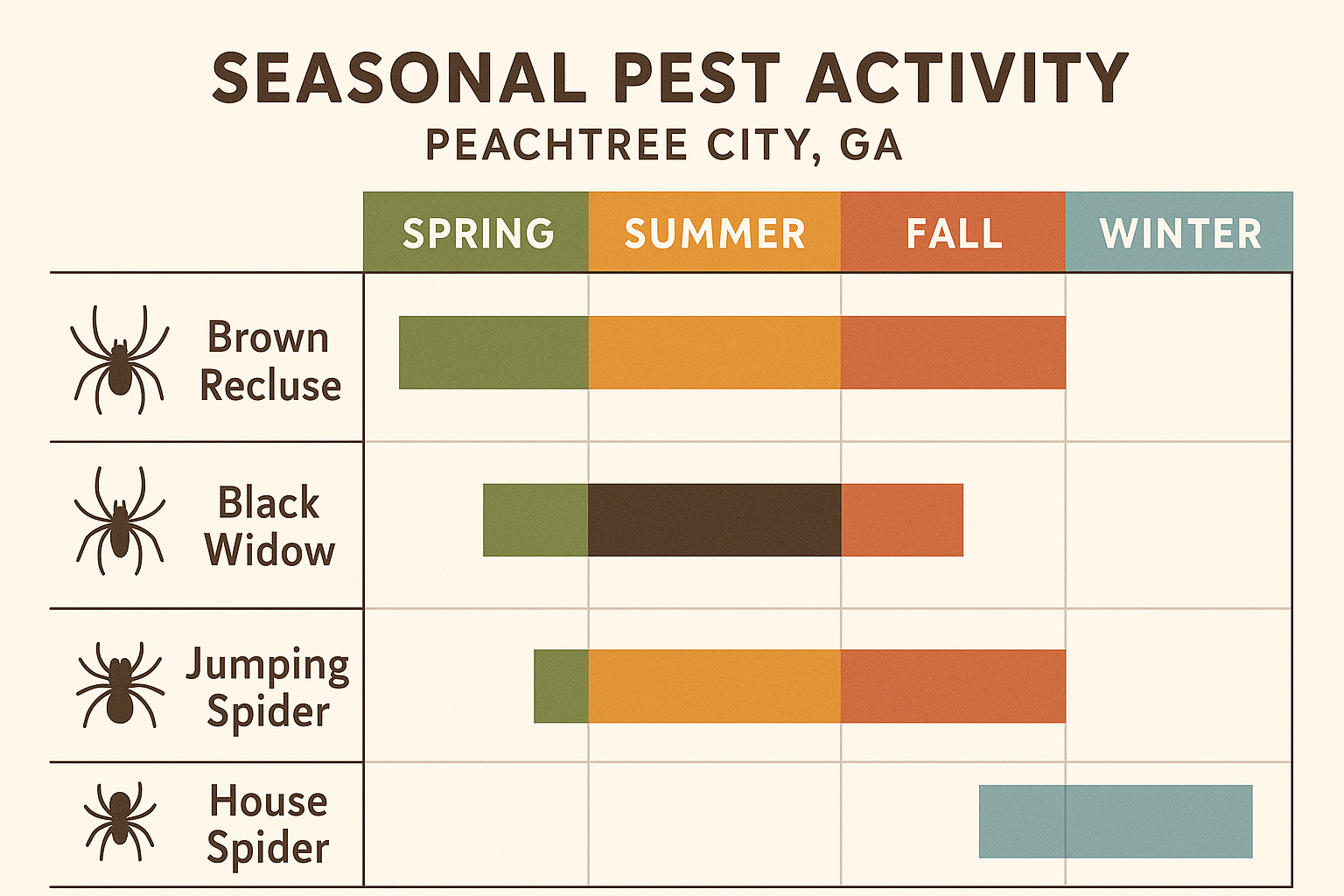
Spiders aren’t random wanderers; their movements are tightly linked to temperature and humidity. Warm, moist conditions speed up development, while dry, cool weather slows it down. Understanding these environmental cues lets you anticipate when spiders are most likely to appear inside your home and when preventive steps will be most effective.
Spring: Egg‑Sacs Hatch and Indoor Explorations Begin
As daytime highs climb above 60°F and soil moisture rises, spider egg sacs—often laid in protected outdoor corners—start to hatch. Young spiderlings disperse in a behavior called “ballooning,” catching breezes to travel short distances. Many end up inside garages, basements, or screen doors, seeking shelter from the lingering chill. This is the ideal window for a thorough interior inspection, especially around window frames, vents, and stored items.
Summer: Peak Hunting and Outdoor Web Proliferation
Summer brings the perfect cocktail of heat (80‑90°F) and humidity for spiders to thrive. Adult hunters such as wolf spiders and jumping spiders are out in full force, hunting insects that are also active in your yard. Web‑building species, like orb weavers, spin dense networks in shaded garden corners, under eaves, and on porch railings. While most remain outdoors, the sheer volume of activity raises the odds of occasional indoor wanderers.
Fall: Mating Season and Shelter‑Seeking Migration
When temperatures dip into the 60s, many adult spiders begin their mating rituals. Males roam more widely, increasing the chance of entering homes in search of females. Simultaneously, spiders look for warm, dry refuges to survive the approaching cold. Expect to see more spiders near entry points, in closets, and behind appliances during September through November.
Winter: Dormancy Dominates, but Indoor Sightings Still Occur
Winter slows most spider metabolism to a near‑standstill. Outdoor activity drops dramatically, yet some species—especially those already inside—remain active at low levels. You might still spot a lone spider in a basement corner or attic, particularly if humidity is high from indoor heating. This period is perfect for sealing cracks and applying preventative treatments that stay effective throughout the colder months.
Using the Seasonal Chart to Plan Preventive Measures
The chart above visualizes the ebb and flow of spider activity across the year. Here’s how you can translate it into a practical schedule:
- Early Spring (March‑April): Conduct a detailed interior sweep, focusing on hidden corners and entry points. Consider a pre‑emptive perimeter treatment to target emerging spiderlings.
- Late Spring to Early Summer (May‑June): Trim vegetation away from the house foundation and keep outdoor lighting on a timer to reduce insect prey that attracts spiders.
- Mid‑Summer (July‑August): Inspect and clean outdoor webs regularly. Apply a targeted outdoor barrier if you notice a surge in web density.
- Fall (September‑October): Seal gaps around doors, windows, and utility penetrations. Schedule a professional inspection to address any hidden infestations before they migrate indoors.
- Winter (November‑February): Maintain low indoor humidity with dehumidifiers, especially in basements and crawl spaces. Perform a final check of sealed entry points before the heating season peaks.
Quick Reference Table
| Season | Typical Activity | Key Homeowner Actions |
|---|---|---|
| Spring | Egg‑sac hatching, increased indoor movement | Full interior inspection, seal cracks, start perimeter treatment |
| Summer | Peak hunting, abundant outdoor webs | Trim vegetation, control outdoor lighting, clean webs |
| Fall | Mating flights, migration into homes | Seal entry points, professional follow‑up inspection |
| Winter | Low activity, occasional indoor sightings | Maintain low humidity, final seal check, monitor basements |
By aligning your pest‑management calendar with these seasonal patterns, you’ll stay one step ahead of the spiders that share your home. A proactive approach not only reduces surprise encounters but also makes any necessary treatments more efficient and cost‑effective.
Warning Signs of a Spider Infestation
Spotting a few stray spiders is normal, but certain patterns signal a growing problem that needs attention. Recognizing these early indicators helps you act before webs spread throughout your home.
Increased webbing in corners, basements, and attics
Spiders build webs where they feel safe and have easy access to prey. If you notice dense, tangled silk in ceiling corners, along baseboards, or tucked away in crawl spaces, it’s a clear sign that a colony is establishing itself. The webs may appear dusty or cobweb‑like, especially in low‑traffic areas where they’re less likely to be disturbed.
Frequent sightings of live spiders or shed exoskeletons
Seeing more spiders than usual, especially during daylight, suggests they’re reproducing and expanding their territory. Likewise, finding shed skins—those translucent, empty shells—indicates a population in active growth. Both are reliable clues that the infestation is moving beyond a few isolated individuals.
Bites or unexplained skin irritations, especially at night
While most household spiders are harmless, some can bite when provoked. Unexplained red welts, itching, or a mild burning sensation that appears after you’ve been in bed or sitting on the floor should raise concern. These symptoms often accompany a hidden spider presence, as the insects seek shelter close to where you rest.
Presence of egg sacs in hidden areas
Female spiders lay egg sacs that look like tiny, silky pillows. Finding them tucked inside closets, under furniture, or in the insulation of crawl spaces means the spiders are preparing for the next generation. Egg sacs can contain dozens of spiderlings, accelerating the infestation quickly.
Unusual spider activity near outdoor lighting or vegetation
Lights attract insects, and insects attract spiders. If you notice a flurry of spider movement around porch lights, garden lamps, or dense foliage near your home’s foundation, it often precedes indoor migration. This pattern is especially common during the warmer months when spiders seek shelter for the cooler evenings.
Quick Homeowner Inspection Checklist
- Check corners of ceilings and walls for new webs.
- Inspect basements, attics, and crawl spaces for silk and egg sacs.
- Look for shed exoskeletons in closets and under furniture.
- Note any unexplained bites or skin irritations.
- Observe spider activity around outdoor lights and garden plants.
- Search for small, pillow‑shaped egg sacs in hidden spots.
- Listen for faint rustling sounds in attics at night.
- Examine stored boxes and seasonal gear for webbing.
- Check the underside of decks and porches for spider trails.
- Record any patterns and contact Anthem Pest Control for a professional assessment.
When these signs appear, it’s time to call in the experts. Anthem Pest Control offers safe, effective treatments that target spider colonies at the source, protecting your home and family before the problem escalates.
How Much Does Spider Control Cost in Peachtree City?
Understanding the Pricing Landscape
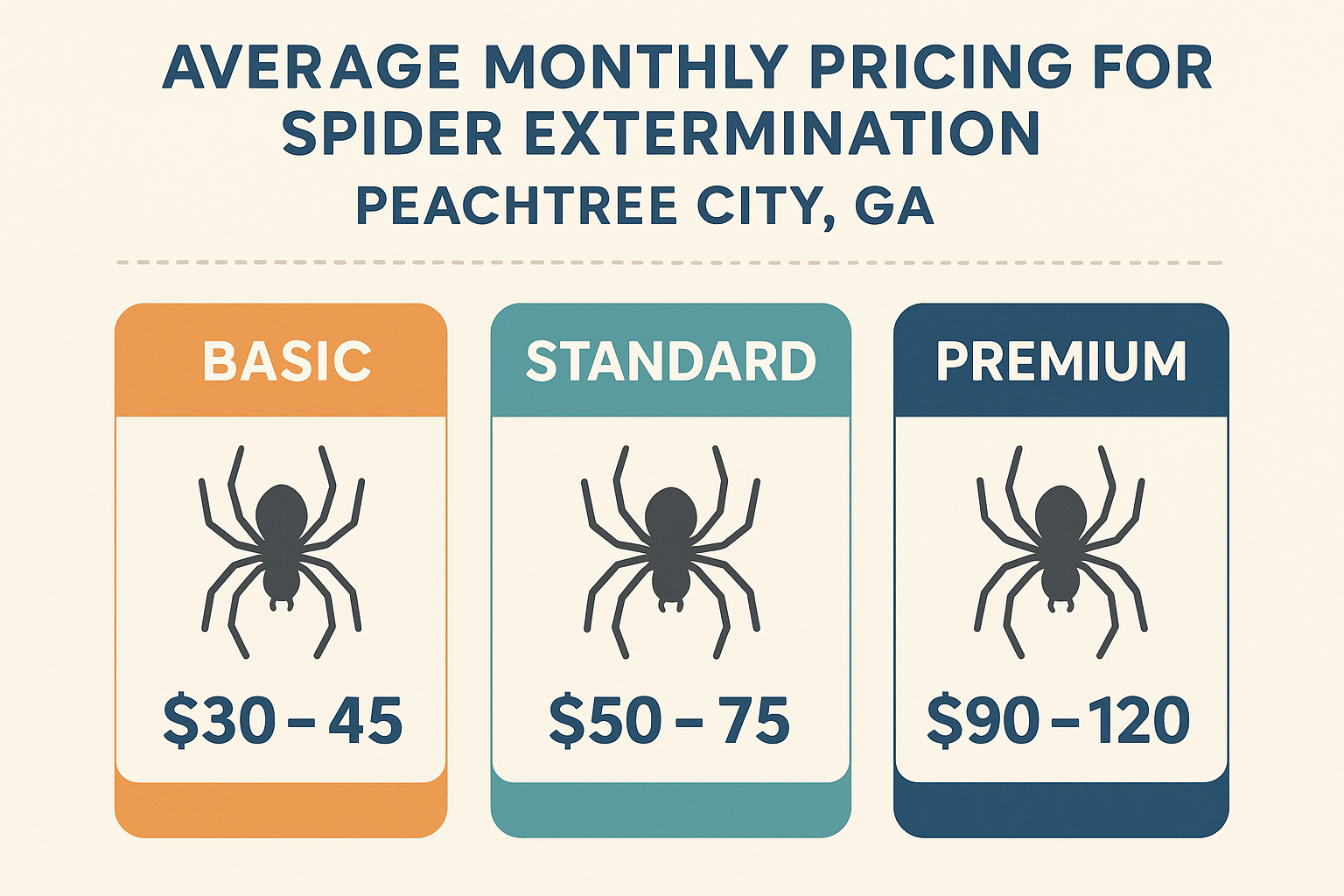
Anthem Pest Control, like most reputable pest‑management firms in Peachtree City, groups spider‑extermination into three distinct service tiers: Basic, Standard, and Premium. Each tier is built around a transparent pricing structure that lets homeowners know exactly what they’re paying for—no hidden fees, no surprise add‑ons. By breaking the options into clear levels, you can match the treatment intensity to the severity of your spider problem and your budget.
What Each Tier Includes
Basic Tier focuses on a one‑time inspection and a targeted chemical or dust treatment aimed at high‑traffic areas where spiders are most likely to hide. The package typically includes a single follow‑up visit within 30 days to ensure the initial treatment took hold, and a 30‑day warranty on the work performed.
Standard Tier adds a more thorough interior inspection, treatment of both interior and exterior perimeters, and two scheduled follow‑up visits over a 60‑day period. This tier also extends the warranty to 90 days, giving you a longer window of protection against re‑infestation.
Premium Tier is the most comprehensive option. It starts with a detailed property‑wide inspection, followed by a combination of chemical, dust, and eco‑friendly bait applications. Homeowners receive three follow‑up visits spread across 90 days, a full‑service exterior barrier, and a 12‑month warranty that covers any resurgence of spider activity.
Average Monthly Cost Ranges
| Tier | Inspection | Treatment Type | Follow‑up Visits | Warranty Length | Avg. Monthly Cost |
|---|---|---|---|---|---|
| Basic | One‑time | Targeted spray/dust | 1 (30‑day) | 30 days | $45–$65 |
| Standard | Comprehensive | Interior + exterior barrier | 2 (60‑day) | 90 days | $80–$110 |
| Premium | Full‑property | Multi‑method (chemical, dust, bait) | 3 (90‑day) | 12 months | $130–$170 |
Factors That Can Influence the Final Price
While the table gives a solid baseline, several variables can shift the actual cost. The most common drivers are:
- Property size: Larger homes or multi‑unit buildings require more product and labor, nudging the price upward.
- Infestation severity: A light, occasional sighting usually falls within the Basic tier, whereas a full‑blown infestation may demand the Premium package.
- Seasonal discounts: Many local companies, including Anthem Pest, offer reduced rates during the spring and fall when spider activity spikes.
- Specialized treatments: If you request pet‑safe or child‑safe formulations, the cost may increase modestly.
Where the Numbers Come From
All figures above are derived from recent market surveys and pricing data compiled by Anthem Pest Control for the Peachtree City area. For a deeper dive into the methodology, the exact cost breakdowns, and any upcoming promotional offers, visit the Anthem Pest Control spider control cost guide. This source is updated quarterly to reflect changes in material costs, labor rates, and local demand.
Treatment Options and Methods for Spider Control
Chemical Treatments: What Works and When
When spiders are already established inside a home, fast‑acting chemical solutions are often the most reliable way to reduce the population. Residual sprays contain insecticides that cling to surfaces such as baseboards, window frames, and doorways for weeks, delivering a lethal dose each time a spider walks over the treated area. This method is ideal for high‑traffic interior zones and for preventing re‑entry after an initial knock‑down.
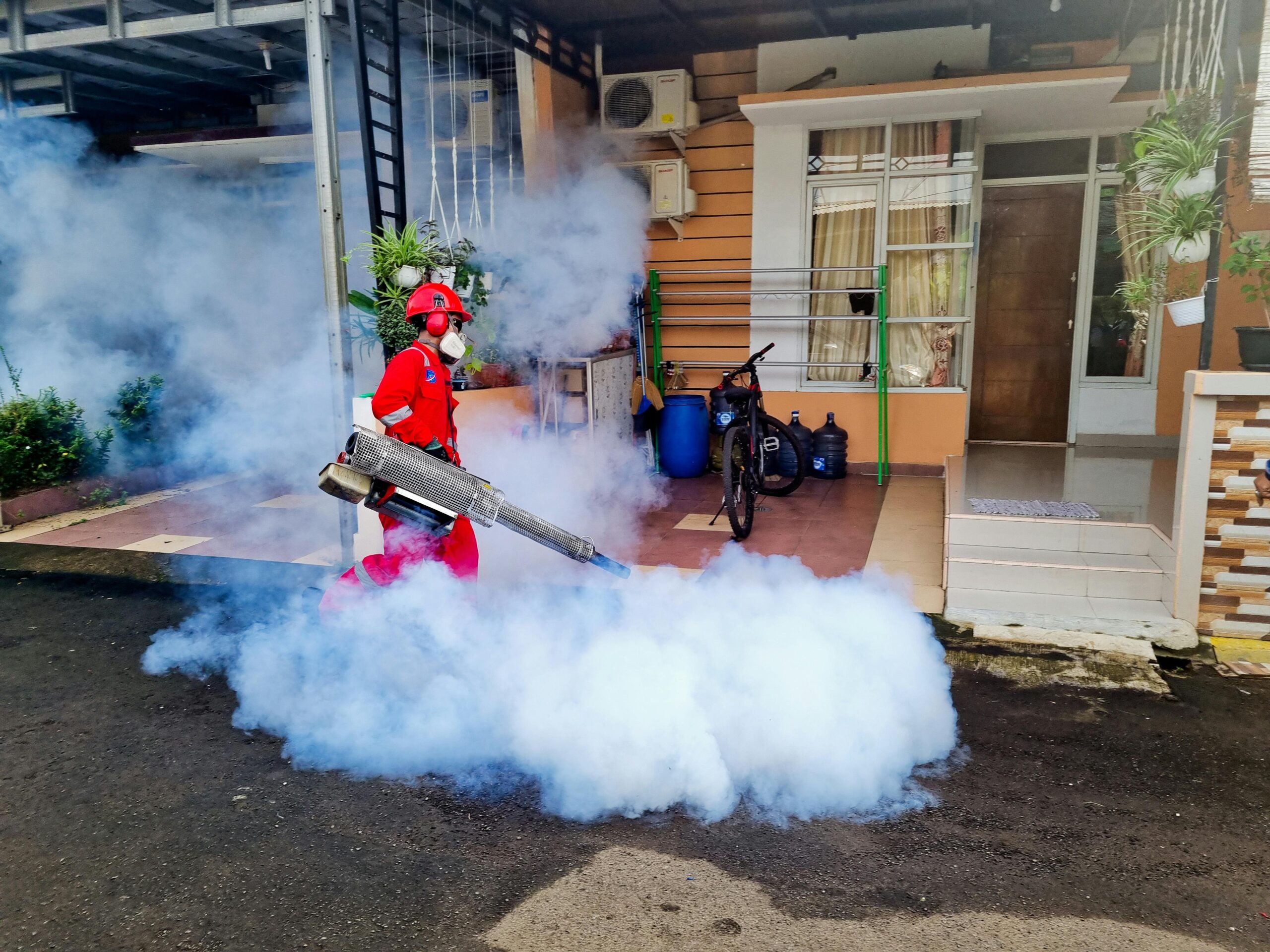
Perimeter fogging expands the reach of residual sprays by dispersing a fine mist around the building’s exterior. The fog creates a protective barrier that deters wandering spiders from crossing into the structure. It’s best applied in the early spring or fall when spiders are most active outdoors, providing a seasonal “shield” before they seek indoor shelter.
Indoor spot applications target known problem spots—such as dark corners, closets, or crawl spaces—where spiders build webs. Technicians apply a concentrated spray directly to these hideouts, delivering immediate results without treating the entire home. Spot treatments are especially useful for homeowners who prefer a limited chemical footprint.
Non‑Chemical Alternatives: Safer, Sustainable Choices
For families with young children, pets, or a strong preference for low‑impact solutions, non‑chemical options can be just as effective when used consistently.
- Bait stations: Though spiders don’t eat traditional baits, placing sticky traps near entry points captures wandering individuals and provides valuable monitoring data.
- Physical removal: Regularly vacuuming webs and using a handheld aspirator removes adult spiders and egg sacs, interrupting the life cycle.
- Habitat modification: Reducing clutter, sealing cracks, and trimming vegetation away from the home eliminates the dark, damp environments spiders love. Installing door sweeps and window screens further blocks entry.
These methods are most appropriate for homeowners seeking long‑term prevention without introducing chemicals into living spaces.
Integrated Pest Management (IPM): A Balanced Strategy
Anthem Pest Control recommends an IPM approach because it blends the strengths of both chemical and non‑chemical tactics while minimizing risks. The process begins with a thorough inspection to identify spider species, locate harborage areas, and assess the level of infestation. Next, exclusion steps—such as sealing cracks, repairing screens, and installing weather stripping—prevent future ingress.
Sanitation follows, focusing on removing webs, debris, and food sources that attract insects, which in turn feed spiders. Finally, a targeted treatment—whether a residual spray, fogging, or a non‑chemical measure—is applied based on the inspection findings. By revisiting each step seasonally, homeowners maintain a proactive barrier rather than reacting after a spider problem has escalated.
Safety Considerations for Families, Pets, and the Environment
All chemical products used by Anthem Pest Control are EPA‑registered and applied at the lowest effective concentration. Technicians wear protective gear and follow strict label directions to ensure residues remain well below harmful levels. After indoor applications, we advise keeping children and pets out of treated rooms for at least 30 minutes, then ventilating the space by opening windows.
Non‑chemical options carry virtually no health risk, but they do require diligent maintenance. Sticky traps should be placed out of reach of curious pets, and any debris removed during physical removal should be sealed in a bag before disposal to prevent accidental re‑release.
Frequency of Treatments and Recommended Maintenance Schedule
Spider activity in Peachtree City peaks during late summer and early fall, when outdoor populations surge and seek shelter indoors. A typical service plan includes:
- Initial deep treatment in early summer—combining perimeter fogging with interior residual sprays.
- Quarterly follow‑ups (every 3–4 months) that focus on spot applications and inspection of exclusion points.
- Annual IPM review in the fall to assess habitat modifications, replace sticky traps, and re‑seal any new entryways.
Homeowners who maintain a tidy yard, keep clutter to a minimum, and address moisture issues can often stretch the interval between professional visits to six months. However, if you notice frequent webbing or bites, contact Anthem Pest Control promptly for an additional inspection.
Choosing a Professional: Why Anthem Pest Control Stands Out
Local Experience You Can Trust
For more than a decade, Anthem Pest Control has been a fixture in the Peachtree City community. Our technicians know the neighborhoods, the homes, and—most importantly—the spider species that tend to set up shop here. From the harmless house spider to the more aggressive brown recluse, we recognize their habits, preferred hiding spots, and seasonal activity patterns. That local insight lets us target infestations quickly, reducing the time you spend worrying about creepy‑crawlies and the need for repeat visits.
Certified Technicians & Safe Products
Every field agent at Anthem is certified by the National Pest Management Association and undergoes ongoing safety training. We stay current on the latest EPA‑approved products, ensuring that each application meets strict environmental and health standards. Our technicians are taught to apply treatments precisely where spiders travel—baseboards, window frames, and outdoor perimeters—while protecting pets, children, and the surrounding ecosystem.
Transparent Pricing & Service Agreements
Homeowners in Peachtree City appreciate clear, upfront costs, and Anthem delivers just that. Our pricing model is broken down into simple line items: inspection, treatment, and any follow‑up visits. You’ll receive a detailed service agreement before any work begins, outlining what’s covered, how long the protection lasts, and the exact price you’ll pay. No hidden fees, no surprise charges—just honest, affordable pest control.
Customer Testimonials & Guarantees
“Anthem came out the same day we called about a spider problem in our garage. The technician explained everything, used a safe product, and the spiders were gone within a week. Their guarantee gave us peace of mind—if they ever returned, they’d re‑treat at no cost.”
—Maria L., Peachtree City homeowner
Our satisfaction guarantee means we’ll return at no extra charge if spiders reappear within the treatment window. This promise reflects our confidence in the methods we use and the results we deliver. Positive reviews across Google, Yelp, and the Better Business Bureau reinforce that we’re not just another pest service—we’re a trusted partner for local families.
Free On‑Site Inspection & Tailored Plans
Choosing Anthem starts with a complimentary on‑site inspection. A certified technician visits your home, assesses spider activity, and discusses any specific concerns you have—whether it’s a dark corner in the basement or a porch that attracts wandering spiders. From that assessment, we craft a customized treatment plan that fits your home’s layout, your budget, and your schedule. The plan includes a timeline, recommended follow‑up visits, and preventative steps you can take to keep spiders at bay year‑round.
When you select Anthem Pest Control, you’re not just hiring a service; you’re partnering with a team that blends local knowledge, certified expertise, transparent pricing, and a genuine commitment to your peace of mind. Let us handle the spiders so you can enjoy a safe, spider‑free home in Peachtree City.
Protect Your Home Today – Get a Free Quote
Protecting your home from spider infestations isn’t a luxury—it’s essential for safety, comfort, and property value. Untreated webs can hide venomous species like black widows or brown recluses, increasing the risk of painful bites and allergic reactions. Beyond health concerns, unchecked spiders attract other insects, compromise food storage, and create an unsettling visual environment that can diminish your peace of mind.
Professional spider control eliminates these hidden dangers quickly and thoroughly. Trained technicians identify the species, locate entry points, and apply targeted treatments that are both effective and safe for children, pets, and the surrounding ecosystem. By addressing the problem early, you avoid costly structural repairs, extensive chemical applications, and the stress of a recurring infestation.
Anthem Pest Control invites you to take the first step toward a spider‑free home with a complimentary, no‑obligation inspection. During the visit, our experts will assess your property, discuss seasonal risk factors, and provide a personalized quote that aligns with your budget and peace‑of‑mind goals. There are no hidden fees—just transparent pricing and a clear action plan.
Our commitment to safe, effective, and affordable solutions means you receive industry‑approved treatments that protect your family while respecting the environment. We use low‑toxicity products, follow strict EPA guidelines, and continuously train our staff on the latest integrated pest‑management techniques. When you choose Anthem, you choose a partner who values long‑term prevention as much as immediate eradication.
Ready to secure your home? Call us today at 877‑371‑8196 or visit our website to schedule your free inspection. Our friendly team is standing by to answer questions, arrange a convenient appointment, and deliver the confidence that comes from knowing your home is protected.