Why a Proactive Pest Strategy Matters

Owning a home in Atlanta isn’t just about curb appeal and comfortable living spaces—it also means staying ahead of the invisible guests that thrive in our climate. A proactive pest strategy is as essential as a solid roof or a reliable HVAC system because pests can strike at any time, turning a well‑kept house into a costly nightmare.
Hidden financial toll
The EPA estimates that U.S. households collectively spend more than $5 billion each year repairing damage caused by insects, rodents, and other pests (2024 data). That figure doesn’t even account for lost productivity, increased utility bills from compromised insulation, or the price of emergency extermination calls. In Atlanta, where homes often sit close together and share landscaping, a single infestation can quickly spread from one property to the next, amplifying those hidden costs.
Health and emotional impacts
- Allergies and asthma flare‑ups from cockroach droppings and dust mite fragments.
- Disease vectors such as mosquitoes, ticks, and rodents that can carry West Nile virus, Hantavirus, or salmonella.
- Chronic stress and reduced quality of life—sleep‑disturbing bed bugs, gnawing noises from rodents, and the constant worry of damage erode peace of mind.
Atlanta’s climate—your pest accelerator
Our city’s humid summers and mild winters create a near‑perfect breeding ground for a wide range of pests. Neighborhoods like Buckhead, Decatur, and Midtown experience higher humidity levels and abundant vegetation, which attract:
- Termites that silently eat away at wooden structures.
- Ants and cockroaches that exploit warm, damp basements.
- Mosquitoes that thrive in standing water after summer thunderstorms.
Because the season never truly “ends” in the South, waiting for an infestation to become visible means you’re already paying the price.
By understanding these financial, health, and emotional stakes—and recognizing how Atlanta’s climate fuels pest pressure—you’ll see why a forward‑looking, data‑driven approach is the smartest investment for any homeowner. In the next section, we’ll break down the most common pests you’re likely to encounter in Buckhead, Decatur, and Midtown, giving you a clear roadmap for prevention and early detection.
Meet the Usual Suspects – Termites, Mosquitoes, Rodents, Cockroaches, Ants
Termites
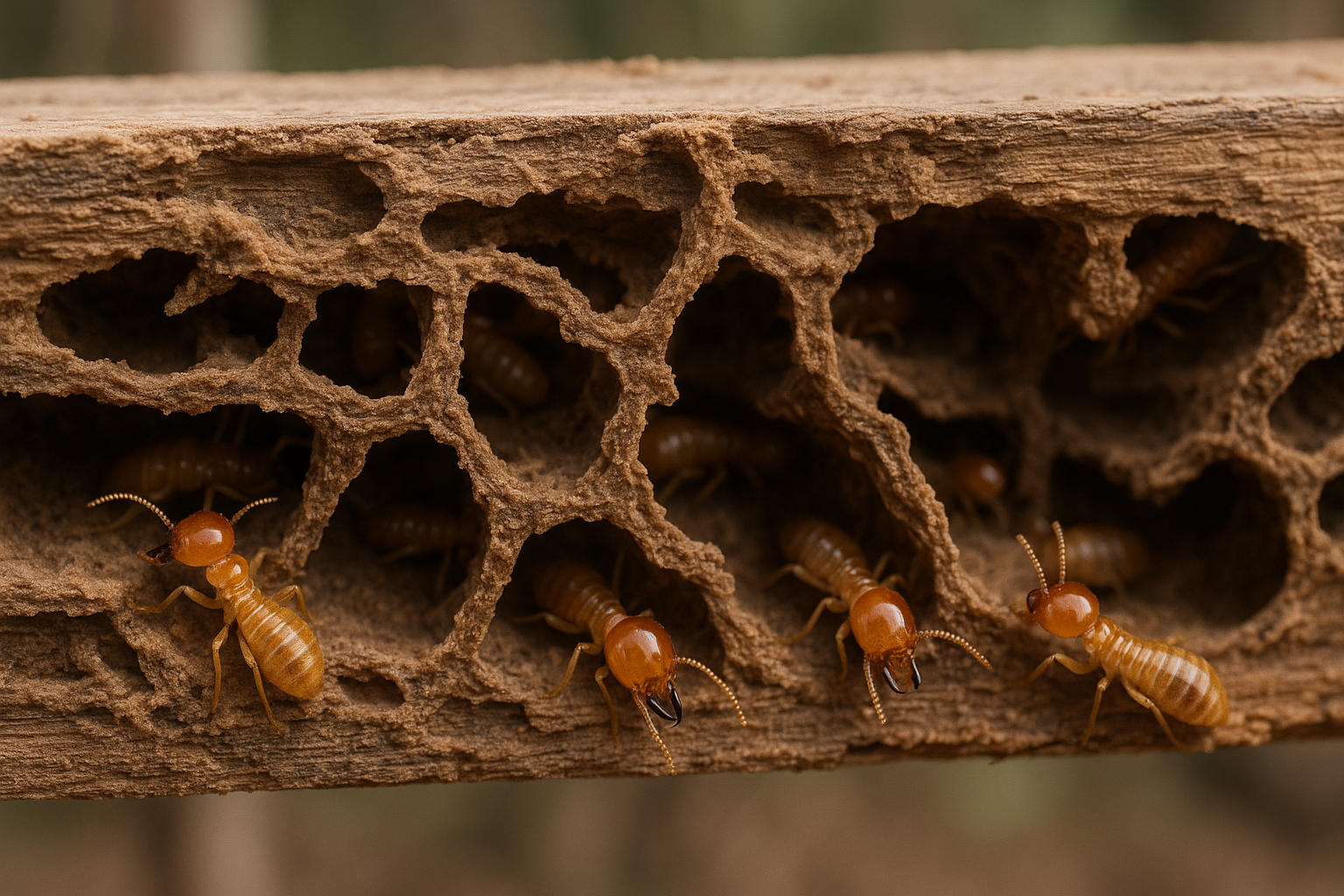
Termites are the silent architects of structural damage. As they feed on wood, they quietly erode load‑bearing beams, floor joists, and even drywall, often leaving homeowners unaware until a costly repair is needed. The NPMA 2023 report estimates that termites cause roughly $5 billion in losses each year across the United States. Look for mud tubes along foundation walls, hollow‑sounding wood, and swarms of winged alates in late summer—these are the tell‑tale visual cues that an infestation is underway.
Mosquitoes
Beyond the itchy bite, mosquitoes are notorious disease vectors. In the Southeast, CDC 2024 data show a spike in mosquito‑borne illnesses each summer, driven by stagnant water sources that serve as breeding grounds. Homeowners should watch for the high‑pitched buzz near standing water, especially after rain. Eliminating puddles, clogged gutters, and bird baths can dramatically cut the population. Early evening is peak activity, so keeping doors and screens tight during those hours helps keep the swarm at bay.
Rodents
Rats and mice are more than a nuisance; they gnaw through electrical wiring, insulation, and even structural wood, creating fire hazards and costly repairs. Their droppings and urine can spread hantavirus and other pathogens, posing serious health risks. Visual clues include fresh droppings (about the size of a grain of rice), gnaw marks on cabinets or wires, and gnaw‑scented urine trails. Listening for nocturnal scurrying in walls or attics often confirms a hidden colony.
Cockroaches
Cockroaches thrive year‑round in warm, humid homes, especially in kitchens and bathrooms. Their shed skins, droppings, and egg cases (oothecae) are common visual indicators. Beyond the unsightly presence, they release allergens that can trigger asthma and other respiratory issues. A sudden increase in musty odors or spotting of small, brown insects after dark signals a growing infestation that warrants professional treatment before they infiltrate deeper into cabinets and appliances.
Ants
Indoor ant species like carpenter ants and odorous house ants are frequent visitors. Carpenter ants excavate wood to build nests, compromising structural integrity over time, while odorous ants contaminate food with their trail pheromones. Look for organized trails marching across countertops, tiny entry holes near windows or foundations, and, in the case of carpenter ants, smooth, sand‑like sawdust near wood damage. Prompt identification and sealing of entry points can prevent these colonies from establishing a long‑term foothold.
When Pests Peak in Atlanta, GA
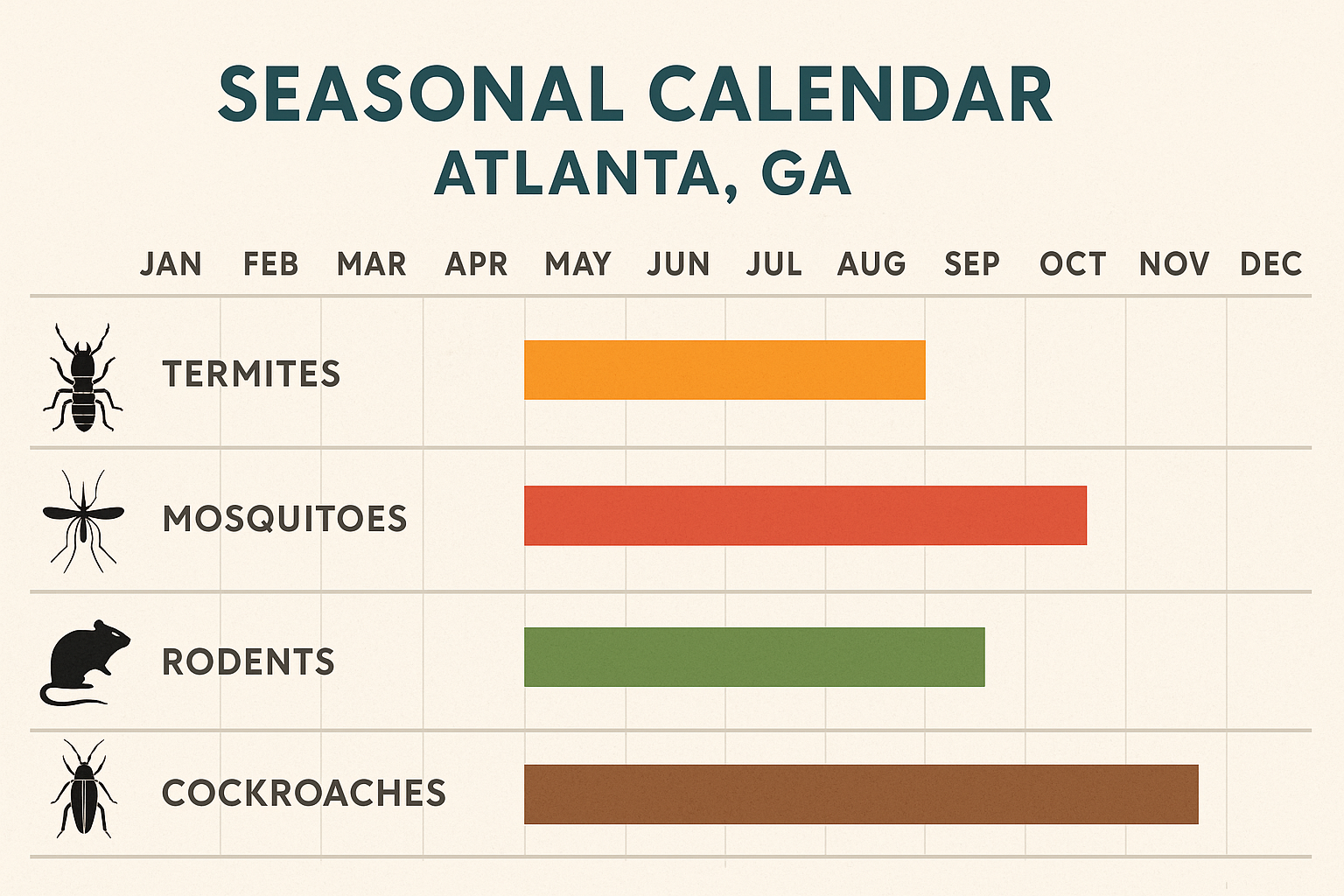
Atlanta’s humid subtropical climate creates a year‑round invitation for insects and critters. Warm winters, a rainy spring, sweltering summers, and crisp falls each trigger a distinct wave of pest activity. Understanding these seasonal patterns lets homeowners schedule inspections and treatments before a tiny invader becomes a full‑blown problem.
| Month | Highest‑risk pest(s) |
|---|---|
| January | 🪳 Cockroaches (indoor shelters) |
| February | 🪳 Cockroaches |
| March | 🪳 Cockroaches, 🐜 Termites (emerging colonies) |
| April | 🐜 Termites (spring surge), 🐜 Ants |
| May | 🐜 Termites, 🦟 Mosquitoes (first breeding pools) |
| June | 🦟 Mosquitoes (peak), 🪳 Cockroaches |
| July | 🦟 Mosquitoes, 🐜 Ants |
| August | 🦟 Mosquitoes, 🪳 Cockroaches |
| September | 🐭 Rodents (harvest season food sources), 🪳 Cockroaches |
| October | 🐭 Rodents (peak), 🐜 Ants (indoor nesting) |
| November | 🐭 Rodents, 🪳 Cockroaches |
| December | 🪳 Cockroaches, 🐭 Rodents (seeking warmth) |
Key peaks to watch: Termites ramp up in spring (April‑May) as soil temperatures rise; mosquitoes dominate the summer months (June‑August), especially after heavy rains; rodents become most active in fall (September‑October) when outdoor food stores dwindle; and cockroaches remain a year‑round threat, finding refuge in humid indoor spaces.
Weather anomalies can shift these patterns. A wetter‑than‑average spring, for example, accelerates mosquito breeding and can push the peak earlier into May. Conversely, an unusually dry summer may suppress mosquito numbers but encourage ants to forage indoors. Homeowners should stay flexible—monitor local forecasts and adjust treatment schedules accordingly.
According to the CDC’s 2024 Southeast mosquito‑borne disease report, Atlanta saw a 12% rise in reported West Nile virus cases compared to 2023, underscoring the importance of proactive mosquito control during the summer months.
DIY Prevention Before You Call a Pro
Before you dial a pest‑control professional, there are several inexpensive steps you can take to make your home less inviting to insects, rodents, and termites. The key is consistency: a little daily housekeeping, a few seasonal yard chores, and a handful of simple repairs can dramatically lower the chance of an infestation. Below is a practical checklist you can start using right away.
General Sanitation Tips
- Food storage: Keep all pantry items in airtight containers and wipe down crumbs after meals. Even tiny food residues can attract ants and cockroaches.
- Trash management: Use bins with tight‑fitting lids, empty them regularly, and keep the area around the bins clean. A sealed trash can is a strong deterrent for raccoons and rodents.
- Decluttering: Store cardboard, paper, and other potential nesting materials off the floor and away from walls. Clear pathways make it harder for pests to hide and travel unnoticed.
Landscaping Advice
- Mulch depth: Apply no more than 2–3 inches of mulch and keep it at least 6 inches away from the foundation. Excess mulch retains moisture, creating a perfect environment for termites and carpenter ants.
- Tree trimming: Prune branches so they clear the roofline by at least 6 inches. Overhanging limbs provide bridges for rodents and squirrels to reach your attic.
- Standing water: Eliminate puddles, birdbaths, and clogged gutters. Stagnant water is a breeding ground for mosquitoes and can attract other pests seeking moisture.
Structural Fixes
- Seal cracks: Use a silicone‑based caulk on foundation cracks, window frames, and any gaps around utility penetrations. Even hairline cracks can become entry points for termites and rodents.
- Install door sweeps: Attach sweeps to all exterior doors to block the gap at the bottom. This simple addition prevents insects from crawling inside and stops drafts that can encourage moisture buildup.
- Ensure proper drainage: Grade the soil away from the house by at least a 2% slope. Good drainage keeps basements dry, reducing the risk of moisture‑loving pests.
Neighborhood Checklists
Buckhead
With its dense tree canopy, Buckhead homes often face increased moisture and shade, conditions that favor termites and carpenter ants. Residents should:
- Schedule gutter cleaning at least twice a year to prevent water overflow onto the foundation.
- Install a wood‑to‑soil barrier (a thin sheet of plastic or metal) beneath decks and patios to stop termites from migrating from the ground up.
Decatur
Decatur’s older housing stock frequently shows signs of settled foundations and cracked slabs. To protect these homes:
- Prioritize foundation sealing with epoxy‑based sealants that penetrate deep cracks.
- Adopt termite‑resistant landscaping—use gravel beds, stone pathways, and plant species that do not attract wood‑eating insects.
Highlight Tip: Mesh Screens on Vents
One of the most effective, low‑cost barriers against rodents is installing fine‑mesh screens on all vent openings—attic, crawl‑space, dryer, and bathroom exhausts. An NPMA study found that properly screened vents can reduce rodent entry by 70 %. The screens are inexpensive, easy to fit, and require no ongoing maintenance.
By integrating these sanitation habits, yard maintenance routines, and simple home repairs, you create multiple layers of protection that make your property far less appealing to pests. When you’ve done the groundwork and still notice activity, that’s the right moment to call Anthem Pest Control for a professional assessment and targeted treatment.
What Professional Treatments Cost and How They Work
Atlanta homeowners have a handful of proven treatment categories to choose from when pests threaten their property. The most common options include a chemical barrier that creates a long‑lasting shield around a home’s foundation, strategically placed bait stations that lure insects or rodents to a lethal dose, fogging for rapid knock‑down of flying insects, and structural fumigation for severe infestations that require whole‑house penetration. Understanding how each method works helps you match the right solution to the pest and your budget.
Chemical Barrier for Termites
A termite barrier is a liquid termiticide applied to the soil beneath and around a home’s perimeter. Once in the ground, the chemical forms a continuous, invisible wall that repels or kills termites that try to cross it. Professional applicators use specialized equipment to ensure even coverage at the recommended depth, typically 12‑18 inches. This pre‑emptive approach is especially effective in the humid Atlanta climate where subterranean termites thrive.
Typical price range: $1,200‑$2,500 per treatment, depending on home size, soil conditions, and the specific termiticide used.
Mosquito Spray: Adulticide vs. Larvicide
Mosquito control in Atlanta usually involves two complementary products. Adulticide sprays target flying adults at the time of application, providing immediate relief for outdoor gatherings. Larvicide treatments are applied to standing water or breeding sites, disrupting the life cycle before mosquitoes emerge. Most pest professionals schedule monthly or bi‑monthly visits during the peak season (April‑October) to keep populations in check.
Cost per visit: $80‑$150, with discounts often available for bundled seasonal packages.
Rodent Exclusion
Rodent exclusion focuses on sealing every potential entry point—gaps around pipes, foundation cracks, vent openings, and utility penetrations. Technicians use steel wool, metal flashing, and high‑grade sealants to create a rodent‑proof envelope. While a one‑time exclusion can stop an active infestation, many homeowners pair it with ongoing monitoring to catch any new incursions.
Price range: $150‑$300 for a thorough inspection and sealing of a typical single‑family home.
Cockroach and Ant Bait Stations
Bait stations are placed in hidden corners, under appliances, and along baseboards where roaches and ants travel. The stations contain a slow‑acting poison that worker insects carry back to the colony, gradually collapsing the population. Proper placement and regular replacement are key; most professionals recommend a full‑home deployment and a follow‑up visit after two weeks.
Full‑home bait package: $100‑$250, covering 20‑30 stations and a month of monitoring.
Value of Annual Service Plans
Many Atlanta residents opt for an annual service plan rather than treating each problem as it arises. These contracts typically bundle several treatments—such as quarterly mosquito sprays, semi‑annual termite barrier re‑applications, and annual rodent exclusion checks—at a reduced rate. Beyond cost savings, the continuous monitoring component catches early signs of reinfestation, allowing technicians to intervene before pests become a full‑blown issue. For homeowners who value peace of mind, the predictable schedule and bundled discount often outweigh the slightly higher upfront commitment of a one‑time treatment.
Pricing data are drawn from the latest EPA and NPMA regional surveys for the Atlanta metro area, confirming that the ranges above reflect current market averages for licensed pest‑control providers.
Local Expertise You Can Trust
When a pest invasion knocks on your door, you need a neighbor who knows the terrain and can act fast. Anthem Pest brings that local know‑how to every home in the Atlanta metro area, backed by guarantees you can count on.
Quick Company Snapshot
- 24‑hour emergency response: We’re on call around the clock, so a midnight ant parade or a surprise rodent sighting never leaves you waiting.
- EPA‑registered, low‑toxicity products: Our treatments protect your family and pets while staying tough on pests.
- 5‑star Google rating: Hundreds of satisfied homeowners have given us top marks for reliability and results.
Service Area Focus
Anthem Pest isn’t a national chain that treats every neighborhood the same. We specialize in the unique pest pressures of Buckhead, Decatur, Midtown and the surrounding Atlanta suburbs. Our technicians map out local hot spots—like the historic oak trees of Decatur that attract termites or the dense foliage in Buckhead that draws mosquitoes—so you get a plan that fits your exact street.
What Sets Us Apart
- Transparent pricing: No hidden fees. You’ll receive a clear, itemized quote before any work begins.
- Customized Integrated Pest Management (IPM) plans: We blend monitoring, preventive measures, and targeted treatments to keep pests at bay year‑round.
- Satisfaction guarantee: If pests return within the warranty period, we’ll come back at no extra cost until the problem is solved.
Technician Credentials & Ongoing Training
Every Anthem Pest technician holds state‑licensed certification and completes quarterly training on the latest low‑toxicity formulations and IPM strategies. This continuous education ensures they can identify emerging pest trends—like the recent rise in Asian tiger mosquitoes—and adjust treatments before infestations spread.

That photo captures a typical day for our crew: a discreet bait station placed strategically to intercept wandering rodents, all while respecting your property’s aesthetics. It’s the same meticulous approach we bring to every service call, whether you’re dealing with stubborn carpenter ants in Midtown or a seasonal mosquito surge in Buckhead.
Choosing Anthem Pest means partnering with a team that treats your home like its own—fast response, proven expertise, and a promise that the pests stay out, so you can enjoy your Atlanta neighborhood without worry.
Quick Answers for Busy Homeowners
We get it—your schedule is packed, and pest concerns can’t wait. Below are the most‑asked questions homeowners like you pose, paired with clear, SEO‑friendly answers that cut straight to the point.
Q1: How often should I schedule inspections?
Plan for two routine inspections each year: one in early spring before pests emerge, and another in the fall as they seek shelter. This bi‑annual cadence covers the majority of seasonal threats, from ants in the warm months to rodents seeking warmth in winter. If mosquitoes are a concern in your area, adding a summer check can keep those buzzing nuisances at bay.
Q2: Are the chemicals safe for kids and pets?
All products we apply are EPA‑approved and selected for low toxicity. We offer a range of low‑impact options—such as botanical sprays and dust‑free granules—specifically for families with children or pets. Our certified technicians follow strict safety protocols, including proper PPE, precise application rates, and post‑treatment ventilation guidelines to ensure a safe environment.
Q3: Can I combine treatments for multiple pests?
Absolutely. Our Integrated Pest Management (IPM) strategy lets us address several threats in a single visit. For example, we can install a termite barrier, perform mosquito fogging, and set up rodent exclusion devices simultaneously. This coordinated approach not only maximizes efficiency but also reduces overall costs compared to separate appointments.
Warranty periods and follow‑up visits
Every service comes with a transparent warranty—typically 12 months for termite barriers, 90 days for mosquito treatments, and 30 days for rodent exclusion. Should pests reappear within the warranty window, we’ll return at no extra charge. Additionally, we schedule a complimentary follow‑up inspection after each treatment to verify effectiveness and address any lingering concerns.
Protect Your Home with Anthem Pest Today
Early detection, seasonal awareness, and a solid DIY prevention routine are the first three pillars of a pest‑free home. Spotting a single ant trail in early summer, keeping gutters clear before the rains, and sealing cracks after a heavy windstorm can stop an infestation before it spreads. Yet, even the most vigilant homeowner benefits from a professional partner who can confirm the hidden threats that DIY methods often miss.
Proactive Planning Saves Money and Health
Atlanta’s humid climate creates the perfect breeding ground for termites, mosquitoes, and roaches. A proactive pest‑management plan—one that blends regular inspections with timely treatments—cuts the cost of emergency exterminations and protects the health of your family. When pests are caught early, treatment requires fewer chemicals, less labor, and ultimately a lower bill.
Professional Treatment Adds Value
Anthem Pest brings local expertise and a guarantee you won’t find in a generic DIY kit. Our technicians know which species are active each month, which products work best in Georgia’s soil, and how to apply them safely around children and pets. By pairing your vigilance with our professional treatment, you create a double layer of defense that keeps your home comfortable year‑round.
Ready to lock down your protection plan? Schedule a free inspection today and take advantage of our 24‑hour response guarantee—so you’re never left waiting when pests strike. We pride ourselves on transparent pricing, so you’ll know exactly what’s covered before any work begins. Give us a call at 877‑371‑8196 or email us to set up your appointment. For more details, visit Anthem Pest Control and discover how easy it is to stay one step ahead of unwanted guests.