Ant Threats in Canton, GA – Why Homeowners Should Pay Attention

Ants may seem harmless at first glance, but in Canton, Georgia they can quickly become a homeowner’s nightmare. The region’s warm, humid climate creates an ideal environment for several ant species that not only invade kitchens and yards but also threaten the very structure of your home. Understanding which ants are most common and what they’re capable of doing is the first step toward keeping your property safe.
Common Ant Species in Canton
- Carpenter Ants – These large, black or reddish insects nest in moist wood, often inside walls, decks, or crawl spaces. They don’t eat wood like termites, but they excavate it to create galleries, weakening structural components over time.
- Pavement Ants – Small, dark brown ants that thrive in cracks around foundations, sidewalks, and driveways. They establish satellite colonies under porches and can quickly spill into kitchens, contaminating food.
- Fire Ants – Recognizable by their reddish hue and aggressive sting, fire ants build conspicuous mounds in lawns and garden beds. While they’re more notorious for painful bites, they also damage landscaping and can infiltrate homes during heavy rains.
Each of these species behaves differently, yet they share a common goal: access to food, water, and shelter. Their ability to form extensive underground networks means a tiny sighting often signals a larger, hidden infestation.
Damage Ants Can Cause
Ants are more than a nuisance; they can inflict real, costly damage:
- Structural Damage – Carpenter ants tunnel through wood, compromising load‑bearing beams, floor joists, and roof supports. Left unchecked, these galleries can lead to sagging floors or even collapse.
- Food Contamination – Pavement and odorous ants forage for sugary residues, leaving behind pheromone trails that attract more insects. Their presence in pantry items can cause spoilage and increase the risk of foodborne illness.
- Stings and Allergic Reactions – Fire ant stings deliver a painful, burning sensation that can last for hours. For sensitive individuals, repeated stings may trigger severe allergic responses requiring medical attention.
National Perspective: EPA Statistics
The Environmental Protection Agency reports that ants rank among the top household pests in the United States, responsible for billions of dollars in damage and control costs each year. According to the EPA’s ant fact sheet, ants are listed as a primary pest group that homeowners must manage proactively.
Why Early Detection Matters
Spotting an ant trail or a few workers is a warning sign, not a minor inconvenience. Early detection allows for targeted treatment before colonies expand into the structural components of your home. Proactive measures—such as sealing entry points, reducing moisture, and scheduling a professional inspection—can prevent the exponential growth that leads to expensive repairs.
At Anthem Pest Control, we combine local knowledge of Canton’s ant species with safe, effective treatment plans. By catching an infestation early, we help you avoid the hidden costs of structural repairs, food loss, and medical expenses. A quick call to our team can turn a small ant problem into a manageable solution, protecting both your home and peace of mind.
Spotting an Ant Infestation – Visual Signs Homeowners Must Know
Common indoor signs
Ants are master opportunists, and the first clues they leave inside your home are often subtle. Look for thin, continuous lines of tiny footprints—these ant trails are usually found along baseboards, kitchen counters, or near windows where moisture gathers. In addition to trails, you may discover small, dark droppings that resemble pepper grains; they are the remnants of ant feces and can accumulate near food sources. Dead ants, especially near entry points, signal a thriving colony nearby, while gnawed wood or chewed packaging on stored pantry items indicates that the pests are feeding and nesting within your walls or cabinets.
Outdoor indicators
Outside the house, ants establish nests in locations that provide shelter and easy access to food. Check the soil around your foundation for small, crater‑shaped mounds or loose piles of sand—these are typical ant nest entrances. Stones, mulch, and leaf litter are also prime real estate for colonies; lift them gently to see if a network of tunnels is hidden underneath. Pay special attention to cracks in the foundation, gaps under siding, and any openings around utility lines, as these are common highways for ants to march into your home.
How to follow an ant trail to locate the colony
Once you spot a trail, follow it patiently rather than swatting at the insects. Ants move in a predictable line, often leading you from a food source back to their nest. Use a flashlight to trace the trail along walls, under appliances, or across floorboards. If the line disappears, look for a slight change in the flooring texture or a small pile of soil—these are usually the entry points to the hidden colony. Mapping the trail can help a professional pest technician pinpoint the exact location for treatment, saving you time and money.
Visual example
A close‑up view of an ant trail on a wooden surface illustrates how the insects leave a faint, silvery line as they walk. Notice the tiny, evenly spaced footprints and the subtle sheen of ant secretions that make the trail visible to the naked eye. Recognizing this pattern early can prevent a minor nuisance from turning into a full‑blown infestation.

Ant Control Options and What They Cost
When it comes to keeping ants out of your Canton home, you have three main treatment paths to choose from. Each option balances speed, longevity, and safety, and each carries a distinct price tag. Understanding how they differ helps you match the method to your budget and the level of protection you need.
One‑time chemical spray
A single, thorough application of a professional-grade insecticide targets the colony you’re dealing with right now. Technicians locate entry points, treat interior cracks, and create a barrier around the perimeter of your house.
- Pros: Immediate knock‑down of visible ants; ideal for a sudden infestation; no ongoing appointments.
- Cons: Protection typically lasts 30‑45 days; may require repeat visits if the colony re‑establishes; higher chemical exposure for pets and children during the treatment window.
Quarterly service
Four visits a year keep a fresh layer of insecticide on your home’s exterior and interior hot spots. This schedule aligns with the seasonal peaks of ant activity in Georgia, ensuring you stay ahead of the swarm.
- Pros: Consistent protection throughout the year; reduced risk of re‑infestation; lower cumulative chemical load per visit.
- Cons: Higher upfront cost than a one‑time spray; requires you to keep a regular appointment calendar.
Annual protection plan
The most hands‑off approach, an annual plan bundles a comprehensive spring treatment with two‑to‑three follow‑up visits. It’s designed for homeowners who want “set it and forget it” peace of mind and typically includes a warranty against ant re‑appearance.
- Pros: Best long‑term value; includes monitoring and a guarantee; minimal disruption to your routine.
- Cons: Slightly higher price point; you’re committing to a year‑long service contract.
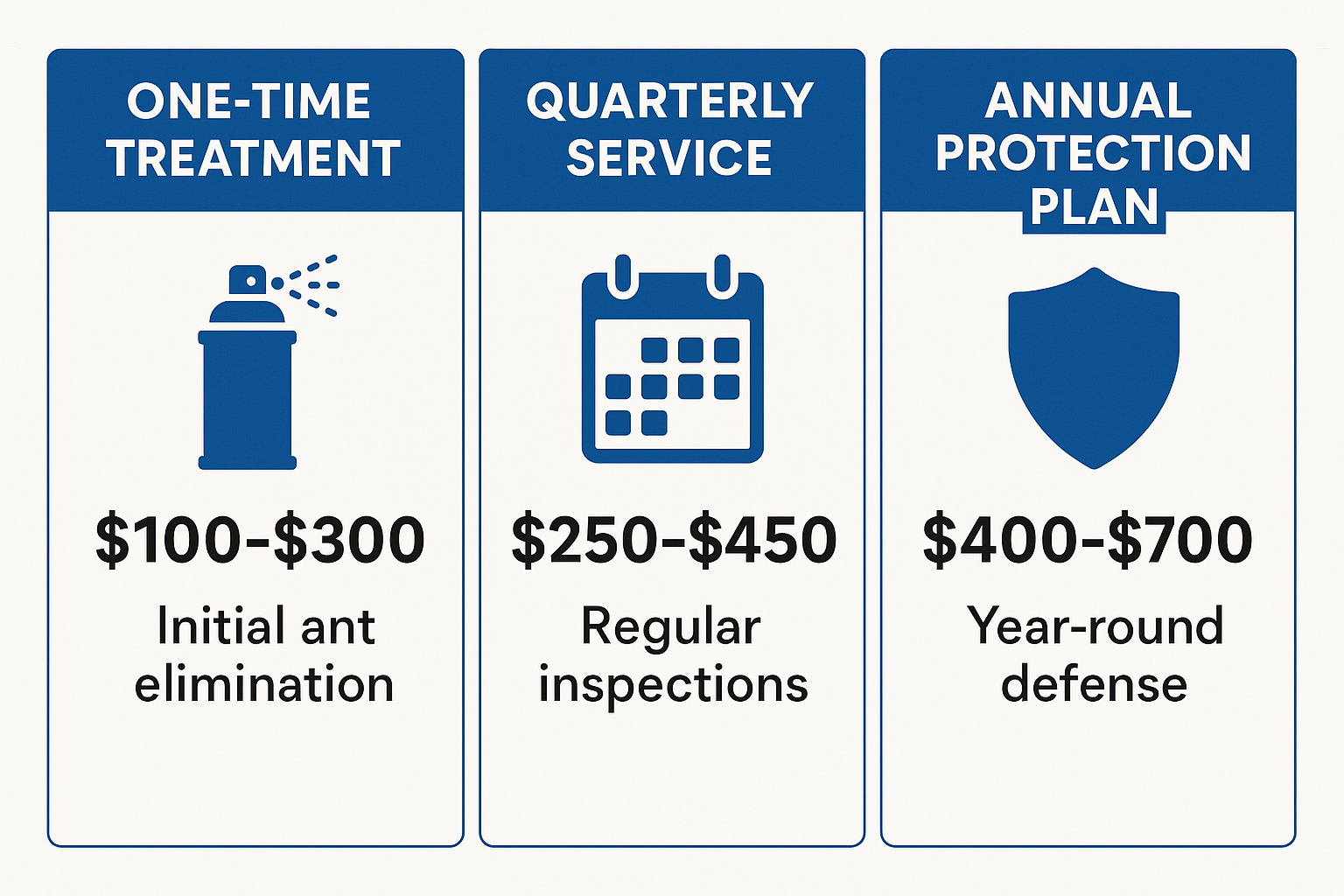
| Treatment Type | Typical Price Range | Key Benefits |
|---|---|---|
| One‑time chemical spray | $120 – $180 | Fast relief; no long‑term commitment |
| Quarterly service | $380 – $460 per year | Year‑round barrier; fewer re‑infestations |
| Annual protection plan | $520 – $620 per year | Comprehensive coverage + warranty; minimal follow‑up needed |
Factors that influence the final cost
- Home size: Larger square footage means more surface area to treat, which raises labor and material costs.
- Infestation severity: A light sighting may need only a single spray, while a deep‑nested colony can require multiple applications and more intensive products.
- Ant species: Carpenter ants, for example, often need more thorough inspections and targeted treatments compared with pavement or odorous house ants.
- Property layout: Multi‑story homes, basements, or extensive landscaping add complexity and time to the service.
- Safety preferences: Requests for low‑toxicity or pet‑safe formulations can affect product choice and price.
Seasonal Ant Activity in Canton – When to Treat
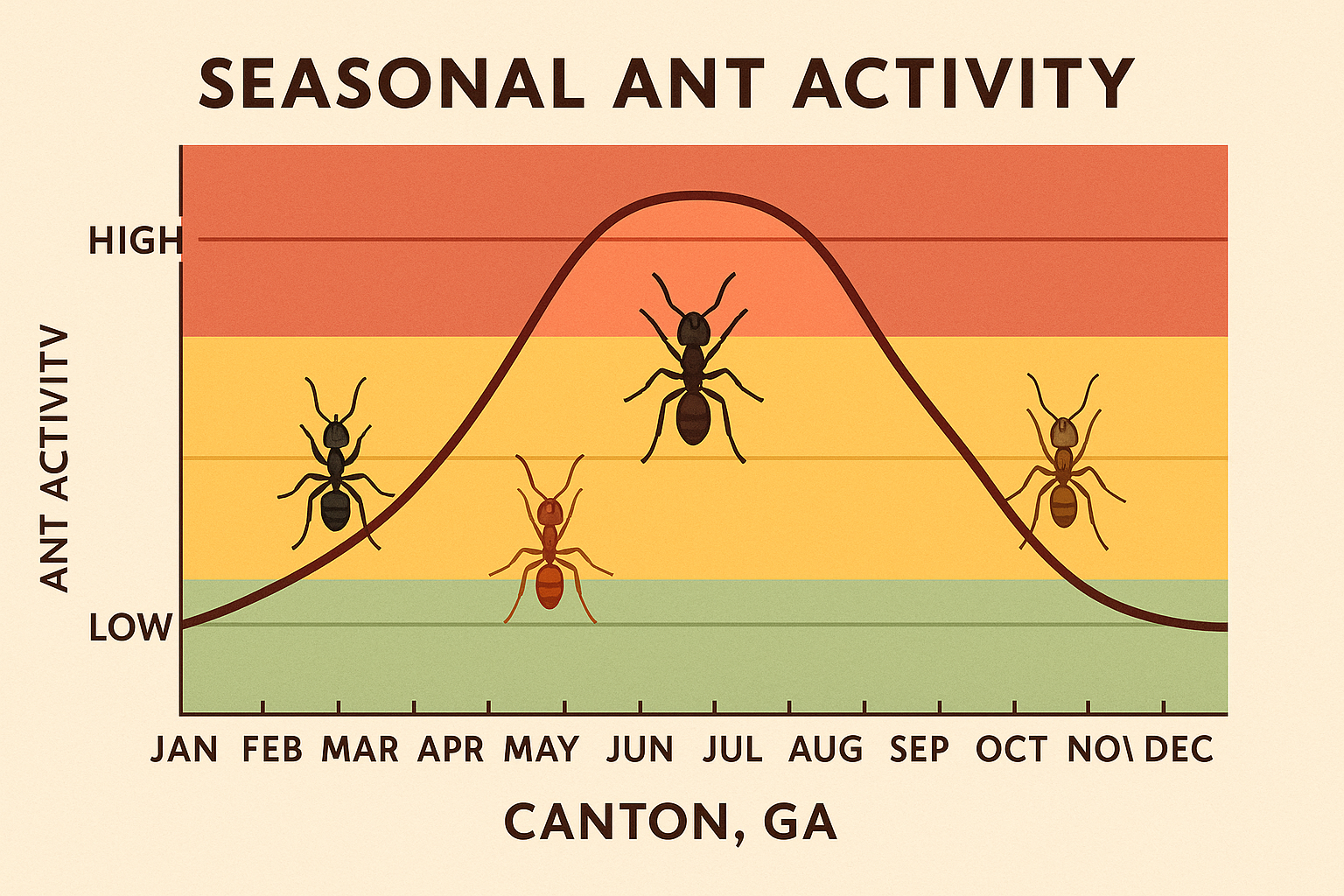
Ant populations in Canton don’t stay steady year‑round; they ebb and flow with the climate. Understanding these cycles lets you strike when colonies are most vulnerable, saving you both time and money. In the chart below, months are grouped into low, medium, and high activity periods. The visual makes it easy to see at a glance when you should schedule a pre‑emptive service versus a reactive “hot‑spot” treatment.
Temperature, Humidity, and Species Emergence
Ants are cold‑blooded, so temperature is their primary cue. In Canton, average highs climb above 80 °F (27 °C) by late April, prompting carpenter and odorous house ants to emerge from nests. Humidity works hand‑in‑hand with heat; a relative humidity above 60 % creates the moist soil conditions many species need for brood development. When both heat and moisture peak—typically July through August—you’ll see the sharpest surge in foraging activity.
Spring – Pre‑emptive Treatment
Early spring (mid‑March to early May) is the optimal window for a preventative approach. Colonies are still small, queens are laying the first batch of workers, and the nest structure is relatively easy to disrupt. A professional service at this stage—often a perimeter spray combined with bait stations—can keep the colony from expanding into your home. Homeowners should also clear leaf litter and trim vegetation away from the foundation to reduce shade and moisture that attract ants.
Summer – Hot‑Spot Management
When temperatures soar, ant foraging intensifies, especially around outdoor lighting, pet food, and trash cans. This is the “hot‑spot” period (June to August) when you may notice trails inside the kitchen or near doors. Targeted spot treatments, such as localized sprays or gel baits placed directly on trails, work best now. Because colonies are larger, a single treatment may not eradicate the problem, so scheduling a follow‑up in late summer helps catch any survivors before they retreat to the cooler fall months.
Fall – Maintenance Window
As the heat wanes (late September to early November), ant activity drops to a medium level, but queens are still producing workers to survive the winter. This is the perfect time for a maintenance service that focuses on interior baiting. Bait stations placed near entry points—under sinks, behind appliances, and along baseboards—allow foraging workers to carry poison back to the nest, gradually reducing the colony size before the cold sets in.
Indoor vs. Outdoor Infestations
Weather patterns dictate where ants prefer to live. Warm, humid summers push many species outdoors, seeking shade and moisture in mulch, garden beds, and under decks. Conversely, cooler fall evenings drive ants indoors as they hunt for warmth and food residues left from summer barbecues. By aligning your treatment strategy with these seasonal preferences—outdoor perimeter work in spring, spot control in summer, and indoor baiting in fall—you’ll keep ant pressure low throughout the year.
Why Choose a Professional Service for Ant Management
When ants invade your home, the temptation to reach for a store‑bought spray or a DIY bait can be strong. However, a licensed pest‑control professional brings advantages that go far beyond what a homeowner can safely achieve on their own.
Safety First with EPA‑Approved Products
Professional technicians are trained to handle chemicals that meet strict EPA standards. They know the exact concentration, application method, and placement needed to eradicate ants while protecting your family, pets, and the environment. By contrast, over‑the‑counter products often lack clear guidance, leading to under‑dosing (ineffective) or over‑dosing (hazardous). A certified expert ensures every treatment complies with safety regulations and local health codes.
Access to Specialized Equipment
Ant control isn’t just about spraying a surface. It requires a toolbox of targeted solutions—gel baits that workers carry into cracks, dust formulations that stay active for months, and foam injectors that reach deep voids behind walls. These tools are typically unavailable to DIY shoppers. A professional can select the right product for the species you’re battling (carpenter ants, pavement ants, odorous house ants, etc.) and apply it precisely where the colony thrives.
Guaranteed Follow‑Up and Monitoring
Ant colonies are resilient. A single treatment may knock back the visible foragers, but the queen can repopulate if the nest isn’t fully eliminated. Licensed services include scheduled follow‑up visits to assess residual activity, replace baits, and adjust tactics as needed. This ongoing monitoring turns a one‑time fix into a long‑term solution, reducing the chance of a repeat invasion and saving you future frustration.
Local Expertise and Transparent Pricing
Anthem Pest Control has been serving homeowners in Canton, Georgia, for years. Their technicians know the local ant species, seasonal patterns, and the construction styles common in the area—knowledge that informs a more effective treatment plan. Moreover, Anthem prides itself on a clear, upfront pricing model. You’ll receive a detailed estimate before any work begins, so there are no surprise fees once the job is complete.
Choosing a professional service means you’re investing in safety, precision, and lasting peace of mind. With Anthem Pest Control’s licensed experts, specialized equipment, guaranteed follow‑ups, and transparent pricing, you can trust that your ant problem will be handled correctly the first time, protecting your home for months to come.
Protect Your Home Today with Anthem Pest Control
Early detection of ant activity and timely, seasonal treatment are the cornerstones of a pest‑free home. Catching a problem before it spreads means fewer chemicals, lower costs, and less disruption to your family’s routine. In Canton’s warm climate, ants can establish colonies quickly, so acting now prevents a small nuisance from becoming a full‑blown infestation.
Choose the Plan That Fits Your Needs
- Basic Package – One‑time treatment focused on immediate ant removal. Ideal for homeowners who need a quick fix and want to see results after a single visit.
- Standard Package – Quarterly inspections and treatments throughout the year. This balanced option keeps ant colonies at bay while protecting against seasonal spikes.
- Premium Package – Year‑round monitoring, unlimited treatments, and a complimentary termite check. Best for families who want total peace of mind and the most comprehensive protection available.
Ready to take the next step? Our certified technicians are just a call away from scheduling a professional inspection at a time that works for you. We’ll assess your property, discuss the best plan, and answer any questions you have—no pressure, just expertise.
Contact Anthem Pest Control today:
- Phone: 877‑371‑8196
- Website: https://anthempest.com
Don’t wait for ants to take over your kitchen or patio. Call now or visit our website for a free, no‑obligation quote and let Anthem Pest Control give your Canton home the protection it deserves.