Why Centipedes Matter in Tucker

In the humid climate of the Southeast, centipedes thrive in the cracks and crevices of homes across Tucker, Georgia. These fast‑moving arthropods are attracted to the moisture that gathers in basements, crawl spaces, and even indoor bathrooms. While most people recognize them as harmless house guests, their presence often leads homeowners to consider centipede control cost Tucker to address the problem before it escalates.
Centipedes are not just a visual nuisance; they can deliver painful, venomous bites that feel like a sharp sting. For homeowners, the anxiety of encountering a centipede in the bedroom or kitchen can be unsettling, especially for families with children or pets who might be more vulnerable. Beyond the bite, a growing centipede population often points to excess humidity, wood rot, or gaps in a home’s foundation—issues that, if left unchecked, can lead to costly structural repairs.
Property concerns extend to infestations in crawl spaces and attics, where centipedes hide during the day and emerge at night to hunt. Their predatory nature means they feed on other pests, but a heavy infestation can indicate an overabundance of insects like silverfish or termites, which are themselves damaging. In short, a centipede problem is often a symptom of broader pest pressure that deserves professional attention.
Recent data underscores the growing relevance of this issue. In 2024, the Georgia Department of Public Health reported a 12% rise in centipede complaints in the Atlanta metro area, a trend that includes Tucker residents (source). This uptick reflects both the region’s favorable climate for centipedes and increasing homeowner awareness of the risks they pose.
Our article aims to give Tucker homeowners a clear picture of what centipede control entails—from understanding the pest’s habits to evaluating treatment costs and options. By recognizing why centipedes matter, you’ll be better equipped to make informed decisions that protect your family, your home, and your peace of mind.
Spotting Centipedes in Your Home
Centipedes are easy to miss if you don’t know what to look for. They have a long, flattened body that can reach 2 to 4 inches, segmented into dozens of pairs of legs—typically 15 to 30 legs per side. Their coloration is usually a yellow‑brown base with darker, almost black, longitudinal stripes that run the length of each segment, giving them a striped “caterpillar” appearance. The head is small, equipped with a pair of antennae and a set of sharp, venom‑laden forcipules used to subdue prey.
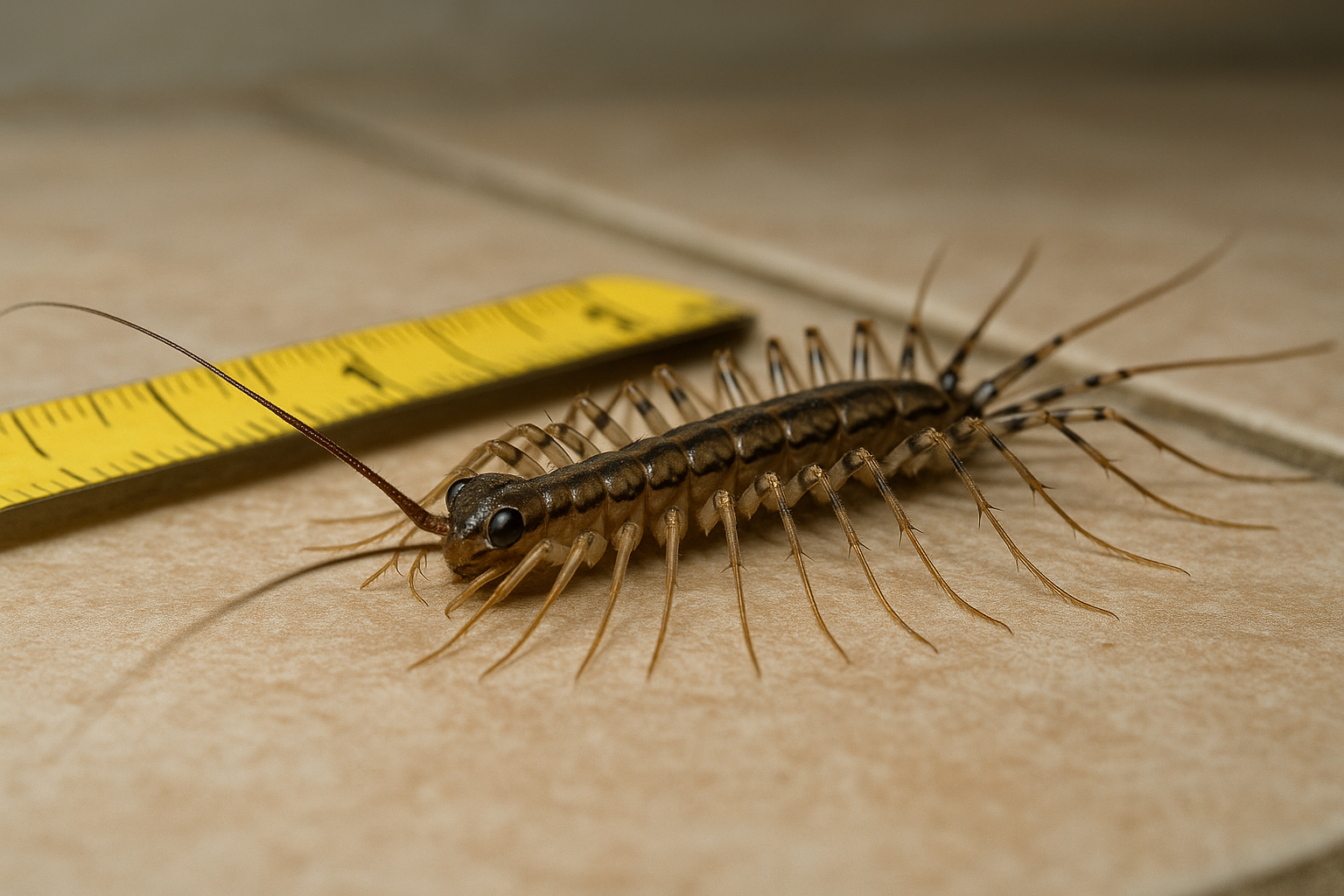
Inside a Tucker home, centipedes gravitate toward the damp, dark places where their favorite prey—small insects and spiders—hide. You’ll most often find them crawling across basement walls, peeking out from under bathroom tiles, nesting in crawl‑space insulation, or slipping behind refrigerators, washing machines, and dryers. These micro‑environments retain moisture even after a summer thunderstorm, creating an ideal highway for centipedes to travel from the outdoors to your living spaces.
Use this quick checklist to spot the warning signs before a small visitor turns into a larger infestation:
- Check any area that feels cool and damp—basements, under sinks, and crawl‑space corners.
- Notice if you see a centipede moving after dark; they are nocturnal hunters.
- Look for an increase in tiny insects such as springtails or fruit flies, which serve as food.
Identifying centipedes early helps you choose the right treatment before they multiply. Because they thrive in moisture, fixing leaks or improving ventilation can cut down their numbers without chemicals.
One Tucker resident, Mariah L., recalled the night a heavy rainstorm flooded her yard and water seeped into the bathroom floor. The next morning she found a 3‑inch centipede scuttling across the tile beside her shower, its striped body glistening with moisture. “I thought it was a spider at first, but the many legs gave it away,” she said, and promptly called Anthem Pest Control to assess the source of the dampness and prevent future visitors.
Risks and Why Professional Treatment Is Needed
Centipedes may look harmless, but a bite can be surprisingly painful. Their venom contains proteins that trigger localized swelling, throbbing pain, and in some cases a mild rash. While most healthy adults recover quickly, children, seniors, and anyone with a known insect allergy can experience more severe reactions, including intense itching, nausea, or even anaphylaxis. Because these bites often occur in kitchens or bathrooms—areas where families gather—the risk to vulnerable household members is a genuine concern. Homeowners who notice frequent centipede activity often consider centipede control cost Tucker when evaluating professional treatment options. If you notice rapid swelling, difficulty breathing, or a spreading rash, seek medical care immediately, as these signs may indicate an allergic response that requires professional attention.
DIY methods: what’s available and where they fall short
Homeowners frequently turn to over‑the‑counter sprays, sticky traps, or natural repellents such as citrus oil or diatomaceous earth. These products can reduce the number of visible centipedes temporarily, but they rarely address the underlying infestation. OTC sprays typically contain low‑concentration pyrethroids that lose effectiveness after a few days, and traps merely capture wandering individuals without eliminating breeding sites. Moreover, improper application can expose pets and children to chemicals that were never meant for indoor use, and some DIY solutions may contribute to environmental runoff when washed away.
Professional treatment: the safer, more effective choice
Licensed technicians from Anthem Pest Control use EPA‑registered products formulated for indoor use. According to EPA data, professional indoor treatments achieve roughly 85% success in controlling centipedes, compared with only 30% for most OTC solutions (EPA). Our team follows strict safety protocols: we wear appropriate personal protective equipment, apply the correct dosage, and target hidden entry points and nesting areas. This comprehensive approach not only eliminates the current population but also reduces the likelihood of re‑infestation, and we schedule follow‑up visits to ensure lasting protection.
Choosing a professional service means you avoid the guesswork of DIY dosing, protect your family from accidental exposure, and benefit from a proven success rate. When centipedes pose a health risk, especially for children and seniors, the peace of mind that comes with a licensed, EPA‑compliant treatment is well worth the investment.
Treatment Options Available in Tucker
Anthem Pest offers three service packages for centipede control in Tucker, each matching different infestation levels and homeowner needs. Knowing the options helps you select the most cost‑effective solution.
One‑time Spot Treatment
This package targets isolated sightings or small clusters of centipedes that have been spotted in a single area, such as a bathroom corner or basement crawl space. A certified technician applies a focused spray directly to the problem zone, using a fast‑acting formulation that kills on contact and leaves a residual barrier for a short period. Spot treatments are ideal when you’ve only noticed a few individuals and there’s no evidence of a larger population. Because the work is limited to one location, the cost typically falls between $80 and $120, making it the most affordable entry point for homeowners who need immediate relief.
Full‑Home Integrated Pest Management (IPM)
The Full‑Home IPM plan is a comprehensive approach for homes with moderate to heavy centipede activity or for owners seeking a long‑term preventive strategy. Service begins with a thorough inspection of interior and exterior entry points, moisture sources, and harborage areas. Technicians apply a perimeter barrier to the foundation and interior treatments in high‑risk zones such as kitchens, bathrooms, and utility rooms. A follow‑up visit a week later confirms effectiveness and allows adjustments. This all‑in‑one solution typically ranges from $180 to $250, reflecting labor, materials, and expertise needed to protect the entire property.
Ongoing Maintenance Plans
For homeowners who prefer a hands‑off approach, Anthem Pest’s quarterly maintenance plan provides continuous protection throughout the year. Each visit includes a brief inspection, targeted re‑applications of residual products, and moisture‑control recommendations to deter centipedes from returning. Visits are priced at $70 to $90 per service, and customers who sign an annual contract often receive a discount that can lower the per‑visit cost by up to 15 %. This plan is especially valuable in Tucker’s humid climate, where centipedes thrive in damp environments and can re‑infest quickly after a single treatment.
All pricing reflects Anthem Pest’s 2024 local rates for Tucker, Georgia. For the most current figures and any seasonal promotions, consult the Anthem Pest 2024 pricing sheet.
Factors Influencing Cost in Tucker
When you call Anthem Pest Control for centipede control, the price you see on the estimate isn’t arbitrary—it reflects a handful of concrete variables that differ from house to house. Understanding these factors helps you see why one neighbor might pay $180 while another’s bill is $250. Our pricing model stays flexible, so you never pay for services you don’t need.
Property size
Most Tucker homes average around 1,800 sq ft. Our baseline service fee is calculated for that footprint. For every additional 500 sq ft, we add roughly $15‑$20 to cover the extra product and labor. A 2,800‑sq‑ft home, for example, would incur an extra $30‑$40 on top of the base price. We also include attached garages or decks that fall within the treated perimeter.
Infestation severity
We assess how many centipedes are roaming your walls, floors and crawl spaces. A light infestation uses a 1.0 multiplier, meaning you pay the base rate. Moderate activity (visible trails, occasional sightings) bumps the cost by 30 % (×1.3). Severe outbreaks—multiple rooms, frequent sightings, and potential damage—raise the multiplier to 1.6, reflecting the need for additional treatments and stronger chemicals. Severe cases usually trigger a guaranteed follow‑up visit to confirm results.
Accessibility challenges
Older homes or those with tight crawl spaces can slow our technicians and require special equipment. If we encounter a basement that’s difficult to reach or a home built before modern code, we apply a $30‑$50 surcharge. This fee ensures we can safely and thoroughly treat hidden pockets where centipedes love to hide.
Seasonal demand
Centipedes are most active during the warm, humid months of June through August. During this peak window, we see higher call volumes, which can translate into a modest seasonal premium. Scheduling treatment in the shoulder months of May or September often saves you a few dollars while still catching the pests before they multiply.
By factoring in square footage, infestation level, home layout, and timing, Anthem Pest Control can give you a transparent, fair quote that matches the exact work required for your Tucker residence.
How to Get an Accurate Quote
Getting a clear, no‑surprise estimate from Anthem Pest is simple and takes just a few minutes. Follow these three steps to lock in transparent pricing before any work begins.
Step 1 – Schedule a free inspection
Call us at 877‑371‑8196 or request an online appointment through our website. Our certified technicians will arrange a convenient time, typically within 24 hours, to assess your home at no cost.
Step 2 – Provide key home details
During the call or on the online form, be ready to share:
- Square footage of the property (including any outbuildings).
- Specific problem areas you’ve noticed – baseboards, crawl spaces, closets, etc.
- Any previous pest‑control treatments, chemicals used, and dates.
These details let our team tailor the treatment plan and avoid unnecessary services.
Step 3 – Receive a written, itemized estimate
Within one business day you’ll get a PDF that breaks down every charge: inspection fee (free), treatment products, labor, and any optional follow‑up visits. The document also outlines the 24‑hour response guarantee and our transparent pricing policy, so you know exactly what you’re paying for.
Anthem Pest’s commitment to transparent pricing means no surprise add‑ons after the job. Every product, labor hour, and protective measure is listed, and the 24‑hour response guarantee ensures a technician at your door within a day if pests return. This clarity lets you budget confidently.
When the estimate arrives, review it at your leisure. If anything is unclear, our customer‑service line is open to explain each line item. Once you approve, we schedule the service and lock in the quoted price – no hidden fees, no surprise hikes.
Ready to start? Call 877‑371‑8196 or visit anthempest.com to book your free inspection today.
Prevention Tips to Reduce Future Costs
Control Moisture at the Source
Centipedes thrive in damp environments, so the first line of defense is eliminating excess moisture. Inspect your home for leaky pipes, faucet drips, or roof leaks and repair them promptly. In basements and crawl spaces, run a dehumidifier set to 50 % relative humidity and empty it regularly. Outside, grade the soil so water drains at least six inches away from the foundation; consider installing a French drain if water pools near the house.
Seal Every Possible Entry Point
Even the tiniest crack can become a highway for centipedes. Use a high‑quality silicone caulk to fill gaps around windows, baseboards, and utility penetrations. Install door sweeps on all exterior doors and attach fine‑mesh screens to vents, dryer exhausts, and chimney flues. Remember to check the garage door threshold and seal any gaps that might let moisture‑laden insects slip inside.
Maintain a Clean Landscape Perimeter
Outdoor clutter creates sheltered pathways that lead straight to your door. Store firewood at least two feet away from the house and keep it elevated off the ground. Remove leaf piles, mulch, and other debris that retain moisture. Trim shrubs, trees, and vines so they stop at the foundation, creating a clear, dry buffer zone. A well‑kept lawn discourages centipedes from venturing indoors.
Stay Organized with a Simple Checklist
Consistent upkeep is easier when you have a step‑by‑step guide. Download Anthem Pest’s free “Centipede Prevention Checklist” and use it each season to track leaks, caulking jobs, and landscaping tasks. A quick weekly review can save you costly treatments later.
Get the checklist here: Anthem Pest Prevention Checklist
Frequently Asked Questions
Do centipedes carry disease?
According to the Centers for Disease Control and Prevention, centipedes are not known to transmit diseases to humans. While their bite can cause localized pain, swelling, and redness, there is no evidence of them acting as vectors for pathogens. For more details, you can review the CDC’s centipede fact sheet here. Our focus at Anthem Pest Control is to eliminate the nuisance while reassuring you that health risks from these arthropods are minimal.
How long does treatment last?
A professional centipede control program typically provides residual protection for three to six months. The exact duration depends on the product used, the level of infestation, and environmental factors such as humidity and landscaping. Our EPA‑registered formulations are designed to stay active on baseboards, cracks, and entry points, giving you a season‑long barrier before a follow‑up visit may be recommended.
Will pets be affected?
We only apply EPA‑registered products that are labeled as pet‑safe when used according to the manufacturer’s directions. Technicians take precautionary steps—such as keeping pets in a separate room or outside—during application and allow a short drying period before allowing animals back inside. This ensures your furry family members remain unharmed while we eradicate centipedes from your home.
If you have additional concerns, our certified technicians are ready to answer your questions during the inspection and help you feel confident about the safety and effectiveness of the treatment.
Protect Your Tucker Home with Confidence
When it comes to centipede control in Tucker, Georgia, the numbers are clear. Understanding centipede control cost Tucker helps homeowners plan their budget effectively. A one‑time spot treatment typically runs between $80 and $150, a comprehensive Integrated Pest Management (IPM) plan falls in the $180‑$300 range, and ongoing maintenance subscriptions average $250‑$400 per year. These realistic cost bands let you budget confidently without surprise fees.
Why Licensed Professionals Make the Difference
Choosing a licensed pest‑management company isn’t just about ticking a box—it directly impacts success and safety. Trained technicians know the exact life cycle of centipedes, can target hidden entry points, and apply EPA‑approved products at the correct dosage. That expertise reduces retreat rates and protects your family and pets from unnecessary chemical exposure.
Preventive Steps That Keep Future Costs Low
Simple, proactive measures can dramatically lower the need for repeat treatments. Keep moisture levels down by fixing leaky pipes, use dehumidifiers in basements, and seal cracks around foundations and windows. Regular yard maintenance—removing leaf litter, wood piles, and standing water—removes the ideal habitat centipedes seek, turning a costly emergency into a routine, low‑budget check‑up. Scheduling an annual professional inspection adds another layer of protection, catching hidden infestations before they spread.
Take the First Step Today
Ready to protect your home without guessing the next bill? Schedule a free inspection by calling 877‑371‑8196 or booking online. Our team will assess your property, outline a tailored plan, and give you a transparent price before any work begins. The consultation is completely free and comes with no obligation to purchase a service.
At Anthem Pest Control, we combine local knowledge with industry‑leading practices to protect your home affordably and safely. Our transparent pricing, including clear centipede control cost Tucker, and 24‑hour response guarantee mean you never have to guess what the next bill will be. Trust a partner that treats every Tucker residence as if it were our own.
Visit Anthem Pest Control to learn more and secure your home’s defense today.