Moth Issues Facing Woodstock Homeowners
Woodstock’s mild winters and warm, humid summers create a perfect breeding ground for both pantry and clothes moths. The area’s average temperature hovers around 70°F (21°C) for most of the year, while humidity levels often stay above 60%. These conditions allow moth eggs and larvae to develop quickly, especially in dark, undisturbed spaces such as kitchen pantries, closets, and attics.
Local Moth Activity: What the Numbers Say
Recent data from local pest reports show that moth complaints in Woodstock have risen by roughly 22 % over the past two years. Homeowners report an average of three to five sightings per household during peak summer months, with pantry moths being the most common culprit. Anecdotal feedback from neighbors often mentions discovering tiny silken tubes along the edges of cereal boxes or finding larvae munching through wool sweaters left in storage.
Why Moths Matter to Your Wallet and Health
Beyond the nuisance factor, moths can inflict real financial damage. A single pantry moth infestation can contaminate dozens of food items—flour, grains, nuts, and dried fruit—forcing homeowners to discard entire shelves of groceries. On average, families in the area spend between $150 and $300 replacing spoiled products each season.
Clothes moths target natural fibers such as wool, cashmere, and silk. Their larvae weave silk tunnels that weaken fabric, leading to holes and irreversible wear. Replacing a damaged garment or upholstery piece can easily run $50 to $200, and the cost climbs quickly if the infestation spreads to multiple items.
While moths are not known to transmit diseases, the presence of larvae and their webs can trigger allergic reactions in sensitive individuals, especially those with asthma or dust sensitivities. The combination of food loss, clothing damage, and potential health concerns makes early detection essential.
Our Goal: Empower You to Spot, Treat, and Prevent Moths
At Anthem Pest Control, we understand that Woodstock homeowners need clear, actionable information to protect their homes. This article will walk you through the tell‑tale signs of pantry and clothes moths, outline effective treatment options—including safe, targeted insecticide applications and non‑chemical methods—and provide a preventative checklist you can implement today. By the end, you’ll have the confidence to tackle moth problems head‑on, keeping your pantry stocked and your wardrobe intact without breaking the bank.
Spotting Pantry and Clothes Moths in Your Home
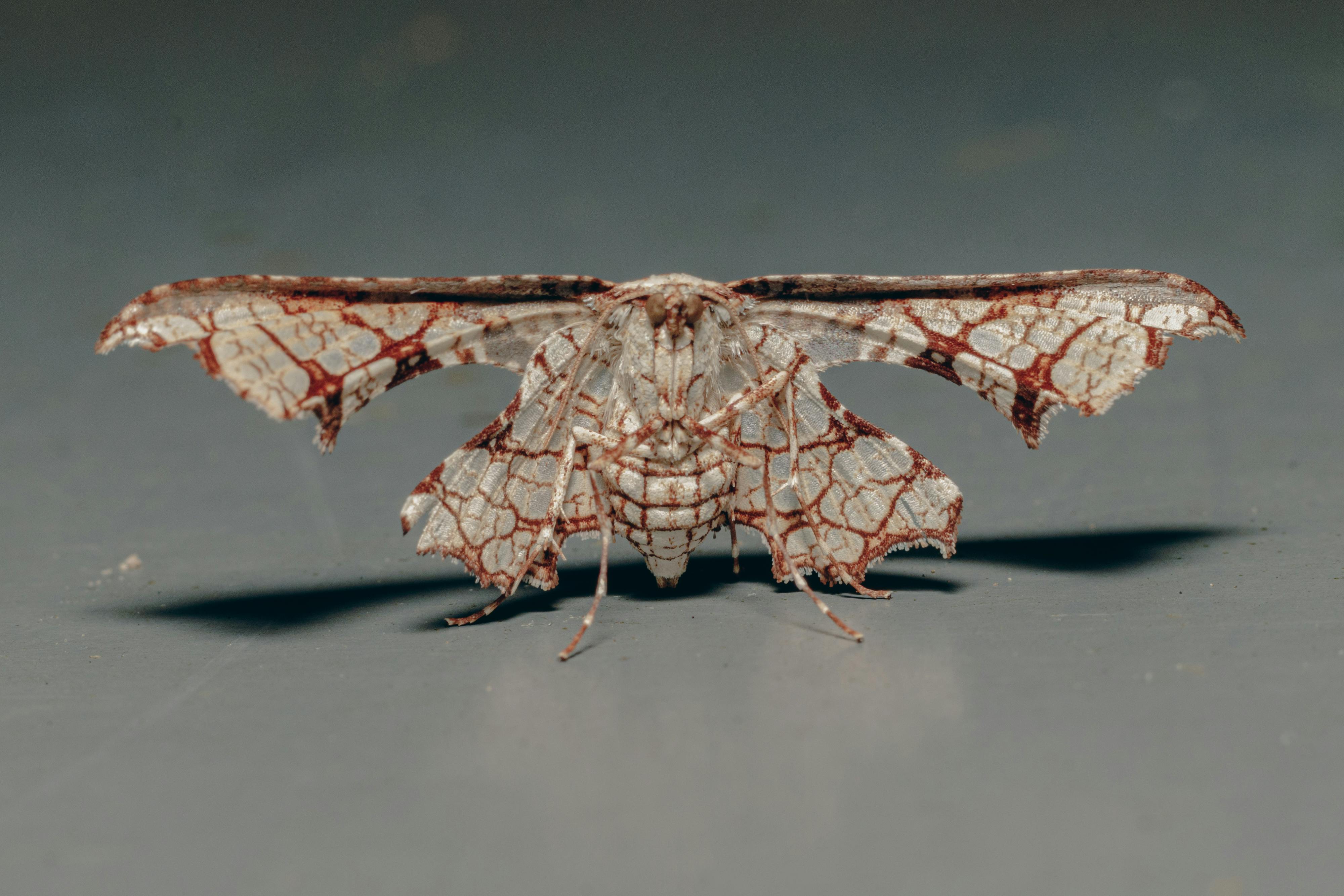
Pantry Moth (Indian Meal Moth)
The Indian meal moth, often called the pantry moth, is a small but noticeable intruder. Adults measure about 1/2 inch (12–15 mm) from wing tip to tip. Their forewings are a mottled blend of brown, gray, and amber, featuring a distinctive copper‑colored “snout” that points forward. When at rest, the wings form a tight, triangular shape, making them easy to recognize against pantry shelves.
Clothes Moth (Webbing or Casemaking Moth)
Clothes moths are slightly larger, ranging from 5/8 to 3/4 inch (15–20 mm). Their bodies are slender and pale, while the wings are a muted gray‑brown with a faint, wavy line across the center. The real giveaway is the larval case: a tiny, silken cocoon that the caterpillars spin around themselves as they feed on natural fibers. These cases often cling to seams, folds, or the underside of garments.
Key Signs of an Infestation
- Webbing: Fine, silky threads on the tops of stored grains, cereal boxes, or inside closets.
- Larvae: Small, cream‑colored caterpillars that move slowly and may be spotted crawling on food surfaces or fabric.
- “Cocoons” or Cases: Tiny, brownish‑gray silken sacs left behind by clothes moth larvae.
- Damaged Food Packages: Small holes, powdery residue, or a faint, stale odor in flour, rice, or nuts.
- Holes in Fabrics: Irregular, round holes in wool, cashmere, or other animal‑based textiles.
Where to Look
Start your inspection where moths love to hide. In the kitchen, pull out pantry shelves, grain bins, and even the backs of cereal boxes. Check the seams of flour bags and the corners of spice jars. In the laundry or bedroom area, examine closets, under the bed, and the interior of drawers. Pay special attention to woolen garments, blankets, and any stored fabrics left in boxes or under furniture.
Confirming the Problem
When you suspect a moth presence, set up a simple pheromone trap. These sticky traps are baited with species‑specific lures that attract adult moths, giving you a clear visual confirmation within a few days. If traps capture multiple moths, it’s a strong indicator of an active infestation.
Alternatively, a thorough visual sweep can be just as effective. Use a flashlight to examine dark corners and crevices, and shake out clothing or stored food items over a white sheet. Any moving larvae or scattered silken threads are unmistakable proof that moths have taken residence.
Identifying the species early lets you act quickly—whether you choose a DIY approach or call a professional like Anthem Pest Control. Prompt action not only protects your pantry and wardrobe but also prevents the costly spread that can occur once moths establish a breeding colony.
Seasonal Activity Patterns for Moths in Woodstock
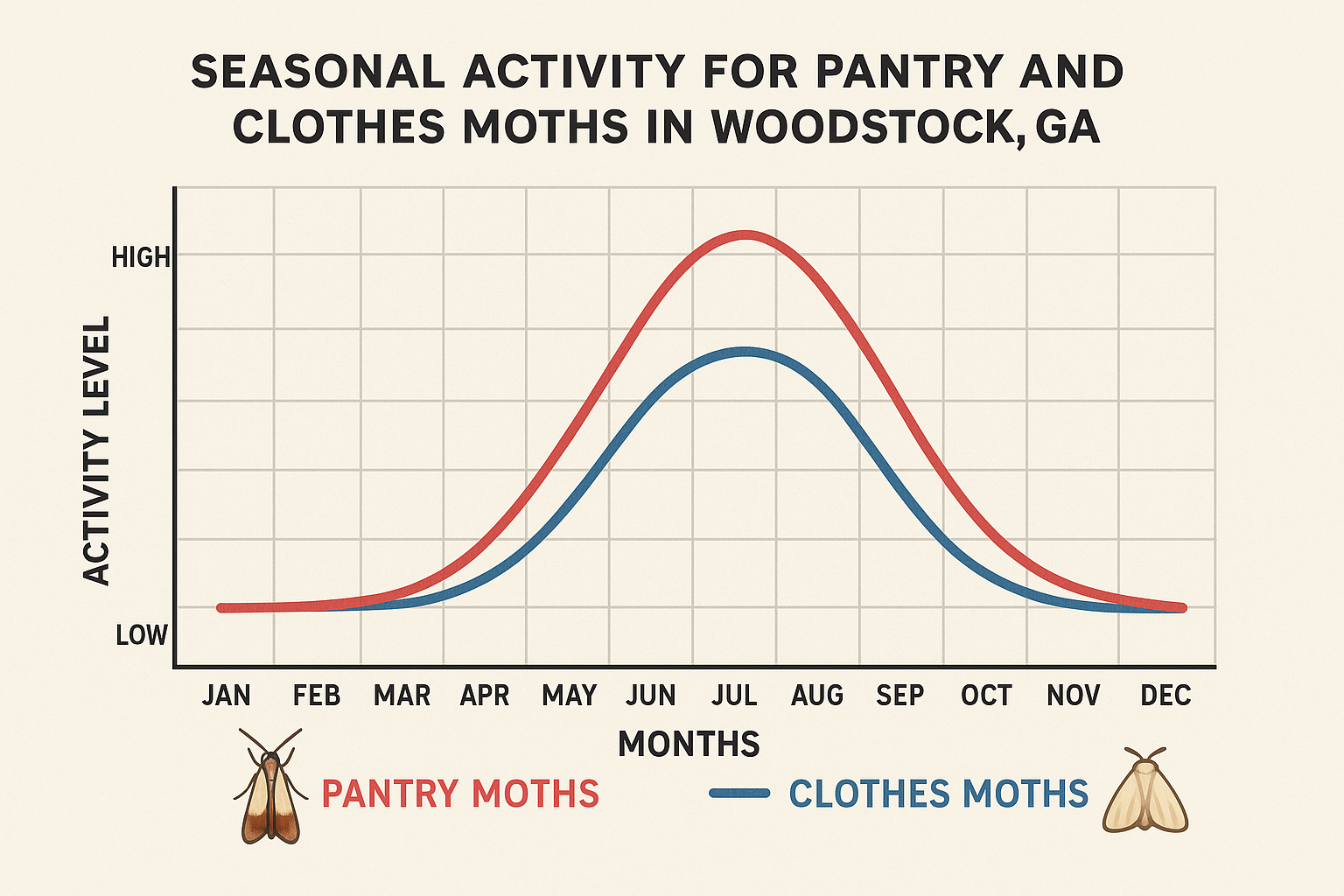
Moths in Woodstock follow a predictable rhythm driven by temperature, humidity, and food availability. When the mercury climbs above 65°F (18°C) and humidity stays between 60‑70%, adult moths emerge, mate, and lay eggs. Those conditions accelerate the life cycle—from egg to larva, pupa, and adult—in as little as three weeks. Conversely, cooler, drier months slow development, pushing the population into a dormant state.
Reading the Seasonal Activity Chart
The chart above breaks down two common household species. Pantry moths (e.g., Plodia interpunctella) peak from late April through early July, coinciding with the warm, humid days that encourage grain and cereal storage. Clothes moths (e.g., Tineola bisselliella) reach their highest numbers from late August to early October, when indoor temperatures remain warm but outdoor humidity begins to drop, creating ideal conditions for larvae to digest natural fibers.
Practical Timing for Homeowners
- Pre‑peak deep cleaning: In late March, vacuum pantry shelves, discard expired dry goods, and wash fabrics before moths become active. This removes the food sources larvae need to thrive.
- Deploy pheromone traps: Set pantry‑type traps in early April and clothes‑type traps in mid‑August. Traps capture male moths, disrupting breeding cycles and giving you an early warning of an infestation.
- Seasonal inspections: Schedule a professional inspection with Anthem Pest Control in early May for pantry moths and again in early September for clothes moths. Technicians can apply targeted treatments just as populations surge.
Linking Moth Activity to Local Events
Woodstock’s calendar offers clues about when moths will appear. Holiday gatherings in November and December increase the amount of stored dry foods, extending pantry moth activity into the colder months if leftovers aren’t sealed. Likewise, the back‑to‑school rush in August brings a wave of new clothing into closets, providing fresh fabrics for clothes moth larvae. By aligning cleaning and trap placement with these events, homeowners can stay one step ahead of the pests.
Understanding these seasonal patterns empowers you to act before moths become a problem. A timely deep clean, strategic trap deployment, and a scheduled professional check are the three pillars of an effective moth‑control plan in Woodstock, GA.
Effective Treatment Options for Woodstock Moth Infestations

Initial Home Inspection
A thorough inspection is the foundation of any successful moth control plan. A certified technician will examine vulnerable areas such as closets, attics, and pantry shelves, looking for tell‑tale signs like webbing, larval frass, and damaged fabric or stored food. Identifying the species, infestation hotspots, and the extent of damage helps tailor a treatment that targets the problem without over‑treating the home. For a deeper dive into what inspectors check, see the Woodstock pest services guide.
Chemical Treatments
When moth populations are moderate to severe, professional-grade chemicals often provide the fastest knock‑down. Residual sprays leave a protective layer on baseboards, cracks, and other entry points, killing insects that walk over them for weeks. Fumigation is reserved for extreme cases, especially when larvae are hidden deep inside wall voids or large fabric collections. Safety is paramount: technicians wear protective gear, seal off treated zones, and follow EPA‑approved application rates to protect children, pets, and indoor air quality.
Non‑Chemical Methods
Homeowners who prefer a greener approach have several effective alternatives:
- Heat treatment: Raising ambient temperature to 120‑130°F for several hours destroys eggs, larvae, and adults without chemicals.
- Freezing: Small items can be placed in a freezer at 0°F for at least 72 hours to eradicate hidden stages.
- Vacuuming: Regularly vacuuming carpets, rugs, and seams removes larvae and disrupts their life cycle; dispose of the bag immediately.
- Pheromone traps: These lure male moths, reducing breeding potential and providing a visual monitor of infestation levels.
- Diatomaceous earth: A food‑grade powder applied to cracks and storage areas abrasively damages the exoskeleton of crawling moths, leading to dehydration.
Integrated Pest Management (IPM)
IPM blends the best of both worlds—chemical and non‑chemical tactics—while emphasizing prevention. Begin with sanitation: regularly clean closets, rotate seasonal clothing, and store fabrics in sealed containers. Exclusion involves sealing gaps around doors, windows, and vents to block adult moths from entering. Finally, apply targeted treatments only where monitoring indicates activity, such as a spot‑on residual spray in a pantry corner or a localized heat treatment for an infested wardrobe. This layered strategy minimizes chemical exposure and maximizes long‑term control.
Professional vs. DIY: When to Call the Experts
Minor sightings—like a few moths fluttering near a sweater—can often be handled with DIY measures: a vacuum, a pheromone trap, and a thorough cleaning. However, if you notice recurring damage, widespread webbing, or larvae hidden in hard‑to‑reach places, it’s time to enlist a professional. Technicians bring expertise in species identification, have access to EPA‑registered products, and can safely execute complex procedures like fumigation or whole‑home heat treatment. Moreover, a professional service typically includes a follow‑up visit to confirm that the population is fully suppressed, giving you peace of mind.
Choosing the right solution hinges on the size of the infestation, your comfort with chemicals, and how quickly you need results. By starting with a comprehensive inspection, weighing chemical versus non‑chemical options, and adopting an IPM mindset, Woodstock homeowners can confidently tackle moth problems while protecting their families and belongings.
Understanding Moth Control Costs in Woodstock
When you call a pest‑control pro, the first thing on your mind is often the price tag. At Anthem Pest Control we break down every charge so you know exactly what you’re paying for and can budget with confidence. Below is a clear view of the typical cost components, the price ranges you’ll see on our Woodstock infographic, and the factors that can shift those numbers up or down.
Cost components you’ll see on the invoice
- Inspection fee: A one‑time charge (usually $75‑$120) that covers a thorough walk‑through, identification of moth species, and a written assessment.
- Initial treatment: The core service—whether it’s pantry bait stations, garment‑casing sprays, or whole‑home fogging—typically runs $150‑$300 per treatment.
- Follow‑up visits: Most plans include 1‑2 callbacks (often $50‑$80 each) to verify that the infestation is gone and to retreat if needed.
- Monthly maintenance plans: Ongoing protection can be bundled for $25‑$45 per month, covering regular inspections and preventative applications.
What the infographic tells you
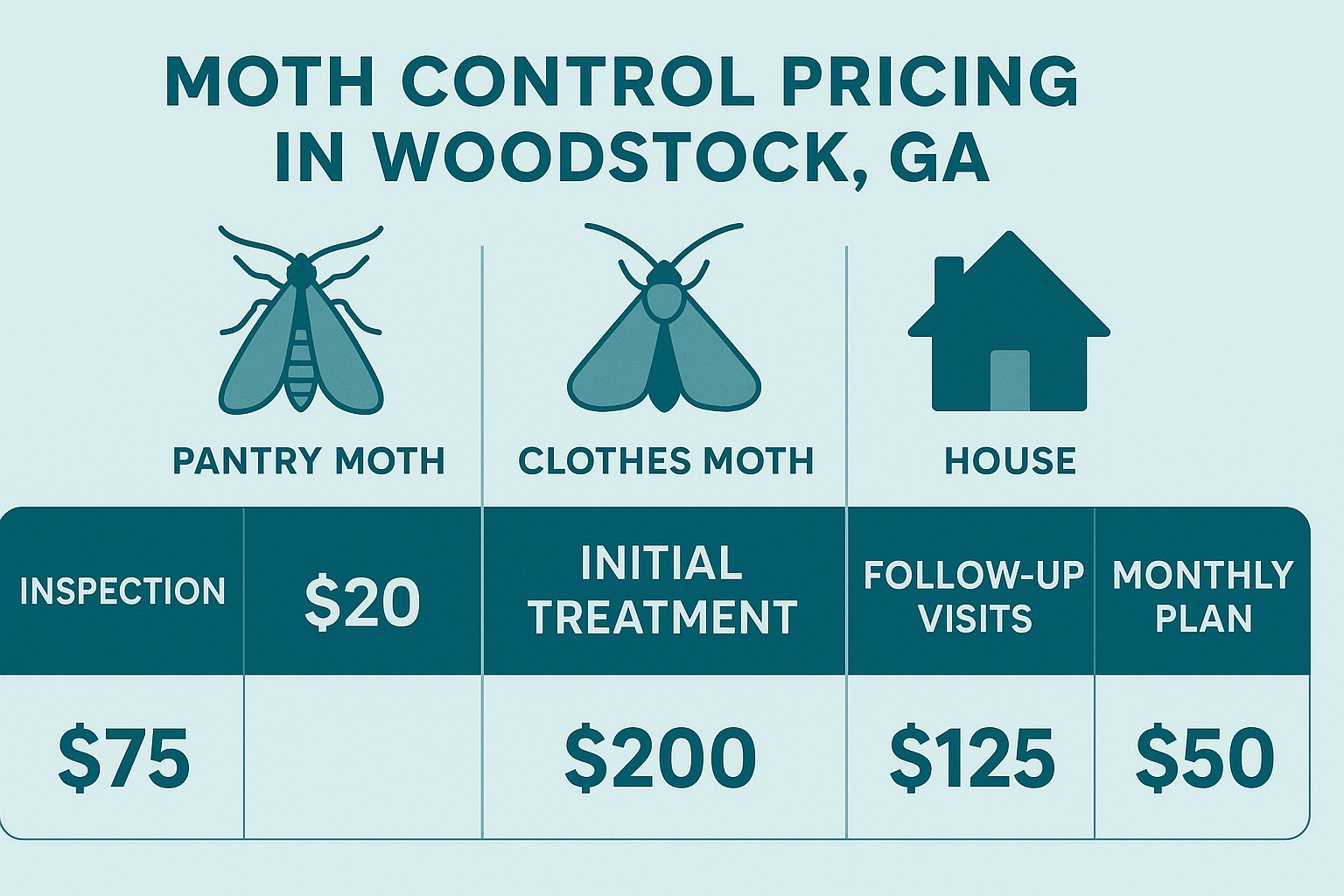
The visual breaks down average pricing for three common service types in Woodstock:
- Pantry moth control: $180‑$250
- Clothes moth control: $200‑$280
- Whole‑home packages (inspection, treatment, and 2‑month follow‑up): $350‑$460
What drives the price up or down
- Infestation severity: A light pantry problem may need only a single bait placement, while a heavy, multi‑room outbreak requires extensive treatment and more visits.
- Home size and layout: Larger square footage or homes with multiple levels increase the amount of product and labor needed.
- Treatment method: Eco‑friendly or low‑toxicity options can carry a modest premium, whereas traditional fogging is usually the most cost‑effective.
Bundled packages vs. one‑time treatments
Bundling inspection, initial treatment, and scheduled follow‑ups usually saves 10‑15% compared with purchasing each service separately. In addition, a bundled plan gives you a single point of contact and a guaranteed timeline, which reduces the risk of a hidden re‑infestation.
Getting a solid quote – your checklist
- Ask for a detailed written estimate that itemizes each cost component.
- Confirm whether the inspection fee is credited toward treatment.
- Inquire about guarantees or free re‑treatments if moths return within 30 days.
- Request information on any seasonal discounts or homeowner loyalty programs.
- Verify that the quoted price includes all necessary follow‑up visits and any recommended maintenance plan.
Preventing Future Moth Problems and Getting Professional Help
Even after a successful treatment, the best defense against pantry and clothes moths is a routine prevention plan that fits seamlessly into your daily life. By staying proactive, you keep the insects from finding a foothold again and protect your food, fabrics, and peace of mind.
Ongoing prevention checklist
- Pantry audits: Once a month, scan shelves for stray crumbs, damaged packaging, or stray larvae. Dispose of any suspect items in a sealed bag.
- Airtight storage: Transfer grains, flour, and dried fruit into containers with snap‑on lids or heavy‑duty zip locks. This starves moths of a food source.
- Seasonal garment care: Before storing winter coats, sweaters, or blankets, give them a thorough vacuum and a cold‑room freeze (or professional dry‑clean) to kill hidden eggs.
- Vacuum cracks and crevices: Use the hose attachment to clean baseboards, behind appliances, and under furniture where moth larvae like to hide.
While these habits are powerful, they work best when paired with an annual professional inspection. A trained technician can spot the faintest signs—tiny webbing, shed skins, or early larval activity—that most homeowners miss. Early detection means treatment can be localized, less invasive, and often cheaper.
Anthem Pest Control brings that expertise directly to Woodstock homeowners. Our technicians use EPA‑approved, low‑toxicity products that are safe for families and pets, yet potent enough to eradicate hidden moth colonies. We pride ourselves on transparent pricing, so you know exactly what each step costs before we begin. Whether you need a one‑time treatment or an ongoing prevention contract, our plans are designed to fit a range of budgets while delivering lasting results.
Ready to safeguard your home? Request a free, no‑obligation quote today and discover how quickly our local team can assess your situation. We respond within 24 hours, schedule inspections at your convenience, and tailor a solution that matches your home’s unique layout.
Call us now at 877‑371‑8196 or visit Anthem Pest Control to schedule your inspection. Let’s keep your pantry fresh and your closets moth‑free.