Rat Risks for Homeowners in Cumming, GA
When you hear the faint scurrying in your attic or notice gnawed wires behind a wall, it’s more than a nuisance—it’s a warning sign. In Cumming, Georgia, rats thrive year‑round, and their presence can quickly turn a comfortable home into a costly repair project and a health hazard. Understanding why rats are such a serious concern helps you act before damage spreads.
Common Rat Species in North Georgia
The two species most likely to invade homes in the Cumming area are the roof rat (Rattus rattus) and the Norway rat (Rattus norvegicus). Roof rats are agile climbers that love the canopy of trees, making them frequent guests in attics, roof voids, and ceiling joists. Norway rats, the larger, sturdier “brown rats,” prefer ground‑level habitats such as basements, crawl spaces, and yard debris. Both species are prolific breeders—one female can produce up to 12 litters a year—so a small initial intrusion can balloon into a full‑blown infestation in months.
Health Risks
Rats are not just property invaders; they are vectors for a suite of diseases and allergens that threaten the health of your family.
- Diseases: Rats can carry Leptospira (causing leptospirosis), hantavirus, salmonella, and even plague. These pathogens can be transmitted through urine, droppings, or bites.
- Allergens: Rat urine and dander contain proteins that trigger asthma attacks and allergic reactions, especially in children and seniors.
- Secondary pests: Rat infestations often attract fleas, mites, and cockroaches, compounding health concerns.
The U.S. Environmental Protection Agency (EPA) confirms that rodent‑borne diseases remain a leading public‑health issue, emphasizing the need for prompt control and sanitation measures.
Economic Impact
Beyond health, rats can cause extensive property damage that quickly adds up to hundreds or even thousands of dollars in repairs.
- Structural damage: Their teeth gnaw through wood, drywall, and especially electrical wiring. A single chewed wire can spark a fire, leading to insurance claims and potential liability.
- Insulation loss: Rats shred fiberglass and cellulose insulation, reducing energy efficiency and raising heating‑cooling bills.
- Repair costs: Homeowners in the Atlanta metro area report average repair expenses of $1,200–$3,500 for wiring and structural fixes after a moderate infestation.
When you factor in the cost of professional extermination—typically $150‑$300 for a one‑time treatment—and the potential for recurring visits, the financial burden can become a significant portion of a household’s annual maintenance budget.
Local Climate That Favors Rats
Cumming’s humid subtropical climate creates an ideal environment for rat populations. Warm summers (average highs in the upper 80s °F) accelerate breeding cycles, while mild winters (rarely dipping below 30 °F) allow rats to remain active year‑round. Abundant oak and pine forests provide natural shelter and food sources, and the area’s frequent rainstorms create moist, sheltered micro‑habitats in leaf litter and mulch beds—perfect nesting spots for both roof and Norway rats.
Additionally, the rapid growth of residential developments in the region often leaves gaps in landscaping, exposed utility lines, and construction debris—exactly the kind of entry points rats love to exploit. Without proactive sealing, proper waste management, and regular inspections, even a well‑maintained home can become an attractive target.
Recognizing these risks is the first step toward protecting your home. By identifying the species, understanding the health and economic threats, and acknowledging how Cumming’s climate fuels rat activity, you can make informed decisions about prevention and treatment—saving both your peace of mind and your wallet.
Spotting a Rat Infestation Early
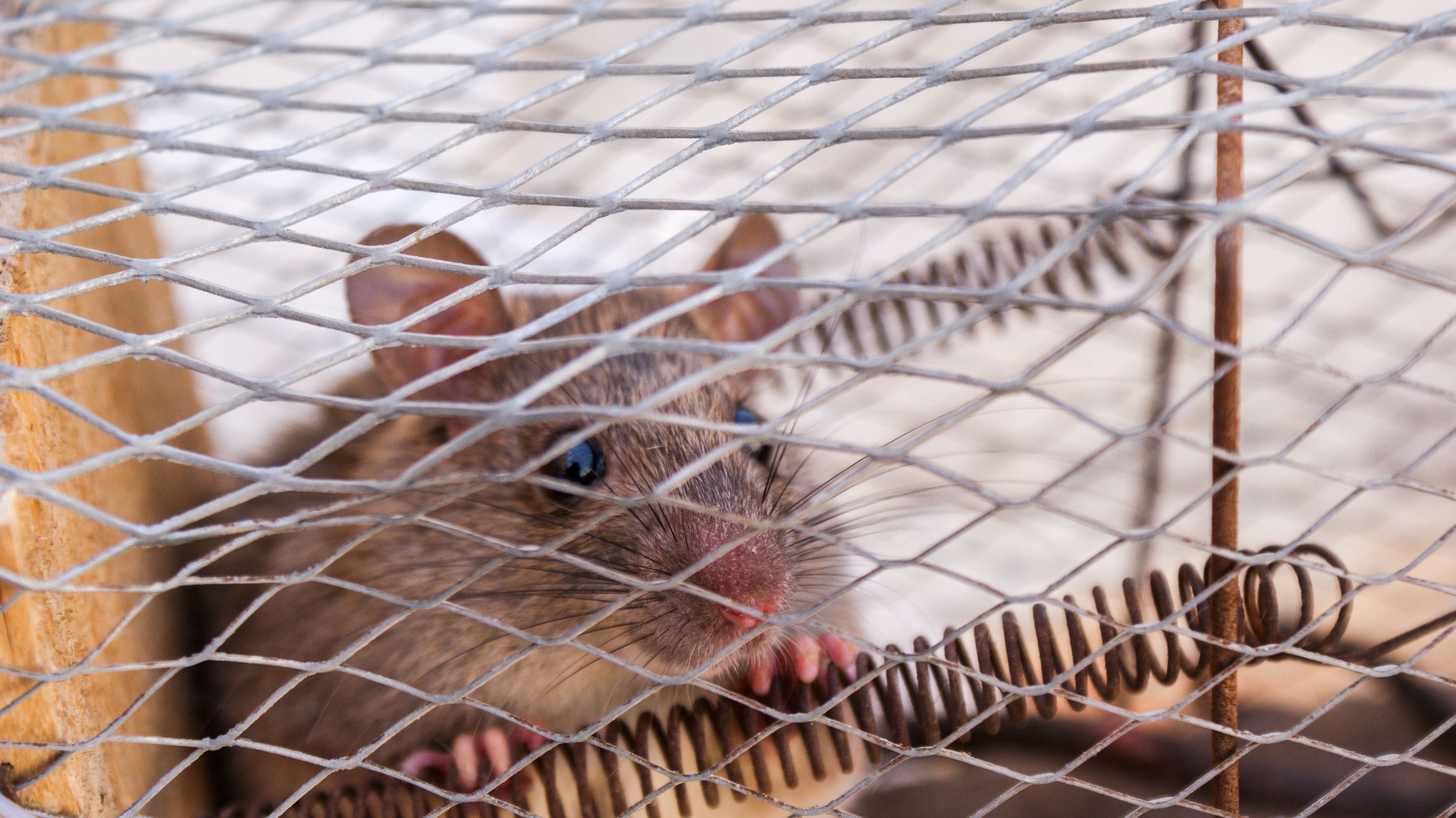
Physical characteristics of roof rats vs. Norway rats
Roof rats (Rattus rattus) are the slimmer of the two common house species. They typically measure 6‑8 inches in body length, have a proportionally long, hairless tail that exceeds their body, and display a sleek, brown‑gray coat with a lighter belly. Norway rats (Rattus norvegicus), also called brown rats, are bulkier, ranging from 7‑10 inches, with a shorter, thick tail and a coarse, dark brown to almost black fur. Spotting these differences can help you identify which species you’re dealing with, which in turn influences the most effective control strategy.
Common entry points in suburban homes
In Cumming’s older neighborhoods, rats exploit any gap that’s larger than a quarter‑inch. Roof rats love the eaves and soffits because they provide direct access to attic insulation and roof voids. Vent openings, especially those without mesh screens, are another favorite. Utility penetrations—where cables, pipes, or HVAC ducts enter the house—often have gaps around them that are easy for a determined rodent to squeeze through. Sealing these openings early can stop an infestation before it gains a foothold.
Warning signs you can’t ignore
Even a modest rat presence leaves a trail of evidence. Fresh droppings look like dark, rice‑shaped pellets and are often found along walls, in cabinets, or near food sources. Gnaw marks appear on wood, plastic, and even metal, usually with clean, parallel cuts. Rub marks—dark, greasy smears—show up along baseboards where rats brush their oily fur. Nesting material such as shredded paper, fabric, or dried plant matter is commonly stacked in hidden corners. Finally, a faint, high‑pitched scurrying sound in the attic or crawl space at night is a clear auditory cue.
How to conduct a quick DIY inspection
Start by gathering a flashlight, a small mirror, and a notebook. Check the attic first: look for droppings on joists, gnaw marks on insulation, and any shredded material in the rafters. Move to the basement or crawl space, paying close attention to the perimeter walls and any exposed pipes. In the pantry, examine stored food for gnaw marks and droppings, and shake out boxes to reveal hidden nests. Don’t forget exterior checks—inspect eaves, soffits, and vent covers for fresh gnawing or droppings.
Safety tips for homeowners during inspection
Rats can carry pathogens, so protect yourself. Wear disposable gloves and a N95‑type mask to avoid inhaling dust or droppings. Use a sturdy ladder with a spotter when accessing the attic, and keep a flashlight with a focused beam to reduce eye strain. If you encounter a large number of droppings or signs of disease, pause the inspection and call a professional. Remember, a brief, careful look is better than a risky deep dive.
For a more detailed guide on rodent identification and additional safety recommendations, visit the EPA’s rodent resources.
When Rats Are Most Active in Georgia
Georgia’s Climate and Rodent Behavior
Georgia’s humid subtropical climate creates a year‑round haven for rodents, but temperature swings and rainfall patterns still dictate when rats are most active. Warm, moist summers accelerate breeding cycles, while milder winters push rats to seek shelter inside homes. The combination of abundant outdoor food sources—like fallen fruit and garden waste—and indoor warmth means that even during cooler months, rats can remain active, though their numbers typically dip in late winter.
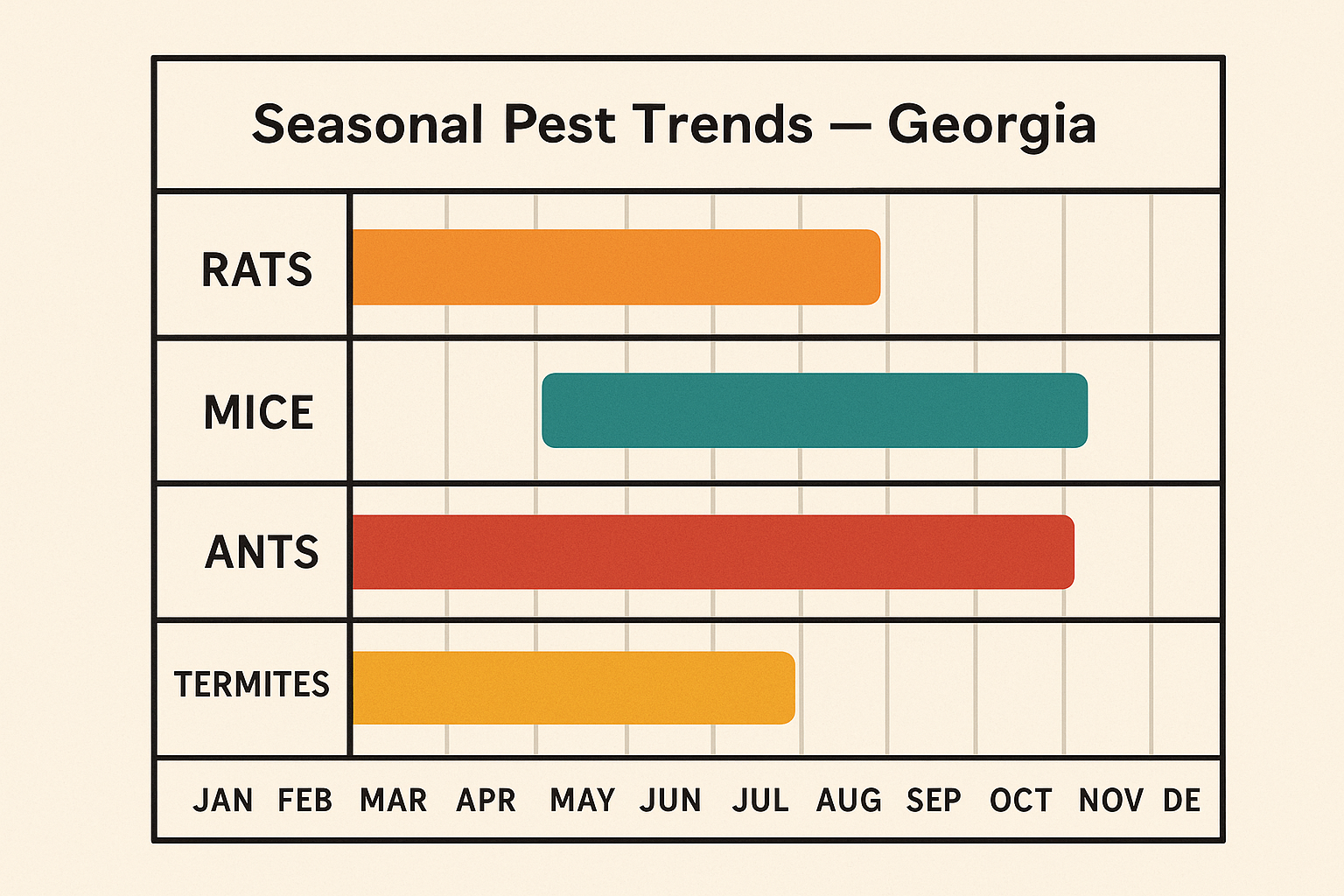
Seasonal Pest Activity Chart
| Pest | Peak Months |
|---|---|
| Rats (Norway & Roof) | July – October |
| Mice (House) | May – September |
| Ants (Carpenter, Pavement) | April – June |
| Termites (Subterranean) | June – August |
Why Late Summer and Early Fall Spark Rat Spikes
Rats have a rapid reproductive cycle: a single female can produce up to five litters per year, each containing 6‑12 pups. Warmer temperatures between July and September shorten gestation to just 21 days, allowing successive generations to emerge before winter sets in. Food availability also peaks during harvest season—think ripe berries, corn, and outdoor trash—providing ample nutrition for growing colonies. As daylight shortens, rats intensify their search for indoor shelter, leading to noticeable spikes in homeowner sightings.
Timing Your Inspections and Treatments
Understanding these seasonal trends lets you act before rats become entrenched. Follow this simple timeline:
- Pre‑Fall Inspection (late August‑early September): Have a professional assess potential entry points, especially around eaves, vents, and utility openings.
- Early‑Spring Exclusion (March‑April): Seal gaps before new litters emerge, focusing on foundation cracks and attic access points.
- Mid‑Summer Baiting (June‑July): Deploy bait stations when foraging activity is high but before the breeding surge.
- Post‑Winter Follow‑Up (January‑February): Check for winter survivors that may have taken refuge in crawl spaces or basements.
By aligning inspections with the charted peaks, you reduce the chance of a full‑blown infestation and keep treatment costs manageable.
For added confidence, remember that any pest‑control provider operating in Georgia must hold a valid license from the Georgia Department of Agriculture. Licensed technicians are trained to identify seasonal patterns, apply the right control methods, and comply with state safety regulations—ensuring you receive effective, legally compliant service.
Preventive Exclusion Strategies for a Rat‑Free Home

Seal the Exterior, Shut Out the Intruders
Rats are master squeezers; a gap the width of a pencil is enough for them to slip inside. Start by caulking all visible cracks around windows, doors, and the foundation. Where caulk alone won’t hold, pack the opening with steel wool and then seal it with expanding foam or concrete. Damaged or torn screens should be replaced immediately, and any vent covers must be fitted with fine mesh. Finally, trim trees, shrubs, and vines at least 12 inches away from the house so branches don’t provide a bridge to the roof.
Smart Interior Habits
Even a perfectly sealed exterior can be compromised by careless indoor practices. Store dry goods in airtight containers—plastic bins with snap‑lids work best. Clean up crumbs and spills within minutes; a lingering scent can act like an open invitation. Waste should be taken out daily and kept in bins with tight‑fitting lids. Check under sinks and behind appliances for drips; eliminating standing water removes a critical drinking source for rats.
Professional Exclusion: Why a Technician Matters
While DIY sealing tackles the obvious entry points, a trained technician can locate the hidden vulnerabilities that most homeowners miss. During an assessment, the expert inspects the roofline, utility penetrations, and crawl‑space vents, then applies targeted exclusion products such as rodent‑grade steel mesh and specialized sealants.
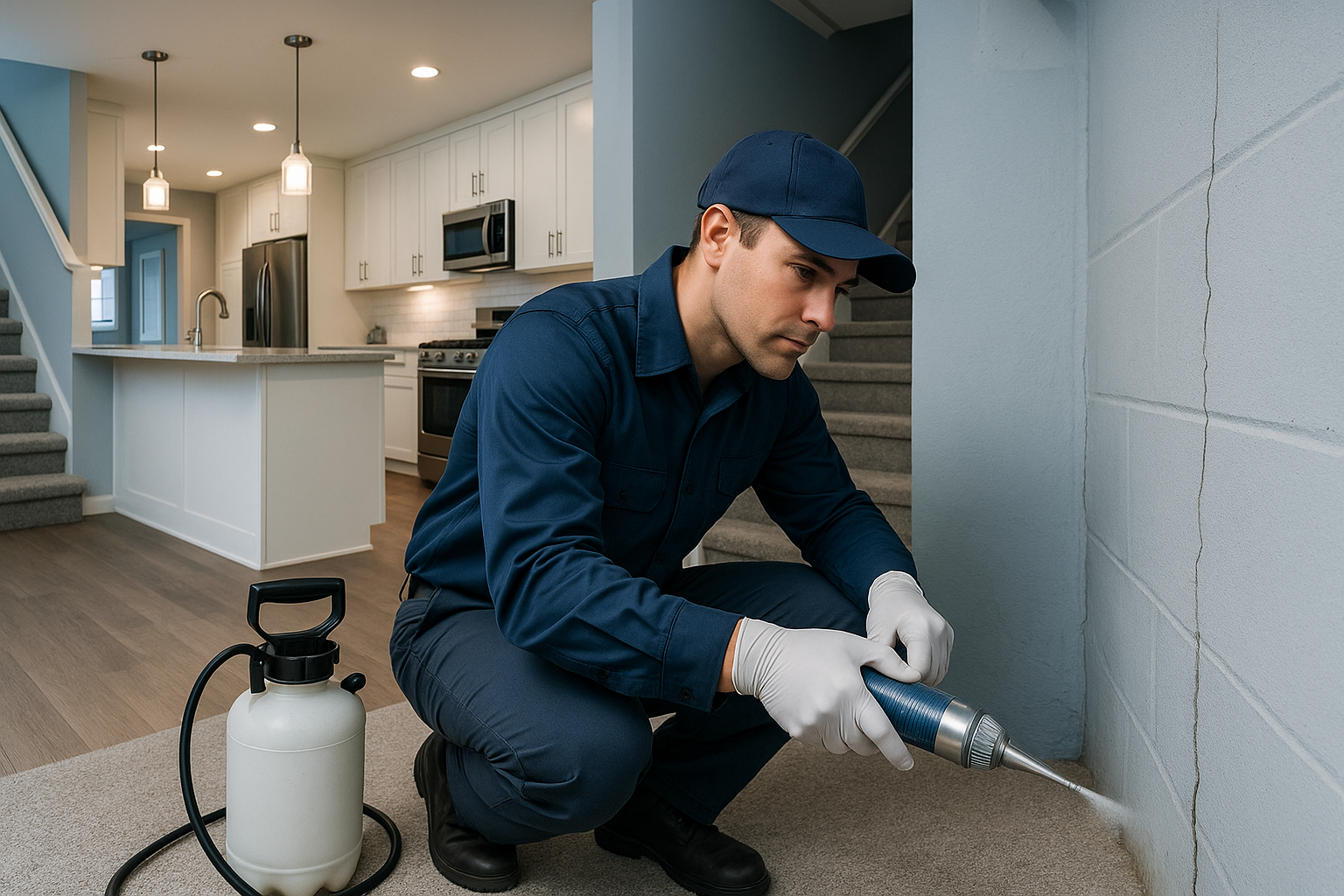
For example, in a typical suburban yard in Cumming, a technician from Anthem Pest Control might set up a fogging device along the perimeter. The fog disperses a low‑toxicity repellent that creates an invisible barrier, discouraging rats from approaching the foundation. Simultaneously, the technician treats potential nesting sites—like wood piles or garden debris—with a non‑residual, environmentally safe bait that reduces the local population without harming pets or children.
Prevention Pays Off
Investing in exclusion now saves you from the higher costs of reactive extermination later. A one‑time professional sealing service typically ranges from $200 to $400, depending on the home’s size and the number of entry points. In contrast, a full‑scale rat eradication—including multiple visits, bait stations, and follow‑up monitoring—can exceed $800. Moreover, prevention protects your property’s structural integrity, saves food, and reduces the health risks associated with rodent‑borne diseases.
Bottom line: A few hours of diligent sealing, combined with smart indoor habits and an occasional professional exclusion visit, creates a rat‑free environment that’s both affordable and long‑lasting. By treating the home as a sealed, unattractive habitat, you deny rats the opportunity to set up shop, keeping your family safe and your peace of mind intact.
Rat Control Cost Breakdown in Cumming, GA
Understanding exactly what you’re paying for makes budgeting for rat control far less stressful. Below is an easy‑to‑read infographic that lists the typical line‑items you’ll see on a professional service invoice in Cumming, Georgia.
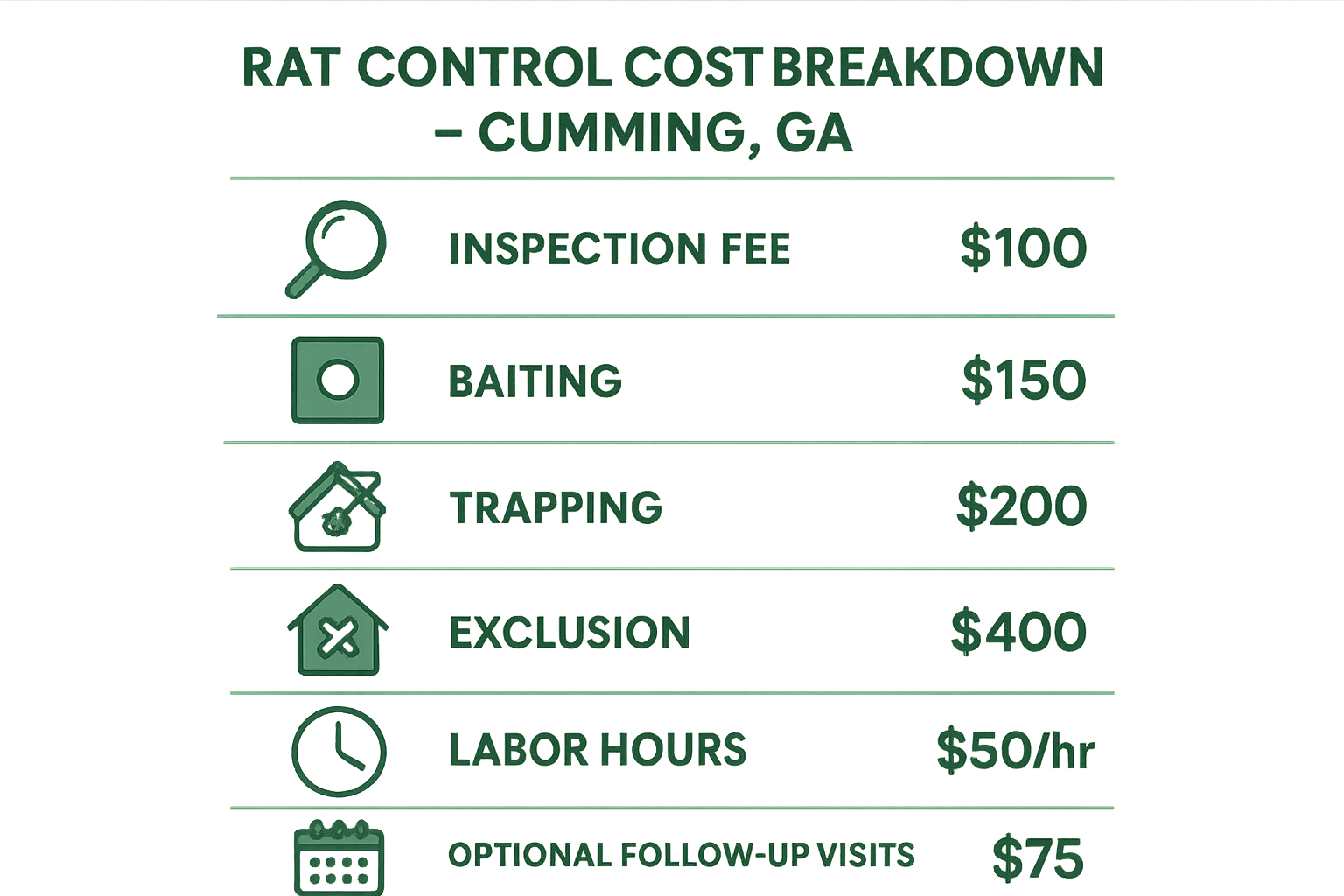
Inspection Fee
The inspection is the first step. A certified technician surveys the interior and exterior, identifies entry points, and maps activity hotspots. According to the NPMA 2024 cost survey, homeowners in Georgia can expect to pay $75 – $120 for a thorough inspection.
Baiting
Bait stations are placed strategically to lure and poison rats over several weeks. This service includes the bait, tamper‑proof stations, and safe placement. The average price range in the region is $120 – $180, depending on the number of stations required.
Trapping
Live‑capture or snap traps are set in high‑traffic areas and checked regularly. Trapping fees cover the traps, labor for placement and removal, and disposal of any captured rodents. Typical costs fall between $150 – $250.
Exclusion
Exclusion seals gaps, cracks, and utility openings that rats use to enter the home. This may involve steel wool, caulking, metal flashing, or door sweeps. Prices vary with the size of the property, but most Cumming homeowners see a charge of $200 – $350.
Labor Hours
Technician time is billed hourly for setup, monitoring, and follow‑up adjustments. In North Georgia, the labor rate averages $80 – $100 per hour. Most jobs require 2–3 hours of on‑site work.
Optional Follow‑Up Visits
After the initial treatment, many companies offer a guaranteed follow‑up visit to ensure the problem is fully resolved. This optional service is usually priced at $60 – $90 per visit.
Factors That Influence the Final Cost
- Severity of infestation – heavy activity means more bait and traps.
- Property size – larger homes require additional stations and longer labor.
- Accessibility – hard‑to‑reach crawl spaces increase labor time.
- Seasonal demand – spring and fall spikes can raise prices slightly.
- Local regulations – any required permits add a modest fee.
Sample Quote: 2,000‑sq‑ft Home with Moderate Infestation
Let’s walk through a realistic scenario. A 2,000‑square‑foot house in Cumming has a moderate rat problem (approximately 5–7 active pathways). The estimate might look like this:
| Service | Average Price (USD) |
|---|---|
| Inspection | $95 |
| Baiting (4 stations) | $150 |
| Trapping (6 traps) | $200 |
| Exclusion (door sweeps, sealing) | $275 |
| Labor (2.5 hours) | $225 |
| One optional follow‑up | $75 |
| Total Estimated Cost | $1,120 |
This figure aligns with the national benchmarks reported by the NPMA, giving homeowners a reliable budgeting target.
Anthem Pest Control’s Transparent Pricing Model
Anthem Pest Control prides itself on a clear, no‑surprise quote structure. Every line‑item is explained up front, and the company offers a 30‑day satisfaction guarantee on all rat control services. If rats reappear within the guarantee window, Anthem will return at no additional labor charge to re‑treat the property. Homeowners can also opt for a yearly monitoring plan that locks in today’s rates and spreads the cost across twelve months.
For a full breakdown tailored to your home, call Anthem Pest Control at 877‑371‑8196 or visit anthempest.com.
Source: NPMA 2024 Cost Survey.
Secure Your Home with Expert Rat Management
Rats may seem harmless until they start chewing through wiring, contaminating food, or leaving droppings that threaten your family’s health. That’s why catching an infestation early, timing treatments with the seasons, and sealing every possible entry point are the three pillars of lasting protection. When you act quickly, you prevent a small problem from becoming a costly, stressful battle that can damage your home’s structure and your peace of mind.
Key Takeaways You Can Put into Action Today
- Early detection saves money. Spotting gnaw marks, droppings, or unusual noises before the population explodes reduces the amount of labor and chemicals needed.
- Seasonal timing matters. Rats are most active in the cooler months of fall and winter when they seek shelter inside. Scheduling a pre‑emptive inspection before they move in gives you a strategic advantage.
- Preventive exclusion is the most effective defense. Properly sealing cracks, installing door sweeps, and managing outdoor clutter eliminates the pathways rats use to enter your home.
- Transparent pricing removes guesswork. With Anthem Pest Control, you’ll receive a detailed estimate up front—no hidden fees, no surprise charges.
- Licensed professionals bring peace of mind. Our technicians are certified, insured, and trained in the latest, safest rodent‑control methods, so you can trust that the job is done right the first time.
Choosing a licensed professional isn’t just about compliance; it’s about confidence. A certified technician knows how to identify the species, assess the extent of the infestation, and apply a treatment plan that targets the problem without jeopardizing your family’s health or the environment. Moreover, Anthem Pest Control’s transparent pricing model means you’ll know exactly what you’re paying for—whether it’s a one‑time extermination, a comprehensive exclusion package, or an ongoing monitoring program.
We understand that inviting a pest‑control service into your home can feel like a big step. That’s why we keep the process simple and pressure‑free. Our free, no‑obligation inspection includes a thorough walk‑through, a clear explanation of any findings, and a customized action plan that fits your budget. There’s no commitment required—just valuable information that empowers you to make the best decision for your household.
If you’re ready to protect your home from rats before they become a costly nuisance, give us a call at 877‑371‑8196 or visit Anthem Pest Control to schedule your complimentary inspection. Our friendly team will work around your schedule, answer every question, and provide a written quote that outlines every step of the process.
Act now to secure your home, safeguard your family’s health, and enjoy the peace of mind that comes from knowing a trusted professional is on your side. Don’t wait for the next rustle in the walls—reach out today and take the first step toward a rat‑free home.