No One Wants Millipedes Marching Into Their Sandy Springs Home
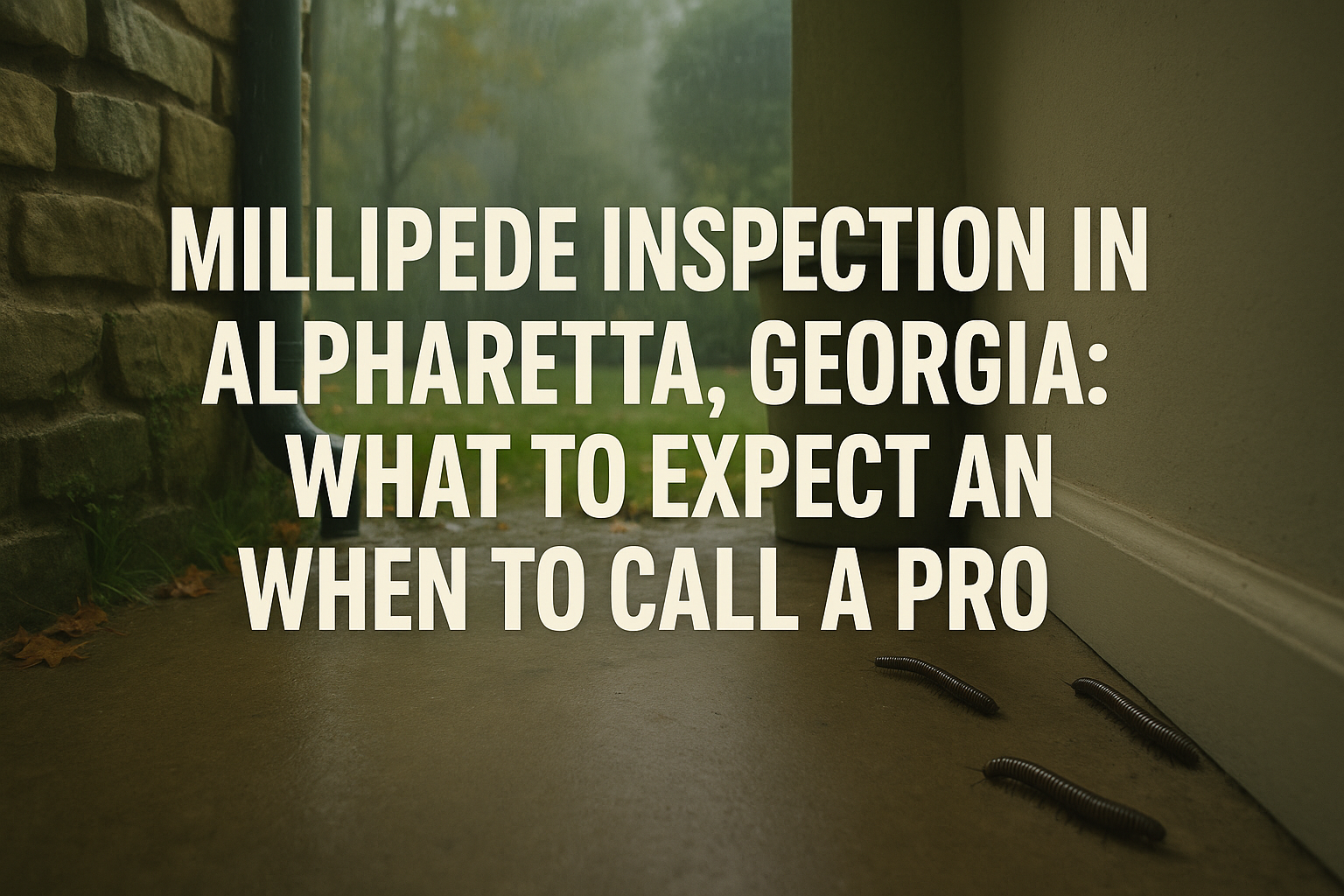
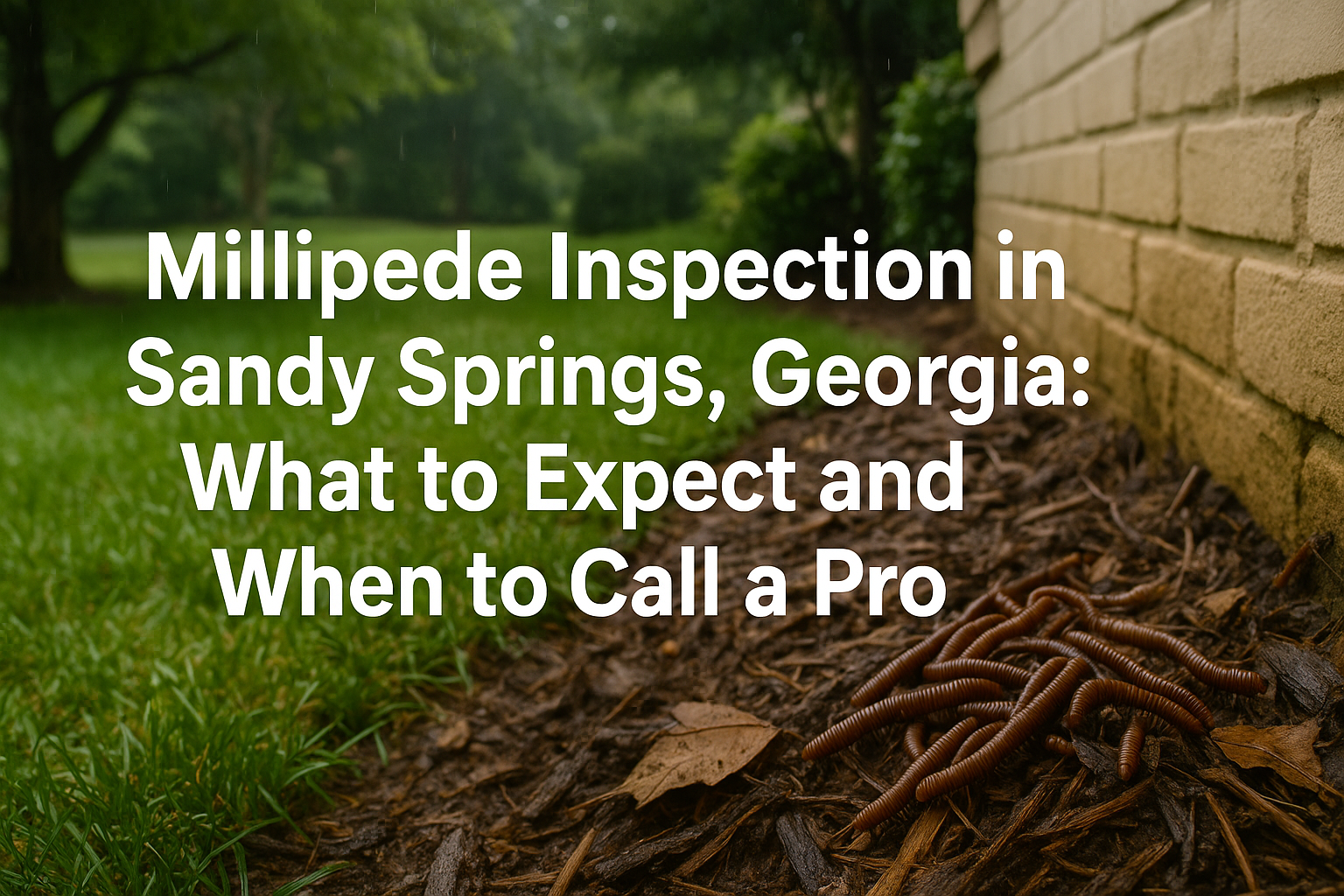
If you’ve spent any length of time living in Sandy Springs—whether it’s Riverside, the Dunwoody Panhandle, or toward North Springs—you know how often we deal with annoying millipede invasions. Every year, it seems like as soon as the air gets heavy with spring or fall rains, these little brown critters find their way into basements, garages, and sometimes even your living room, which is often when a millipede inspection Sandy Springs homeowners rely on becomes essential. They love all of the moist, shaded spots we usually have in our yards, especially if you’re lucky enough to be surrounded by mature trees and lush landscaping.
Now, millipedes are harmless enough. They don’t bite or sting, but nobody’s thrilled about stepping barefoot on a pile of them in the dark or finding them curled up on your basement carpet. Their numbers can get pretty wild, especially in older homes with more cracks, or places where mulch and leaves collect close to the foundation. Add in some heavy rain, and you’ve basically rolled out the welcome mat.
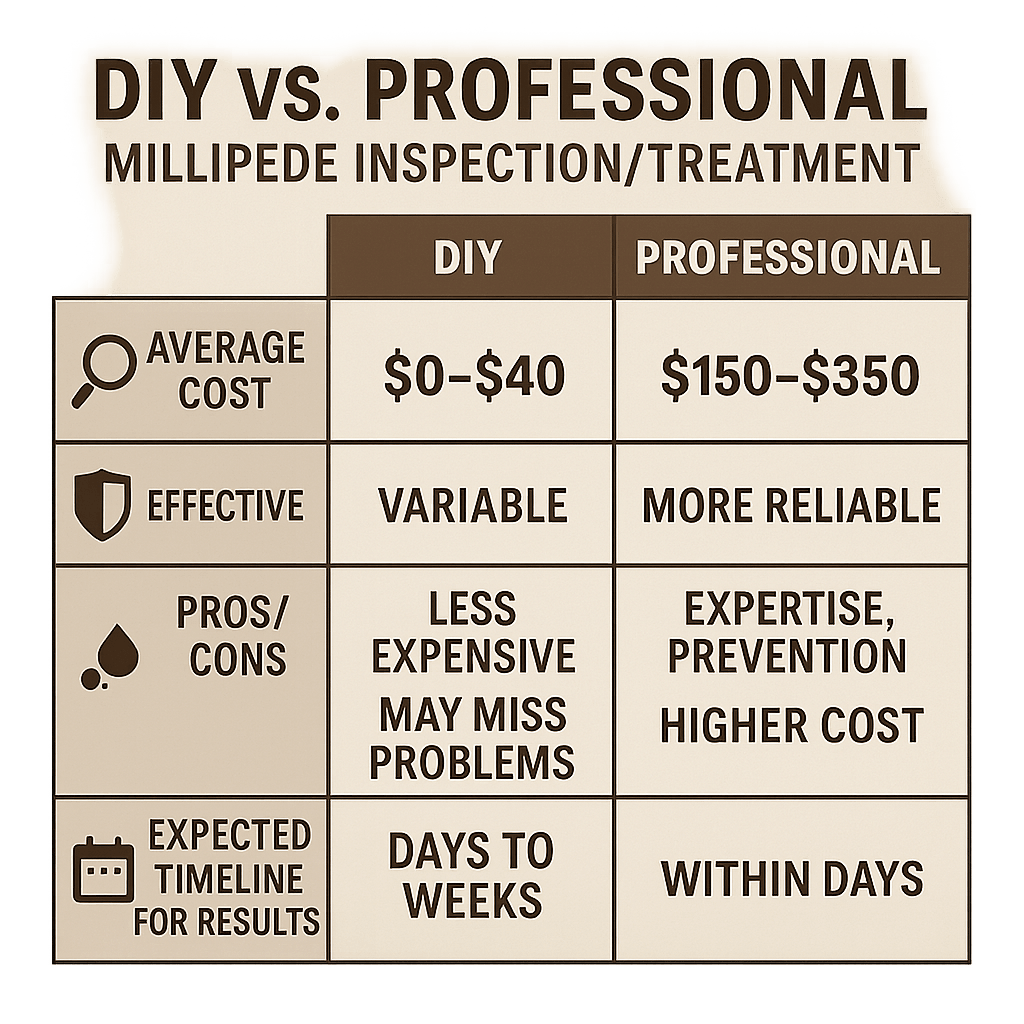
It’s not just the nuisance factor, either. When DIY tricks like sweeping, caulking, or spraying grocery store products just aren’t cutting it, things can quickly get overwhelming. Professional pest control calls become the norm, especially since these bugs tend to keep coming back whenever we get another stretch of wet weather. Around Sandy Springs, most homeowners end up paying somewhere between $150 and $350 per inspection and treatment, and sometimes you need a few visits to get ahead of the problem.
If you’re tired of playing whack-a-mole with millipedes, you’re not alone. Many folks around here deal with the exact same headache every year, especially in wooded neighborhoods or homes that have been around awhile. Stick around as we lay out the real solutions—from what works, what’s worth your money, and how you can actually keep these persistent pests from making a comeback every single season.
What Affects the Cost of Millipede Service in Sandy Springs?
Millipede problems aren’t all created equal—and the truth is, pricing for a millipede inspection Sandy Springs homeowners schedule or related treatment depends on a handful of real-world factors. If you’ve ever been surprised by a wave of millipedes after a thunderstorm, you know it can go from a minor annoyance to a major headache in no time. Let’s break down what actually determines your quote, so there are no surprises when you call.
- Size and Layout of Your Property: The more ground a pro needs to cover, the higher the cost. Inspecting a two-bedroom condo is a different ballgame than handling a sprawling home in Huntcliff or a multi-level house with finished basement rooms.
- Severity of the Problem: Noticing a few stray millipedes near the back door? That’s much simpler to handle—and cheaper—than nightly masses piling up in the basement or regular repeat invasions after every rain.
- Scope of Service: Some homeowners just want a one-time cleanup, while others need full-on professional exclusion, moisture correction, and repeat treatment. If your home sits on an older crawlspace or has lots of basement nooks, expect extra steps for moisture control or sealing entry points, especially in leafy neighborhoods like Riverside or Mount Vernon Woods.
- Neighborhood & Property Features: Older homes or those surrounded by dense trees usually require more in-depth inspection and sometimes additional moisture work. Places with old foundations demand extra attention to entry points—it can mean a bump up in the estimate.
On average, a basic millipede inspection for a typical Sandy Springs home starts at around $150. Larger homes, properties with finished basements, or heavier infestations can bring that cost up to $350–$400 per visit, especially if ongoing treatment or special exclusion work is needed.
If you’re looking for a straightforward price, just remember: no two homes or infestations are exactly the same. A quick call and a walk-around from a local expert will always beat a generic online quote, and it’ll get you the peace of mind you’re after.
What Affects the Cost of Millipede Service in Sandy Springs?
Millipede problems aren’t all created equal—and the truth is, pricing for a millipede inspection Sandy Springs homeowners schedule or related treatment depends on a handful of real-world factors. If you’ve ever been surprised by a wave of millipedes after a thunderstorm, you know it can go from a minor annoyance to a major headache in no time. Let’s break down what actually determines your quote, so there are no surprises when you call.
- Size and Layout of Your Property: The more ground a pro needs to cover, the higher the cost. Inspecting a two-bedroom condo is a different ballgame than handling a sprawling home in Huntcliff or a multi-level house with finished basement rooms.
- Severity of the Problem: Noticing a few stray millipedes near the back door? That’s much simpler to handle—and cheaper—than nightly masses piling up in the basement or regular repeat invasions after every rain.
- Scope of Service: Some homeowners just want a one-time cleanup, while others need full-on professional exclusion, moisture correction, and repeat treatment. If your home sits on an older crawlspace or has lots of basement nooks, expect extra steps for moisture control or sealing entry points, especially in leafy neighborhoods like Riverside or Mount Vernon Woods.
- Neighborhood & Property Features: Older homes or those surrounded by dense trees usually require more in-depth inspection and sometimes additional moisture work. Places with old foundations demand extra attention to entry points—it can mean a bump up in the estimate.
On average, a basic millipede inspection for a typical Sandy Springs home starts at around $150. Larger homes, properties with finished basements, or heavier infestations can bring that cost up to $350–$400 per visit, especially if ongoing treatment or special exclusion work is needed.
If you’re looking for a straightforward price, just remember: no two homes or infestations are exactly the same. A quick call and a walk-around from a local expert will always beat a generic online quote, and it’ll get you the peace of mind you’re after.
Why Millipedes Love Sandy Springs (And What That Means for Your Home)
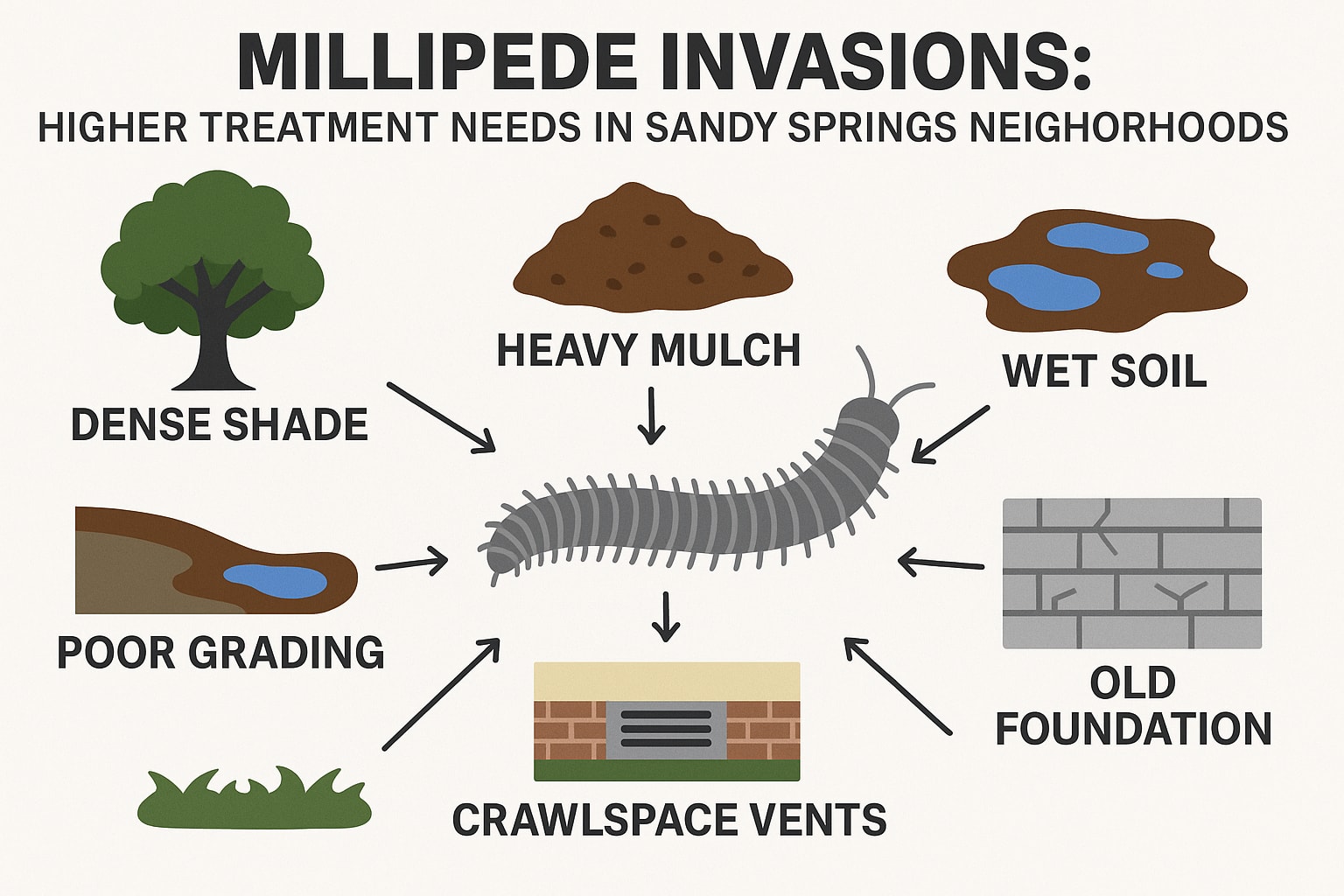
Here in Sandy Springs, if you’ve ever wondered why millipedes seem to move in every time it rains, you’re not alone. Our humid summers and that classic Georgia spring thunderstorm both play a big part. It’s not just the weather, either—our city’s lush neighborhoods, full of big, shady trees and thick mulch beds right up against older homes, give millipedes exactly what they want: lots of damp, dark places to hide.
If your place is in Woodland, North Springs, or along the Chattahoochee, you probably already know this story. Those homes built in the ‘60s, ‘70s, or ‘80s may charm with history, but their original basements and crawlspaces weren’t built to keep out persistent critters—or today’s wild rain events. Basements taking on a little water, crawlspaces with musty wood, gutters full of leaves, or irrigation systems running too often all add up to a millipede magnet.
It doesn’t stop at what’s inside the four walls. Your lot’s grade (does water pool near the foundation?), the density of mature trees shading the ground (keeping things damp), and how your landscape mulch meets the home can all make a big impact. Plus, homes that back up to wooded parks or the river can see more of these bugs, simply because they’re so close to those perfect millipede habitats.
- Soil type: Sandy or loose soils drain fast but also dry out quick, while dense or clay-rich soil stays damper after rain—prime real estate for millipedes.
- Home construction: Sealed concrete and proper venting cut down on moisture, but older construction often needs upgrades for today’s bug battles.
- Neighborhood factors: Living near woods or natural creeks? These spots are big contributors to ongoing millipede pressure.
All of these factors can affect what it takes—and costs—to get things under control. Sometimes all that’s needed is a little sealing or landscape tweak; other times, full moisture control and a service plan make the real difference. Next up, we’ll break down the main risk factors in a handy visual chart, so you can see exactly what impacts millipede problems in your part of Sandy Springs.
Easy Ways to Keep Millipedes Out of Your Home
Millipedes aren’t just a nuisance—they can end up causing big repair bills if they find their way indoors. Luckily, you can stop these crawlers in their tracks with a few simple changes around your property, often identified during a millipede inspection Sandy Springs homeowners rely on for early detection. Here’s what you need to do to keep your Sandy Springs home—especially in areas like Riverside or Spalding Woods—millipede-free and your wallet happy.
- Control Moisture: The number one reason millipedes show up inside is excess moisture. Redirect your downspouts away from the foundation and repair any leaks, no matter how small. A dry foundation goes a long way in making your house less inviting.
- Space Out Mulch and Debris: Pull mulch and leaf piles back at least 12 inches from the foundation. Millipedes thrive in damp, decaying material, so keeping this buffer zone gives them one less reason to head indoors.
- Maintain Your Gutters: Don’t forget the gutters! Clogged gutters lead to puddles right next to your foundation, attracting millipedes faster than you’d think.
- Seal Entry Points: Walk your home’s exterior and fill in any cracks, especially around windows, doors, and where wires or pipes enter. Weatherstripping that’s up to snuff can mean the difference between a peaceful night and a surprise millipede visit.
- Watch the Landscaping: In lush neighborhoods, regular cleanups and thinning your mulch are non-negotiable. Don’t let leaf litter and heavy growth become insect condos right beside your house.
- Check Often, Act Early: Make these steps part of your regular routine, especially after storms or as seasons change. Bit by bit, these easy habits will help you dodge the cost—and headache—of a millipede infestation.
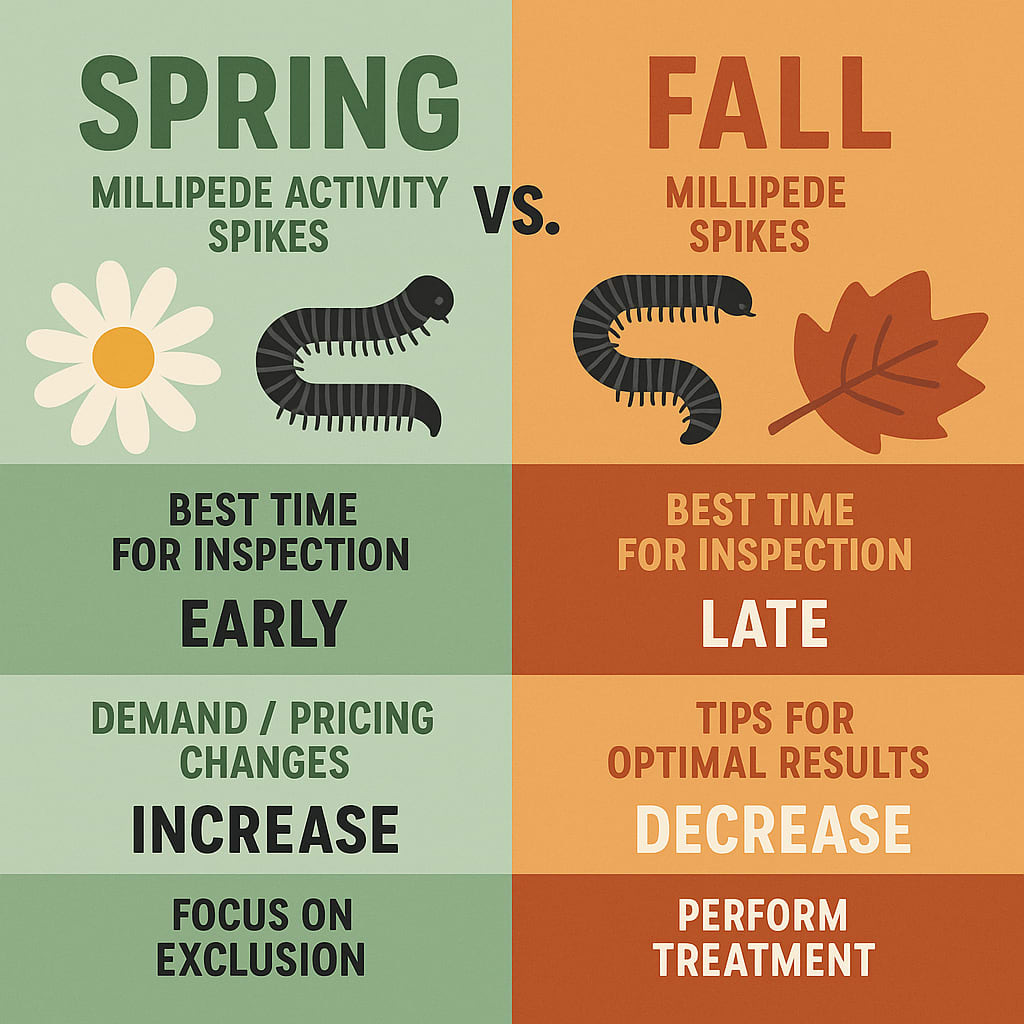
Stay ahead of pest problems by practicing these prevention strategies. The earlier you start, the less likely you’ll face a surprise pest bill later. Check out the next infographic for more seasonal smart moves to keep your home protected all year long.
Why Timing Your Millipede Service Matters in Sandy Springs
If you’ve lived here for a while, you know millipedes are like clockwork—popping up just as spring showers or fall rains roll through. When April hits, we start getting calls from all over Sandy Springs, often triggered by homeowners scheduling a millipede inspection Sandy Springs residents depend on after a few days of wet weather. Houses shaded by big old trees or tucked into lush neighborhoods like Huntcliff, Mount Vernon Woods, and The Branches are usually at the top of the list for unwanted millipede visitors.
The thing is, millipedes aren’t a year-round crisis. Activity reaches its peak right after heavy rain in early spring and again in the fall – that’s April through June and September through October. Those are the stretches where getting your inspection done can really make a difference, both in protecting your home and in snagging better appointment times (and sometimes better prices) before everybody else is scrambling to find help.
- Book early in spring or fall for the best choice of service dates
- Avoid long waits by beating the seasonal rush
- Prevent major infestations with timed exclusion or barrier treatments
- Many neighbors already know – acting during these windows delivers lasting peace of mind
We recommend circling those spring and fall dates on your calendar. If you see a couple of warm, drizzly weeks in the forecast, that’s your sign to act. It’s always easier (and more affordable) to tackle millipedes before you’re sweeping out piles from the garage. Have a question about timing, or want to lock in a good spot on the schedule? Give us a shout – we’re happy to help you plan ahead.
Stop Millipedes in Their Tracks—With a Free Local Assessment
If you’ve had enough of seeing millipedes crawling around your Sandy Springs home, it’s time to take action that really works. Call Anthem Pest Control at 877-3718-5196 and get your free, no-pressure assessment. Prefer online? Request your quote from the comfort of your couch.
We’re a local crew who genuinely understands how Sandy Springs’ unique weather, landscaping, and even the way homes are built can invite millipedes inside. That means we don’t do cookie-cutter treatments—we put together a plan that fits your house, your yard, and your peace of mind. Our goal? To keep these pests out for good, so your home stays clean and comfortable all year long.
- Top-Rated Millipede Control in Sandy Springs
- Full-service Millipede Control
- Millipede Solutions for Sandy Springs, GA
Let us show you why Sandy Springs homeowners trust Anthem Pest Control for real, lasting results.
Millipede FAQ for Sandy Springs Homeowners
- Are millipedes dangerous to my family or pets?
Not at all. Millipedes are truly harmless. The most they might do is secrete a little bit of mild fluid if bothered, but washing your skin (or your pet’s paws) with regular soap and water is more than enough. They’re a nuisance, not a threat. - Why am I seeing millipedes this year when I haven’t before?
If it seems like millipedes showed up overnight, blame Mother Nature—or a new landscaping change. Odd weather patterns (like heavy rain), shifting irrigation, more mulch, or discovering a new way inside your basement can kick off a sudden invasion. - How can I keep millipedes out without chemicals?
It’s all about keeping things dry and tidy. Millipedes love moisture. Seal up any little openings around windows and doors, and move mulch, leaf piles, or firewood away from your home’s foundation. Less mess—less millipedes! - What should I expect from a professional inspection?
When you call in the pros, we’ll check inside and out—looking for moisture problems, hidden cracks, and those cozy hiding spots millipedes love. We’ll sit down with you and share what’s going on, then lay out a plan that’s right for your house and budget. - Do I need monthly treatments?
In most Sandy Springs homes, that’s overkill. Usually a one-time treatment with follow-up prevention keeps things under control. Folks in shadier or high-moisture areas sometimes opt for quarterly visits just for peace of mind. - Will millipedes damage my house?
Nope! Millipedes aren’t after your home—they just want to get away from the soggy or scorching weather outside. They don’t chew, tunnel, or destroy anything in your house. They’re decomposers that belong outdoors. - Is professional millipede control safe for kids and pets?
Absolutely. We use targeted, EPA-approved products that hit only the source—no need to worry about your two- or four-legged family members. - What neighborhoods in Sandy Springs have more issues?
If you live in Huntcliff, North Springs, or older tree-covered neighborhoods, you might notice more millipede activity. Dense shade and heavy mulch are their playgrounds, but with a few tweaks, you can keep them outdoors where they belong.