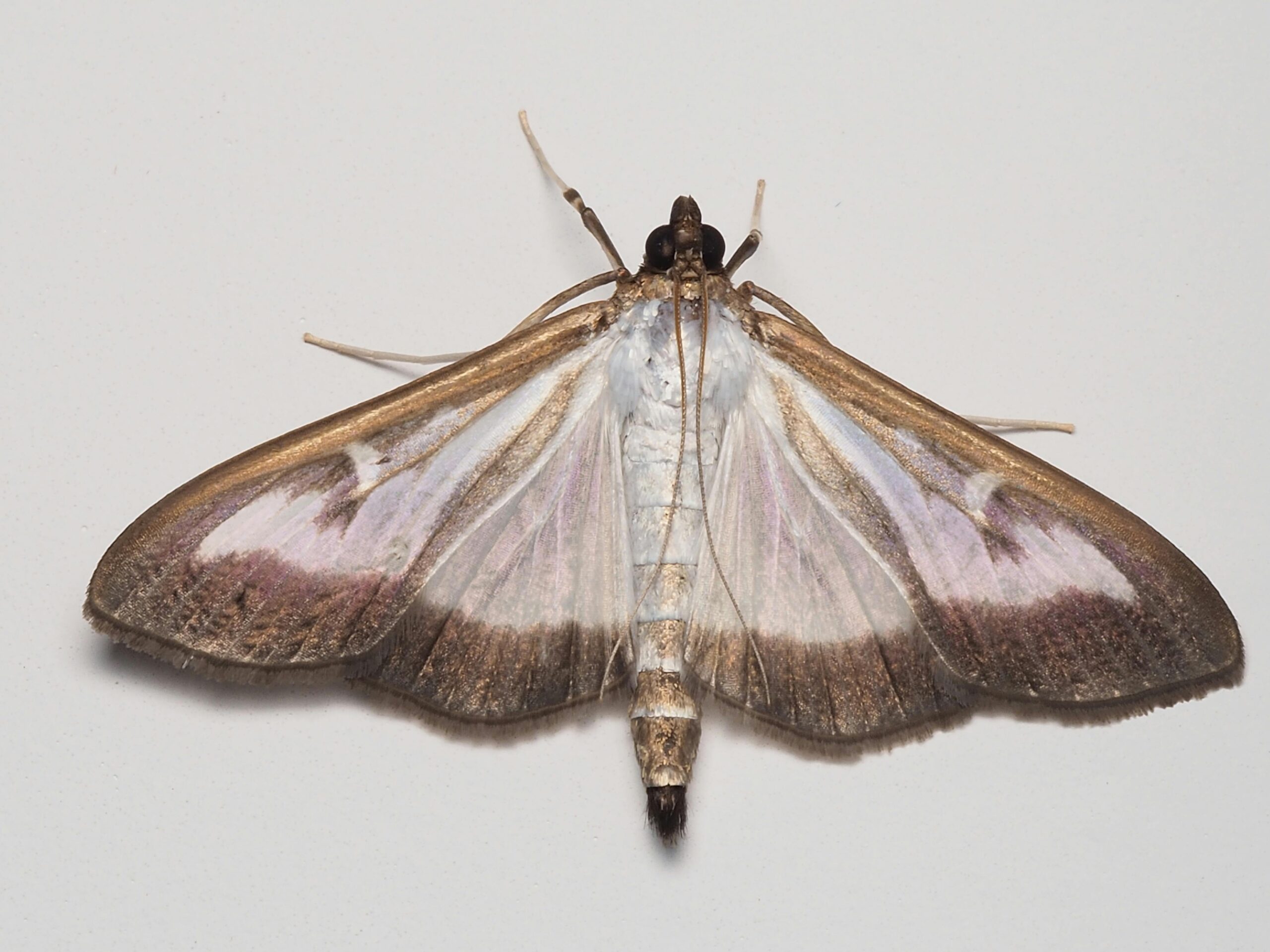
Why Moths Are a Growing Concern in Decatur, GA

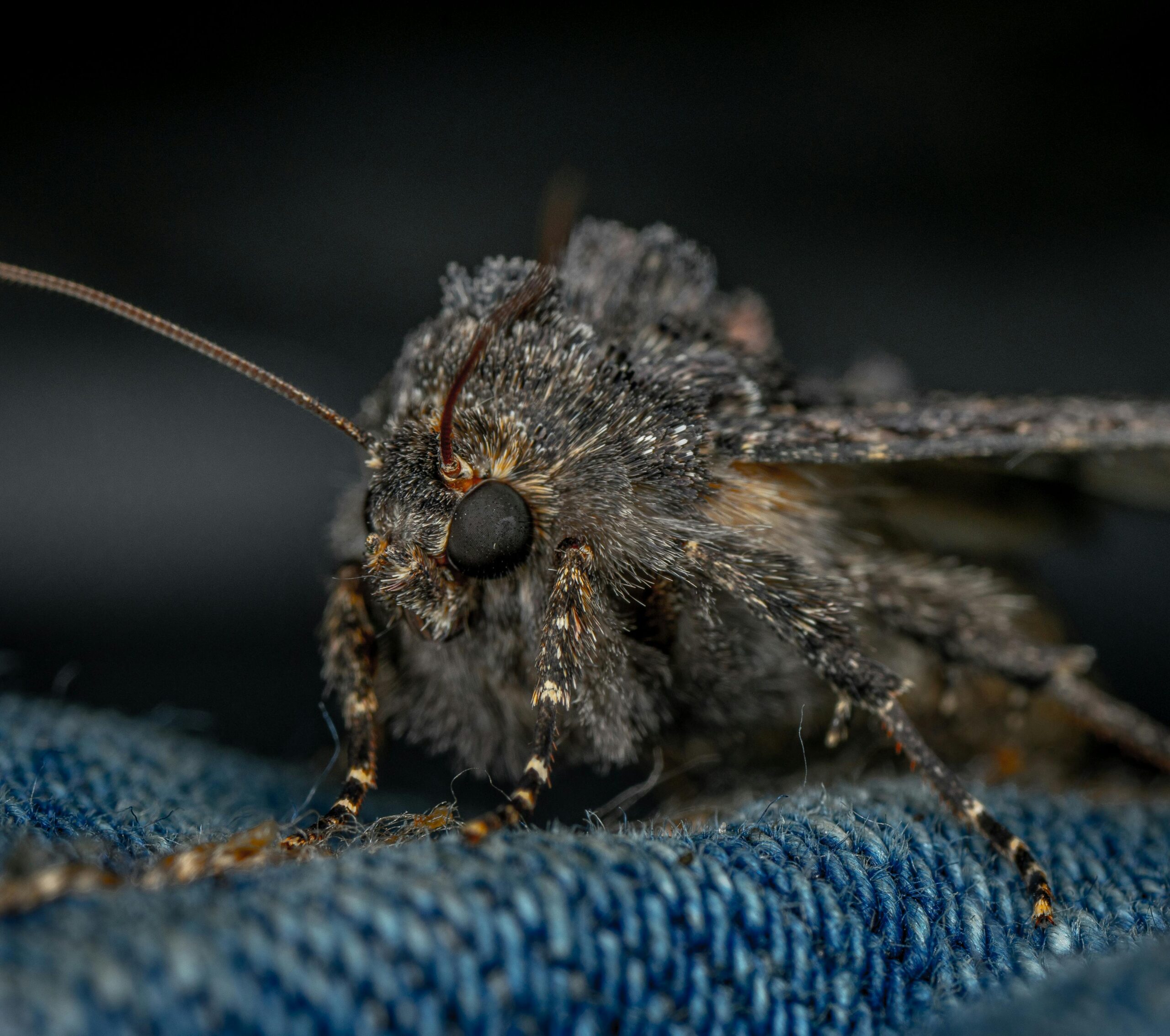
Decatur homeowners are discovering that moths are no longer a “nice‑to‑have” conversation starter at neighborhood barbecues. Two species dominate local households: the clothes moth (Tineola bisselliella) and the pantry moth (Plodia interpunctella). Both share a surprisingly rapid life cycle—egg, larva, pupa, adult—often completing the entire process in as little as six weeks when temperature and food sources are favorable. This means a single female can lay up to 200 eggs, and within a month you could have a full‑blown infestation.
Rising sightings in Decatur
Data from the Decatur County Extension Service shows a 27 % increase in moth reports between 2021 and 2023. The surge aligns with milder winters and higher humidity levels that create ideal breeding grounds inside homes. Local homeowners’ forums also echo this trend, with members noting more frequent encounters of silky webbing in closets and tiny, brown‑speckled moths fluttering near pantry shelves.
Economic and health impacts
While a moth may look harmless, the damage it causes can be costly. Clothes moth larvae feed on natural fibers—wool, silk, cashmere—leaving holes that can ruin expensive garments, heirloom blankets, or upholstered furniture. Pantry moths, on the other hand, infest stored grains, cereals, and dried fruit, contaminating food with webbing, frass (insect droppings), and larvae. The U.S. Department of Agriculture estimates that household food loss from pantry pests exceeds $1 billion annually nationwide, and Decatur is no exception.
Beyond financial loss, moths can trigger allergic reactions. The shed skins and droppings become airborne allergens, irritating the eyes, nose, and lungs of sensitive occupants. In extreme cases, repeated exposure may exacerbate asthma symptoms, especially in children and the elderly.
Warning signs to watch for
- Fine, silvery webbing in corners of closets, drawers, or pantry shelves.
- Small, creamy‑white larvae that resemble tiny worms, often found near food packages or natural‑fiber fabrics.
- Adult moths—typically ½‑inch long—flying at night (clothes moth) or day (pantry moth) and attracted to light sources.
- Unexplained holes in wool sweaters, blankets, or stored grain containers.
- Foul, musty odors emanating from infested pantry items.
Why a professional inspection matters
Identifying the source of a moth problem isn’t always straightforward. Moths can hide in wall voids, under insulation, or within rarely used storage areas. A DIY approach may miss these hidden colonies, allowing the infestation to rebound after treatment. That’s where Anthem Pest Control steps in. As a locally‑owned service with deep knowledge of Decatur’s climate patterns, Anthem offers:
- Targeted inspections that locate both visible and concealed moth activity.
- Integrated pest‑management plans that combine safe, EPA‑approved treatments with preventive measures such as proper food storage and fabric protection.
- Transparent pricing and a satisfaction guarantee, so homeowners know exactly what they’re paying for and can trust the results.
If you’ve spotted any of the warning signs above, don’t wait for the damage to spread. A prompt, professional moth inspection can protect your belongings, your health, and your peace of mind. Contact Anthem Pest Control today at 877‑371‑8196 or visit anthempest.com to schedule an assessment.
Seasonal Moth Activity in Decatur, GA
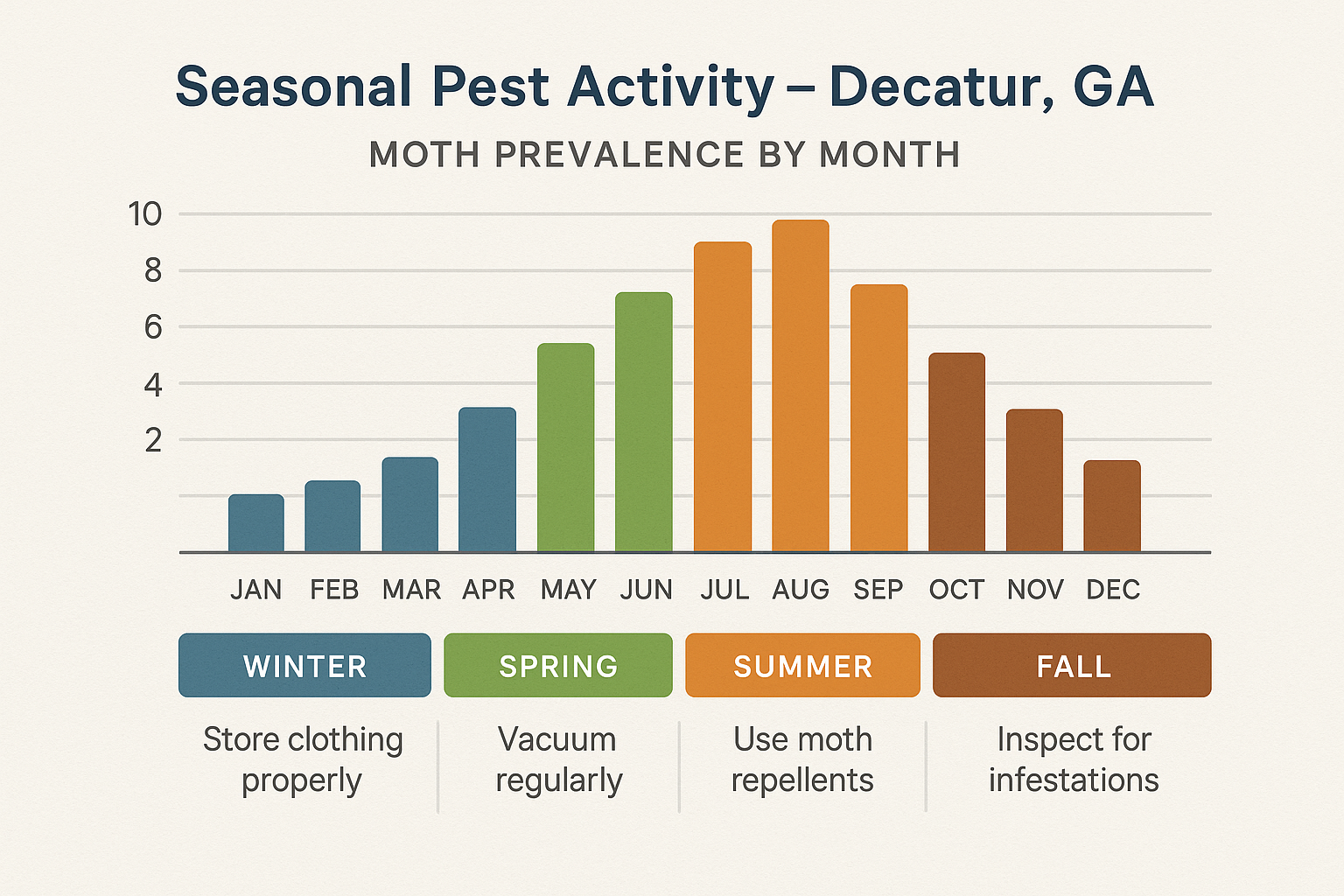
The chart above illustrates that moth emergence in Decatur follows a classic bell‑shaped curve. The earliest activity appears in late March, climbs sharply through May, peaks in July and August, then tapers off after September. A secondary, smaller wave can occur in October when lingering warm nights encourage a late‑season brood. Knowing these peaks lets homeowners schedule inspections before moths reach their most destructive phase.
Two environmental drivers dictate this rhythm. First, temperature: larvae develop fastest when daily highs hover between 75°F and 85°F. When nights stay above 60°F, adult moths emerge sooner and reproduce more often. Second, humidity fuels the mold and stored‑product foods that larvae love. Decatur’s summer humidity often exceeds 70%, creating an ideal feeding ground for pantry and carpet moths alike. When either temperature or moisture dips below the thresholds—typically in late fall and early spring—population growth stalls, giving you a natural lull to clean and treat.
Use the month‑by‑month checklist below to stay ahead of the cycle. Simple, proactive steps each month reduce food sources, limit breeding sites, and keep your home less attractive to moths.
- March: Inspect attic insulation and stored fabrics for early signs of webbing. Vacuum corners and store off‑season clothing in sealed plastic containers.
- April: Clean pantry shelves, discard expired grains, and rotate food stock. Seal cracks around windows and doors to block adult entry.
- May: Perform a deep‑clean of carpets and rugs using a steam cleaner. Replace or wash pet bedding weekly.
- June: Store summer clothing in garment bags; keep closets dry with a dehumidifier if humidity spikes above 65%.
- July: This is the peak month. Schedule a professional inspection now to catch any hidden infestations before they spread.
- August: Continue regular vacuuming, focusing on baseboards and under furniture. Use EPA‑approved pheromone traps to monitor adult activity (EPA pesticide safety guidelines).
- September: Begin a fall deep‑clean: wash curtains, clean behind appliances, and discard any food that has been open for more than six months.
- October: Apply a preventive treatment to storage areas and closets. This timing catches the secondary wave before it gains momentum.
- November: Reduce indoor humidity with exhaust fans and a whole‑house dehumidifier. Store holiday decorations in airtight containers.
- December: Conduct a final walkthrough of the home, checking for any missed spots. Plan next year’s early‑spring inspection now.
By aligning your DIY prevention with the natural ebb and flow of moth activity, you minimize the need for aggressive chemical interventions. However, the most reliable safeguard is to book a professional treatment just before the July‑August peak. Anthem Pest Control’s licensed technicians can apply EPA‑approved products safely, targeting both adult moths and hidden larvae, and they’ll set up a year‑long monitoring plan to keep your home moth‑free.
Professional Moth Treatment Options
How Anthem’s technicians start the job
Before any product touches your home, our certified technicians conduct a thorough inspection. Using flashlights, magnifiers, and moisture meters, they locate live larvae, cocoons, and adult moths hidden in closets, attics, and wall voids. The inspection also maps the infestation’s extent—whether it’s a single pocket of damage or a house‑wide problem. This data drives the choice of treatment, ensuring we target only the areas that need attention and avoid unnecessary chemical exposure.

Heat treatment – “turn up the thermostat”
Heat is a non‑chemical weapon that kills every life stage of moths. Our crew raises the interior temperature to 140–150°F (60–65°C) for 30–45 minutes, a range proven lethal for eggs, larvae, and pupae. The heat penetrates insulation, floor joists, and hidden crevices where moths love to hide. Because no chemicals are used, there’s no residue left behind—perfect for families with pets or young children.
Safety tip: While the heat itself is safe once the space cools, we advise homeowners to vacate the home during the process and keep windows closed to maintain the target temperature. After cooling, a short ventilation period removes any lingering odors from heated fabrics.
Fogging/smoke treatment – reaching the hard‑to‑see
When moths nest in tight crawl spaces, ceiling voids, or behind built‑in cabinetry, a low‑toxicity insecticide smoke is the most effective delivery method. Our EPA‑approved fogger creates a fine mist that settles into cracks and gaps, coating larvae and adult moths with a quick‑acting insecticide that disrupts their nervous system.
We use formulations that meet CDC guidelines for moth‑related health risks, minimizing inhalation hazards. After fogging, the area is left to settle for 30 minutes before occupants re‑enter.
Eco‑friendly spray – botanical protection for the long haul
For ongoing prevention, Anthem offers a botanical‑based spray made from neem oil, rosemary extract, and other plant‑derived actives. This eco‑friendly spray creates a protective barrier on fabrics, baseboards, and entry points without harming beneficial insects or the indoor air quality.
Applied after heat or fogging, the spray targets any residual moths that survived the primary treatment and deters new females from laying eggs. It’s especially popular with homeowners who prefer a green approach and want a treatment that can be safely reapplied every few months.
Why trained technicians in full protective gear are essential
Each of the methods above involves specialized equipment and chemicals that require precise handling. Our technicians wear gloves, respirators, and protective suits to prevent skin contact and inhalation of fumes. This gear also protects them from accidental burns during heat treatments. The combination of expertise and protective equipment ensures that the job is done efficiently, safely, and in compliance with EPA regulations.
FAQ: Preparing Your Home for a Professional Moth Treatment
- Do I need to remove all clothing and linens? No. We ask you to place items in sealed bags or move them to a clean, dry area. Heat treatment will safely treat fabrics left in place.
- Can I stay home during fogging? It’s best to vacate the treated rooms for at least 30 minutes. Keep windows closed to allow the fog to work effectively.
- Will the eco‑friendly spray affect my pets? The botanical formula is low‑toxicity and safe for dogs and cats once it dries. We recommend keeping pets out of the treated area for a short period.
- How long does a heat treatment take? The entire process, including set‑up, heating, and cooling, usually takes 2–3 hours.
- What should I do after treatment? Vacuum thoroughly, wash any exposed fabrics at high temperature, and keep doors and windows closed for a few hours to maintain treatment efficacy.
Comparing Moth Control Pricing in Decatur
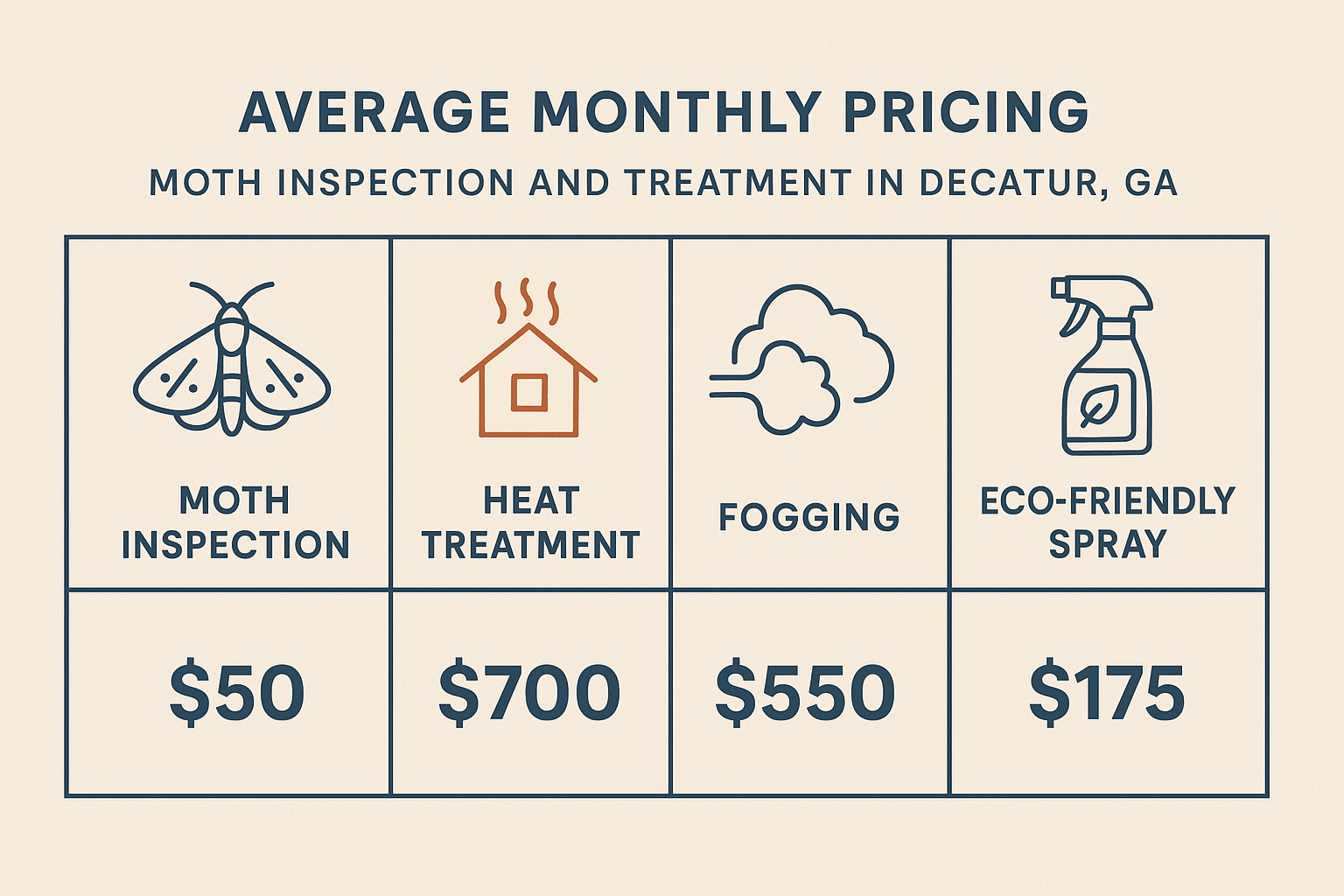
Understanding what you’ll actually pay for moth control can feel like decoding a secret code. To make it simple, we’ve created an easy‑to‑read infographic that breaks down the average monthly costs for the most common services in Decatur: a standard inspection, heat treatment, fogging, and eco‑friendly spray. The graphic shows the typical price range you’ll encounter from local providers, so you can spot a fair deal at a glance.
What Drives the Price Tag?
Several variables influence the final bill for moth control. Knowing which factors matter most helps you compare quotes without getting lost in technical jargon.
- Home size and layout: Larger square footage or multi‑level homes require more product and labor, raising the cost.
- Infestation severity: A light, early‑stage problem may need only a single spray, while a heavy, entrenched infestation often calls for heat treatment or multiple applications.
- Treatment type: Traditional chemical fogging is usually the cheapest option, whereas heat treatment—effective for deep‑seated larvae—carries a premium.
- Eco‑friendly preferences: Green formulations cost a bit more, but they’re safer for kids, pets, and the environment.
- Frequency of service: One‑time treatments are priced higher per visit than bundled monthly or quarterly plans.
How Anthem’s Pricing Stacks Up
Anthem Pest Control prides itself on transparent, competitive pricing that doesn’t sacrifice quality. When you compare our rates to the local averages shown in the infographic, you’ll notice two key advantages:
- Value‑driven tiers: Our service tiers bundle inspection, treatment, and follow‑up visits, so you avoid hidden fees.
- Quality assurance: All our technicians are EPA‑certified, and we use a blend of proven chemical and eco‑friendly options. That means you get the same or better results for a price that often sits below the market median.
Service Tiers & Price Ranges
| Tier | Price Range (Monthly) | Included Services |
|---|---|---|
| Basic Inspection | $45 – $65 | Comprehensive visual inspection, identification report, and a single eco‑friendly spray |
| Standard Treatment | $80 – $110 | Inspection, one‑time fogging, and a 30‑day follow‑up visit |
| Premium Heat Treatment | $130 – $170 | Inspection, whole‑home heat treatment, eco‑spray touch‑up, and two quarterly follow‑ups |
| Eco‑Friendly Plan | $95 – $125 | Inspection, monthly organic spray, and unlimited phone support for the duration of the plan |
Whether you’re looking for a quick fix or a long‑term, environmentally conscious solution, Anthem’s tiers are designed to fit a range of budgets while delivering the same high‑standard results you expect from a professional pest‑control partner.
Ready to see how these numbers translate to your specific home? Request a free, no‑obligation quote today, and we’ll tailor a moth‑control plan that matches your property’s size, infestation level, and budget.
Protect Your Home Today with Anthem Pest Control
Early moth detection isn’t just a nice‑to‑have—it’s the difference between a quick fix and a full‑scale infestation. Spotting the first signs in spring or early summer gives you a narrow window to act before larvae burrow deep into fabrics, insulation, or even structural wood. That timing, combined with a proactive mindset, keeps your home comfortable and your wardrobe intact.
Why a Professional Treatment Beats DIY Every Time
- Targeted expertise: Trained technicians know exactly which species you’re dealing with and which products work best without harming pets or children.
- Comprehensive coverage: Professionals treat hidden hotspots—behind walls, under floorboards, and in crawl spaces—areas DIY sprays can’t reach.
- Long‑lasting results: Integrated pest‑management plans include follow‑up visits and preventive measures, reducing the chance of a repeat invasion.
- Safety first: Certified products are applied with industry‑approved equipment, minimizing health risks compared to over‑the‑counter chemicals.
Anthem’s Commitment to You
At Anthem Pest Control we blend safety, effectiveness, and affordability into every service. Our technicians use EPA‑approved treatments that eradicate moths while protecting the people and pets you love. Transparent pricing means you’ll never face surprise fees—just a clear, upfront quote and a plan that fits your budget.
We also back our work with a satisfaction guarantee. If moth activity returns, we’ll revisit your home at no extra cost until the problem is fully resolved.
Take the Next Step—It’s Easy
Ready to safeguard your home before moths become a nuisance? Call us today at 877‑371‑8196 for a free inspection and a personalized quote. Our friendly team will assess your property, explain the treatment process, and schedule a convenient appointment.
Want to learn more about our safe, effective solutions? Visit Anthem Pest Control and discover how we keep homes across the U.S. moth‑free.