Understanding Mosquito Risks for Homeowners in Suwanee, GA
Living in Suwanee means enjoying warm evenings on the porch, weekend barbecues, and a lush, green yard. Unfortunately, the same climate that nurtures our gardens also creates the perfect breeding ground for mosquitoes. As a homeowner, it’s essential to know which species are lurking around your property, what illnesses they can carry, and why taking action now can save you money, health, and peace of mind.
Which Mosquitoes Call Georgia Home?
Georgia’s humid summers support three primary mosquito genera that most homeowners will encounter:
- Aedes – Often called “container mosquitoes,” they thrive in small water collections like birdbaths, flower pots, and clogged gutters. Aedes species are aggressive daytime biters.
- Culex – The most common night‑biting mosquito in the Southeast. Culex mosquitoes breed in standing water with organic debris, such as storm drains or untreated ponds.
- Anopheles – Less prevalent in Georgia than Aedes or Culex, but still present in rural and suburban wetlands. They are known for feeding at dusk and dawn.
Health Threats You Can’t Ignore
These pests are more than a nuisance; they are vectors for serious diseases. According to the CDC, the following illnesses have been linked to mosquito bites in the United States:
- West Nile virus – Transmitted primarily by Culex mosquitoes; can cause fever, headache, and, in severe cases, neurological complications.
- Zika virus – Carried mainly by Aedes species; poses a particular risk to pregnant women due to potential birth defects.
- Eastern equine encephalitis (EEE) – A rare but often fatal virus spread by Culex mosquitoes; symptoms include high fever, stiff neck, and brain inflammation.
- La Crosse encephalitis – Another Culex‑borne disease, especially common in the Midwest but reported in Georgia’s northern counties.
Local Numbers Tell the Story
Fulton County, which includes Suwanee, has seen a steady rise in mosquito‑borne disease reports over the past five years. The Georgia Department of Public Health recorded an average of 12 confirmed West Nile cases per summer season, with spikes in July and August when temperatures regularly exceed 90°F. Aedes‑related complaints—mostly about nuisance bites—peak after heavy rains in late spring, when backyard containers fill with water.
Beyond Health: How Mosquitoes Disrupt Daily Life
Even when disease isn’t a concern, mosquitoes can erode your quality of life:
- Outdoor recreation – A backyard gathering can turn into a swatting marathon, discouraging families from using decks, pools, or fire pits.
- Sleep disturbance – Night‑biting Culex mosquitoes often infiltrate bedrooms, leading to restless nights and reduced productivity.
- Property value – Persistent mosquito problems are a red flag for prospective buyers. Homes in well‑maintained neighborhoods with effective pest control tend to fetch higher resale prices.
The Real Cost of Doing Nothing
Choosing to ignore the mosquito threat may seem harmless until the consequences add up. Increased pest pressure creates a feedback loop: more breeding sites attract more insects, which in turn generate more eggs. Over time, you may face:
- Higher treatment expenses – Late‑season or emergency spray programs are often pricier than a scheduled, preventative plan.
- Medical bills – Treating a West Nile infection or a severe allergic reaction can quickly climb into thousands of dollars.
- Lost leisure time – The hours you spend swatting, applying repellents, or canceling outdoor plans are indirect costs that affect family well‑being.
At Anthem Pest Control, we help Suwanee homeowners break this cycle before it starts. By identifying breeding hotspots, applying targeted treatments, and educating you on simple yard‑maintenance steps, we protect both your health and your wallet. The sooner you act, the less you’ll spend on emergency interventions and potential medical care.
Seasonal Mosquito Activity in Suwanee, GA
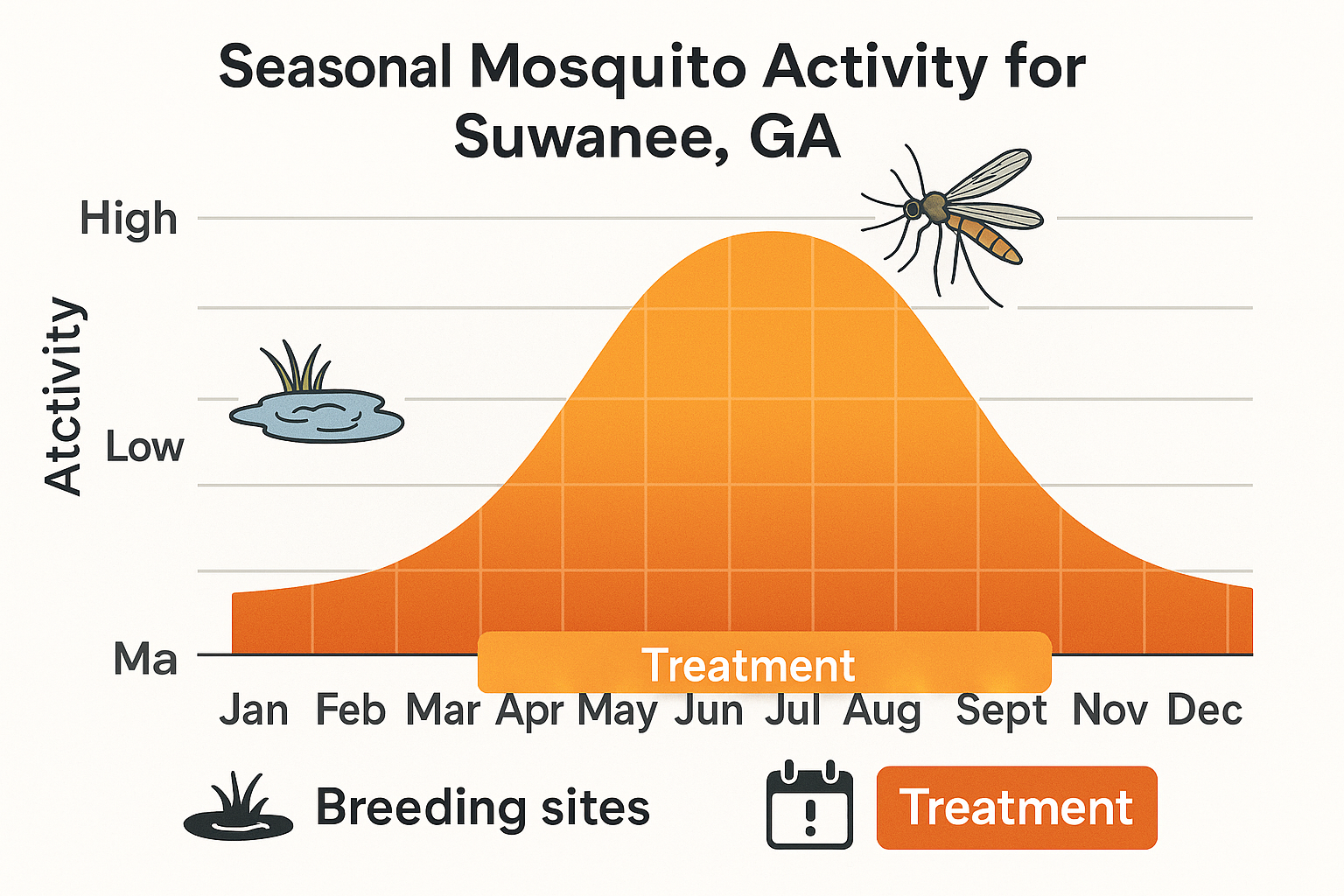
Understanding when mosquitoes are most active in Suwanee helps you plan a proactive defense. Below is a simple chart that maps each month to an activity level—low, moderate, or high. The visual makes it clear that the greatest risk periods fall between late spring and early fall, with a noticeable lull during the cooler winter months.
Key Drivers Behind the Peaks
Temperature. Mosquitoes thrive when daily highs stay above 70°F. As soon as the thermometer climbs in April, you’ll see a sharp rise in activity that peaks when midsummer temperatures hover near 85°F.
Rainfall. Rain fills low spots, bird baths, and other containers, creating ideal larval habitats. A heavy rain event in May can trigger a surge that lasts two weeks, while steady summer showers sustain the population.
Standing Water. Even a few inches of stagnant water become a breeding ground. The longer water remains undisturbed, the more eggs hatch and the larger the adult swarm.
Typical Breeding Sites by Season
- Spring (March‑May): Rain barrels, newly filled garden beds, and puddles left from thawing snow.
- Summer (June‑August): Clogged gutters, overfilled kiddie pools, and forgotten pet water dishes.
- Fall (September‑October): Leaf‑laden depressions that hold rainwater, and abandoned rainwater harvesters.
- Winter (November‑February): Mosquito activity drops dramatically, but indoor plants with saucers can still harbor larvae.
Optimal Treatment Timing
Use the chart’s insights to schedule professional treatments when they’ll have the biggest impact:
- Pre‑Spring Boost (early March): Apply a residual larvicide to eliminate early hatchlings before they multiply.
- Mid‑Season Sweep (late May‑early June): Target adult mosquitoes as populations peak for the first time.
- Late‑Summer Touch‑Up (mid‑August): A second application counters the second wave that follows late‑summer rains.
- Fall Maintenance (late September): A final barrier reduces any lingering adults that could lay overwintering eggs.
Quick Yard‑Prep Checklist for Each Peak
- Empty or turn over rain barrels and bird baths weekly.
- Clear gutters and downspouts of leaves and debris.
- Drain, cover, or treat kiddie pools and ornamental ponds.
- Replace standing water in pet dishes and plant saucers daily.
- Trim overgrown vegetation that creates shade and moisture.
- Schedule a professional mosquito treatment during the recommended windows.
By aligning your yard maintenance with the seasonal patterns shown in the chart, you’ll cut down mosquito numbers before they become a nuisance. Anthem Pest Control can fine‑tune the timing and apply EPA‑approved products that keep your family safe while delivering lasting relief.
Effective Mosquito Control Methods for Homeowners

Barrier Sprays and Mist Systems: How They Work
Professional barrier sprays are formulated with residual insecticides that cling to grass, shrubs, and hardscape surfaces. Once applied, the chemicals remain active for days or even weeks, killing mosquitoes on contact before they can bite. Mist systems operate on the same principle but disperse the product as a fine aerosol, allowing it to penetrate dense foliage and hard‑to‑reach spots where adult mosquitoes rest.
The key advantage of these treatments is consistency. While DIY foggers fade within hours, a properly applied barrier spray can provide up to 30 days of protection, creating a long‑lasting shield around your home.
Creating an “Invisible Wall” with Professional Misting
Imagine a transparent fence that stops mosquitoes dead in their tracks—that’s essentially what a professional misting service does. Technicians use calibrated equipment to spray a uniform mist along the perimeter of your property, covering lawns, decks, and even the underside of eaves where mosquitoes often hide.
This “invisible wall” works because the mist settles onto surfaces and forms a thin, continuous layer of insecticide. As soon as a mosquito lands or walks through the treated zone, it absorbs a lethal dose, preventing it from reaching you or your family.
Why Licensed Technicians Matter
Licensed pest‑control professionals bring three critical assets to the job: proper dosage, safety compliance, and adherence to EPA regulations. They calculate the exact amount of product needed for your square footage, avoiding under‑ or over‑application that could compromise effectiveness or pose risks.
All EPA‑registered mosquito products must be applied according to strict guidelines. A certified technician ensures that the treatment meets those standards, protecting your pets, children, and the surrounding environment. For more details on EPA requirements, visit the EPA Mosquito Control page.
Weekly vs. Monthly Application Schedules
Choosing the right schedule depends on your local mosquito pressure and the type of product used. A weekly misting program is ideal for high‑risk areas—near standing water, dense vegetation, or during peak summer months—because it maintains a constantly fresh layer of insecticide.
For most suburban homes in Suwanee, a monthly barrier spray strikes the best balance between cost and protection. The residual action of modern formulations means you still enjoy a full month of coverage, while the reduced frequency keeps your budget in check.
Many homeowners combine both approaches: a monthly barrier spray for baseline protection, supplemented by a targeted weekly mist when an outbreak spikes.
Safety Considerations for Pets, Children, and the Environment
All EPA‑approved mosquito products used by Anthem Pest Control are tested for low toxicity to mammals when applied correctly. Technicians wear protective gear and follow re‑entry intervals—usually 30 minutes to a few hours—before allowing people or pets back onto treated areas.
To further safeguard your family, ask your technician to use formulations labeled “pet‑friendly” or “low‑odor.” These options minimize any lingering scent and reduce the chance of accidental ingestion.
Environmental stewardship is also a priority. Professional applicators target only the zones where mosquitoes rest, avoiding unnecessary spray drift onto neighboring properties or waterways. This precision helps preserve beneficial insects like bees and butterflies while still delivering effective mosquito control.
Bottom Line: Trust the Pros for Consistent, Safe Results
When you invest in a licensed mosquito control program, you’re buying more than just a spray—you’re gaining a systematic, science‑backed approach that adapts to your home’s unique layout and seasonal challenges. Barrier sprays and mist systems work together to form that invisible wall, while the expertise of certified technicians ensures every ounce of product is used responsibly.
Whether you opt for weekly misting during the height of summer or a monthly barrier spray for year‑round peace of mind, the result is the same: fewer bites, happier evenings on the patio, and a healthier environment for the whole family.
Choosing the Right Treatment: Fogging, Barriers, and DIY Options

Fogging – Fast Relief, No Long‑Term Shield
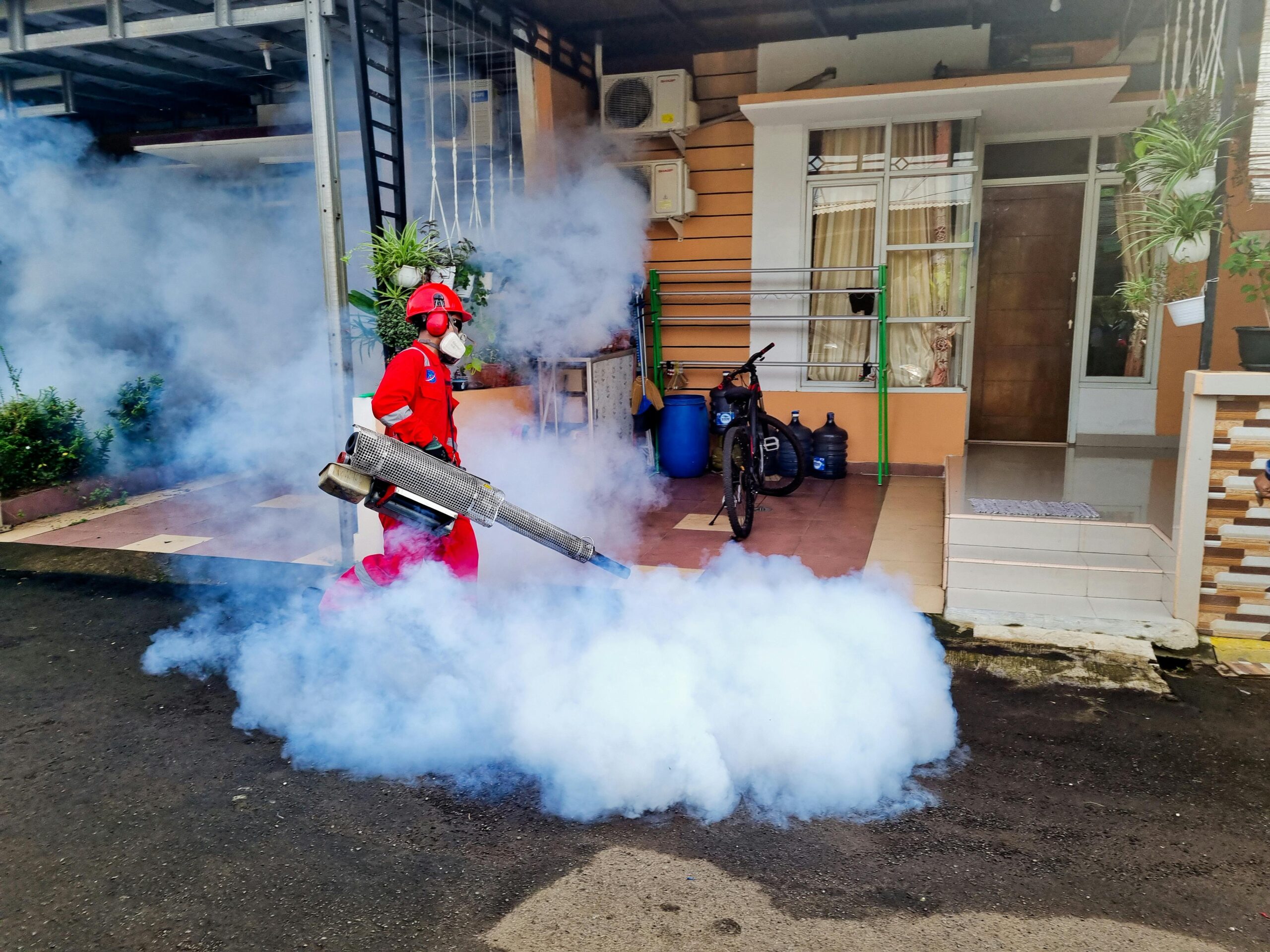
Fogging is the go‑to emergency tool when mosquitoes are buzzing nonstop around your patio or pool. A handheld or truck‑mounted fogger releases a fine mist of adulticide that drops onto flying insects within seconds, delivering a rapid knock‑down effect. Homeowners love the instant “silence” it creates, especially after a weekend BBQ or during a sudden surge after heavy rain.
The trade‑off is that fogging leaves little to no residual protection. Once the mist settles, the chemicals evaporate or break down within a few hours, meaning any new adults emerging from nearby breeding sites will quickly repopulate the area. For that reason, fogging is best viewed as a short‑term fix rather than a standalone strategy.
Barrier Sprays vs. Fogging – Cost, Longevity, Coverage
Barrier sprays, also known as perimeter or residual treatments, coat vegetation, fences, and hardscape with a low‑dose insecticide that remains active for weeks. While a professional fogging session might cost $80‑$120 for a single yard, a full‑season barrier spray typically ranges from $150‑$250, covering a larger square footage and lasting 3‑6 weeks depending on product choice and weather.
In terms of coverage, fogging blankets the entire air column above your yard but can miss shaded spots under dense foliage. Barrier sprays, applied directly to those hidden surfaces, create a protective “wall” that intercepts mosquitoes before they can land. The upfront price of a barrier spray is higher, but the extended protection often results in fewer repeat visits and lower overall spend for homeowners who need consistent control.
DIY Options – Larvicides, Traps, and Their Limits
Do‑it‑yourself solutions appeal to the budget‑conscious homeowner. Common products include:
- Larvicides (e.g., bacterial agents like Bti) that target mosquito larvae in standing water.
- CO₂ or UV traps that lure adults into a collection chamber.
- Homemade sprays made from essential oils or soap solutions.
These methods can reduce numbers, but they rarely achieve the same level of suppression as a professional service. Larvicides work only where water is stagnant and accessible; any missed puddle becomes a breeding hotspot. Traps capture a fraction of the population and often need frequent maintenance. Moreover, DIY products lack the EPA‑registered residual formulations that professionals apply, meaning their effectiveness drops sharply after a few days.
When you factor in the time spent scouting, setting, and monitoring, the cost‑benefit ratio can tilt back toward hiring a licensed pest control company—especially when you consider the expertise and warranty that come with a professional treatment.
Combining Methods for Maximum Protection
The most resilient approach blends rapid knock‑down with lasting barriers. A typical sequence looks like this:
- Apply fogging immediately after a heavy rain event or before a large outdoor gathering to clear the air of adult mosquitoes.
- Within 24‑48 hours, follow up with a barrier spray that treats vegetation, decks, and any shaded areas where fogging may have missed.
- Use a larvicide in any persistent water features (bird baths, rain barrels) to stop the next generation before it hatches.
This layered strategy leverages the strengths of each method while minimizing their weaknesses, delivering both instant relief and multi‑week protection.
Real‑World Backyard Treatment Plan
Imagine a typical Suwanee homeowner with a 2,500‑square‑foot yard, a pool, and a shaded patio. Here’s how a professional could structure the work:
- Day 1 – Fogging: A truck‑mounted fogger circulates a fine mist over the pool deck and patio, eliminating the adult mosquitoes that are actively biting guests.
- Day 2 – Barrier Spray: Technicians apply a residual insecticide to all low‑lying shrubs, the underside of the patio canopy, and the fence line. This creates a protective “moat” that lasts up to five weeks.
- Week 1 – Larvicide Spot‑Treat: A measured dose of Bti is placed in the pool’s overflow gutter and the garden’s decorative pond, targeting any larvae that might develop.
- Month 2 – Follow‑up Fog: If a sudden rainstorm creates new standing water, a light fogging session restores immediate comfort while the barrier continues to work.
By the end of the season, the homeowner enjoys a mosquito‑free backyard without the constant need for DIY tinkering. The combination of fogging for instant knock‑down, barrier spray for lasting defense, and targeted larvicide for source control delivers the most reliable results—exactly what Anthem Pest Control promises to every Suwanee family.
Mosquito Control Pricing: What Homeowners Can Expect
Typical Price Tiers
Most Suwanee pest companies structure their mosquito programs into three clear tiers—Basic, Standard, and Premium. The Basic plan usually starts around $30‑$45 per month and covers a single exterior spray per month, focusing on adult mosquito knock‑down. The Standard tier, averaging $55‑$75 per month, adds a second monthly treatment plus a perimeter barrier that targets both adults and emerging larvae. The Premium option, often priced between $90‑$120 per month, incorporates weekly misting, larvicide applications for standing water, and a comprehensive inspection of the property’s perimeter and interior screens.
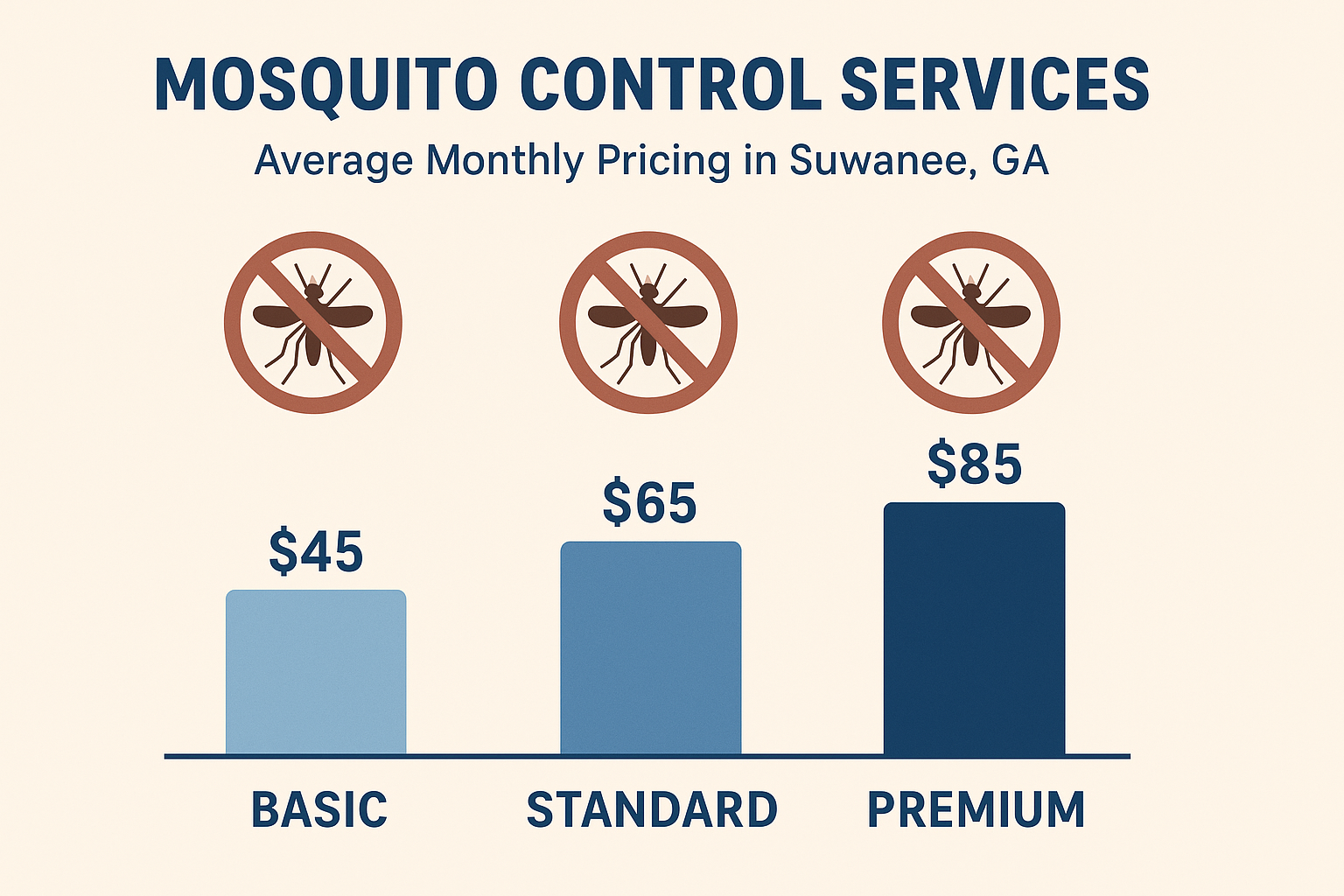
| Tier | Typical Monthly Cost | What’s Included |
|---|---|---|
| Basic | $30‑$45 | One exterior spray per month, adult mosquito knock‑down |
| Standard | $55‑$75 | Two monthly sprays, perimeter barrier, basic larvicide |
| Premium | $90‑$120 | Weekly misting, advanced larvicide, full property inspection, screen treatment |
Factors Influencing the Price
While tiered pricing offers a useful baseline, several variables can shift the final quote:
- Property size: Larger yards or multi‑story homes require more product and labor.
- Infestation level: A heavy, established population may need an intensive initial “burst” treatment before regular maintenance.
- Treatment frequency: Weekly misting or bi‑weekly applications increase labor costs but dramatically reduce mosquito numbers.
- Add‑ons: Options such as larvicide for ponds, foggers for shaded areas, or wildlife‑safe formulations add $10‑$30 per month.
One‑Time Treatment vs. Subscription Plans
A single, intensive treatment can appear attractive—often priced between $150‑$250 for a full‑yard service. However, the protection typically lasts only 2‑3 weeks, after which the mosquito population can rebound. By contrast, a subscription spreads the cost over many months and maintains a consistent barrier. Over a 12‑month period, a Standard subscription at $65 per month totals $780, whereas twelve separate one‑time treatments could exceed $2,400. The subscription model not only saves money but also reduces the need for repeated appointments, giving homeowners a steadier, worry‑free outdoor experience.
Tips for Getting Accurate Quotes
When you call a local provider, come prepared with these questions to avoid surprise fees:
- What exactly does each tier cover? Ask for a detailed list of products and application frequencies.
- Are there any hidden fees for travel, set‑up, or equipment?
- How do you calculate the cost for my property’s square footage?
- Is there a discount for multi‑year contracts or bundling with other pest services (e.g., termites or ants)?
- What is the policy for re‑treatment if the mosquito count remains high after the first month?
Request a written estimate that breaks down labor, product, and any optional add‑ons. Comparing at least three local quotes will give you a realistic budget range and confidence that you’re choosing a transparent, reputable provider like Anthem Pest Control.
Protect Your Home with Anthem Pest Control
When mosquitoes swarm your yard, the problem goes far beyond an annoying buzz. These tiny insects can carry diseases, disrupt outdoor gatherings, and even damage the comfort of your home’s interior when they find their way inside. Professional mosquito control isn’t a luxury—it’s a necessary step to safeguard your family’s health, preserve the enjoyment of your outdoor spaces, and protect your property from the long‑term wear that constant insect activity can cause.
Why Anthem Pest Control Stands Out
Anthem’s team of licensed technicians brings more than just a spray can to the job. Each professional is certified by the state of Georgia and trained in the latest EPA‑approved treatment methods. This means you receive a solution that meets strict safety standards while delivering the knock‑down power mosquitoes need.
What truly differentiates Anthem in Suwanee is its deep local knowledge. Our experts understand the seasonal patterns, breeding hotspots, and micro‑climates that make certain neighborhoods more vulnerable. By mapping these trends, we can target treatments where they’ll be most effective, reducing the chance of a re‑infestation.
Safe, Effective, and Transparent Solutions
We prioritize safety for your family, pets, and the environment. All products we use are vetted by the EPA and applied at concentrations that eliminate mosquitoes without lingering hazards. Our treatment plans are customized to the size and layout of your property, ensuring every corner—from shaded patios to dense foliage—is covered.
Affordability is built into our service model. Anthem offers clear, upfront pricing with no hidden fees. Whether you need a one‑time barrier treatment before summer or a seasonal maintenance program, you’ll receive a detailed estimate that outlines every step and cost.
Get a Free, No‑Obligation Quote
Ready to see how a professional approach can transform your outdoor experience? Simply request a free, no‑obligation quote tailored to your home’s unique needs. Our technicians will assess your property, explain the most suitable treatment options, and provide a transparent price list—so you can decide with confidence.
Take the Next Step
If you’re ready to enjoy your yard without the buzz, call Anthem Pest Control today at 877‑371‑8196 for a free quote. Our certified technicians will assess your property, explain the best treatment plan, and provide clear pricing—so you can make an informed decision. Protect your family, pets, and home with a trusted partner who understands Suwanee’s mosquito challenges.
Visit Anthem Pest Control to learn more and schedule your service.