
Identifying Common Household Moths
When you spot tiny fluttering insects in your kitchen or a fine web in a closet, the culprit is often one of two indoor moth species: the pantry moth (also called the Indian meal moth) or the clothing moth (commonly known as the webbing moth). Both are harmless to people but can cause serious damage to food stores and fabrics if left unchecked, making professional moth control Druid Hills GA especially important.
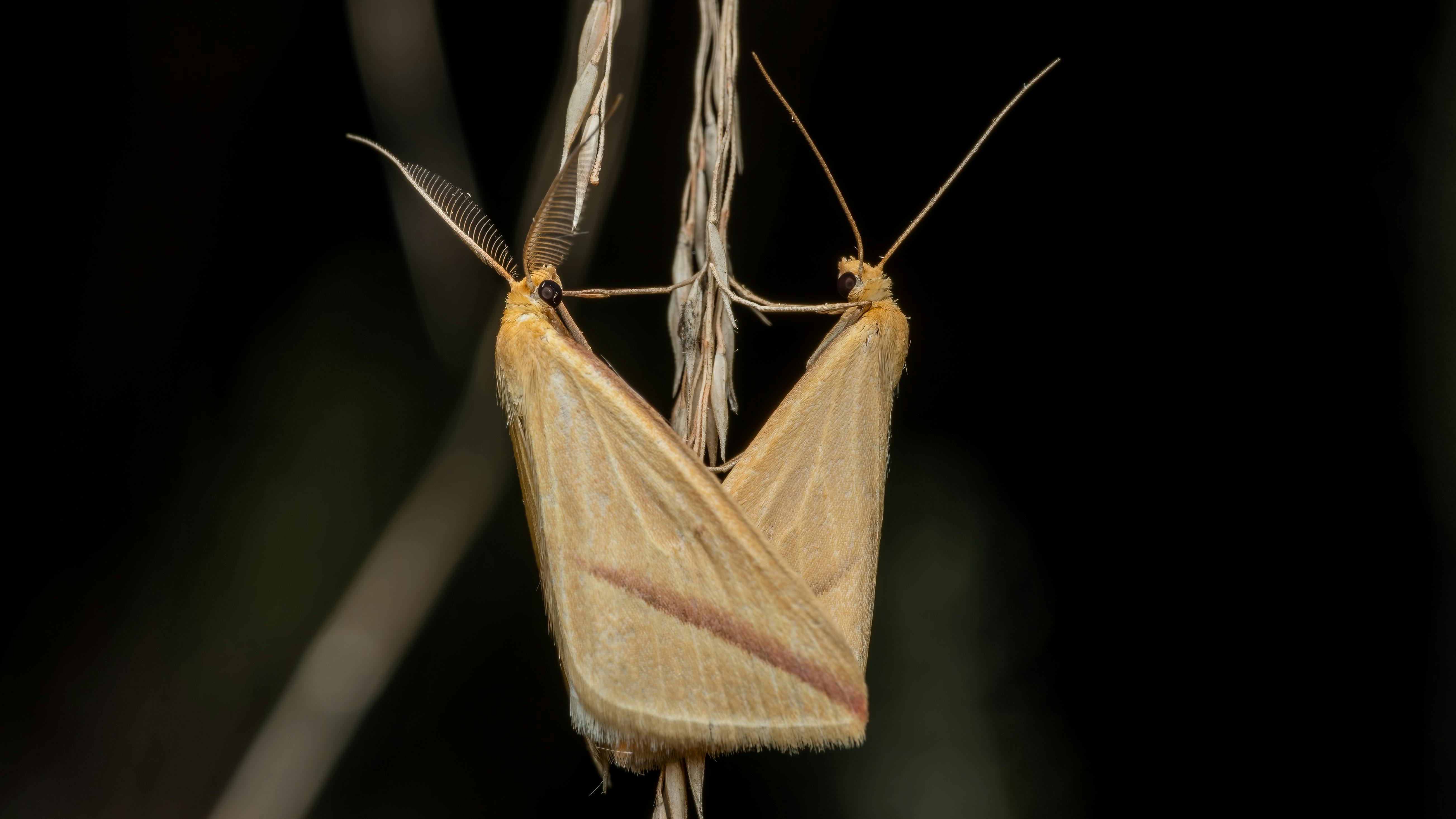
Pantry Moth (Indian Meal Moth)
This species averages 1/2 to 3/4 inch in length. Its forewings are a mottled blend of brown, gray, and amber, with a distinctive snout‑like projection on the head. The hindwings are pale with a fringe of fine hairs. In a home setting, pantry moths gravitate toward dry goods—cereals, flour, rice, nuts, and pet food—stored on pantry shelves or in unopened containers.
Clothing Moth (Webbing Moth)
Clothing moths are slightly larger, reaching up to 1 inch when their wings are spread. Their wings are a uniform brown or tan with subtle speckling, and they lack the prominent snout of pantry moths. These moths prefer dark, undisturbed areas such as closets, drawers, and under upholstered furniture where natural fibers like wool, cashmere, and silk are present.
Typical Habitats Inside Your Home
- Pantry shelves, especially where grain products are stored without airtight seals.
- Kitchen cabinets that hold spices, dried herbs, and pet food.
- Closets, garment bags, and storage boxes containing wool, fur, or silk.
- Under furniture or behind baseboards where larvae can spin protective tunnels.
Signs of Infestation
Detecting a moth problem early can save you from costly replacements. Look for these tell‑tale signs:
- Fine silken webbing on the tops of stored food or within fabric folds.
- Small, creamy‑white larvae moving beneath the surface of grains or inside seams.
- Dark droppings resembling tiny pepper grains, often found near food packages.
- Visible holes or chewed patches in clothing, especially in woolen sweaters.
- Adult moths fluttering near light sources at night.
Why Early Identification Matters
Both species reproduce quickly—female pantry moths can lay up to 400 eggs, while a single clothing moth can produce 100–200. Within weeks, an unnoticed infestation can spread to multiple rooms, contaminating food supplies and degrading valuable textiles. Prompt recognition allows homeowners to isolate the source, apply targeted treatments, and prevent the moths from establishing a permanent foothold.
For a deeper dive into the biology and management of these pests, consult the EPA Integrated Pest Management guide. Armed with the right knowledge, you can act quickly and keep your home moth‑free.
When Moths Are Most Active in Georgia
Temperature, humidity, and the moth life cycle
Both pantry and clothing moths are cold‑blooded insects, so their development speeds up as temperatures rise and slows down when it cools. In Georgia’s warm spring and summer, average daytime highs of 75‑85 °F (24‑29 °C) combined with moderate humidity (55‑70 %) create ideal conditions for eggs to hatch, larvae to feed, and adults to reproduce. When humidity spikes, especially after a rainstorm, larvae in stored grain or woolen fibers become more active because moisture softens the food source, accelerating growth cycles.
Seasonal activity chart for Georgia
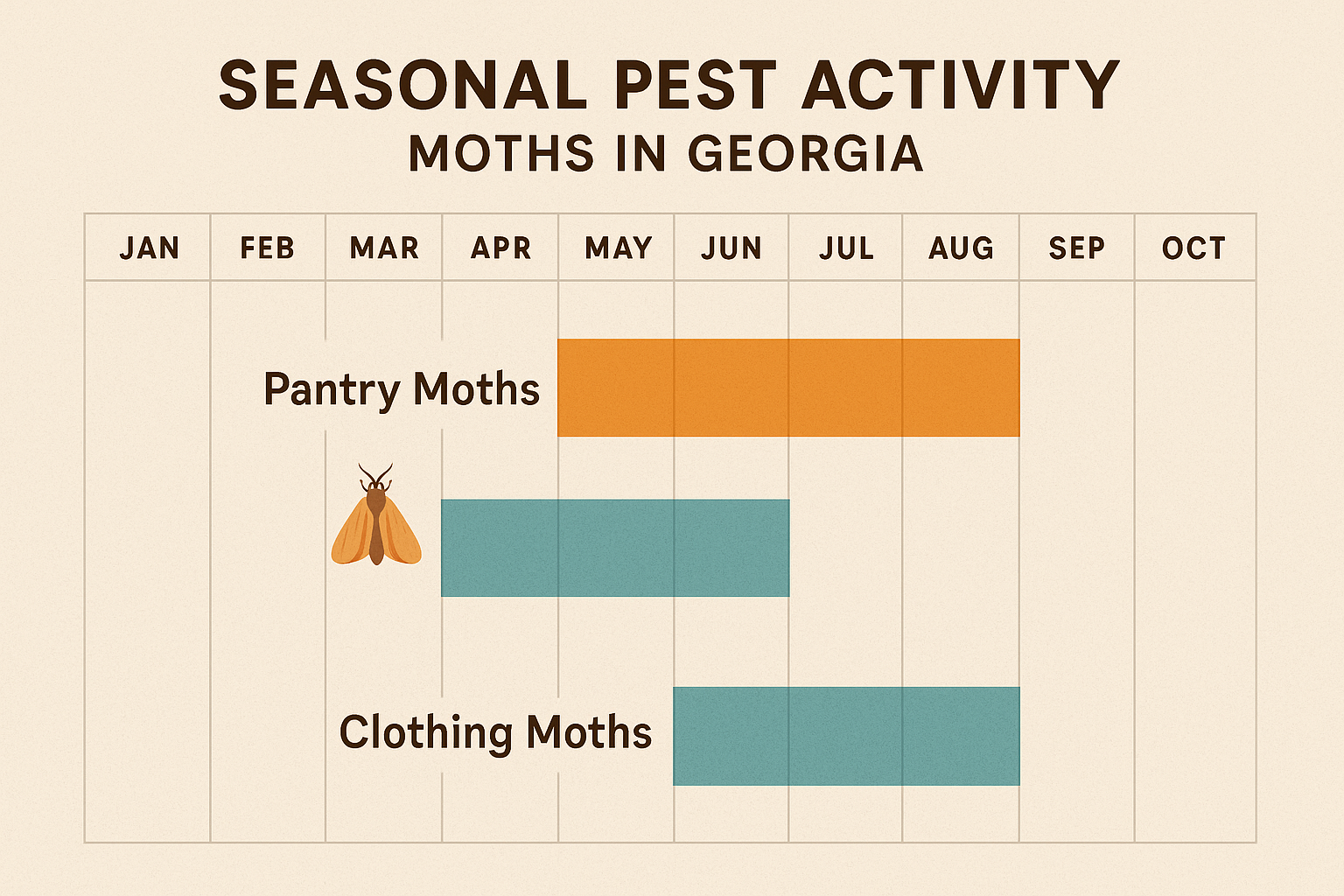
| Month | Pantry Moths (e.g., Indian Meal Moth) | Clothing Moths (e.g., Webbing & Carpet Moth) |
|---|---|---|
| January | Low | Low |
| February | Low | Low |
| March | Increasing | Low |
| April | Moderate | Increasing |
| May | High | Moderate |
| June | Peak | High |
| July | Peak | High |
| August | High | Moderate |
| September | Moderate | Low |
| October | Low | Low |
| November | Low | Low |
| December | Low | Low |
Regional climate nuances
Georgia’s coastal counties experience milder winters and higher year-round humidity, which can push pantry-moth activity a month earlier than inland areas such as Druid Hills. Conversely, the higher elevations of the north experience cooler nights, delaying the clothing-moth surge until late May. Homeowners should adjust inspection timing based on their micro-climate to support proactive moth control Druid Hills GA planning—coastal residents start checking pantry shelves in early March, while inland families can wait until mid-April.
Seasonal monitoring tips
- Inspect pantry shelves at least once a month from March through August; look for webbing, larvae, or tiny moths near grains, nuts, and dried fruit.
- Rotate stored food every 30 days and use airtight containers to break the life cycle.
- Before winter (late October), give closets a thorough vacuum, wash all garments in hot water, and store out‑of‑season items in sealed bags.
- Place pheromone traps in wardrobes and pantry corners during peak months to catch early flyers.
- Document any sightings in a simple log; patterns will help your pest‑control professional target treatments more precisely.
Integrating timing into an IPM program
Integrated Pest Management (IPM) relies on monitoring, prevention, and targeted treatment. By syncing inspections with the seasonal peaks shown above, you reduce the need for broad‑spectrum sprays. Early detection lets you apply localized interventions—such as heat treatment for infested pantry items or dry‑cleaning for clothing—before populations explode. When a professional service is required, timing the application during the moth’s most vulnerable stage (late larval period) maximizes efficacy while minimizing chemical use.
Source: NPMAPestWorld moth guide
Professional Moth‑Control Methods and What to Expect

Integrated Pest Management (IPM) for Moths
Integrated Pest Management, or IPM, is the backbone of every professional moth‑control program we deliver in Druid Hills. The process starts with a thorough inspection to locate active infestations, followed by precise species identification—whether you’re dealing with pantry moths, carpet moths, or the dreaded clothing moth. Monitoring tools such as sticky cards and pheromone lures help us track population levels, while targeted treatment and long‑term prevention measures close the loop. By moving through each step methodically, we keep treatments effective and minimize disruption to your home.
Common Professional Tactics
- Targeted fogging: A fine, low‑toxicity mist is applied to cracks, ceiling corners, and pantry shelves where adult moths hide.
- Pheromone traps: These act as both diagnostic and control devices, luring males into a sticky chamber and breaking the breeding cycle.
- Heat treatment for clothing moths: Temperatures are raised to 120 °F for a short period, killing eggs and larvae without damaging fabrics.
- Sanitation protocols: Vacuuming infested areas, discarding compromised food, and sealing cracks to eliminate future entry points.
What Happens When a Technician Visits
A typical service visit follows a predictable, transparent sequence so you always know what’s happening inside your walls.
- Initial Assessment: Our certified technician arrives on time, introduces themselves, and asks you to point out any suspect areas. Using a bright flashlight and a handheld magnifier, they scan closets, attics, and kitchen pantries for live moths, larvae, or webbing.
- Identification & Planning: Any debris or fabric fragments are collected in sealed bags for lab analysis, ensuring accurate species identification. Within minutes the technician can confirm whether you’re dealing with pantry, carpet, or clothing moths and then tailors the treatment plan to your specific situation.
- Treatment Application: The technician applies the chosen control method—often a low‑odor fogger that penetrates cracks, followed by placement of pheromone traps in high‑traffic zones. If clothing moths are present, a portable heat chamber is positioned around the affected wardrobe for a timed cycle.
- Post‑Treatment Briefing: Once the chemicals have settled, the technician walks you through each step that was taken, points out treated zones, and hands you a simple checklist for post‑treatment housekeeping—such as vacuuming, proper food storage, and trap inspection.
- Ongoing Monitoring: We recommend a follow‑up visit within two weeks to verify that the population is gone, then schedule quarterly monitoring visits that keep new moths from establishing a foothold.
Safety First: EPA‑Approved Products
All products we use carry EPA registration and are formulated for indoor residential use. They are low‑toxicity, fast‑acting, and leave no harmful residues when applied according to label directions. Technicians wear protective gloves and masks, and we advise you to keep children and pets out of treated rooms for the recommended ventilation period, usually 30 minutes to an hour.
Why Choose a Licensed Provider?
A licensed pest‑control company brings expertise, liability coverage, and access to professional‑grade tools that homeowners simply can’t buy at the hardware store. DIY sprays often miss hidden larvae, leading to repeated applications and higher long‑term costs. With Anthem Pest, you get a guaranteed result, transparent pricing, and ongoing support that protects your home year after year.
Ready to protect your Druid Hills home? Schedule a professional moth‑control service today and let our certified team handle the problem from inspection to long‑term prevention.
Comparing DIY and Professional Moth‑Control Costs
DIY Solution Expenses
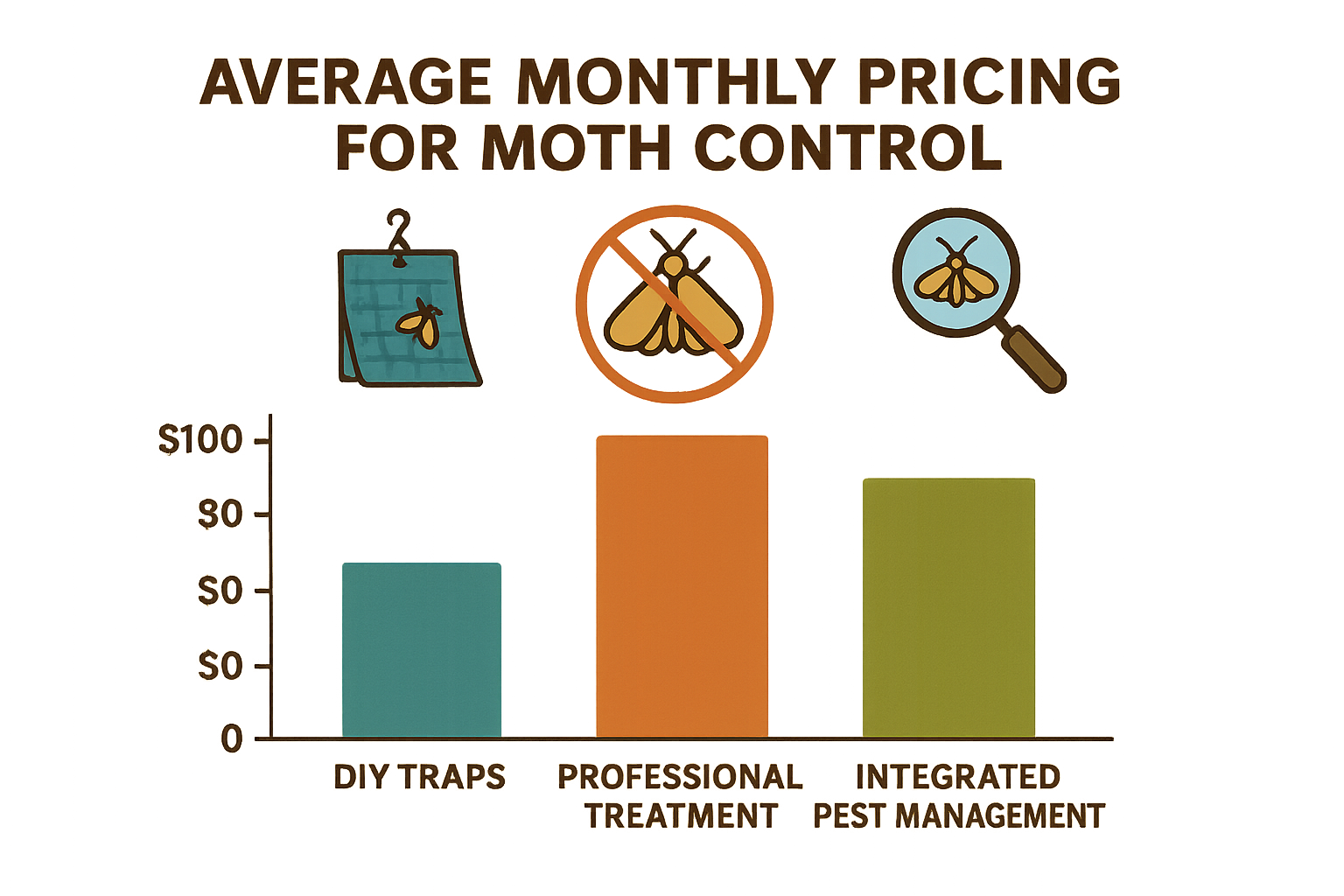
Homeowners who prefer a hands‑on approach usually start with a few basic items: sticky traps, pheromone lures, and the cleaning supplies needed to remove moth eggs and larvae. A pack of high‑quality sticky traps runs about $15‑$25 for a 30‑day supply, while a set of pheromone lures—effective for pantry or clothing moths—costs roughly $30‑$45 per unit. Add another $10‑$20 for all‑purpose cleaners, vacuum bags, and sealable storage containers, and the initial outlay sits between $55 and $90.
These items are a one‑time purchase, but they require regular replacement and diligent monitoring. Most DIYers find themselves restocking every 2–3 months, which can push the annual cost toward $120‑$150 if infestations persist.
One‑Time Professional Treatment
A single professional visit typically includes a thorough inspection, labor, and the application of EPA‑registered moth control products. In Druid Hills, the average price for a one‑time treatment ranges from $180 to $250. This fee covers:
- Technician travel and inspection time
- Application of targeted insecticides or baits
- Follow‑up advice on sanitation and preventative steps
Because the technician handles placement and dosage, the homeowner avoids the guesswork of DIY products and often sees immediate reduction in moth activity.
Integrated Pest Management (IPM) Contracts
For long‑term protection, many residents opt for an Integrated Pest Management (IPM) plan. These contracts usually involve quarterly visits, continuous monitoring, and repeat treatments as needed. Pricing typically falls between $350 and $500 per year, which breaks down to roughly $90‑$130 per visit.
The IPM model adds value beyond the raw numbers: technicians track population trends, adjust treatment methods seasonally, and guarantee results—often offering a money‑back promise if moth damage recurs within the contract period.
Cost‑Benefit Analysis
When you compare the numbers, the DIY route may look cheaper upfront, but recurring purchases and the risk of missed hotspots can drive total expenses higher over time. A single professional treatment, while pricier than a few traps, often eliminates the problem in one go, saving you the hassle of repeated purchases and potential damage to clothing or stored foods—especially when investing in reliable moth control Druid Hills GA services.
IPM contracts carry the highest initial cost, yet they deliver the greatest long‑term savings by preventing re‑infestations, reducing property damage, and providing peace of mind. Homeowners who factor in the value of guaranteed results and the convenience of scheduled visits typically find the annual $350‑$500 investment more economical than the $120‑$150 they’d spend on DIY supplies plus possible repair costs.
In short, budget‑conscious homeowners should weigh not only the price tag but also the hidden costs of time, effort, and potential loss. Choosing the right level of service—whether a one‑time professional fix or an all‑inclusive IPM plan—ensures both fiscal responsibility and a moth‑free home.
Protect Your Home with Expert Moth Control Today
Early detection and prompt treatment are the cornerstones of keeping pantry and clothing moths from ruining your belongings. By now you should be able to spot the tell‑tale signs, know the peak seasons in Georgia, and understand why a professional approach outperforms DIY fixes.
Why Choose Anthem Pest Control?
Our certified technicians bring a Georgia‑specific, EPA‑approved Integrated Pest Management (IPM) plan to every job. That means they start with a thorough inspection, identify the species and entry points, then apply targeted, low‑impact treatments that protect your family and pets while eradicating the moths.
Transparent Pricing, No Surprises
We believe homeowners deserve clear, upfront costs. Anthem offers straightforward pricing structures, flexible service plans, and a written estimate before any work begins. You’ll know exactly what you’re paying for—effective, safe solutions that fit your budget.
Take the Next Step
Don’t let a small infestation become a costly nightmare. Schedule a free, no‑obligation inspection today and receive a personalized quote from a team that prioritizes education and long‑term protection.
Call us now at 877-371-8196 or visit Anthem Pest Control to book your free inspection. Our friendly experts are ready to safeguard your home with professional moth control Druid Hills GA—because peace of mind starts with proactive protection.