Spotting Rat Activity Around Your Decatur Home

Typical entry points in Decatur houses
Rats are master squeezers; they can fit through openings as small as a quarter-inch, which is why proactive rat control Decatur GA is essential for homeowners. In Decatur’s older homes, the most common gateways are the eaves where roofing meets the wall, crawl-space vents that lack proper mesh, and utility openings for water, gas, or electrical lines. Even a tiny gap around a vent pipe or a damaged soffit can become a highway for a rodent looking for shelter.
Exterior clues you shouldn’t ignore
Once a rat has found its way inside, it leaves a trail you can see from the sidewalk. Look for fresh gnaw marks on wooden siding, deck rails, or garden trellises—rat teeth leave clean, crescent‑shaped cuts. Droppings near garbage cans, compost bins, or under outdoor furniture are another red flag; they’re dark, pellet‑shaped, and often found in clusters.
Burrow entrances are especially common in mulch beds, along foundation walls, or beneath shrubbery. These look like small mounds of soil with a neat, circular opening. Finally, notice any greasy or oily smears on exterior walls; rats coat their fur with oil to keep it waterproof, and the residue can transfer onto surfaces they rub against.
Indoor clues that scream “rat”
Inside, the evidence is often more subtle but just as telling. Shredded insulation in attics or crawl spaces indicates a nest being built. Chewed electrical wiring is not only a sign of a rat presence—it’s a fire hazard you must address immediately. Open cabinets may contain nesting material such as shredded paper, fabric strips, or even dried plant matter.
Listen for nocturnal scratching or scurrying sounds, especially behind walls or in ceilings. Rats are most active at night, and the noise can sound like a mouse but is usually louder and more persistent. If you hear a repetitive scratching that stops when you shine a flashlight into the wall cavity, you’ve likely pinpointed a rat’s activity zone.
How to differentiate rat evidence from other pests
Size matters. Rat droppings are larger—about ½‑inch long—compared to mouse droppings, which are roughly ¼‑inch. Gnaw marks from rats are deeper and have a more pronounced, V‑shaped bite than the shallow nibbles left by squirrels or chipmunks. Smell is another clue; a strong, musky odor often accompanies a rat infestation, whereas insects rarely produce a noticeable scent.
Quick checklist for a DIY inspection walk‑through
- Inspect all exterior vents, eaves, and utility openings; seal any gaps larger than ¼‑inch.
- Look for fresh gnaw marks on wood, plastic, and metal surfaces.
- Search for droppings near trash areas, under decks, and in garden beds.
- Check for burrow entrances in mulch, soil, and along foundation walls.
- Examine attic insulation, crawl‑space joists, and wall cavities for shredded material.
- Test electrical outlets and exposed wiring for chew damage.
- Listen for nighttime scratching sounds; note the location.
- Smell for a strong, oily musky odor near suspected activity zones.
Spotting these signs early gives you a head start before a minor problem turns into a full‑blown infestation. If you notice several of these indicators during your walk‑through, it’s time to call a local professional—like Anthem Pest Control—to assess, treat, and seal your home against future rat intrusions.
How Seasons Influence Rat Activity in Decatur
Rats are opportunistic survivors, but their behavior follows a predictable rhythm tied to the calendar. Understanding the breeding cycles and food‑search habits of roof‑ and Norway rats in Decatur lets you schedule inspections before the critters reach peak numbers.
Year‑round breeding and food‑search patterns
Unlike many insects, rats can breed throughout most of the year, but the volume of litters spikes when conditions are warm and food is abundant. A female rat can produce a new litter every three weeks, and each litter may contain 6‑12 pups. When temperatures rise in spring, the juveniles wean quickly and start foraging, expanding the colony’s reach into yards, gardens, and nearby structures. Conversely, during colder months the same colonies contract, seeking the warmth of homes while still needing access to water and shelter.
Spring surge – nesting and yard clean‑up
As March rolls into May, you’ll notice a noticeable increase in rat activity. Juvenile rats emerge from their burrows, and adults intensify nesting to protect the new brood. This is the perfect window to clear debris, trim overgrown shrubs, and store firewood off the ground. Eliminating hiding spots reduces the number of safe entry points and makes it easier to spot fresh droppings or gnaw marks during a routine inspection.
Summer peak – heat drives rats indoors
By June and July, soaring temperatures push many rats to seek cooler, insulated spaces inside homes. Open vents, gaps around doors, and even pet doors become highways for these nocturnal invaders. Sealing vents with steel mesh, installing door sweeps, and repairing any cracks in the foundation are essential. Summer is when you’ll hear the most scurrying at night, a clear sign the colony is transitioning from the yard to the interior.
Fall slowdown – preparation for winter
In September and October activity begins to taper as rats stockpile food and reinforce nests for the colder season. While the visible presence may lessen, this is a good moment to double‑check all exterior seals you installed earlier in the year. Reinforcing attic insulation, sealing utility entry points, and ensuring garbage containers are lidded will block the routes rats use to slip inside when the first frost arrives.
Winter persistence – rats seek heated homes
Even in December and January, rats do not disappear. They remain active, especially near heat sources like kitchens, laundry rooms, and basements. Look for tell‑tale signs: fresh droppings in hidden corners, gnaw marks on wiring or insulation, and a faint, musky odor. Detection during winter prevents a small family from expanding into a full‑blown infestation once temperatures rise again.
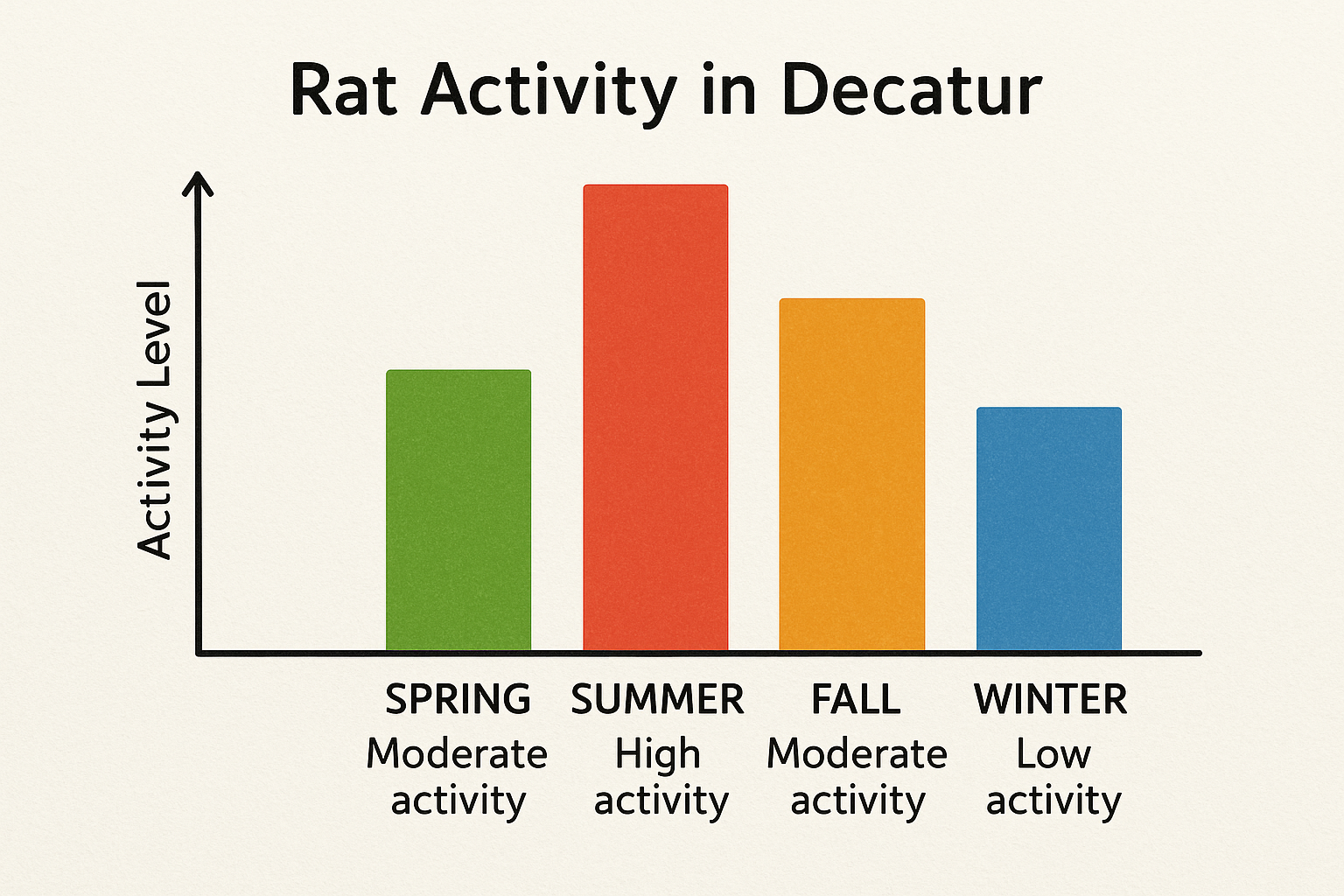
The chart above visualizes the ebb and flow of rat activity throughout the year, reinforcing why timing inspections and treatments to each season’s characteristics yields the best results. Schedule a professional assessment with Anthem Pest Control before the spring surge or after the winter lull, and let our experts fortify your home against the relentless drive of these adaptable rodents.
Professional vs. DIY Rat Control Methods

DIY Traps: Snap, Live, and Electronic
Snap traps are the classic, low‑cost option. Place them along walls, behind appliances, and near suspected runways, aiming the trigger side toward the wall so rats run into it. Live‑catch traps let you release captured rodents, but you must check them hourly and relocate the animal far from your home—a legal gray area in some Georgia counties. Electronic traps deliver a quick, humane kill, yet they require batteries and careful placement to avoid accidental contact with pets or children. All three work well for isolated sightings, but they rarely eliminate an established infestation.
Over‑the‑Counter Rodenticides
OTC baits come in pellet or block form and promise a “set‑and‑forget” solution. In Georgia, products containing anticoagulants are legal for homeowner use, but they must be placed in tamper‑resistant bait stations to comply with state regulations. The biggest risk is secondary poisoning: a curious child, dog, or even a pet cat can ingest the bait or a poisoned rat. Misapplication—such as scattering loose pellets on countertops—can also attract non‑target wildlife and lead to costly liability.
Seal‑and‑Exclude: What Homeowners Can Do
Blocking entry points is the most sustainable DIY step. Use a high‑quality silicone caulk to seal cracks around pipes, vents, and baseboards. Steel wool, tucked into gaps larger than ¼ inch, creates a barrier rats can’t chew through. Remember to inspect the exterior for gaps under the foundation, around deck railings, and where utility lines enter the home. While sealing reduces new invasions, it won’t eradicate rats already nesting inside.
When You Call a Pro: What the Service Includes
Professional technicians start with a thorough inspection, mapping active runways and identifying hidden nests. They then deploy EPA‑approved bait stations that are child‑ and pet‑safe, positioning them behind appliances, under sinks, and inside wall voids where rats travel. In addition to baiting, experts apply targeted rodenticide sprays to hard‑to‑reach crevices and set up monitoring devices for ongoing assessment. Follow‑up visits—usually within 7‑10 days—allow the crew to replace depleted baits, verify mortality, and adjust placement for maximum coverage.
Safety First: PPE, EPA‑Approved Products, and Environmental Impact
Technicians wear gloves, goggles, and disposable coveralls to prevent direct exposure. All chemicals used are registered with the EPA and formulated to break down quickly, minimizing soil and water contamination. By contrast, DIY users often lack proper PPE and may select unregistered products that linger in the home environment. Choosing a licensed provider also ensures compliance with Georgia’s specific restrictions on rodenticide concentrations and bait‑station labeling.
Real‑World Kitchen Treatment: A Technician’s Walkthrough
During a recent kitchen visit in Decatur, our crew first sealed a ½‑inch gap behind the refrigerator with steel wool and caulk. Next, two bait stations—one under the sink and another behind the pantry door—were installed at a height of 3–4 inches, the typical travel path for rats. Each station contained a measured dose of anticoagulant bait, locked behind a tamper‑proof lid. After a 10‑day monitoring period, the technician logged two dead rats and repositioned one station to a newly identified runway, confirming a comprehensive treatment.
Quick Comparison: DIY vs. Professional
| Method | Effectiveness | Safety | Long‑Term Results |
|---|---|---|---|
| Snap trap | Moderate – works for isolated rats | High – no chemicals, but risk of accidental snap | Poor – rats can bypass traps |
| Live‑catch trap | Low‑moderate – depends on frequent checking | Medium – handling live rats poses disease risk | Poor – requires repeated placement |
| Electronic trap | High – quick kill when contacted | Medium – electricity concerns for pets | Fair – limited to contact zones |
| OTC rodenticide | High – can affect hidden populations | Low – poisoning risk to children, pets, wildlife | Fair – requires strict placement and monitoring |
| Seal‑and‑exclude (DIY) | Low‑moderate – prevents new entry | High – no chemicals involved | Good – long‑term barrier when maintained |
| Professional service | Very high – integrated inspection, baiting, monitoring | High – EPA‑approved products, technician PPE | Excellent – follow‑up ensures lasting control |
Decatur Rat Control Pricing – Monthly Plans vs. One‑Time Service
When it comes to protecting your home from rats, the way you pay for service can be just as important as the treatment itself. In Decatur, most pest‑control firms offer three main structures: a recurring monthly monitoring plan, a quarterly bait‑station program, or a one‑time eradication visit. Understanding what each option includes and how the costs add up helps you choose the solution that fits both your budget and your long‑term peace of mind.
What’s inside each service package?
- Monthly Monitoring Plan – A technician visits once a month to inspect interior and exterior perimeters, replace or top‑off bait stations, and document activity. The plan usually includes a 90‑day guarantee that any new activity will be addressed at no extra charge.
- Quarterly Baiting Program – Inspections and bait station servicing occur every 90 days as part of an ongoing rat control Decatur GA strategy. This option adds a seasonal “pre-emptive” bait placement in the fall and spring, when rats are most active, plus a follow-up call after each visit to confirm results.
- One‑Time Eradication Visit – A single, intensive treatment that may involve snap traps, live‑catch traps, and a full‑property inspection. The service often comes with a 30‑day guarantee; if rats return, another visit is scheduled at a reduced rate.
Cost comparison
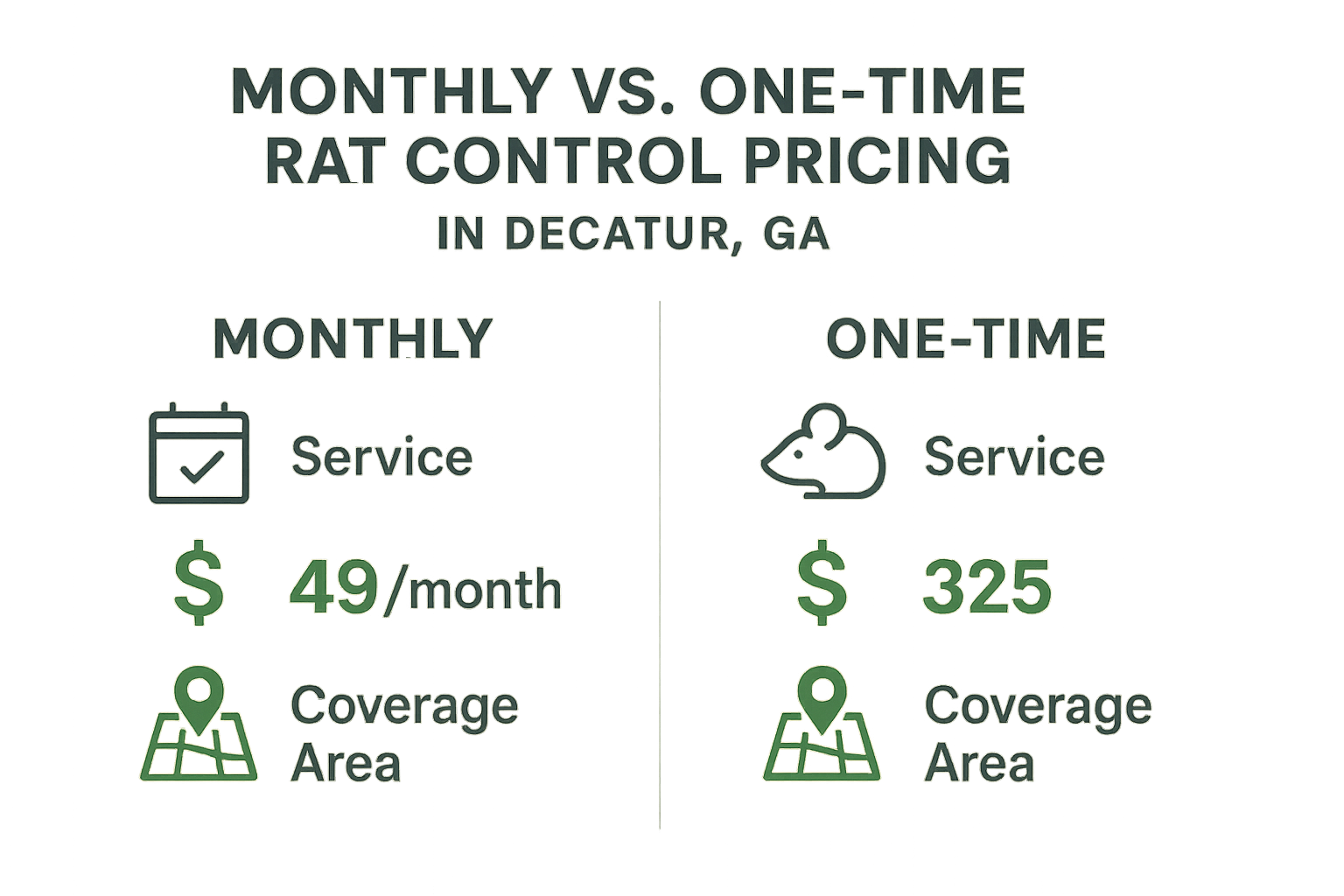
| Service Type | Avg. Monthly Cost | Total Annual Cost | Typical Coverage Area |
|---|---|---|---|
| Monthly Monitoring | $55 | $660 | Up to 2,500 sq ft (single‑family) |
| Quarterly Baiting | $42 (averaged over 12 months) | $500 | Up to 3,500 sq ft (larger homes) |
| One‑Time Eradication | $180 (single visit) | $180 | Any size, but best for < 5,000 sq ft |
What drives the price?
Even within the same service tier, several factors can shift the final bill for rat control Decatur GA:
- Property size – Larger homes or properties with extensive landscaping need more bait stations and longer inspection routes.
- Infestation severity – A light sighting may be handled with a few traps, while a heavy, multi‑entry infestation often requires additional bait, more frequent visits, and possibly structural sealing.
- Additional pest concerns – If you also have mice, cockroaches, or ants, many companies bundle treatments, which can raise the per‑visit cost but lower the overall expense compared to separate contracts.
Choosing the right plan for you
If you’re looking for a set‑and‑forget approach that protects against future invasions, the monthly monitoring plan offers the most consistent coverage and a solid guarantee. Homeowners on a tighter budget, or those who only experience occasional rat sightings, often find the quarterly baiting program provides a good balance of cost and proactive protection.
For a one‑off problem—say you’ve just discovered a nest in the attic and want it eliminated fast—a single eradication visit is the most direct route. Just remember that without ongoing monitoring, the same entry points can invite new rodents later on.
In short, match the service to your budget, property size, and long‑term prevention goals. If you’re unsure, a quick call to Anthem Pest Control (877‑371‑8196) will let a local expert assess your situation and recommend the most cost‑effective plan for a rat‑free home.
Secure a Rat‑Free Home with Anthem Pest Control
What the warning signs mean for you
Finding droppings in the pantry, hearing nocturnal scurrying, or spotting gnaw marks on wiring are all red flags that rats have already set up camp. These signs often appear in early spring and again in late summer, aligning with the species’ breeding cycles. While a quick DIY trap might catch a lone visitor, it rarely addresses the hidden nests, entry points, and food sources that keep a colony thriving. Without a comprehensive approach, the problem resurfaces, and the damage—both structural and health‑related—can quickly compound.
Why DIY falls short and professional help matters
Do‑it‑yourself solutions typically target only the visible rats, leaving the underlying infestation untouched. Effective, lasting control requires:
- Identifying and sealing every possible entryway.
- Deploying EPA‑approved baits and treatments that work safely around children and pets.
- Monitoring the property over weeks to ensure the colony is fully eradicated.
Professional technicians have the training and tools to execute each step systematically, turning a temporary fix into a permanent solution.
Anthem’s local expertise you can trust
Anthem Pest Control’s Decatur team is composed of locally trained technicians who understand the specific rodent pressures of our region, delivering reliable rat control Decatur GA homeowners can trust. We use only EPA-approved products, guaranteeing effectiveness while protecting your family’s health. Our pricing is transparent—no hidden fees, just a clear, upfront quote that lets you budget with confidence.
Safety first, satisfaction guaranteed
We understand that a home is more than a structure; it’s where families and pets live. Every treatment plan is designed with the utmost safety in mind, using low‑odor, low‑toxicity solutions that target rats without harming your loved ones. Plus, we back every rodent service with a satisfaction guarantee: if rats return after our work, we’ll revisit the site at no additional cost.
Take the next step toward a rat‑free home
If you’ve noticed any of the warning signs above—or simply want to fortify your home before the next seasonal surge—our friendly team is ready to help with professional rat control Decatur GA homeowners can rely on. Call us today for a complimentary inspection and quote. We’ll walk you through what’s happening, outline a tailored action plan, and answer any questions you have.
Contact Anthem Pest Control
Phone: 877‑371‑8196
Schedule online: https://anthempest.com