Why Suwanee Homeowners Face a Rat Problem
Suwanee’s humid subtropical climate, with warm summers and mild winters, creates an ideal environment for rodents to thrive year‑round. The town’s mix of mature hardwood trees, lush landscaping, and numerous water features—such as the nearby Suwanee Creek and several community lakes—offers plentiful food sources and shelter. Add to that the prevalence of single‑family homes with spacious basements, crawl spaces, and attics, and you have a perfect recipe for rat activity.
Typical Signs That Rats Have Moved In
- Droppings: Small, dark, pellet‑shaped feces often found along baseboards, in cabinets, or near food storage areas.
- Gnaw marks: Fresh chew holes on wood, plastic, or even electrical wiring, usually about the size of a pencil tip.
- Noises: Scratching, scurrying, or squeaking sounds in walls, ceilings, or attic spaces, especially at night.
- Burrows and nests: Soil mounds or shredded material near foundations, garden beds, or under decks.
Spotting any of these indicators should trigger an immediate inspection. Rats multiply quickly—one pair can produce up to 2,000 offspring in a single year—so early detection is crucial to keep the problem from spiraling.
Health and Property Risks
Beyond the obvious nuisance, rats pose serious health threats. They are carriers of Leptospira bacteria, hantavirus, and salmonella, all of which can contaminate surfaces and food supplies through urine and droppings. A single bite or inhalation of contaminated dust can lead to severe illness for you and your family.
From a property standpoint, rats love to gnaw on electrical wiring, increasing the risk of short circuits and even fires. Their constant nesting behavior can damage insulation, drywall, and structural wood, leading to costly repairs. Moreover, food‑grade areas—pantries, refrigerators, and pet feeders—can become contaminated, forcing you to discard entire batches of groceries.
Local Data Shows the Scale of the Issue
According to a recent report from Anthem Pest Control, Gwinnett County experienced a 27% rise in rat sightings over the past two years, with Suwanee accounting for a disproportionate share of those reports. The data highlights that the problem is not isolated to a few neighborhoods; it’s a community‑wide concern that demands proactive measures.
Why Understanding Seasonal Activity Matters for Your Budget
Rats are most active during the cooler months of fall and winter, when they seek warmth inside homes. However, the breeding season peaks in spring and summer, meaning populations can explode if left unchecked. Knowing these patterns helps you time inspections and treatments strategically, avoiding emergency calls that often come with premium pricing.
By recognizing the local climate factors, typical housing features, and the warning signs of infestation, you’ll be better equipped to weigh treatment options against potential damage costs. The next section will dive into the specific cost‑focused strategies—preventive measures, one‑time treatments, and ongoing monitoring—that can keep your Suwanee home rat‑free without breaking the bank.
Seasonal Rat Activity in Suwanee, GA
Rats aren’t just nocturnal scavengers; they’re highly responsive to the environment around them. In Suwanee, temperature swings and food availability dictate when they venture indoors or stay hidden outdoors. When winter temperatures dip below 40°F, rats slow their metabolism, conserve energy, and rely on stored food caches. As spring warms up, they emerge to forage, and the abundant outdoor seed and insect life fuels a moderate surge in movement. Summer’s heat and the constant supply of ripe fruit, garden produce, and outdoor trash create the perfect buffet, prompting rats to expand their territories and seek shelter inside homes to escape the scorching days. By fall, cooler evenings and dwindling outdoor food push them back toward structures, but activity never drops to winter’s low level.
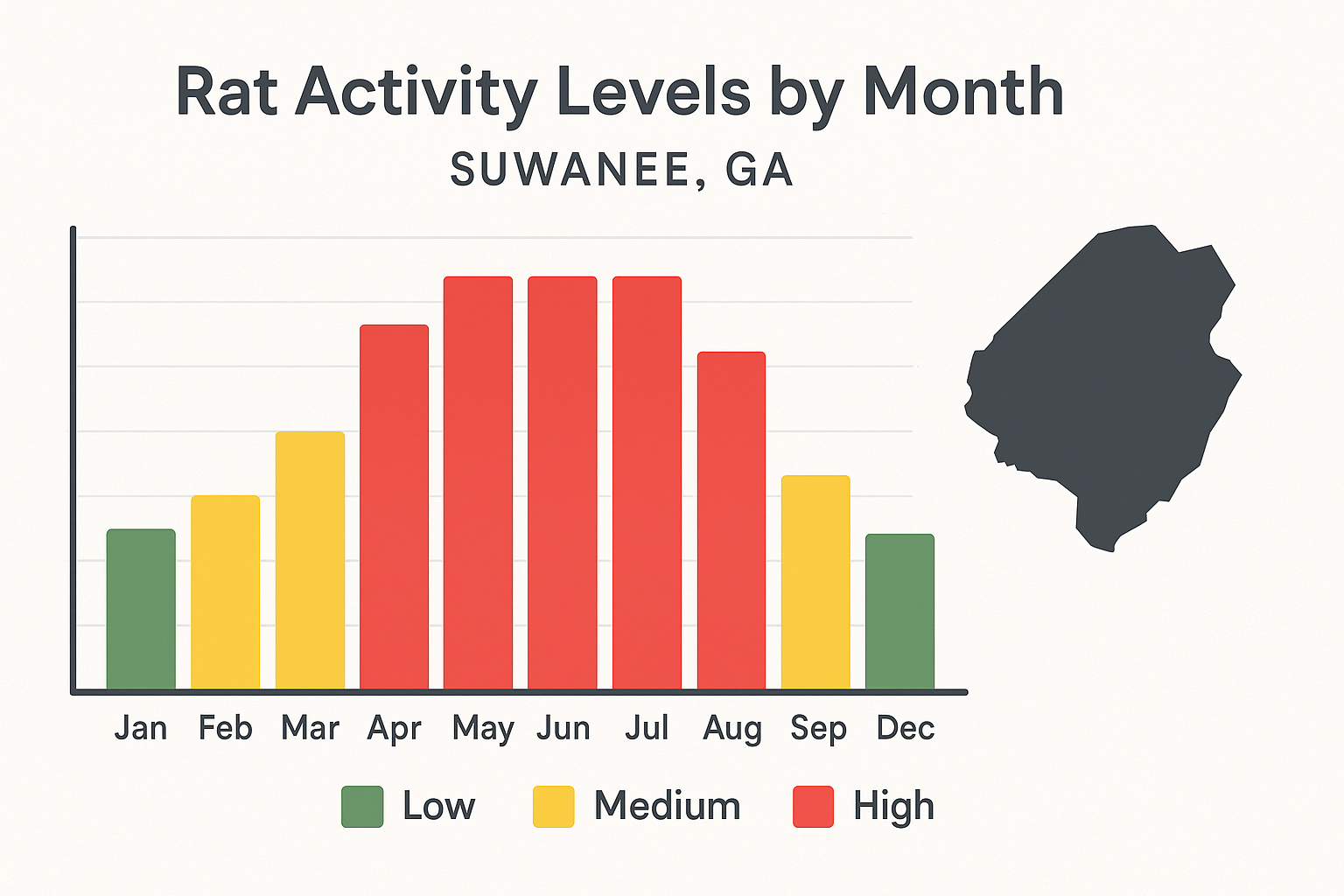
The chart above breaks down rat activity into three clear bands:
- Low (December – February): Rats stay deep in burrows or attics, limiting indoor sightings.
- Medium (March – May & September – November): Increased foraging leads to occasional indoor forays, especially near food sources.
- High (June – August): Warm nights and abundant outdoor food drive the greatest number of rats into homes, often through small cracks, vents, or utility openings.
Homeowners should pay special attention to the months with the highest indoor‑incursion risk: June, July, and August. During this window, rats are not only looking for food but also for cool, protected nesting spots. You’ll notice more gnaw marks, droppings, and fresh grease tracks in kitchens, basements, and crawl spaces.
Timing Inspections and Treatments
To stay ahead of the seasonal surge, schedule a thorough inspection at the tail end of the low‑activity period—late February or early March. This timing lets a professional identify entry points before the rats ramp up their outdoor activity. Follow up with a preventive treatment in early May, just before the medium‑activity phase, to seal gaps and set up bait stations. If you notice signs of activity in June, request an expedited treatment; a quick intervention can prevent a full‑blown infestation that’s far more costly to eradicate later in the summer.
For homeowners who prefer a DIY approach, use these seasonal cues as a checklist:
- Inspect exterior foundations, vents, and utility openings in March.
- Apply steel‑wool or copper mesh to any discovered gaps before May.
- Place tamper‑proof bait stations in attics and crawl spaces by early June.
- Monitor for fresh droppings weekly through August, and replace bait as needed.
By aligning your inspection and treatment schedule with the natural rhythm of rat activity, you reduce the chance of an unexpected indoor invasion and keep your home safe throughout the year.
Professional Rat Control Packages and Pricing
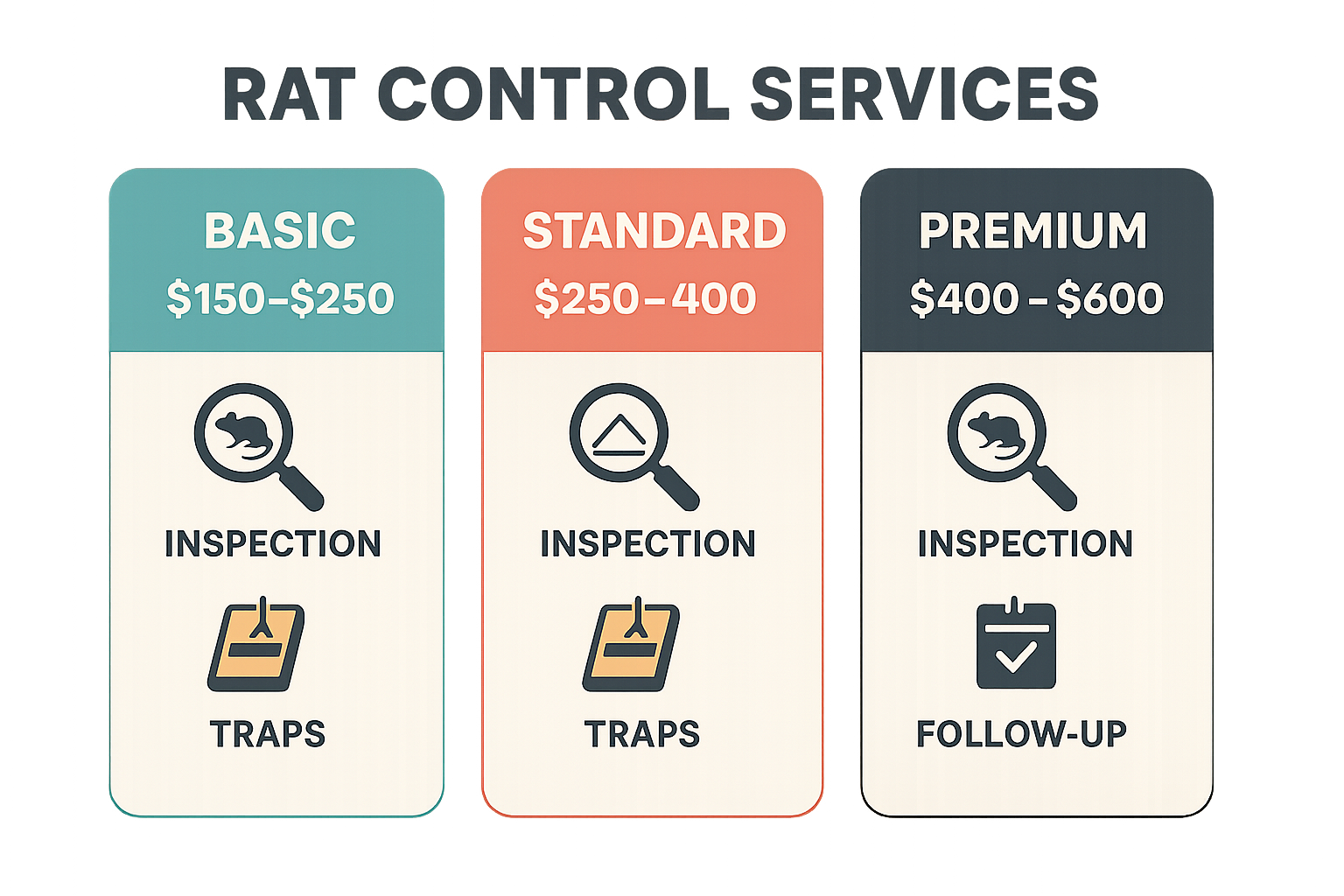
When it comes to rat control, one size does not fit all. Anthem Pest offers three clearly defined service tiers—Basic, Standard, and Premium—so you can choose the level of protection that matches the severity of the infestation and your budget. Each package starts with a thorough on‑site inspection and ends with a warranty that keeps your home safe long after the technician leaves.
Basic Package
- Initial inspection: Certified technician identifies entry points, activity hotspots, and the extent of the problem.
- Trap placement: Two to three snap or live traps set in strategic locations.
- Follow‑up visit: One post‑treatment check within 7 days to remove captured rodents and reset traps if needed.
- Sealing recommendation: Written suggestions for DIY sealing of obvious gaps.
Price range: $150 – $200. The exact quote depends on square footage and how many access points need attention.
Standard Package
- All services included in the Basic tier.
- Expanded trap network: Up to six traps, covering larger or multi‑level homes.
- Professional sealing: Technician applies rodent‑grade caulk and steel wool to critical entry points.
- Two follow‑up visits: One at 7 days and another at 30 days to ensure no new activity.
- Monitoring kit: Passive monitoring stations installed for ongoing detection.
Price range: $250 – $300. This tier is ideal for moderate infestations where you want a hands‑off approach to sealing and monitoring.
Premium Package
- Everything from the Standard tier, plus:
- Comprehensive trap placement: Up to ten traps, including bait stations for hard‑to‑reach areas.
- Full‑service sealing: All identified gaps professionally sealed, including foundation cracks and vent openings.
- Three follow‑up visits: At 7 days, 30 days, and 60 days, with a final inspection to certify a rat‑free environment.
- Extended warranty: 12‑month guarantee that includes one complimentary revisit if rats return.
- Monthly monitoring report: Digital updates on trap activity and recommendations for preventive actions.
Price range: $400 – $500. This is the most robust option for severe infestations or properties where peace of mind is paramount.
The higher tiers deliver real value through additional follow‑up visits and warranty coverage. A second or third visit catches any late‑emerging rodents that the initial treatment might miss, while the extended warranty protects you from unexpected re‑infestations—saving you both time and money in the long run.
Choosing the right package is simple: assess the level of activity you’ve observed, consider the size and layout of your home, and match those factors to the tier that fits your budget. If you’ve only spotted occasional droppings, the Basic plan may be enough. For multiple sightings or a multi‑story house, the Standard or Premium options provide the extra layers of protection that keep rats out for good.
Inspection, Entry‑Point Sealing, and Trap Placement
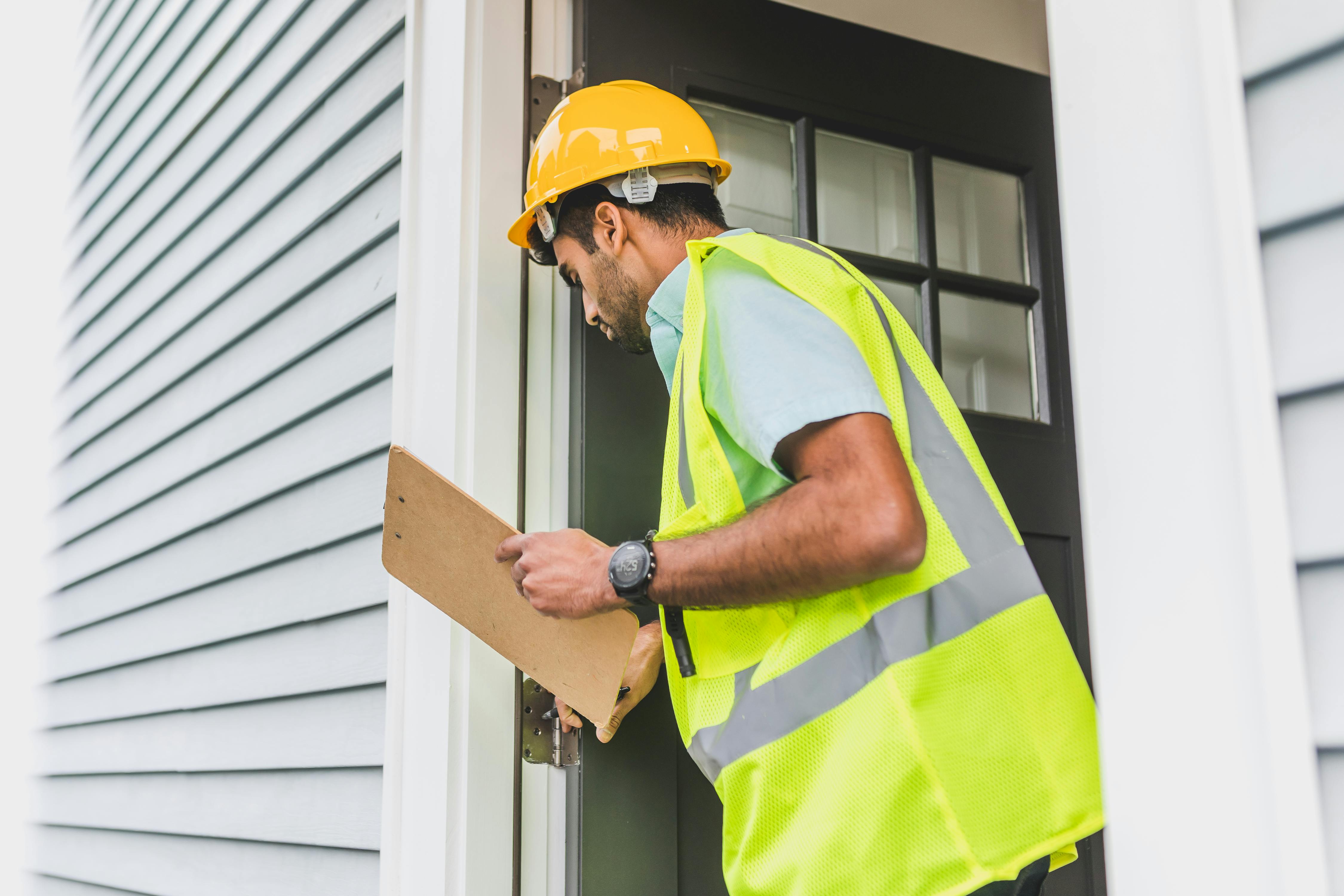
When a professional from Anthem Pest Control arrives at a Suwanee home, the first half‑hour is spent mapping out the rat‑infestation like a detective on a crime scene. The technician walks the perimeter, shines a bright flashlight into every nook, and records any signs of gnawing, droppings, or burrows. Inside, walls, ceilings, and crawl spaces are examined with a combination of visual checks and low‑power inspection cameras. This systematic sweep pinpoints the exact routes rats are using to move between the outdoors and your living spaces, giving the team a clear roadmap for the next steps.
Step 1: Comprehensive Exterior and Interior Inspection
Exterior inspection focuses on gaps around foundation walls, utility penetrations, vent openings, and roof eaves. Even a ¼‑inch crack can become a highway for a determined rodent. Technicians use steel‑wool probes and moisture meters to locate hidden fissures that aren’t obvious to the naked eye. Inside, they look for fresh droppings, shredded insulation, and gnaw marks on baseboards, cabinets, and pipe sleeves. Special attention is paid to high‑traffic areas—kitchens, pantries, and laundry rooms—where food residue can lure rats deeper into the house.
Step 2: Identifying and Sealing Common Entry Points
In Suwanee homes, the most frequent entry points include:
- Foundation cracks and gaps around basement windows.
- Unscreened vent openings in attics and crawl spaces.
- Openings around utility lines, such as water, gas, and electrical conduits.
- Door sweeps that are worn or missing.
- Loose siding or damaged soffits.
Once identified, each opening is sealed with a blend of durable materials—high‑grade steel wool, silicone‑based caulk, and hardware cloth where flexibility is needed. This “rat-proofing” not only blocks current intruders but also prevents future colonies from establishing new pathways, dramatically lowering the chance of re‑infestation after treatment.
Step 3: Strategic Trap Placement
Anthem’s technicians deploy a mix of trap types to cover every stage of the rat’s journey:
- Snap traps—quick‑acting, no‑bait required, placed along walls where rats travel.
- Live‑catch traps—humane option for homeowners who prefer relocation, positioned near known foraging routes.
- Bait stations—secure, tamper‑proof containers with rodenticide, used in concealed areas like attics and basements.
Placement follows a “travel‑path” strategy: traps are set perpendicular to walls, a few inches from the baseboard, and clustered near suspected entry points. In kitchens, traps sit behind appliances and under cabinets; in attics, they’re positioned near insulation joists; in basements, they target utility corridors. Technicians rotate trap locations every few days to prevent rats from learning avoidance patterns.
Safety Precautions and Regulatory Compliance
All work complies with Georgia’s Department of Agriculture regulations and the EPA’s pest‑control guidelines. Technicians wear personal protective equipment—gloves, eye protection, and disposable coveralls—to avoid direct contact with droppings or bait. Bait stations are placed out of reach of children and pets, and any used traps are removed and disposed of according to local hazardous‑waste protocols. Homeowners receive a written safety sheet that outlines what to expect and how to keep family members safe during the treatment window.
Homeowner Quick‑Help Tip
While Anthem handles the heavy lifting, you can boost the results by keeping food sealed in airtight containers, promptly cleaning crumbs from countertops, and reducing clutter that offers hiding spots. Regularly empty trash cans, store pet food in sealed bins, and maintain a tidy garage or shed. These simple habits deny rats easy access to food and shelter, making your home far less attractive to future invaders.
DIY Snap Traps vs. Professional Service
What a DIY snap trap looks like in practice
Snap traps are the classic, low‑cost solution most homeowners reach for when a rat is spotted. A typical plastic or wooden snap trap sells for $2‑$4 each, so a box of ten costs roughly $30. The trick to success is placement: set the trap along walls, behind appliances, and in dark corners where rats travel. You’ll also need to check the traps daily, replace baits, and reset the mechanisms after each catch.
Limitations and hidden risks
While a handful of traps can catch a solitary intruder, they rarely address the bigger picture. DIY setups often miss hidden entry points, leaving the infestation open to re‑entry. Incomplete sealing can also create a “trap‑and‑run” scenario where rats die in inaccessible walls, potentially spreading disease‑carrying droppings throughout your home. Moreover, handling dead rodents without proper protective gear increases the risk of exposure to hantavirus, leptospirosis, and other pathogens.
Why a professional service can be a game‑changer
Anthem Pest’s technicians start with a thorough inspection, identifying every possible entry, nesting site, and food source. Their expertise in rodent behavior means traps are positioned where rats are most active, not just where you think they might be. After the initial placement, the service includes a guaranteed follow‑up visit to monitor trap performance, adjust locations, and ensure the problem is fully eradicated. This comprehensive approach reduces the chance of a recurring infestation and eliminates the guesswork that DIY owners face.
Cost comparison at a glance
| Option | What’s included | Estimated Cost |
|---|---|---|
| DIY Snap Traps (10 units) | 10 traps, bait, personal labor | $30 |
| Anthem Pest – Standard Package | Full inspection, placement of professional‑grade traps, sealing of entry points, one follow‑up visit | $275 |
When DIY might be enough
- Only one rat sighting and no signs of nesting.
- A small, low‑traffic rental or vacation home where the risk of disease spread is minimal.
- Homeowners comfortable handling traps, wearing gloves, and disposing of carcasses safely.
When to call in Anthem Pest
- Multiple rats spotted over several days or evidence of gnaw‑damage.
- Visible entry points such as gaps around pipes, vents, or foundation cracks.
- Structural damage, insulation contamination, or a history of recurring rodent problems.
- Any situation where you’d rather avoid direct contact with potentially disease‑carrying rodents.
In short, a DIY snap‑trap kit can be a quick stop‑gap for a single sighting, but it rarely offers the thoroughness and safety that a professional service provides. For most Suwanee homeowners dealing with more than a fleeting encounter, investing in Anthem Pest’s Standard package delivers lasting peace of mind—without the hidden health hazards of a DIY approach.
Take the Next Step to Protect Your Home
In Suwanee, rats are most active during the cooler months of spring and fall, when they seek shelter from temperature extremes and abundant food sources. Summer rains can also drive them indoors as they look for dry nesting sites. Acting before these peak periods arrives not only stops an infestation before it spreads, it also saves you the higher costs associated with emergency treatments and structural repairs.
Choose a package that matches your situation
Anthem Pest offers three flexible service tiers:
- Basic Inspection & Exclusion – Ideal for homeowners who have spotted a few droppings or gnaw marks and need a professional assessment.
- Standard Removal – Includes trapping, baiting, and a follow‑up visit, perfect for moderate activity in attics, basements or crawl spaces.
- Comprehensive Protection – A full‑scale solution with ongoing monitoring, sealing of entry points, and quarterly inspections for heavy or recurring infestations.
Selecting the right tier ensures you pay only for the services you truly need, while still receiving a thorough, long‑lasting solution.
Why Anthem Pest is the trusted choice in Suwanee
Our technicians live and work in the Suwanee area, so they understand the local building styles, climate patterns, and the specific rat species that tend to invade homes here. We rely on EPA‑approved, low‑toxicity baits and traps that protect children, pets, and the environment. Every quote is itemized and transparent—no hidden fees, no surprise add‑ons. That clarity lets you compare options confidently and plan your budget ahead of time.
Ready for a free, no‑obligation inspection?
Give us a call at 877‑371‑8196 or visit Anthem Pest Control to schedule your complimentary assessment. One of our locally trained specialists will walk you through the findings, recommend the most cost‑effective package, and set a timeline that fits your schedule. Protecting your home from rats starts with a single phone call—let’s make sure the critters stay outside where they belong.