Recognizing Millipedes and Their Impact in Druid Hills
Biology and Appearance
Millipede control Druid Hills GA starts with proper identification of the pest invading your home. Millipedes belong to the class Diplopoda and are often mistaken for insects, but they are actually arthropods with two pairs of legs per body segment. In Druid Hills you’ll typically see adults ranging from 1½ to 3 inches long, with a smooth, cylindrical body covered in dozens of overlapping rings. Their coloration varies from dark brown to reddish-orange, and unlike centipedes they move in a slow, deliberate wave-like motion.
How Millipedes Differ from Ticks and Centipedes
Ticks are tiny, flat arachnids that latch onto skin for a blood meal, while centipedes are fast‑moving predators with a single pair of legs per segment and venomous claws. Millipedes, by contrast, are detritivores that feed on decaying plant matter. They lack the venomous forcipules of centipedes and the mouthparts needed to pierce skin, which is why they are harmless to humans but can become a nuisance when they congregate in large numbers.

Key Visual Cues for Identification
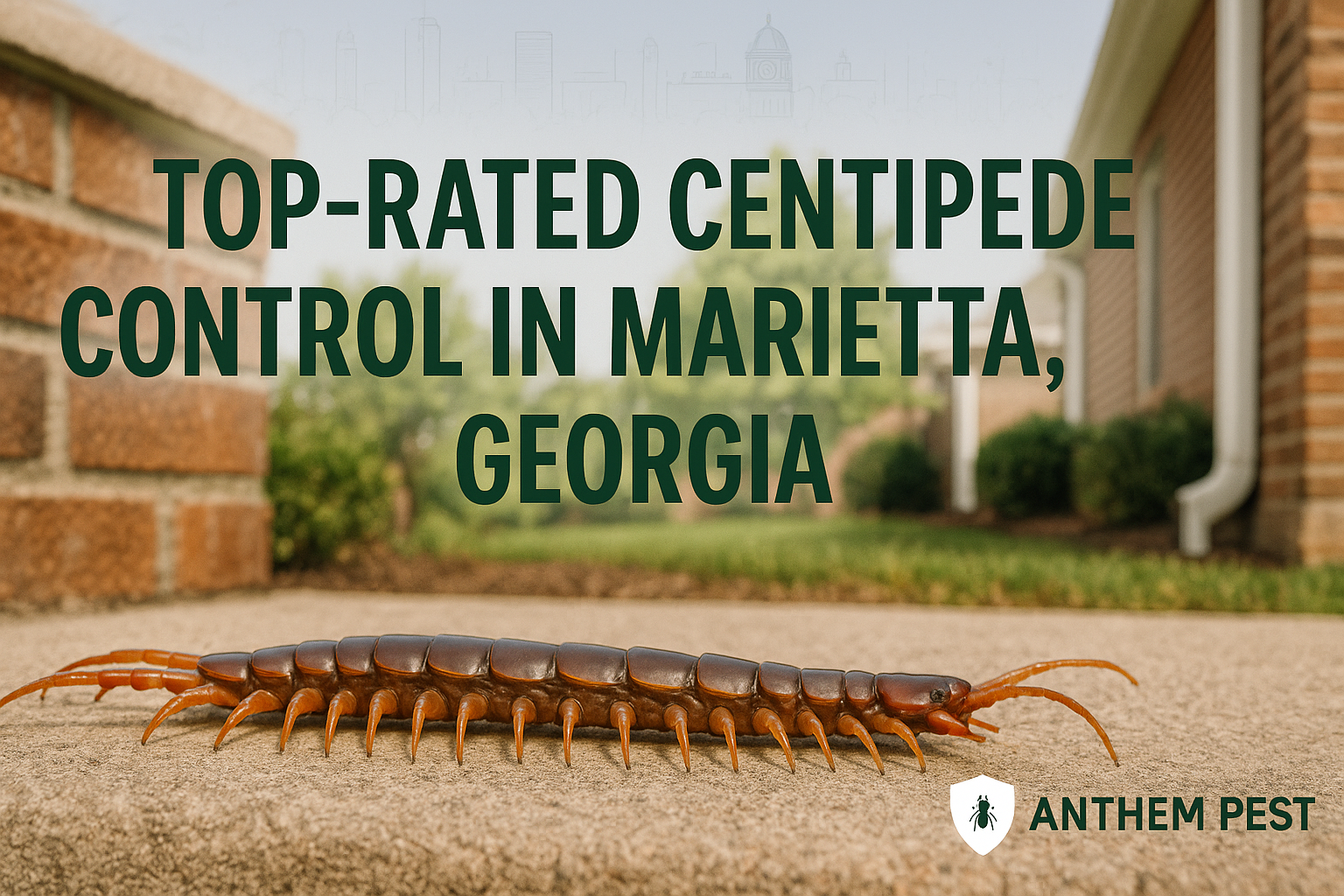
When you spot a creature scurrying across your patio, look for these tell‑tale signs: a millipede typically has 30‑40 visible body segments, each bearing two pairs of legs. Its antennae are short and tucked near the head, and the overall hue is uniformly muted rather than the stark black of many centipedes. The macro photo above highlights the segment count and the fine, hair‑like setae that give many species a slightly fuzzy appearance.
Common Entry Points Around Druid Hills Homes
The rolling hills and mature trees of Druid Hills create a moist micro‑climate that millipedes love. They slip through foundation cracks, gaps around utility lines, and any opening where mulch or leaf litter abuts the foundation. Wood chips, garden beds, and poorly drained soil act as highways, allowing millipedes to migrate from the surrounding woods right onto your doorstep.
Potential Damage and When an Infestation Becomes a Problem
Individually, a millipede does little more than curl up when disturbed. In aggregate, however, they can disrupt soil structure, push aside mulch, and leave dark, oily stains on siding or concrete when crushed. Their sheer numbers may also attract secondary pests such as ants or spiders, creating a cascade of unwanted activity. Homeowners should consider treatment when you notice regular trails along foundation walls, persistent staining, or a sudden surge of millipedes after heavy rain.
Why Local Climate Matters
Druid Hills experiences warm, humid summers and mild winters—conditions that keep leaf litter moist and provide year‑round food sources for millipedes. Seasonal rainstorms can drive them indoors in search of shelter, especially when the ground becomes saturated. Understanding this climate link helps you anticipate peak activity periods and implement preventive measures before the pests become visible.
For a deeper dive into regional millipede behavior and management recommendations, consult the UGA Extension on Millipedes. Their research‑based guidelines complement professional services and give homeowners a solid foundation for long‑term control.
Seasonal Activity Patterns of Millipedes in Georgia
Georgia’s climate isn’t uniform—from the humid coastal plains to the cooler mountain foothills, temperature and moisture shift dramatically across the state. Millipedes thrive when the air is moist and the ground stays cool, which is why they’re most active in the moderate, damp periods that Georgia’s climate naturally provides.
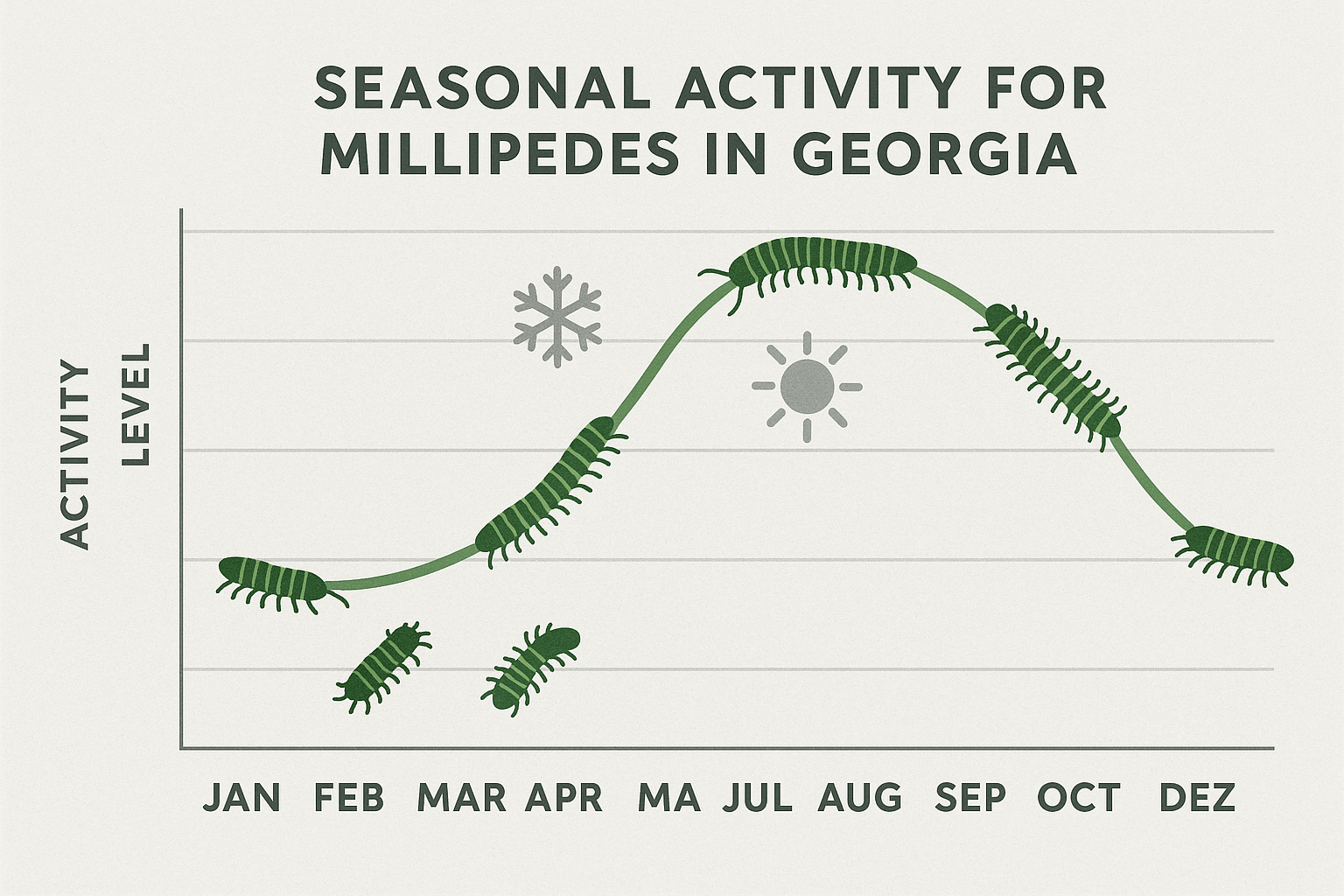
The line chart above illustrates a clear two‑peak pattern. From April through June, spring rains and leaf litter create ideal breeding conditions, pushing millipede numbers upward. A second surge appears in October and November as autumn rains return and fallen foliage adds both shelter and food. The summer months of July and August, despite high humidity, see a dip because scorching soil temperatures dry out the upper layers where millipedes usually roam. Winter (December‑February) remains low‑activity territory, with the insects retreating deep into the soil until the ground thaws.
What Drives These Seasonal Spikes?
- Rainfall: Fresh moisture softens the soil, allowing millipedes to surface and search for organic debris.
- Leaf fall: Decaying leaves provide both a food source and a humid micro‑habitat that protects them from predators.
- Soil moisture: Consistently damp soil sustains the thin cuticle of millipedes, preventing dehydration.
When any of these factors align—especially after a week of steady rain—you’ll notice a rapid increase in sightings around foundations, doorways, and garden beds.
Homeowner Monitoring Tips for High‑Risk Months
Knowing when millipedes are likely to appear lets you act before they become a nuisance. Here are three simple steps to keep tabs on their activity during April‑June and October‑November:
- Visual checks: Walk the perimeter of your home once a week after rain. Look for clusters of tiny, dark bodies under mulch, wood piles, or stone walls.
- Trap placement: Lay a shallow dish of damp newspaper or a piece of corrugated cardboard near potential entry points. Millipedes will hide under it, making it easy to count and remove.
- Moisture monitoring: Use a basic soil moisture meter in garden beds. If the reading stays above 20% for several days, increase your inspection frequency.
Timing Professional Treatments for Maximum Effect
Professional millipede control works best when applied just before the peaks, giving the product time to create a barrier before the insects surge. Schedule a treatment in late March or early April to cover the spring wave, and consider a follow‑up in early October for the autumn spike. This timing ensures that the residual insecticide remains active in the soil when millipedes are most likely to emerge, reducing the need for repeated indoor interventions.
By aligning inspections, DIY monitoring, and professional services with Georgia’s seasonal millipede rhythm, you’ll keep your home dry, clean, and free of those many‑legged visitors all year long.
Effective Millipede Control Methods for Homeowners
Preventive measures you can start today
Millipedes love damp, cluttered environments, so the first line of defense is a tidy yard. Trim back dense shrubs and keep grass at a manageable height to eliminate the cool, moist refuges they favor. Ensure your home’s foundation has proper drainage—install French drains or adjust downspouts so water flows away from the house, and routinely clear leaves, mulch, and other organic debris that can hold moisture.
Sealing cracks and gaps in the foundation, especially around utility penetrations, blocks the tiny entry points millipedes use to slip indoors. Use a high‑quality silicone or polyurethane sealant, and consider adding a low‑viscosity perimeter seal around the exterior footing for an extra barrier.
Chemical treatments: what works and how to use them safely
When prevention isn’t enough, targeted chemical applications can dramatically reduce millipede populations. The most common homeowner options are perimeter sprays and soil drenches applied around the home’s exterior.
- Bifenthrin – a synthetic pyrethroid that provides long‑lasting residual activity on surfaces and in the top few inches of soil.
- Chlorpyrifos – a broad‑spectrum organophosphate; many states restrict its residential use, so check Georgia regulations before purchasing.
Apply chemicals in the early evening when millipedes are most active on the surface, and always wear gloves, goggles, and a mask to avoid skin contact or inhalation. Keep children and pets indoors until the treated area is completely dry, typically 2–4 hours for most products.
Non‑chemical approaches you can try yourself
If you prefer a greener route, several non‑chemical tactics can keep millipedes at bay without introducing toxins.
- Diatomaceous earth (DE) – sprinkle a thin layer along foundation walls, under decks, and in garden beds; the microscopic silica particles abrade the insects’ exoskeletons, causing dehydration.
- Beneficial nematodes – microscopic roundworms that seek out and infect soil‑dwelling millipedes. Mix the nematodes with water and apply using a garden sprayer according to the label.
- Bait stations – commercial bait gels or granules placed in low‑traffic corners attract millipedes, which then carry the toxin back to hidden colonies.
These methods work best when combined with the preventive steps above, creating an environment that’s both inhospitable and hostile to millipedes.
Professional service workflow
Licensed technicians follow a systematic process to ensure thorough control and lasting results.
- Inspection – a pest‑control specialist surveys the property, identifies infestation hotspots, and assesses moisture sources.
- Customized treatment plan – based on the inspection, the technician selects the most effective combination of chemicals, baits, and non‑chemical products, tailored to the home’s layout and the homeowner’s preferences.
- Application – trained staff apply perimeter sprays, soil drenches, or targeted spot treatments while adhering to safety protocols.
- Follow‑up monitoring – a post‑treatment visit checks efficacy, adjusts dosage if needed, and provides guidance on ongoing prevention.
Role of the pest‑control specialist
During the application phase, the specialist uses tools such as an exterior smoke‑machine to visualize airflow and ensure that treatments reach hidden cracks without drifting into occupied indoor spaces. This targeted approach minimizes exposure for residents and pets while maximizing contact with the millipedes where they hide.

DIY vs. hiring a licensed technician: cost‑benefit considerations
DIY kits typically range from $30 to $80 for a single application of DE, nematodes, or a small can of bifenthrin. While the upfront cost is low, homeowners must repeat applications every 4–6 weeks during peak season, and effectiveness can be inconsistent if moisture problems aren’t resolved.
Professional services in Druid Hills usually start around $150 for a comprehensive perimeter treatment and can climb to $350 for a full‑service plan that includes soil drenches, bait stations, and quarterly monitoring. Though the price tag is higher, the benefits include:
- Expert diagnosis of underlying drainage or structural issues.
- Access to EPA‑approved products not available to the public.
- Warranty‑backed results and a documented follow‑up schedule.
For most homeowners, the peace of mind that comes with a licensed technician’s guarantee outweighs the modest extra expense, especially when the infestation threatens to spread to indoor spaces.
Comparing Millipede Control Costs in Druid Hills and Neighboring Areas
What’s Included in a Typical Millipede Service?
A standard millipede control visit usually consists of three distinct components, each with its own price tag:
- Inspection: A certified technician surveys the property, identifies entry points, and gauges infestation severity. Expect a flat fee of $45‑$75, depending on property size.
- Treatment: Application of EPA‑approved products, either as a perimeter spray, soil drench, or targeted spot‑treatment. Most homeowners see a charge of $120‑$250 for a single‑session treatment.
- Follow‑up & Warranty: One to two return visits to confirm eradication and a written guarantee (often 30‑90 days). Follow‑up fees range from $40‑$80 per visit, but many companies bundle this cost into a “complete package.”
Average Costs: Druid Hills vs. Nearby Neighborhoods
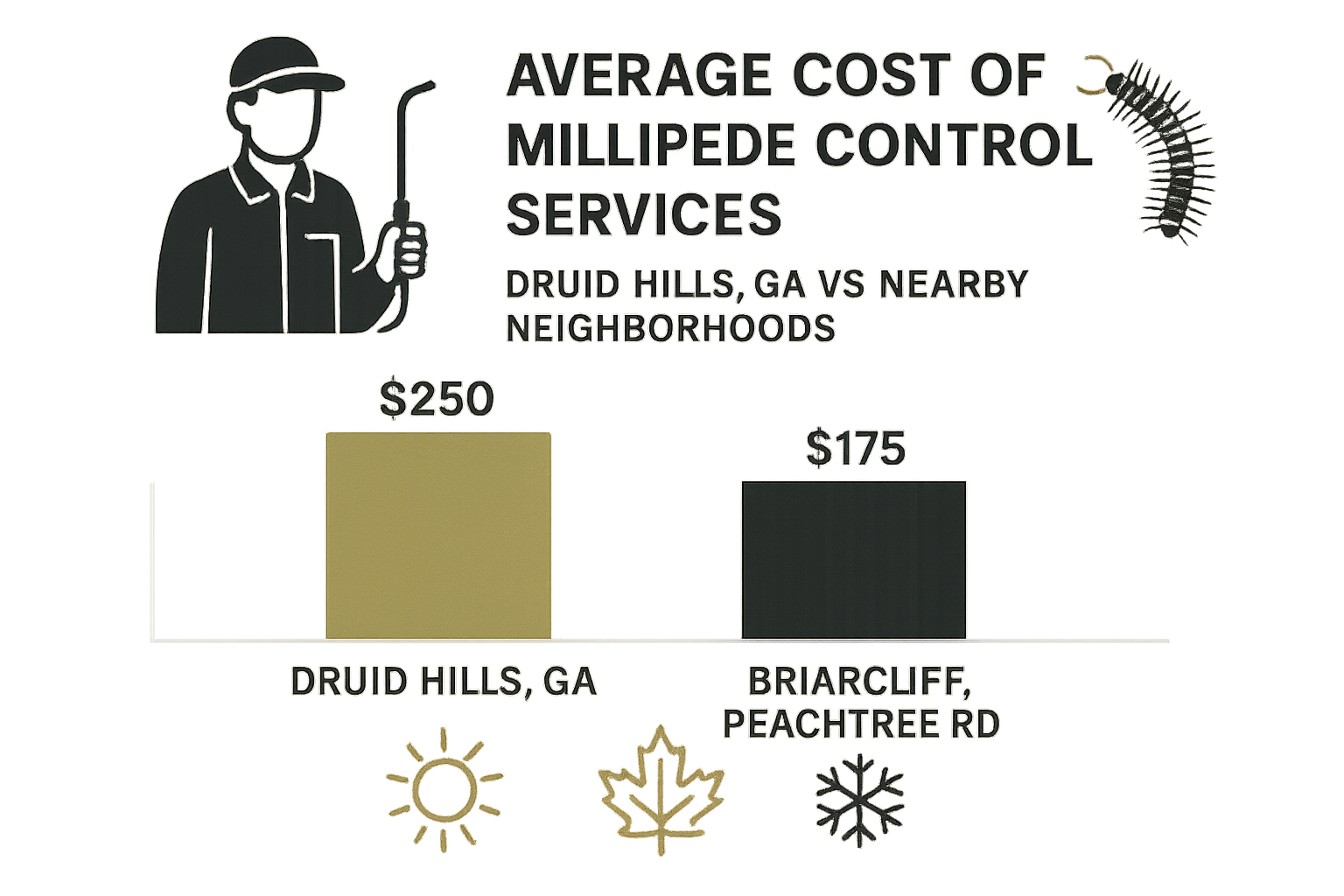
The bar‑chart above illustrates the average out‑of‑pocket expense for a standard treatment package in three local markets. Druid Hills sits at roughly $210, while Briarcliff averages $185 and the high‑traffic Peachtree Road corridor climbs to $235. Premiums on Peachtree Road often reflect larger lot sizes and the need for more frequent seasonal treatments.
Key Variables That Drive Price Differences
Even within the same zip code, a homeowner’s quote can swing dramatically based on the following factors:
- Property Size: Larger homes or expansive lawns require more product and longer labor hours. A 2,500‑sq‑ft residence typically costs 20‑30% more than a 1,500‑sq‑ft cottage.
- Infestation Severity: Light sightings may be handled with a single spot‑treatment, while a heavy, multi‑zone infestation calls for a full‑property soil drench and repeated follow‑ups.
- Treatment Type: Eco‑friendly botanical sprays often carry a modest premium over conventional chemicals, but they appeal to homeowners with pets or children.
- Service Frequency: Annual contracts lock in a lower per‑visit rate and include seasonal “urgency” visits (e.g., after heavy rains). One‑time services lack that discount.
How to Evaluate a Quote Like a Pro
When you receive a written estimate, run through this quick checklist:
- Is every service component itemized? Look for separate line items for inspection, treatment, and follow‑up.
- Does the quote specify the type of product used and its EPA registration number?
- Are guarantee terms clearly stated (e.g., “30‑day re‑treatment at no extra charge”)?
- Is the company’s licensing information visible? A valid Georgia pest‑control license builds credibility.
- Are there any hidden fees—such as travel surcharges for properties beyond a 10‑mile radius?
Anthem Pest Control’s Transparent Pricing Model
Anthem Pest Control distinguishes itself by offering a flat‑rate, all‑inclusive package for Druid Hills homeowners. The standard “Millipede Shield” plan includes:
- Pre‑season inspection ($55)
- Full‑property perimeter spray and soil drench ($190)
- Two post‑treatment follow‑up visits ($70 total)
- 30‑day re‑treatment guarantee (no extra charge)
All together, the package totals $315—well within the regional average and free of surprise add‑ons. Anthem also runs seasonal discounts for residents who schedule before the first heavy rain of the year, and bundled offers that combine millipede control with ant or rodent prevention for an additional $40 savings.
Bottom Line for Druid Hills Homeowners
Understanding the components that shape a millipede control quote empowers you to compare offers objectively. Druid Hills pricing aligns closely with neighboring Briarcliff, but stays modest compared to the premium on Peachtree Road. By demanding itemized estimates, checking licensing, and choosing a provider like Anthem Pest Control that practices upfront pricing, you can protect your home without overpaying.
Protect Your Home with Professional Millipede Management
Millipedes may look harmless, but when they swarm in the spring and early summer they can clog gutters, damage mulch, and create an unsightly mess around your foundation. By now you should recognize the tell‑tale signs: dark, shiny bodies in damp corners, clusters under leaf litter, and increased activity after heavy rain. Knowing the seasonal peak—typically March through June in Druid Hills—gives you a crucial window to act before the infestation spreads.
Quick Recap: What to Look For and How to Respond
- Identification signs: elongated, many‑legged insects moving in groups, often found near moisture sources.
- Seasonal peaks: early spring emergence after the first rains, with a secondary surge in late summer.
- Effective control strategies: proper yard sanitation, targeted perimeter treatments, and moisture reduction around foundations.
While DIY measures—like removing leaf piles and sealing cracks—help, professional intervention delivers results you can rely on. Trained technicians apply EPA‑approved products that penetrate soil and treat hidden entry points, all while respecting the safety of your family and pets.
Why Early, Professional Action Saves You Money
Delaying treatment often means larger colonies, more extensive damage, and higher labor costs. An early inspection can pinpoint hotspots and allow us to apply a focused treatment plan, which typically costs less than a full‑scale remediation later in the season. Moreover, our transparent pricing eliminates surprise fees, so you know exactly what you’re paying for from the start.
Ready for a Millipede‑Free Home?
Take the next step toward a cleaner, safer yard by scheduling a free, no‑obligation inspection with Anthem Pest Control. Our team will assess your property, explain the recommended approach, and provide a clear quote—no hidden charges.
Call us today at 877‑371‑8196 or visit Anthem Pest Control to book your inspection. We pride ourselves on delivering safe, effective, and affordable solutions that keep millipedes—and other pests—out of your home.
With a nationwide service network and a commitment to 100 % customer satisfaction, Anthem Pest Control stands behind every treatment. Trust our expertise to protect your Druid Hills residence year after year.