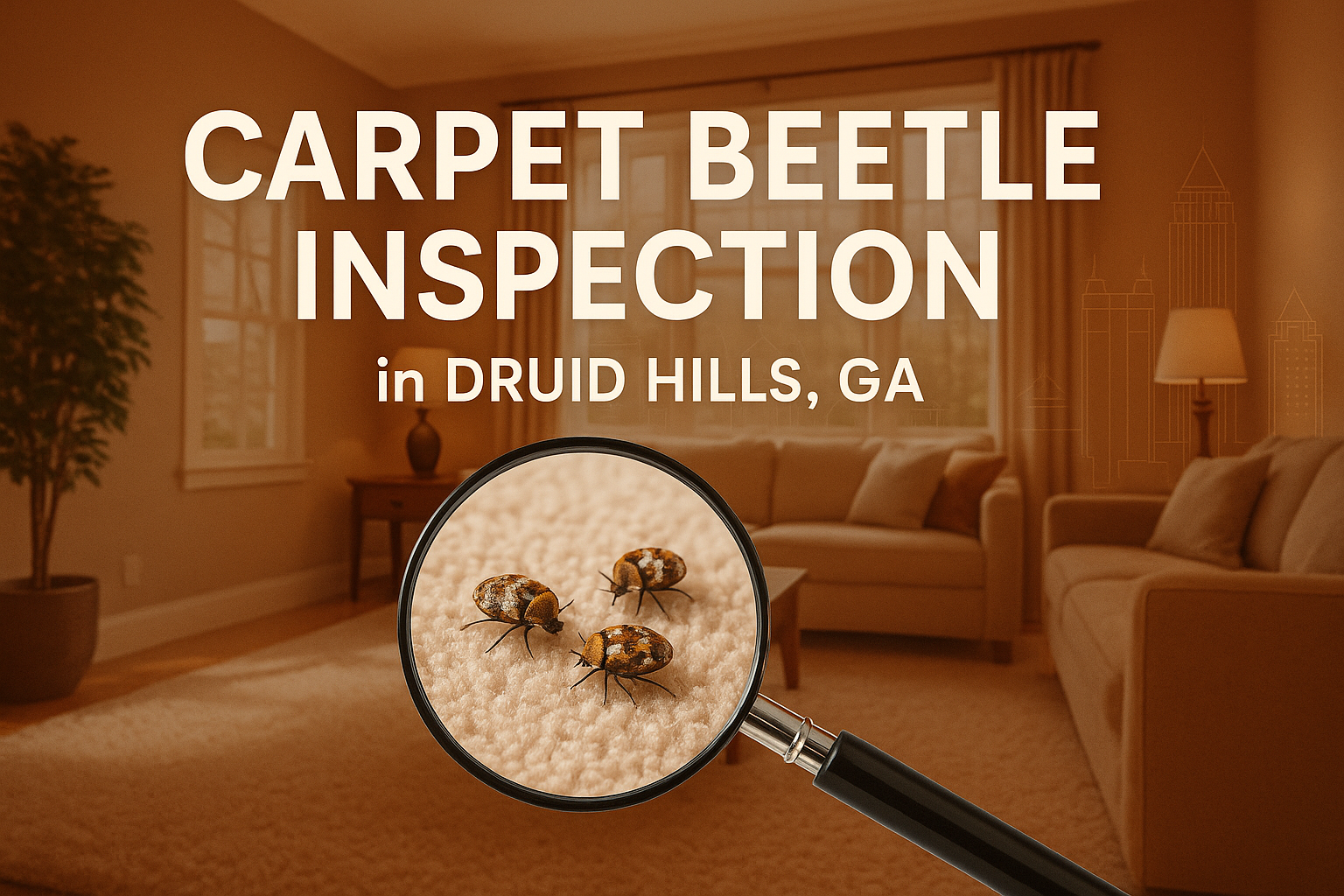
Carpet Beetle Inspection in Druid Hills: What to Expect

Carpet beetles are small, oval‑shaped insects—usually 2 to 5 mm long—whose larvae feast on natural fibers such as wool, silk, feathers, and even pet hair. While the adults are harmless to humans, the hungry caterpillars can create unsightly holes, weaken upholstery, and trigger allergic reactions for sensitive occupants. In a home like yours, an unnoticed infestation can turn a cherished rug into a costly replacement.
In the next few minutes, we’ll walk you through the exact steps Anthem Pest uses during a carpet‑beetle inspection in Druid Hills—from a visual sweep of vulnerable rooms to the use of a handheld UV light that reveals hidden larvae. You’ll learn the warning signs that scream “infestation,” and we’ll tell you exactly when it’s time to pick up the phone and call a professional. Think of this guide as your local, homeowner‑focused roadmap to keeping carpet beetles out of your home for good.
What Are Carpet Beetles?
Carpet beetles are small, oval‑shaped insects that most homeowners never see—until they start finding mysterious holes in clothing, blankets, or upholstery. In Georgia, two species turn up most often: the varied carpet beetle (Anthrenus verbasci) and the black carpet beetle (Attagenus unicolor). Both thrive in the warm, humid conditions that characterize the Druid Hills area.
Common Georgia Species
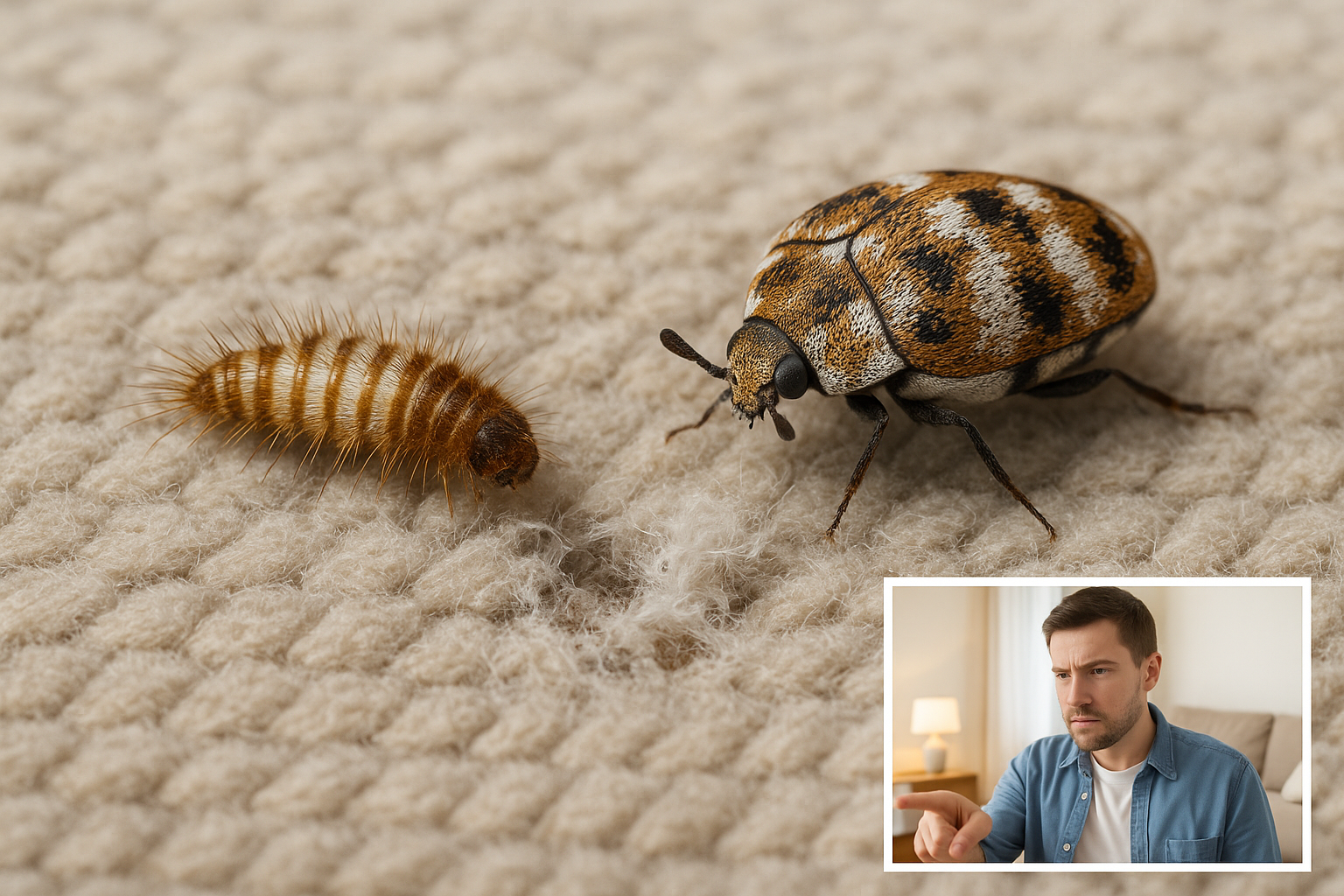
- Anthrenus verbasci – the varied carpet beetle, recognized by its mottled black, white, and orange pattern.
- Attagenus unicolor – the black carpet beetle, uniformly dark and often found in stored products as well as fabrics.
Four‑Stage Life Cycle
Understanding the beetle’s life cycle helps you spot problems early. The cycle consists of four distinct stages:
- Egg: Females lay 30‑70 eggs in dark, undisturbed places such as closets, under baseboards, or in pet bedding.
- Larva: After 10‑20 days, eggs hatch into creamy, hair‑covered larvae. This is the only stage that feeds on natural fibers—wool, silk, fur, and even dead insects—causing the damage homeowners notice.
- Pupa: Fully grown larvae spin a cocoon and transform into pupae. The pupal stage can last several weeks, depending on temperature.
- Adult: Emergent adults live only a few weeks, primarily to mate and lay the next generation of eggs. Adults rarely damage fabrics, but they can travel easily, spreading infestations.
The larval stage is the troublemaker, and in Druid Hills the combination of mild winters and humid summers can accelerate development. Warm, moist environments shorten the egg‑to‑larva interval and allow multiple generations to overlap, meaning damage can accumulate quickly if left unchecked.
EPA statistic: According to the U.S. Environmental Protection Agency, carpet beetles are responsible for up to 30 % of household fabric damage annually. This underscores why early detection and professional inspection are essential, especially in climate‑sensitive neighborhoods like Druid Hills.
How to Spot Carpet Beetle Activity
Carpet beetles are tiny, but the damage they cause can be noticeable fast. Catching the problem early saves you time, money, and the look of your favorite rooms. Below are the tell‑tale signs that a beetle colony has taken up residence in your home.
Visual clues to watch for
- Small, round holes in natural fibers such as wool, silk, or cashmere. The openings are usually 1‑2 mm in diameter and appear irregularly across a garment or carpet.
- Irregular lint or “cobweb” that looks like a fine, silky dust. It often gathers near seams, under furniture, or in the corners of closets.
- Shed skins (exuviae) of the larvae. These are translucent, oval shells that drop off as the caterpillar grows.
- Fecal pellets that resemble tiny specks of pepper. They are most commonly found on the underside of rugs, in pillowcases, or near stored blankets.
These indicators often appear together, but even one sign warrants a closer look.
Real‑world example from Druid Hills
When the Martins moved into a historic home on Ponce de Leon Avenue, they noticed a faint, powdery residue along the window seat where they kept a few throw pillows. A quick flashlight inspection revealed several shed skins and a handful of pepper‑like pellets. The larvae were only a few millimeters long, yet their presence signaled that adult beetles had been laying eggs for weeks. Within a day, they discovered a few active larvae crawling between the seams of a wool throw. The family called Anthem Pest Control, and a professional inspection confirmed a moderate carpet beetle presence that was limited to the first‑floor sitting area.
According to the CDC, 1 in 5 households with pets notice beetle damage within the first year. Pets often transport adult beetles or larvae on their fur, making the statistic especially relevant for dog and cat owners in Druid Hills.
Early detection is the most effective defense. Spotting the clues above within days of moving in—or after a new pet arrives—allows a targeted treatment that prevents the insects from spreading to upholstery, curtains, and stored clothing. If you see any of these signs, schedule a professional inspection promptly. A timely response can keep your home’s fabrics intact and your peace of mind intact.
Why Druid Hills Is Particularly Vulnerable
One of the biggest reasons carpet beetles thrive in Druid Hills is the micro‑climate created by the neighborhood’s dense tree canopy. The shade from mature oaks, magnolias, and dogwoods traps moisture, keeping indoor humidity levels higher than in more open suburbs. Carpet beetle larvae love that extra moisture because it speeds up the breakdown of natural fibers, turning them into a buffet.
Many homes in Druid Hills were built in the early‑20th century, and a surprising number still feature original wool, silk, or cotton rugs and wall hangings. Those natural‑fiber carpets are exactly what carpet beetles target, providing both food and shelter. When owners replace these with synthetic fibers, the beetles lose a key resource.
The neighborhood’s proximity to green spaces—especially the Emory University Arboretum and nearby parklands—adds another layer of risk. Outdoor beetles are constantly drawn to the abundant pollen and shed animal hair found in these areas, and they can easily wander indoors through open doors or ventilation gaps.
Specific pockets such as the historic district along Ponce de Leon Avenue, the Briarcliff enclave, and the core of the Druid Hills Historic District have reported the highest concentrations of beetle activity. The 2023 Fulton County pest‑trend report, issued by the local extension service, highlighted a 42 % increase in carpet‑beetle sightings in these exact zones compared with the county average.
Understanding these local factors helps homeowners see why a routine inspection is more than a precaution—it’s a necessary step to protect cherished furnishings before an infestation takes hold.
The Carpet Beetle Inspection Process
1. Pre‑visit questionnaire to assess risk factors
Before the technician steps inside, you’ll receive a short questionnaire—either online or over the phone. It asks about recent moves, pet ownership, storage habits, and any previous pest activity. This information lets the inspector prioritize high‑risk areas, such as closets with seasonal clothing, attics with insulation, or basements that stay damp.
2. Visual walkthrough of each room
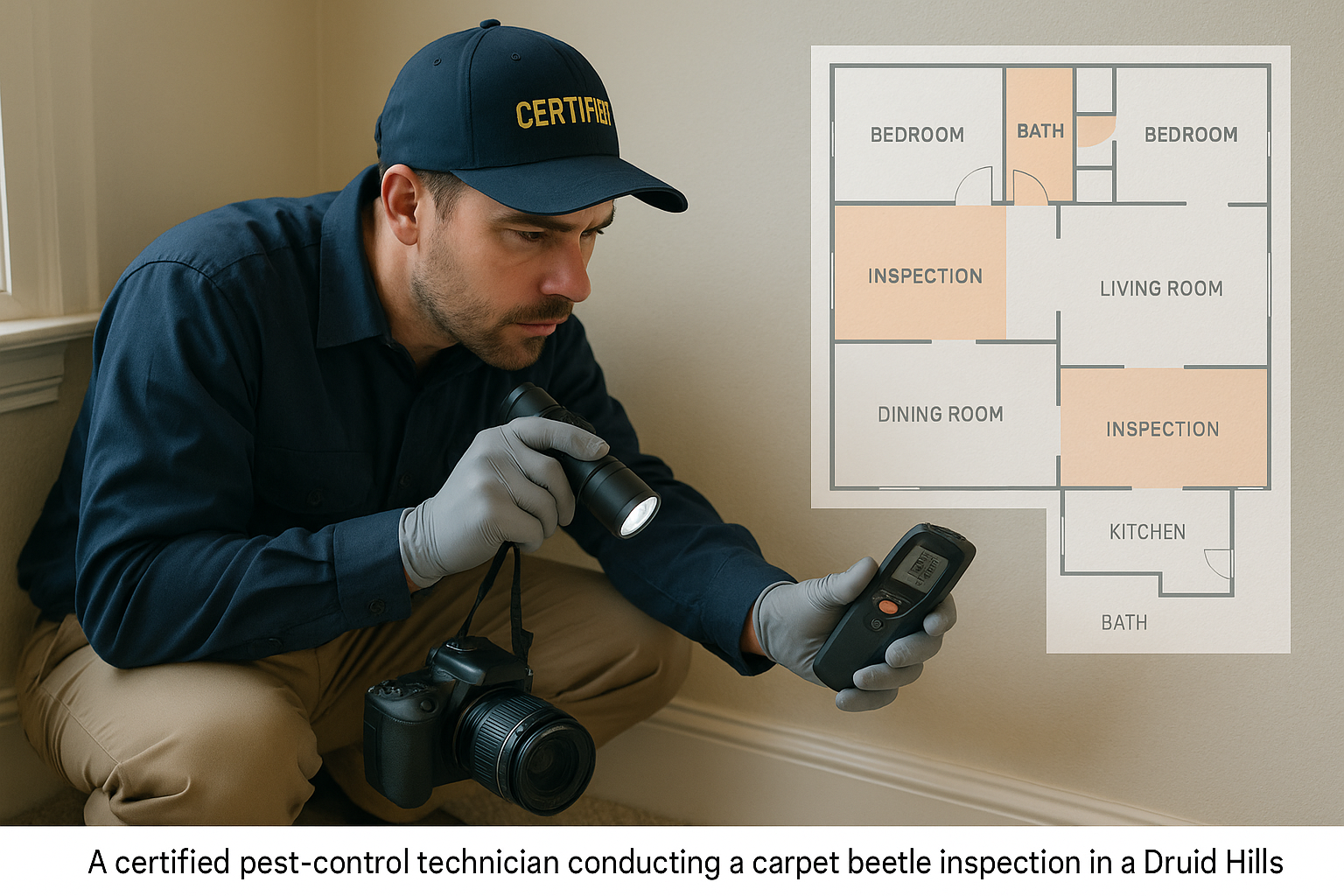
Armed with a UV flashlight, moisture meter, and handheld camera, the technician conducts a room‑by‑room visual sweep. The UV light reveals shed larval skins and adult beetle exoskeletons that are invisible to the naked eye. The moisture meter flags damp spots where larvae thrive, while the camera documents any evidence for your records and for follow‑up treatment planning.
3. Deployment of detection tools
After the initial visual scan, the inspector places targeted detection devices:
- Sticky traps positioned along baseboards and under furniture to capture wandering adults.
- Pheromone lures that attract specific carpet beetle species, increasing trap efficacy.
- Portable microscope used on‑site to examine suspicious debris for characteristic larval hairs and mandibles.
These tools work together to confirm an active infestation and to gauge its severity.
4. Typical time frame
For an average 2,000‑sq‑ft home in Druid Hills, the entire inspection usually takes 45–60 minutes. Larger properties or homes with extensive storage areas may require a bit more time, but the technician will keep you informed of any extensions.
5. Cost range
Anthem Pest pricing for a standard carpet beetle inspection falls between $150 and $300, depending on the size of the home and any additional services you request (such as immediate treatment or a detailed report). The quote is transparent, with no hidden fees, so you know exactly what you’re paying for.
Why a professional inspection beats DIY spot checks
DIY inspections often rely on guesswork and limited tools, which can miss hidden larvae deep within wall voids or under floorboards. A certified technician’s use of UV light, moisture detection, and microscopic analysis ensures no life stage goes unnoticed. This thoroughness not only identifies current infestations but also highlights conditions—like excess humidity—that could invite future problems, allowing Anthem Pest to recommend preventive measures alongside any necessary treatments.
When to Call a Pro
- Density threshold: More than five live larvae spotted within a 10 sq ft area (for example, a single carpet square or a bedroom rug).
- Spread of damage: Visible feeding marks or holes extending beyond one room, indicating that beetles have migrated.
- Adult presence: Seeing adult carpet beetles—small, oval, and often mottled—means the life cycle is completing and new generations are on the way.
Attempting a DIY cure at this stage often leads to incomplete eradication. Over‑the‑counter sprays may knock back a few insects, but they rarely reach hidden larvae inside seams, under baseboards, or within stored fabrics. This partial treatment leaves a breeding ground that can rebound within weeks, turning a manageable problem into a costly, recurring battle.
Anthem Pest understands how quickly carpet beetles can multiply. That’s why we guarantee a 24‑hour response window for any Druid Hills caller who reports these warning signs. Our technicians arrive equipped with targeted, EPA‑approved products and the expertise to locate hidden infestations, ensuring a thorough, long‑lasting solution.
Quick tip: Before the technician arrives, take clear photos of the affected areas, note the locations where you’ve counted larvae, and collect any damaged items in a sealed bag. This documentation helps our team pinpoint hotspots, speeds up the treatment plan, and gives you a record of the infestation for insurance or warranty purposes.
Treatment Options and Pricing
When a carpet‑beetle infestation is confirmed in Druid Hills, the next step is choosing a safe, effective, and affordable solution. Anthem Pest offers three primary pathways—chemical sprays, heat‑based eradication, and an integrated blend—each designed to match different budgets, home layouts, and homeowner preferences. Knowing the advantages and drawbacks of each method helps you avoid surprise costs and ensures the chosen approach aligns with your family’s health concerns and the structural integrity of your home.
Chemical Treatments
Licensed technicians apply EPA‑registered insecticides such as bifenthrin or permethrin directly to carpets, baseboards, and hidden crevices where larvae reside. These products leave a residual barrier that continues to kill beetles for weeks, making them a fast‑acting option for most homes. The main downside is the potential for allergic reactions in sensitive occupants and a brief evacuation period after application. Prices typically range from $200 to $400 per treatment, depending on square footage and infestation severity.
Non‑Chemical Heat Treatment
Heat treatment raises the temperature of the affected area to at least 120 °F for a minimum of four hours, a level lethal to every life stage of carpet beetles. Heat penetrates deep into carpet fibers, padding, and even wooden subfloors, ensuring no hidden pockets survive. While completely chemical‑free, this method carries a higher upfront cost and requires temporary removal of heat‑sensitive items. Most Druid Hills homeowners see costs between $350 and $600 for a full‑home heat session, which includes setup, monitoring, and post‑treatment verification.
Integrated Approach
An integrated plan combines spot‑treatments, carpet encasement, and preventive barriers to maximize effectiveness while minimizing chemical exposure. Spot‑treatments target high‑risk zones—closets, under furniture, pet bedding—with a low‑dose spray, followed by encasement that traps any remaining insects. Preventive perimeter fogging or residual dust creates a protective shield against future invasions. This strategy often lowers overall cost because fewer full‑home applications are needed. Typical pricing runs from $250 for a basic spot‑treatment bundle up to $500 for a comprehensive integrated package that includes encasement and barrier treatments.
Anthem Pest Pricing Guarantees
Anthem Pest backs its service with transparent guarantees that simplify budgeting. The company offers a $99 inspection‑to‑treatment guarantee: if an inspection reveals carpet‑beetles, the same technician can begin treatment for just $99, covering the first EPA‑registered application. Full‑service treatment packages start at $250 and include follow‑up visits, monitoring, and a written warranty. These rates align with the 2024 National Pest Management Association (NPMA) average treatment cost of $300‑$450, ensuring Druid Hills residents receive competitive pricing without hidden fees.
Choosing the Right Method
Your decision should reflect your home’s layout, infestation severity, and comfort with chemicals. For most families, a targeted chemical spot‑treatment followed by carpet encasement offers a quick, cost‑effective balance. If you prefer a zero‑chemical solution, heat treatment guarantees complete eradication but at a higher price point. Partnering with a licensed provider like Anthem Pest ensures the work meets EPA standards and that you receive a clear, written estimate before any service begins.
| Option | Pros | Cons | Price Range |
|---|---|---|---|
| Chemical Treatment | Fast acting, residual protection, widely available | Potential allergens, brief evacuation needed | $200 – $400 per treatment |
| Heat Treatment | 100% chemical‑free, kills all life stages, no residue | Higher cost, requires removal of heat‑sensitive items | $350 – $600 per session |
| Integrated Approach | Reduced chemical use, comprehensive coverage, preventive barrier | More coordination, may involve multiple visits | $250 – $500 per package |
Prevention Tips for Homeowners
Carpet beetles may be tiny, but they can cause big damage to your favorite blankets, upholstery, and even decorative pillows. The good news is that most infestations can be stopped before they start—simply by adopting a few low‑cost, routine habits. Below are the everyday actions that keep beetles out of your home for good.
Weekly Vacuuming
Make a habit of vacuuming carpets, rugs, and upholstered furniture at least once a week, paying special attention to high‑traffic zones such as hallways, entryways, and family rooms. Use the hose attachment to reach crevices, under cushions, and along baseboards where larvae love to hide. Empty the vacuum bag or canister outdoors immediately to prevent any captured beetles from re‑infesting your home.
Secure Natural Fibers
Wool, silk, cashmere, and other natural fibers are a beetle’s favorite buffet. Store these items in airtight containers—plastic bins with tight‑fitting lids or heavy‑duty vacuum‑sealed bags work best. If you keep seasonal blankets or clothing in closets, add a few silica packets or cedar blocks to further deter moisture and scent that attract adult beetles.
Seasonal Deep‑Cleaning
After the first frost, adult carpet beetles emerge and begin searching for warm indoor shelters. Schedule a deep‑cleaning session in late fall: move furniture, steam‑clean carpets, and wash all removable covers in hot water (at least 120°F). This intensive sweep removes any hidden eggs or larvae that escaped weekly vacuuming.
Professional Annual Maintenance Plan
For homeowners who prefer a set‑and‑forget solution, Anthem Pest Control offers an annual maintenance plan priced between $120 and $180 per year. The plan includes a pre‑emptive inspection, targeted treatments around vulnerable entry points, and a follow‑up visit to verify that beetle activity remains absent. Think of it as a health check‑up for your home’s fabric ecosystem.
Local Tip: Trim Tree Branches Near Windows
In Druid Hills, many beetles hitch a ride on tree limbs that brush against windows and doors. By trimming branches at least six inches away from openings, you reduce the number of insects that can slip inside during windy evenings. This simple landscaping tweak complements your indoor defenses and helps keep the beetle population outside where it belongs.
Implementing these straightforward steps—regular vacuuming, airtight storage, seasonal deep‑cleaning, a professional maintenance plan, and smart landscaping—creates multiple barriers that carpet beetles struggle to cross. Consistency is key; the more you reinforce these habits, the less likely you’ll ever see a beetle‑related stain on your favorite sofa.
Seasonal Timing: When Is the Risk Highest?
Carpet beetles follow a predictable seasonal rhythm that can help you stay one step ahead of an infestation. Adult beetles emerge from their hidden larval homes in late spring and are most active through early summer, buzzing around windows, light fixtures, and outdoor clothing as they search for mates and new feeding sites.
Once they have mated, females lay eggs that hatch into larvae—the true culprits that chew through natural fibers. These larvae thrive in the cooler, more humid conditions of fall, where they multiply rapidly in closets, under carpets, and inside stored fabrics. By the time winter arrives, the larval population peaks, making this the period when damage is most likely to become noticeable.
Because the life cycle is split between two distinct windows, the smartest inspection schedule targets both. We recommend a thorough carpet‑beetle inspection in early spring (late March to early April) before the adult flight period begins. This allows technicians to locate any overwintering larvae and treat them before they disperse. A follow‑up inspection in late summer (August‑early September) catches any late‑emerging adults and gives you a chance to address fresh egg deposits before the fall larval surge.
The U.S. Environmental Protection Agency’s seasonal pest activity chart confirms this pattern, showing a spike in adult activity in May‑June and a larval peak in September‑October. View the EPA chart here for a visual guide to timing your preventive measures.
By aligning inspections with these high‑risk windows, Druid Hills homeowners can dramatically reduce the chance of a costly carpet‑beetle outbreak and keep their homes looking pristine year‑round.
Choosing Anthem Pest in Druid Hills
When a carpet‑beetle problem shows up, you need a partner who combines official credentials with real‑world results. Anthem Pest in Druid Hills brings both. All of our technicians are EPA‑registered applicators and hold the state licenses required to treat residential infestations safely and legally. This dual certification means we follow the strictest safety protocols while delivering the most effective treatments.
- EPA‑registered applicators – approved to use low‑impact chemicals.
- Georgia state‑licensed technicians – fully vetted and continuously trained.
- Annual continuing‑education – keeping us ahead of emerging pest threats.
Our neighbors on Briarcliff Rd can attest to the difference. Below are a couple of recent comments from homeowners who let us handle their carpet‑beetle inspections:
“Anthem Pest arrived on schedule, explained every step, and the beetles were gone within days. I felt safe knowing they used low‑toxicity products in our home.” – Linda M., Briarcliff Rd
“Transparent pricing, a clear satisfaction guarantee, and a friendly crew. I’ll never call anyone else for pest control.” – James K., Briarcliff Rd
We pride ourselves on using low‑toxicity, EPA‑approved solutions that protect your family and pets while eradicating the pest. Every service comes with a satisfaction guarantee: if the beetles return within the warranty period, we’ll retreat at no extra cost. Our pricing is straightforward—no hidden fees, no surprise add‑ons—so you know exactly what you’re paying before we start.
Ready to protect your carpet and your peace of mind? Call us today at 877‑371‑8196 or visit anthempest.com to schedule a free inspection. Anthem Pest is the trusted local expert that Druid Hills homeowners rely on.
FAQ About Carpet Beetles
Do carpet beetles damage furniture?
Yes. The larvae of carpet beetles feast on natural fibers such as wool, silk, cashmere, and even feather‑filled cushions. Over time they chew tiny holes, create a ragged look, and can weaken the structure of upholstery, blankets, and stored clothing. Synthetic fabrics are less attractive, but mixed‑material items can still suffer if the natural component is exposed. You might see small holes or powdery residue near seams—signs of an active infestation. Professional treatment can stop further loss.
How long does treatment take?
For a typical single‑family home in Druid Hills, a professional inspection and treatment usually takes between one and two hours. The exact time depends on the size of the property, the severity of the infestation, and whether we need to treat interior spaces, closets, and storage areas. We ask you to clear clutter and move lightweight items so spray reaches hidden crevices; we then do a quick walkthrough.
Are pets safe during treatment?
We use EPA‑approved products that are formulated to be pet‑friendly when applied according to label directions. Pets should be kept out of treated rooms for the short drying period—generally 30 minutes to an hour—after which they can safely return. If you prefer a non‑chemical approach, we also offer heat or vacuum‑based treatments that pose no risk to pets. Keep windows open after application to clear residual odor.
Can I prevent re‑infestation after treatment?
Absolutely. Follow the prevention checklist we outlined earlier: vacuum regularly, store seasonal clothing in sealed containers, repair any damaged screens or cracks, and keep humidity levels low. Schedule a follow‑up in the fall, when beetles emerge, and monitor closets and under‑furniture areas. Early detection lets us intervene before a small problem grows.
Take Action to Protect Your Home Today
First, remember the basics: you can spot carpet beetles by their tiny, oval bodies and the tell‑tale holes they leave in fabrics; a thorough inspection walks through closets, under furniture, and along baseboards, looking for larvae, shed skins, and fecal specks; red flags include unexplained stains on carpets, damaged wool, and a persistent, musty odor; and a professional treatment not only eradicates the current infestation but also seals entry points to prevent future outbreaks.
Choosing Anthem Pest gives you the peace of mind that comes from knowing a certified expert is safeguarding your home with proven, low‑toxicity solutions.
Ready for a free, no‑obligation carpet beetle inspection in Druid Hills? Call us today at 877‑371‑8196 or visit our website for a quick quote.
Our affordable pricing, transparent estimates, and deep local knowledge mean you get effective protection without surprise costs—just a healthier home for you and your family.