Recognizing Termite Infestation Signs in Your Home
Georgia’s warm, humid climate creates an ideal playground for two termite culprits—subterranean termites and dry-wood termites—which is why effective termite control Druid Hills GA homeowners rely on is so important. Subterranean termites live underground and travel to your house through tiny mud tubes, while dry-wood termites colonize the wood itself, needing no soil contact. Knowing which species you’re likely dealing with helps you spot the right clues before the damage becomes costly.
Visual Damage Patterns to Watch For
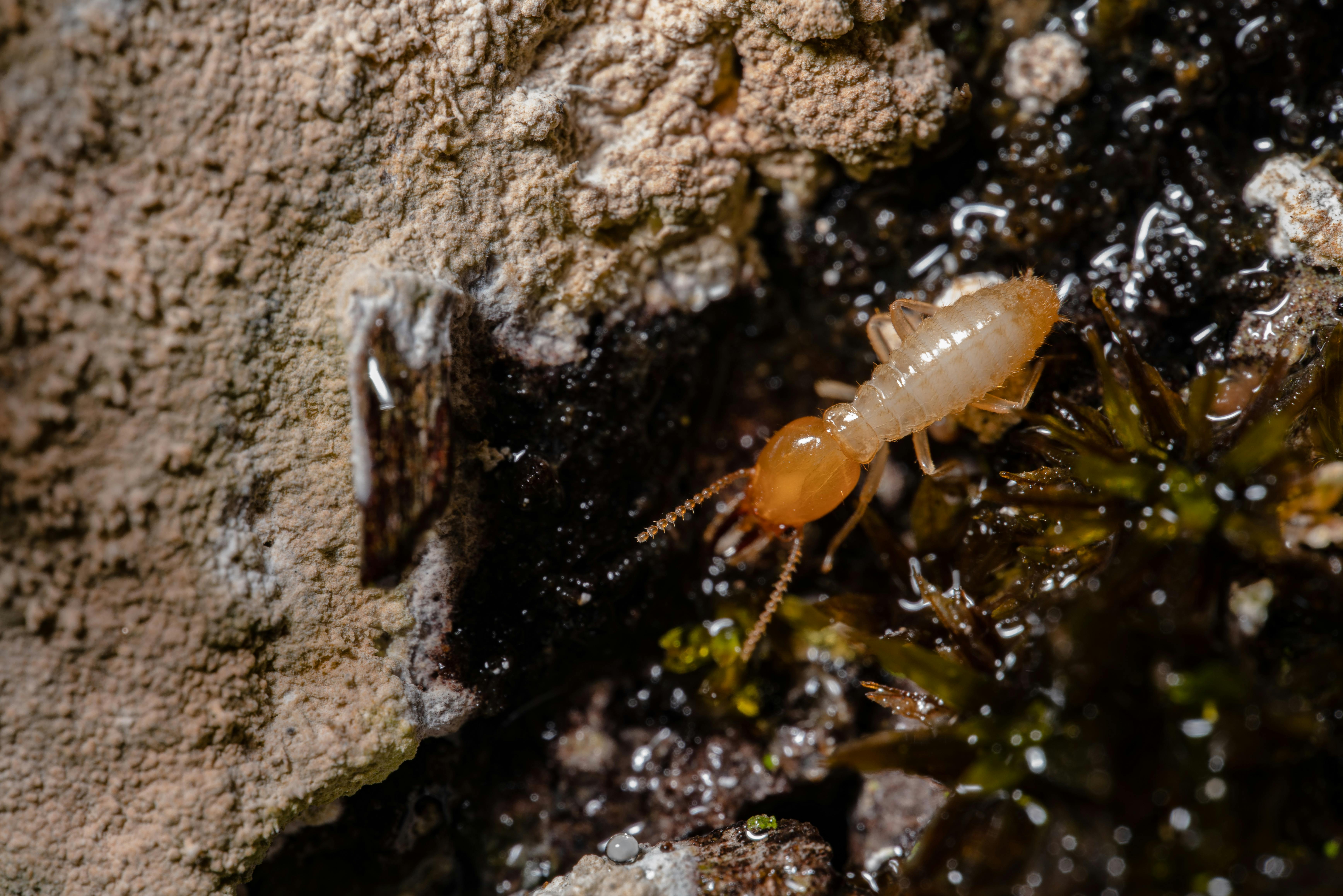
Termites are quiet workers, but they leave a distinct trail. Look for mud tubes along foundation walls, crawl spaces, or the underside of decks—these are the highways subterranean termites use to reach food sources. Dry‑wood termites, on the other hand, create “kick‑out” holes where they expel frass (tiny wood pellets). Inside the wood, you may notice a hollow, papery sound when tapped or a honey‑comb‑like interior once a piece is removed. These patterns are often subtle, so a close eye can make all the difference.
Simple DIY Inspection Checklist
Before you call a professional, you can perform a quick walkthrough:
- Baseboards & trim: Pull back a section and feel for soft, spongy wood or a faint mud line.
- Window and door frames: Check for cracks or gaps where mud tubes might be emerging.
- Outdoor wood piles: Stacked firewood or lumber can attract dry‑wood termites; inspect for kick‑out holes or frass.
- Crawl spaces & basements: Shine a flashlight along joists and look for mud tubes or discarded wings from swarmers.
Take note of any findings, snap photos if possible, and keep a record of the locations. This documentation speeds up the professional assessment and helps pinpoint the infestation’s extent.
Why a Professional Confirmation Is Crucial
Not every hollowed piece of wood or mysterious dust is termite activity. Moisture damage, carpenter ants, and even normal wood shrinkage can mimic termite signs. A licensed pest specialist uses moisture meters, boroscopes, and calibrated probes to differentiate true termite damage from look‑alikes. Confirming the infestation early prevents unnecessary treatments and ensures you invest in the right solution—whether that’s a targeted bait system for subterranean termites or localized fumigation for dry‑wood colonies.
EPA Guidance on Termite Identification
The U.S. Environmental Protection Agency offers a concise, science‑backed overview of termite biology and identification methods. Homeowners can reference the EPA’s termite page for additional visual guides and safety tips before scheduling an inspection. Visit the EPA’s resource here: EPA – Termite Identification.
Early detection isn’t just about saving money; it protects the structural integrity of your home and prevents the spread to neighboring properties. By familiarizing yourself with Georgia’s common termite species, recognizing the tell‑tale damage patterns, and performing a straightforward visual check, you set the stage for a swift, effective response—ideally with the expertise of a trusted local provider like Anthem Pest Control.
Effective Termite Treatment Options for Homeowners
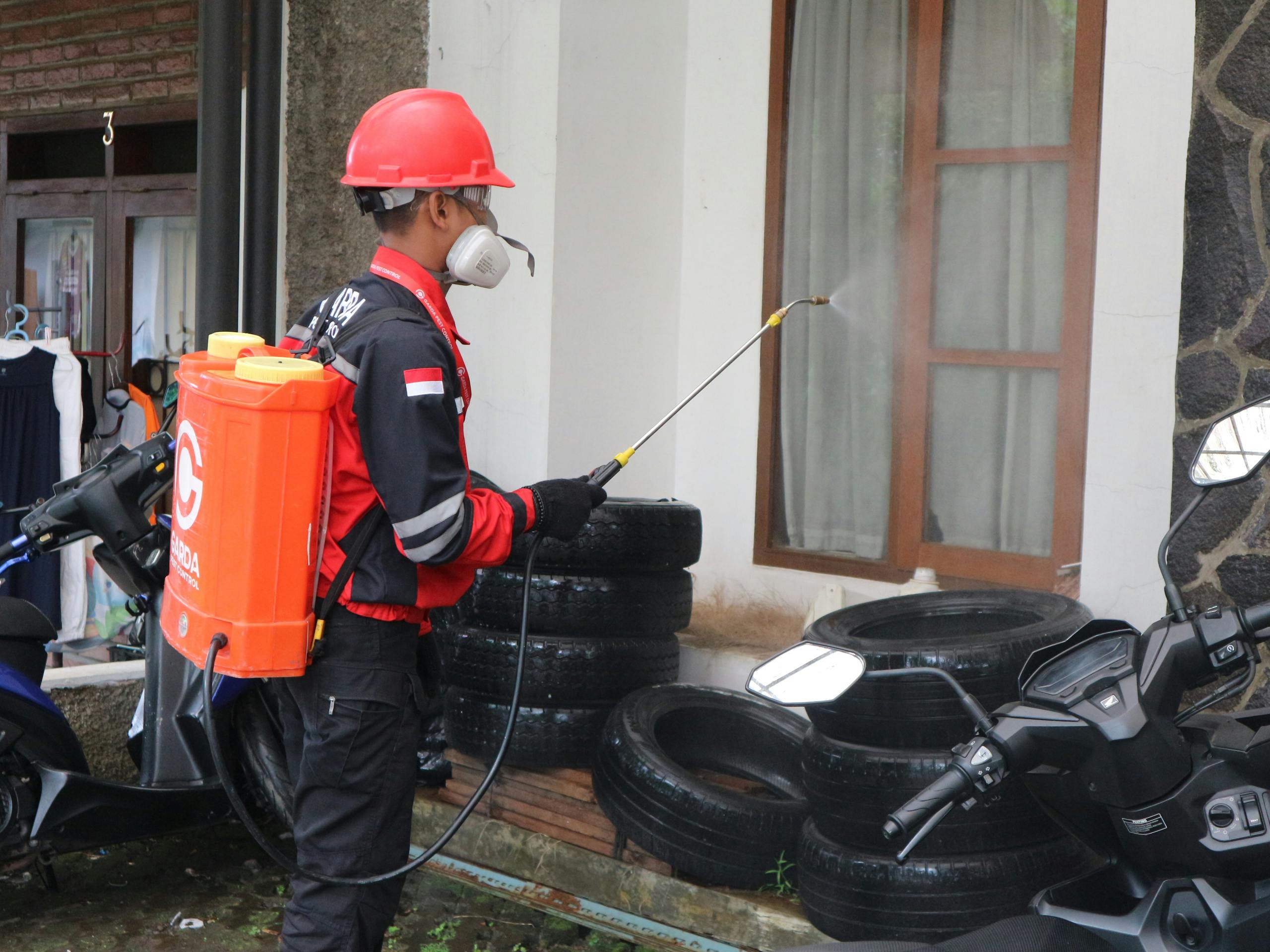
DIY Termiticide Kits: What You Get and What You Miss
Do‑it‑yourself kits typically contain a single active ingredient such as fipronil or imidacloprid. The label walks you through mixing the concentrate, loading a sprayer, and applying a perimeter barrier around the foundation. While the process sounds straightforward, the reality is that a homeowner must achieve consistent coverage, maintain the correct concentration, and reapply after heavy rain or landscaping work. Most kits offer protection for only 1–2 years, and they lack the deep soil penetration that professional-grade products provide.
Professional Treatment Methods
Licensed technicians bring three proven approaches to the table:
- Liquid termiticides—engineered to flow through soil and wood, these formulations (often based on chlorpyrifos alternatives like Premise or Taurus SC) create a chemical barrier that can last 5 years or more.
- Baiting systems—stations containing cellulose and a slow‑acting insecticide attract foraging termites. Colonies feed the bait back to the mound, eventually collapsing the infestation from the inside.
- Structural fumigation—a gas such as sulfuryl fluoride fills the entire home, eradicating hidden colonies in wood framing, furniture, and subflooring. This method is reserved for severe, widespread attacks.
Each professional technique is calibrated to local soil type, moisture levels, and the specific termite species found in Druid Hills, ensuring optimal efficacy.
Safety Gear and Precautions
Whether you’re spraying a DIY kit or a pro‑applied liquid, personal protection is non‑negotiable. Minimum gear includes:
- Full‑face respirator with organic vapor cartridges (especially for liquid termiticides).
- Chemical‑resistant gloves and long sleeves to prevent skin absorption.
- Protective eyewear or a safety helmet with a face shield when handling fumigants.
Professionals also follow strict containment protocols: they seal vents, use negative‑pressure machines during fumigation, and perform post‑treatment air quality checks. Homeowners attempting DIY should at least ventilate the area for 24 hours and keep children and pets away.
Longevity and Warranty: DIY vs. Pro
DIY barriers often degrade after a single season, leaving you vulnerable to reinfestation. Most manufacturers offer a limited 90‑day guarantee that the product was applied correctly, but they do not cover structural damage caused by termites.
In contrast, reputable companies like Anthem Pest Control back their services with multi‑year warranties—typically 3 years for liquid barriers and up to 5 years for baiting programs. The warranty not only covers retreatment but also includes a written guarantee that the property will remain termite‑free, providing peace of mind and potential resale value.
Cost‑Benefit Snapshot
At first glance, a DIY kit may seem like the cheapest route, ranging from $80 to $150 for a single‑family home. Professional treatments, however, start around $1,200 for a liquid barrier and can rise to $2,500 for comprehensive baiting plus a warranty. When you factor in the hidden costs of re‑applications, potential damage repairs, and the value of a warranty, the professional investment often pays for itself within the first few years.
Our upcoming infographic breaks down these numbers side‑by‑side, helping you visualize the true return on investment for each option.
Comparing the True Cost of Termite Control in Druid Hills, GA
Understanding the real expense of protecting your home from termites is easier when you can see the numbers side-by-side, especially when comparing termite control Druid Hills GA options. Below is an infographic that breaks down the average yearly outlay for a DIY termite-control kit versus a professional, month-to-month service plan.
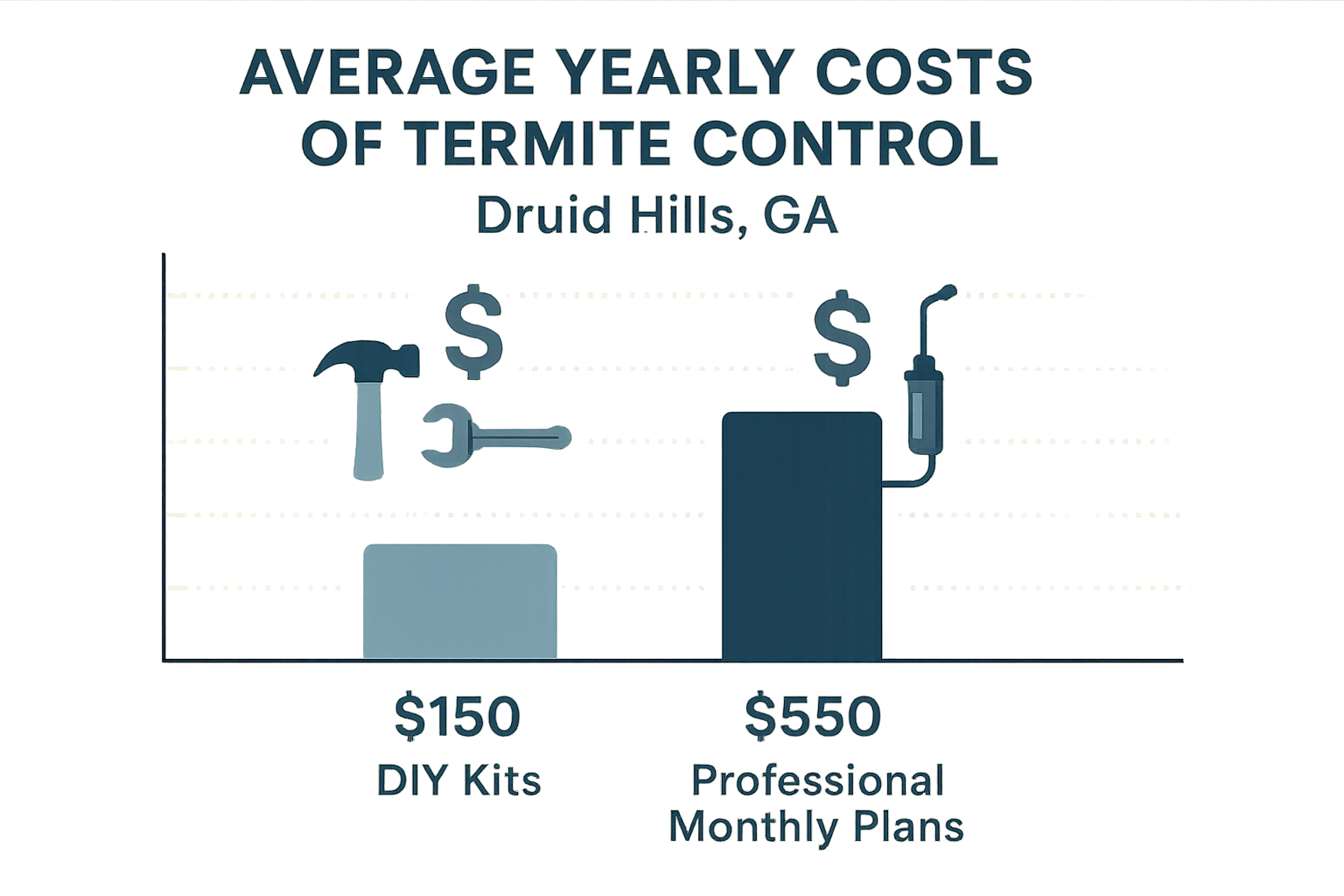
DIY kits – upfront and recurring costs Most homeowners who opt for a do‑it‑yourself approach spend between $120 and $250 on an initial treatment kit. That kit typically covers a single application and includes chemicals, applicators, and a basic warranty. After the first year, the average homeowner spends an additional $30‑$60 on refill cartridges or booster sprays, especially if they notice new activity or need to re‑treat high‑risk zones.
Professional monthly plans – what you pay each year A reputable service like Anthem Pest Control structures its pricing as a predictable monthly fee—usually $40‑$55 per month. Over twelve months, that translates to $480‑$660 in total annual cost. The fee includes quarterly inspections, a full‑home treatment, and a guarantee that covers any repeat infestations within the warranty period.
Potential hidden costs DIY owners often overlook hidden expenses such as additional treatments after a missed spot, protective gear, or the time spent researching proper application methods. Those costs can quickly add $100‑$200 to the yearly tally. Professional plans, on the other hand, may involve a one‑time “repeat‑treatment” charge—typically $150‑$200—if a severe reinfestation occurs after the initial service, though many contracts waive this fee under the warranty.
Anthem Pest Control’s transparent pricing Anthem stands out by listing every component of its service on a single invoice: inspection, treatment, monitoring devices, and warranty coverage. There are no surprise add‑ons; the monthly rate you see is the exact amount you’ll pay each billing cycle. This clarity helps homeowners compare apples to apples when weighing DIY versus professional options.
Financing and bundled discounts To soften the upfront impact, Anthem offers 0% financing for up to 12 months on its annual plans. Homeowners who bundle termite control with other services—such as mosquito or rodent management—receive a 10‑15% discount on the combined package, effectively lowering the monthly outlay.
| Cost Category | DIY Kit | Anthem Professional Plan |
|---|---|---|
| Initial Investment | $120‑$250 | $0 (no upfront fee) |
| Recurring Fees (Yearly) | $30‑$60 (refills) | $480‑$660 (monthly payments) |
| Potential Hidden Costs | $100‑$200 (repeat treatments, gear) | $0‑$150 (repeat‑treatment fee, often waived) |
| Financing/Discounts | None | 0% financing, 10‑15% bundle discount |
When you line up the numbers, the professional route may appear higher at first glance, but the predictability, warranty protection, and financing options often make it the more economical choice over the long term. Use the infographic and table above to decide which path aligns best with your budget and peace‑of‑mind goals.
Seasonal Termite Activity in Georgia and Optimal Treatment Timing
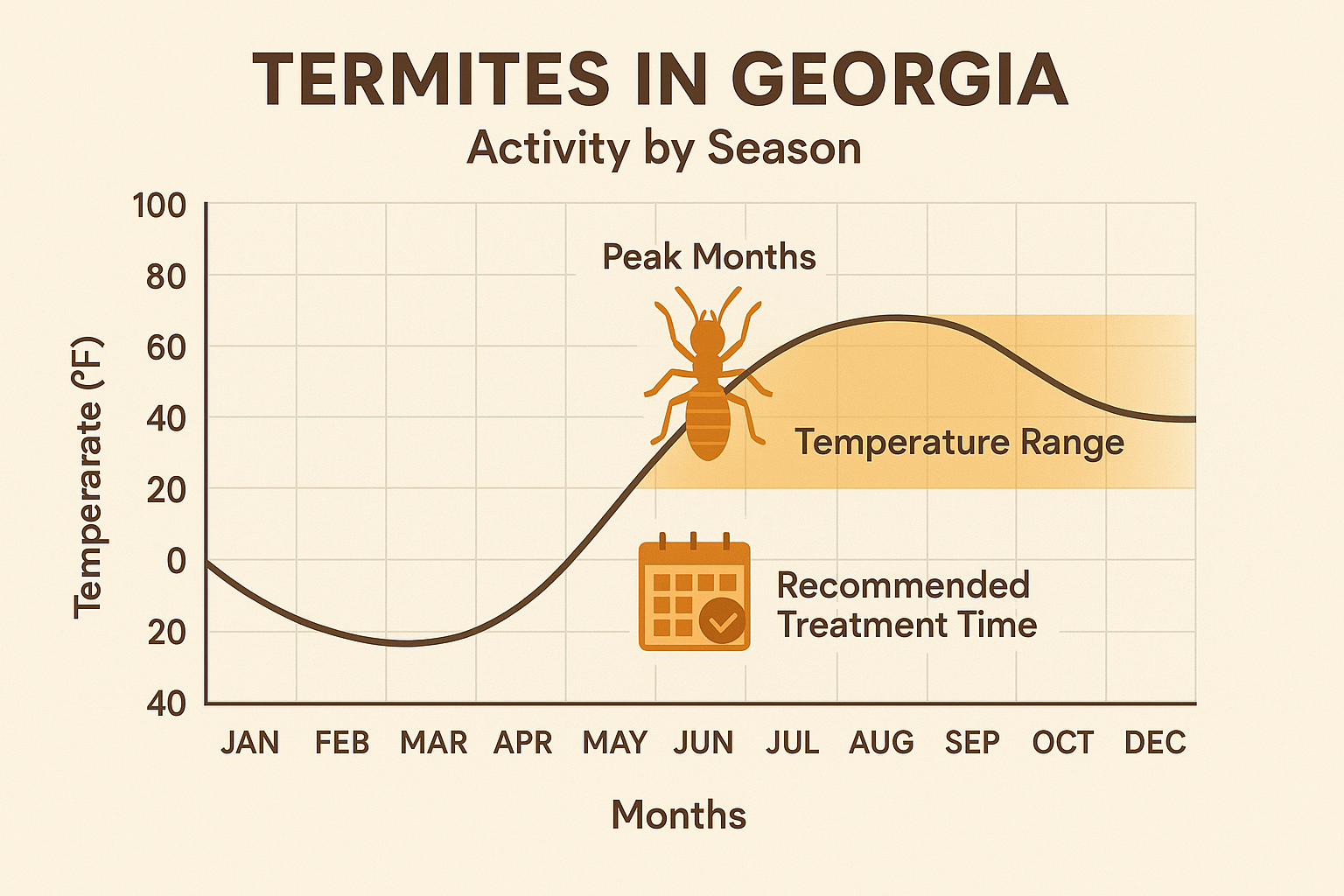
Understanding the Seasonal Activity Chart
The chart above breaks Georgia’s termite activity into four distinct phases—pre-peak (March–April), peak (May–September), post-peak (October–November), and dormant (December–February)—a pattern that helps homeowners plan effective termite control Druid Hills GA strategies. During the peak window, foraging colonies expand aggressively, seeking wood, moisture, and shelter. The pre-peak period shows the first surge of activity after winter, while post-peak activity tapers off as temperatures begin to drop.
Temperature Ranges and Foraging Behavior
Termites are cold‑blooded insects; their metabolism speeds up as soil and air temperatures rise above 55°F (13°C). In Georgia, daytime highs consistently exceed this threshold from late March onward, prompting workers to leave the nest and explore the surrounding soil. The most vigorous foraging occurs when temperatures hover between 70°F and 85°F (21°C‑29°C), which aligns with the late‑spring to early‑fall months. Below 50°F (10°C), activity slows dramatically, and colonies retreat deeper into the soil where they remain relatively dormant.
Strategic Treatment Windows
- Pre‑peak (March‑April): This is the ideal time for a preventative barrier treatment. Applying termiticides before colonies intensify reduces the chance of wood contact and limits future damage.
- Peak (May‑September): If an infestation is already present, a targeted baiting or spot‑treatment program works best during peak foraging, as termites are actively feeding and will encounter the product more readily.
- Post‑peak (October‑November): A follow‑up inspection and supplemental treatment can mop up residual colonies that survived the summer heat, especially in shaded or insulated areas that stay warm.
How Weather Patterns Influence Soil‑Borne Colonies
Heavy rains can both help and hinder termites. Saturated soil creates a humid pathway that encourages workers to travel farther, potentially expanding the infestation radius. Conversely, prolonged flooding may drown shallow colonies or force them to relocate deeper, making detection harder. After a significant rain event, schedule an inspection within 7‑10 days to assess any new activity before the next temperature rise.
Why Schedule an Inspection Before the First Peak
Booking a professional inspection in early March gives you a clear picture of existing colonies and allows Anthem Pest Control to design a customized preventative plan. Early intervention not only locks in the most cost‑effective treatment window but also gives homeowners peace of mind before the summer termite surge. A simple visual check, combined with moisture meter readings and bait station placement, can catch hidden colonies before they cause structural damage.
Protect Your Home with Professional Termite Solutions
Early detection, the right treatment choice, clear cost expectations, and timely action are the four pillars of effective termite management. Missing any one of these can turn a minor nuisance into a costly structural problem. By staying vigilant—watching for mud tubes, winged alates, or subtle wood damage—you give yourself the best chance to intervene before termites establish a permanent foothold.
Why Anthem Pest Control Stands Out in Georgia
Anthem Pest Control brings years of Georgia‑specific experience to every inspection and treatment. Our technicians understand the local termite species, seasonal activity patterns, and building styles common in Druid Hills. We employ safe, EPA‑approved application methods that protect your family, pets, and the environment while delivering the aggressive action termites need to be eliminated.
Transparent Pricing You Can Trust
We believe homeowners deserve clear, upfront pricing without hidden fees. Our cost structure is based on the size of your property, the severity of the infestation, and the most effective treatment plan—whether it’s a liquid barrier, bait stations, or a combination approach. Before any work begins, you’ll receive a detailed estimate that outlines every component of the service.
Free, No‑Obligation Quote & 24/7 Support
Take the first step toward a termite‑free home with a complimentary, no‑obligation quote. Our friendly team will walk you through the findings, recommend the optimal solution, and answer any questions you have. Plus, our 24/7 support line ensures you’re never left in the dark if you notice new activity or need urgent assistance.
Don’t wait for the next termite peak to catch you off guard. Schedule a professional inspection today and lock in peace of mind before the summer surge. Our experts will assess your property, identify any hidden colonies, and craft a customized protection plan that fits your budget.
Ready to protect your home? Call us now at 877-371-8196 or visit Anthem Pest Control to book your free inspection for termite control Druid Hills GA homeowners trust. With Anthem, you get local expertise, safe treatments, and transparent pricing—all backed by a commitment to keep your home safe from termites year round.