Why Millipedes Matter in Dunwoody
Millipedes are long‑bodied arthropods with two pairs of legs per body segment. In the wild they play a valuable role breaking down decaying plant material, and they do not bite, sting, or transmit diseases. For most homeowners they’re simply a curious, harmless critter that prefers to stay outside.
That harmless reputation can change when Dunwoody experiences its seasonal downpours. Heavy rain and lingering humidity create soggy soil, prompting millipedes to seek drier shelter. They crawl up foundation cracks, through vents, and into basements or crawl spaces in search of moisture. When a storm dumps several inches of rain over a short period, it’s not unusual to see dozens—sometimes hundreds—of millipedes crossing doorways and windowsills in a single evening.
According to the Georgia Department of Agriculture pest report, the state sees a 12% rise in indoor millipede sightings during the spring months. This spike aligns perfectly with the region’s rainy season, making Dunwoody homeowners especially vulnerable to sudden invasions.
Even though millipedes won’t damage your home’s structure, they can become a genuine nuisance. Large congregations may leave dark, oily stains on carpets, hardwood floors, or upholstery. Their shed exoskeletons accumulate in corners, giving the impression of a larger infestation. For many residents, the sight of countless tiny, rust‑colored bodies crawling across a kitchen counter triggers a psychological discomfort that feels far worse than the insects themselves.
Understanding why millipedes appear is the first step toward effective control. In the sections that follow, we’ll walk you through how to confidently identify these pests, conduct a thorough inspection of vulnerable entry points, evaluate treatment options that are safe for your family and pets, and implement preventative measures to keep future rain‑driven migrations at bay. Armed with this knowledge, you’ll know exactly when to call a professional and how to protect your Dunwoody home from an unwanted millipede parade.
Identifying the Millipedes You Might Find
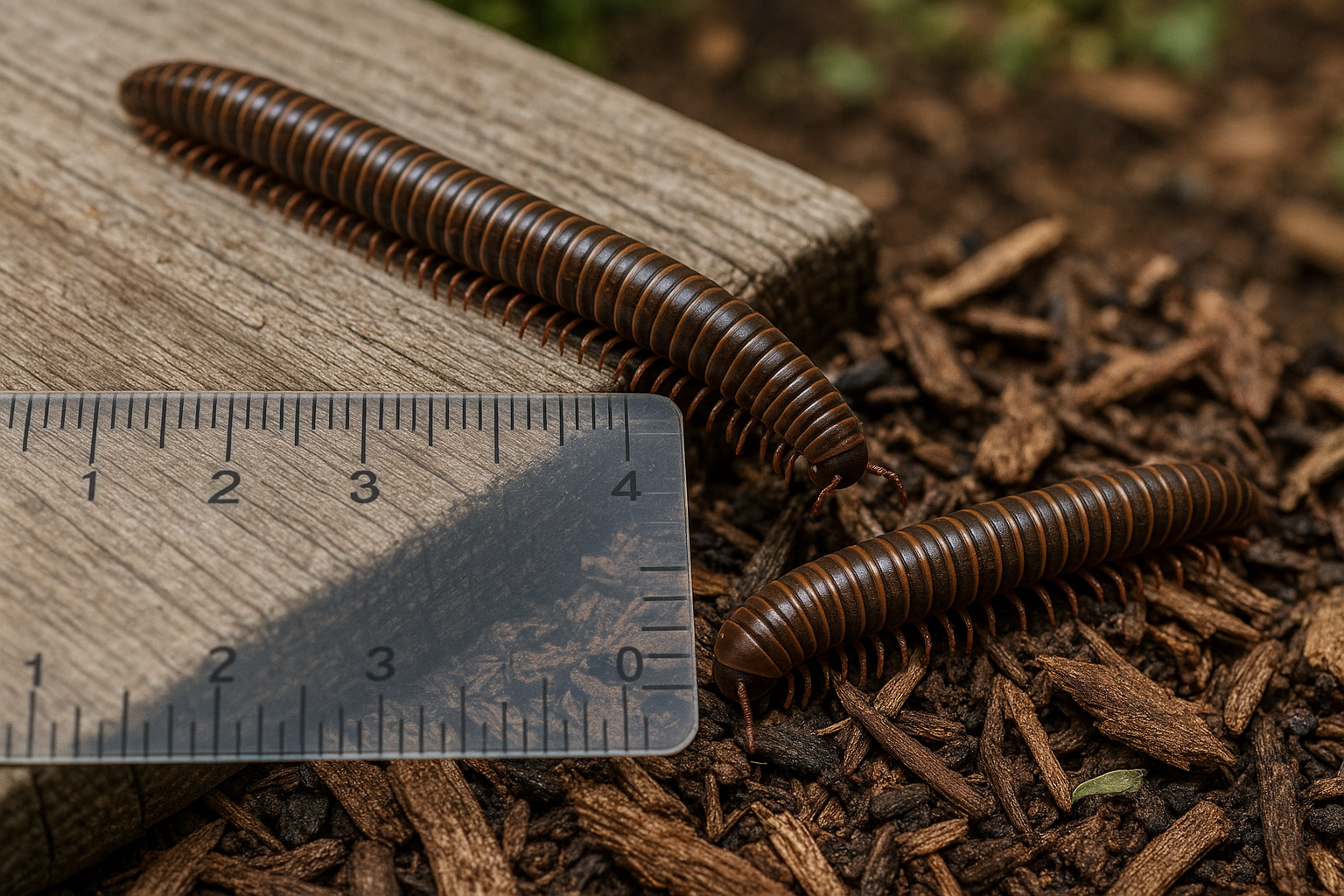
When a millipede shows up in your home or garden, the first step is to know which species you’re dealing with. In Dunwoody, two culprits account for the overwhelming majority of sightings: the greenhouse millipede (Oxidus gracilis) and the common millipede (Narceus americanus). Both are harmless to structures, but they can be a nuisance and may signal excess moisture that needs attention.
Greenhouse Millipede (Oxidus gracilis)
This little “garden traveler” measures about 20–30 mm in length. Its body is a uniform tan‑brown, almost rubbery in appearance, which helps it blend into mulch, leaf litter, and the damp corners of flower beds. Greenhouse millipedes love the constant humidity found in potting mixes, compost piles, and shaded, well‑irrigated zones. Because they are small and quick, they often slip into crawl spaces or under siding during heavy rain.
Common Millipede (Narceus americanus)
The common millipede is noticeably larger—up to 50 mm long—with a darker, chocolate‑brown exoskeleton. As its name suggests, it is the species you’re most likely to encounter in basements, under decks, or in shaded garden beds where moisture accumulates. A distinctive feature is its 60 body segments, each bearing two pairs of legs, for a total of roughly 120 legs, though most observers simply note the “many‑legged” look. Their slower, lumbering gait makes them easy to spot when they congregate in damp corners.
Key Identification Markers
- Body segmentation: Greenhouse millipedes have fewer, smoother segments; common millipedes display more pronounced, rounded rings.
- Number of legs: Both have two pairs per segment, but the larger size of N. americanus means you’ll see longer leg clusters.
- Antenna length: O. gracilis sports relatively short, stubby antennae; N. americanus has longer, more slender ones.
- Movement pattern: Greenhouse millipedes move in quick, jerky bursts; common millipedes take a slower, deliberate crawl.
Real‑World Anecdote
One homeowner in nearby Peachtree Corners shared a startling story: after a heavy summer storm, a damp basement filled with a “river” of millipedes. Within hours, thousands of the larger, dark‑brown common millipedes had migrated from the soil outside to the cool, moist floor of the basement. The family’s quick call to a pest professional prevented water damage and helped restore a dry, pest‑free environment.
For a deeper dive into species characteristics and behavior, consult the EPA millipede fact sheet. Knowing these visual cues not only speeds up the inspection process but also gives you confidence when reporting what you see to your pest‑control provider.
Step‑by‑Step Millipede Inspection with Anthem Pest

1. Pre‑inspection Call
When you dial 877‑371‑8196, our friendly dispatcher starts with a short questionnaire. We ask about recent rain events, any millipede sightings, and the layout of your property—especially basements, crawl spaces, and low‑lying garden beds. This information helps us bring the right tools and allocate enough time for a thorough evaluation.
2. Exterior Assessment
Our certified technician arrives with a calibrated moisture meter, a flashlight, and a detailed inspection checklist. The first step is to scan the foundation for excess moisture, a common magnet for millipedes. We then examine:
- Cracks in concrete or block walls that could serve as entry points.
- Grading around the home to ensure water flows away from the structure.
- Downspout and gutter performance, looking for pooling near the foundation.
Each observation is logged on a digital tablet, allowing us to generate a precise entry‑point map later.
3. Interior Survey
Inside the house, we focus on damp zones where millipedes love to congregate. Using a high‑intensity flashlight, we inspect:
- Basement walls, corners, and floor joists.
- Crawl spaces, paying special attention to insulation and vent openings.
- Areas near sinks, washing machines, and utility rooms where humidity spikes.
If we spot clusters, we note the exact location and estimate the size of the population.
4. Identification & Population Estimate
After gathering visual and moisture data, we categorize the infestation level:
- Low – A few individuals, typically confined to one or two damp spots.
- Moderate – Visible trails across multiple rooms, indicating a growing colony.
- High – Large swarms, frequent sightings, and evidence of breeding activity.
This classification guides the intensity of the treatment plan.
5. Customized Report
Within 24 hours, you receive a comprehensive PDF report that includes:
- An annotated entry‑point map highlighting cracks, gaps, and drainage issues.
- Specific treatment recommendations—ranging from a perimeter barrier to targeted indoor applications.
- A transparent cost estimate broken down by labor, materials, and follow‑up visits.
Example Case: Dunwoody Family
One Dunwoody household called after a heavy June rainstorm. Our technician discovered three distinct entry points: a foundation crack near the garage, an unsealed vent in the crawl space, and a gap around a downspout. The interior survey revealed moderate activity in the basement corner by the water heater. The final report recommended a EPA‑approved low‑toxicity perimeter barrier using bifenthrin, supplemented with diatomaceous earth in the crawl space. The family approved the plan, and a follow‑up visit confirmed no new activity after two weeks.
EPA‑Approved Low‑Toxicity Products
Anthem Pest only uses products listed on the EPA label database. For millipedes, we favor:
- Bifenthrin – A synthetic pyrethroid with proven efficacy at low concentrations, minimizing risk to pets and children when applied by a certified professional.
- Diatomaceous earth – A naturally occurring, non‑chemical powder that desiccates insects without leaving toxic residues.
Both options are applied according to label directions, ensuring compliance and safety.
Effective Solutions and Transparent Costs
When millipedes start marching across your foundation, you need a treatment that works quickly, stays effective, and fits your budget. Anthem Pest’s 2024 service guide outlines three core options that address the problem from the outside in, each backed by EPA‑registered products and applied by certified technicians. Below, we break down what each solution does, how much it typically costs in the Dunwoody area, and why safety is never an afterthought.

1. Exterior Barrier Spray
- What it covers: A thorough mist of EPA‑registered insecticide applied to the foundation, grading slopes, and surrounding mulch. The spray creates a chemical shield that repels millipedes before they can crawl onto your home.
- Typical cost: $120‑$180 per treatment. Prices reflect the size of the property and the number of entry points treated.
- Safety benefits: The formulation is low‑odor, non‑toxic to humans, children, and pets when applied by our certified team. We wait the recommended re‑entry time before you resume normal activities.
2. Interior Crack Sealing & Moisture Control
- What it covers: Focused work in basements and crawl‑spaces, sealing foundation cracks, gaps around utility penetrations, and any moisture‑prone zones that attract millipedes.
- Typical cost: $80‑$130 per service. The range depends on the square footage and the complexity of the sealing required.
- Safety benefits: By eliminating excess moisture, you reduce the need for chemical applications inside living spaces. All sealants used are VOC‑compliant and safe for indoor air quality.
3. Integrated Pest‑Management (IPM) Plan
- What it covers: A year‑long partnership that includes quarterly inspections, routine barrier maintenance, and proactive adjustments based on seasonal millipede activity.
- Typical cost: $350‑$450 annually. This all‑inclusive fee covers multiple visits, re‑applications of the exterior barrier, and any minor interior touch‑ups.
- Safety benefits: IPM emphasizes monitoring, habitat modification, and the minimal use of chemicals. When treatments are needed, we again rely on EPA‑registered, child‑ and pet‑safe products.
Source: Anthem Pest 2024 Service Guide (internal PDF).
Optional Add‑Ons
If your home shows signs of excess humidity or water runoff, you might consider a few supplemental services:
- Dehumidifier rental – $25 / month, helps keep crawl‑space moisture below 50 %.
- Gutter repair or cleaning – $75‑$120 per job, prevents water pooling that draws millipedes to the foundation.
- Additional perimeter treatments – $40‑$60 per extra application, useful for larger lots or multi‑family properties.
Choosing the right solution hinges on the severity of the infestation, the condition of your home’s exterior, and your comfort level with chemical use. With Anthem Pest, you get clear pricing, documented safety standards, and a treatment plan that matches the unique needs of Dunwoody homeowners.
DIY Steps to Keep Millipedes Out
Moisture Reduction
Millipedes thrive in damp environments, so the first line of defense is to eliminate excess moisture around your home. Inspect gutters and downspouts for leaks, and repair any cracks or loose joints. In basements or crawl spaces, run a dehumidifier to keep humidity below 60 %. Finally, grade the soil so water drains at least six inches away from the foundation; this prevents soggy zones where millipedes can hide.
Landscape Maintenance
What’s close to the house matters. Keep mulch, leaf litter, and wood chips at least six inches from the foundation—otherwise they become a perfect bridge for millipedes. Trim back shrubs, vines, and other vegetation that touch the exterior walls, and avoid piling organic material directly against the siding. If you prefer a decorative ground cover, choose low‑maintenance options like gravel or stone that don’t retain moisture.
Seal Entry Points
Even the smallest crack can serve as a highway for these crawlers. Use a high‑quality caulk to seal gaps around the foundation, windows, and utility penetrations. Install door sweeps on all exterior doors, and make sure garage doors sit flush with the floor. Finally, cover vent openings with fine mesh screens; this blocks millipedes while still allowing airflow.
Quick‑Check Checklist
- Repair leaky gutters and downspouts.
- Run a dehumidifier in basements/crawl spaces.
- Grade soil to slope away from the foundation.
- Keep mulch ≥ 6 inches from walls.
- Trim vegetation that contacts the house.
- Caulk cracks, add door sweeps, and screen vents.
These low‑cost steps are backed by the University of Georgia Extension’s recommendations for millipede prevention. For more detailed guidance, visit UGA Extension.
Know the Red Flags
When millipedes start crossing the threshold from the yard into your home, it’s more than a quirky nuisance—it’s a signal that conditions are ripe for a larger problem. Recognizing the warning signs early can save you from costly repairs and a prolonged battle with these moisture‑loving arthropods.
Thresholds that demand a professional look
- More than 100 millipedes spotted inside your living spaces.
- Frequent sightings in kitchens, bathrooms, or bedrooms rather than just near entry points.
- Persistent dampness or mold despite DIY dehumidifiers, ventilation tricks, or sealing cracks.
- Sudden spikes after heavy rain or a storm, especially if they linger for several days.
Each of these indicators suggests that the environment inside your house is staying wet enough for millipedes to thrive. When the numbers climb, the likelihood of them finding hidden cracks, floor joists, or insulation increases dramatically.
What you risk by waiting
Ignoring the red flags can lead to moisture‑related damage such as warped wood, weakened drywall, and mold growth that jeopardizes indoor air quality. An unchecked millipede population also creates a gateway for other pests—ants, termites, and even rodents—because they share the same damp habitats. The longer the infestation persists, the more extensive (and expensive) the treatment becomes, often requiring multiple visits and specialized equipment.
Take action now
Don’t let the problem grow. Call Anthem Pest at 877‑371‑8196 for a same‑day inspection. Our technicians will assess the moisture source, map the infestation, and outline a tailored plan.
Our Dun‑to‑Dunwoody team knows the local climate and building styles, so you can count on a rapid response that targets the root cause—not just the visible millipedes. Rest easy knowing a trusted neighbor is just a phone call away.
Protect Your Home with Anthem Pest Today
Quick Recap
- Common millipede species in Dunwoody – the gray house millipede and the striped millipede.
- What an inspection looks like: visual sweep, moisture assessment, and identification of entry points.
- Treatment options: targeted EPA‑approved sprays, perimeter barriers, and structural treatments.
- DIY prevention tips: reduce excess moisture, seal cracks, and keep vegetation away from foundations.
Why Choose Anthem Pest in Dunwoody?
Our Dunwoody team knows the local climate and the specific pests that thrive here. Certified technicians arrive in fully stocked trucks, use only EPA‑approved products, and follow a transparent pricing model—so you never face hidden fees. We combine thorough inspections with a customized action plan that protects your home now and prevents future invasions.
We provide a clear, itemized estimate before any work begins, and all treatments are backed by a 30‑day satisfaction guarantee, so you know exactly what you’re paying for and that the job is done right.
Take the Next Step
Ready for peace of mind? Request a free, no‑obligation quote today. Scheduling is simple: call us at 877‑371‑8196 or click here to fill out our quick online form. Our friendly staff will arrange a same‑day or next‑day inspection at a time that fits your busy schedule.
Protecting your home starts with a professional eye. Let Anthem Pest be the partner that keeps millipedes—and all unwanted guests—out of your life.