Understanding Centipedes and Their Risks in Peachtree City
What are centipedes? – A quick taxonomy
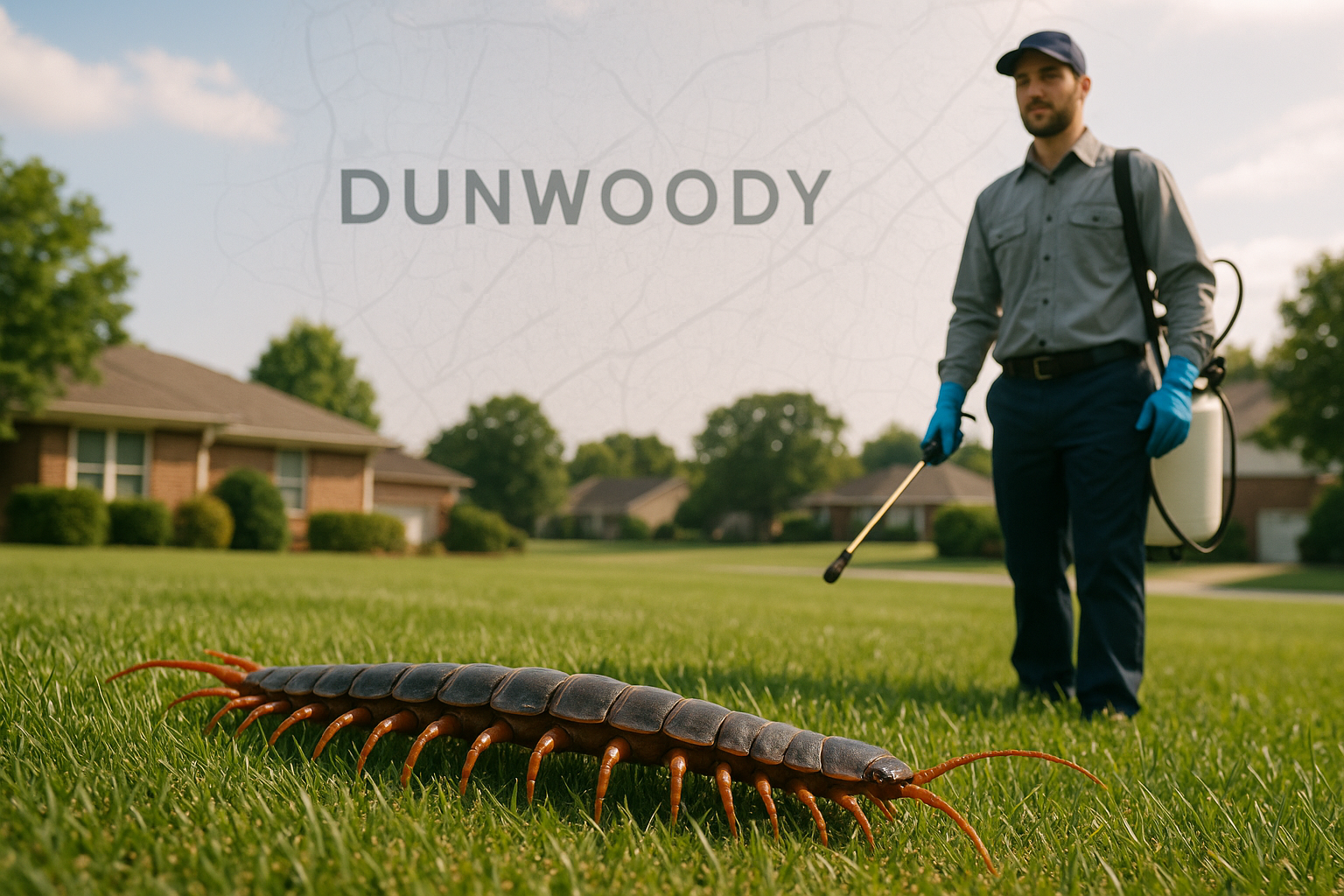
Centipedes belong to the class Chilopoda, a group of arthropods distinguished by a long, segmented body and one pair of legs per segment—details commonly identified during a centipede inspection Peachtree City homeowners schedule for accurate species recognition. In Georgia, the two most common household species are the house centipede (Scutigera coleoptrata) and the stone centipede (Lithobius spp.). The house centipede is sleek, with up to 15 pairs of long, delicate legs that give it a “spider-like” appearance, while stone centipedes are shorter, darker, and prefer the crevices of stone or concrete.
Where you’ll find them in a Peachtree City home
Centipedes are moisture‑loving hunters. In the Peachtree City climate—humid summers, occasional heavy rains, and a high water table—they gravitate toward areas that stay damp for extended periods. Typical hide‑outs include:
- Basements and crawl spaces with poor ventilation.
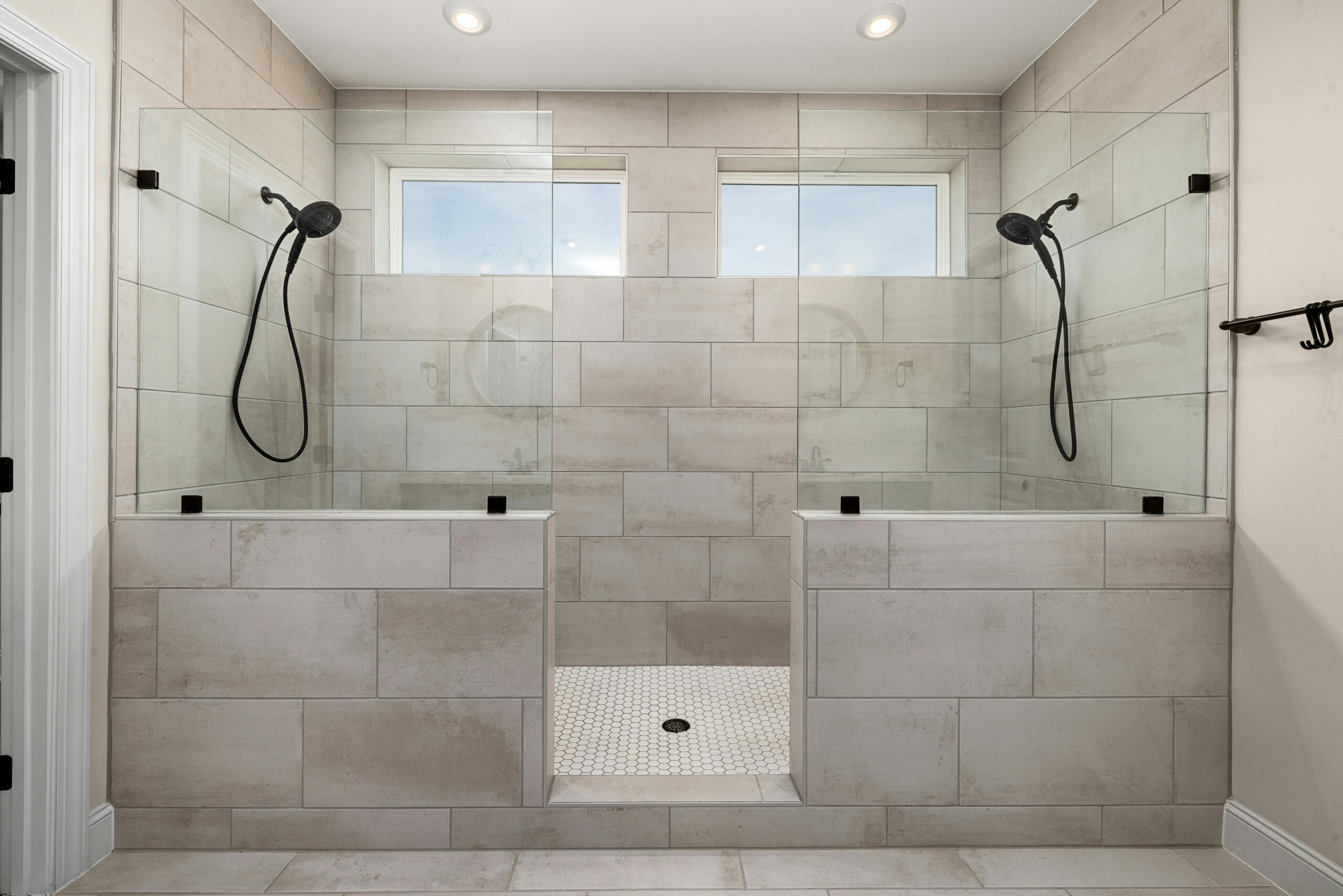
- Bathrooms, especially under tubs and behind tiles.
- Under kitchen sinks where leaky pipes create a steady drip.
- Garage floors and utility rooms with concrete slabs that retain moisture.
These micro‑habitats provide the humidity centipedes need to stay active and reproduce.
Why homeowners should be concerned
Although centipedes are beneficial predators that feast on insects like spiders and cockroaches, they pose several risks when they move into living spaces:
- Painful bites. A centipede’s forcipules (modified front legs) inject venom to subdue prey. A bite on human skin can feel like a sharp sting followed by lingering soreness—unpleasant, though rarely dangerous to healthy adults.
- Rapid multiplication. A single female can lay dozens of eggs in a concealed crack. In a moisture‑rich environment, the next generation can appear within weeks, leading to visible swarms.
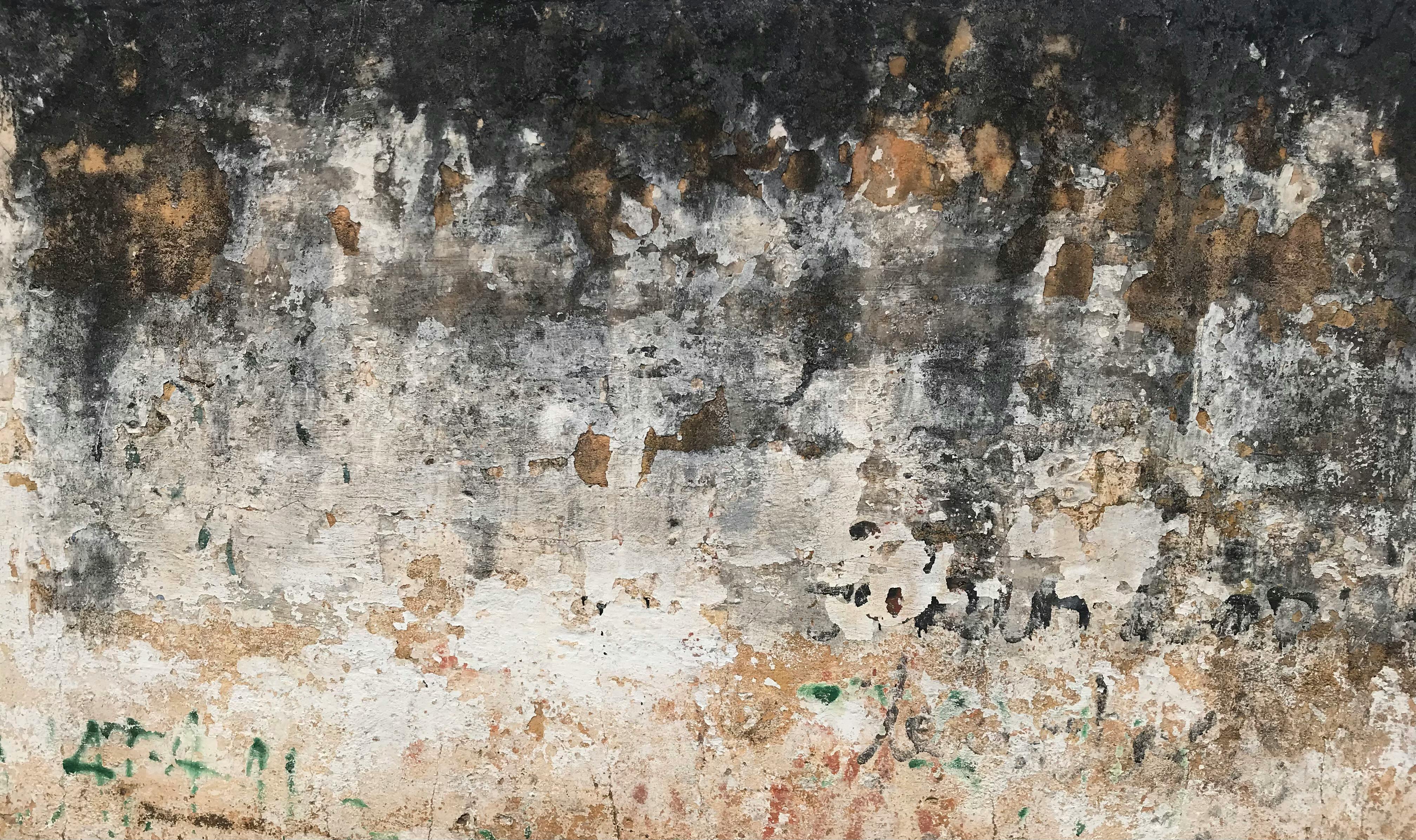
- Structural intrusion. Centipedes can crawl through tiny gaps in foundations, wall voids, and insulation. Over time, they may indicate larger moisture problems that, if left unchecked, can compromise wood rot resistance and promote mold growth.
Moisture and structural issues: the hidden connection
Peachtree City homes built on clay soils often experience seasonal expansion and contraction, creating hairline cracks in foundations. When rainwater pools near the foundation or when gutters overflow, that moisture seeps into these cracks, creating the perfect breeding ground for centipedes. Leaky plumbing, especially in older homes, adds another steady water source. The presence of centipedes is frequently a red flag that your home’s envelope is allowing water intrusion—a problem that can lead to wood rot, mold, and even termite activity.
Local data and where to learn more
Anthem Pest Control tracks centipede activity across the metro area and notes a seasonal spike in late spring when groundwater levels rise. For a deeper dive into regional trends, treatment options, and preventative measures, visit the authoritative source on centipede control for Peachtree City: Anthem Pest – Centipede Control in Peachtree City, GA. The page outlines how professional inspections can pinpoint moisture sources, evaluate structural vulnerabilities, and apply targeted, low‑toxicity treatments that keep your family safe.
Spotting Early Warning Signs Inside Your Home

What a centipede leaves behind
Before a full‑blown infestation takes hold, centipedes reveal themselves in subtle ways. The most common visual clues are:
- Shed exoskeletons: These translucent, papery shells often appear in corners, under baseboards, or near pantry shelves. A fresh molt looks like a thin, empty tube that’s still glossy; older molts become brittle and may crumble when touched.
- Small dead centipedes: You might find a few dead bodies, usually less than an inch long, tucked into hidden crevices. Their presence signals that the environment is already attractive to these predators.
- Silk‑like webbing: Although centipedes don’t spin true webs, they sometimes leave a fine, silk‑like residue in tight corners or behind appliances. This material helps them navigate dark, humid spaces.
Recognizing bite symptoms
Centipede bites are rare, but they can happen when the insects feel threatened. If you suspect a bite, look for the following:
- Localized redness that may turn a pinkish hue.
- Swelling that develops within an hour of the bite.
- A lingering sting‑like pain that can last several minutes to a few hours.
Most healthy adults experience only mild irritation, but children, seniors, or anyone with an allergic history should monitor the reaction closely and seek medical advice if symptoms worsen.
Moisture hotspots to inspect
Centipedes thrive in damp environments. The following spots are prime real estate for them:
- Under kitchen sinks – look behind the cabinet doors where pipes may leak.
- Behind appliances such as refrigerators, dishwashers, and washing machines.
- Inside bathroom cabinets, especially near the toilet tank or shower drain.
How to perform a quick “moisture inspection”
Grab a flashlight, a thin probe (like a bent coat hanger or a wooden dowel), and follow these steps:
- Scan for water stains: Dark rings or discoloration on walls, cabinets, or flooring often indicate hidden leaks.
- Check for condensation: Run a hand over cold surfaces; a damp feel suggests excess humidity.
- Look for standing water: Even a small puddle under a sink or behind a dishwasher can create a perfect breeding ground.
- Probe tight crevices: Insert the thin probe into gaps between baseboards, under cabinets, and behind radiators. If you feel resistance or encounter a sticky residue, you’ve likely found a moist niche.
Document any problem areas with a smartphone photo. This visual record helps a professional pinpoint the exact locations that need treatment.
Tools of the trade: flashlight and thin probe
A high‑lumens LED flashlight is essential. It penetrates dark corners and reveals the faint sheen of centipede silk or the glossy surface of a shed exoskeleton. Pair it with a thin probe to gently explore spaces that are too narrow for your hand. Move slowly; a sudden poke can startle hidden centipedes, causing them to scuttle deeper into the wall cavity.
DIY inspection vs. calling a professional
When DIY is enough: If you only spot a few shed skins, occasional dead centipedes, and no persistent moisture, a thorough cleaning, de-cluttering, and a simple dehumidifier can often keep the population in check without immediately scheduling a centipede inspection Peachtree City homeowners typically reserve for more serious cases.
When to call a pro: Call Anthem Pest Control if you notice any of the following:
- Repeated sightings of live centipedes in multiple rooms.
- Persistent moisture problems that you cannot locate or fix yourself.
- Signs of bites accompanied by swelling or prolonged pain.
- Large numbers of shed exoskeletons or silk‑like webbing indicating an established colony.
Professional technicians have access to moisture meters, infrared cameras, and targeted insecticide treatments that safely eliminate centipedes while protecting your family and pets. They’ll also recommend long‑term prevention strategies—like sealing cracks, improving ventilation, and installing moisture‑absorbing products—to keep centipedes from returning.
Seasonal Activity Trends and When to Inspect
Georgia’s weather is a perfect recipe for centipedes. Warm, humid summers paired with frequent rain create a moist environment that these nocturnal hunters love. Winters are mild compared to northern states, but they still bring cooler temperatures that push centipedes deeper into the soil. Understanding how the climate shifts throughout the year helps you anticipate when these pests are most likely to wander into your home.
Why Humidity and Heat Matter
Centipedes need moisture to survive. When daytime highs climb above 75°F and nighttime humidity stays above 60%, the soil and leaf litter stay damp, providing an ideal hunting ground. During late spring through early fall—typically May through September—Georgia experiences the perfect blend of heat and moisture. This is when you’ll see the highest surface activity, especially after a rainstorm.
Low‑Activity Periods in Winter
From December through February, average temperatures dip into the 40s and 50s, and the ground begins to dry out. Centipedes respond by burrowing deeper, often below the frost line, where they remain relatively dormant. While they’re less likely to appear inside your home, they’re still present in the yard, waiting for the next warm spell.
Rainstorms: A Quick Invasion Trigger
Even a brief downpour can flood the leaf litter and push centipedes upward in search of dry shelter. They’ll crawl under siding, into crawl spaces, or slip through foundation cracks to escape the soggy ground. That’s why you might notice a sudden spike in sightings right after a heavy rain—especially if the storm follows a dry spell.
Recommended Inspection Schedule
- Spring deep inspection (April–May): Check foundations, crawl spaces, and basement walls before the humidity surge.
- Fall deep inspection (September–October): Look for moisture buildup after the summer and seal any new entry points.
- Post‑storm checks: After any rain event that leaves the yard soggy for more than 24 hours, do a quick visual sweep of vulnerable areas.
Pairing these bi‑annual inspections with opportunistic post‑storm checks gives you the best chance to catch centipedes before they establish a foothold inside.
Seasonal Activity Chart
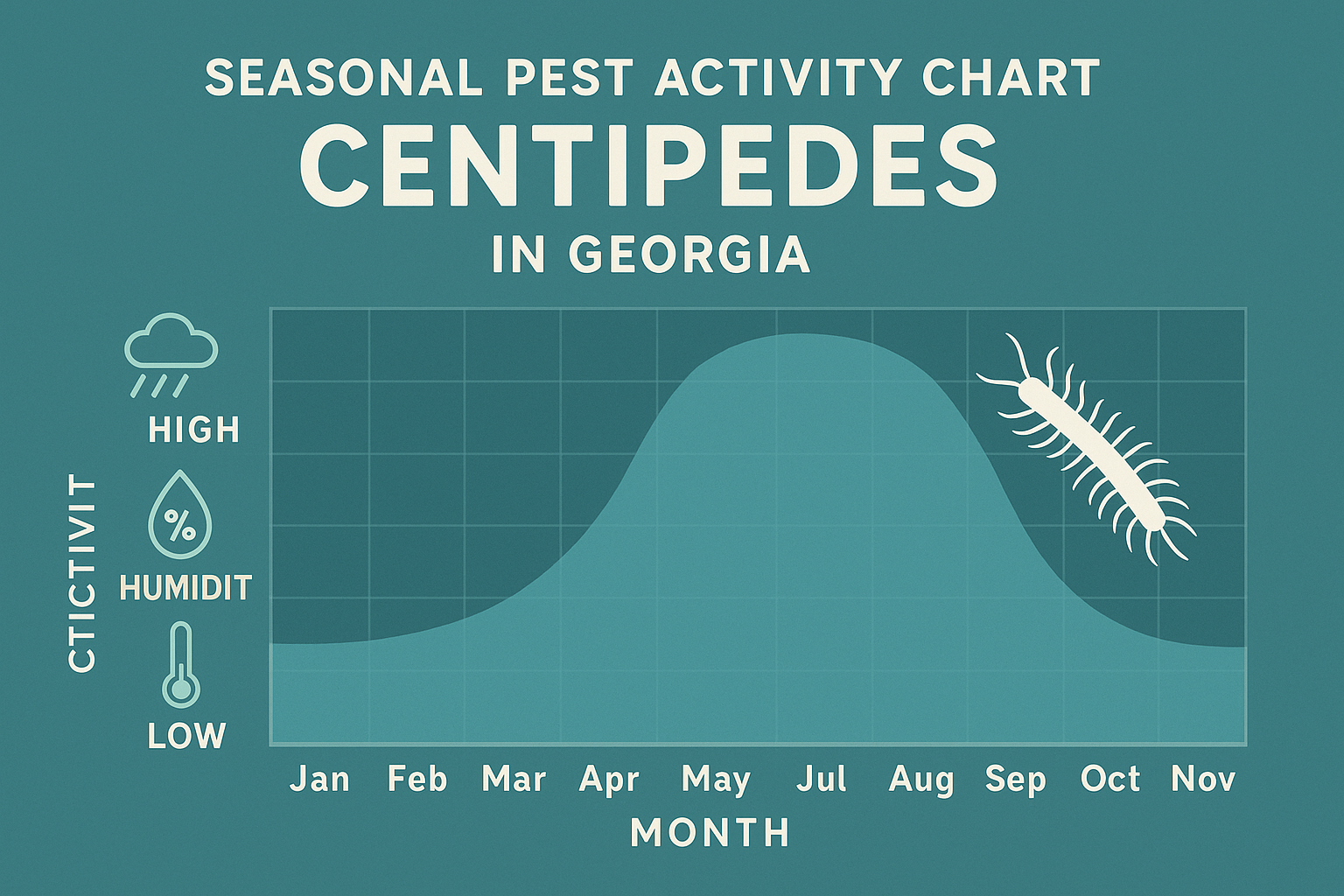
| Month | Avg Temp (°F) | Avg Humidity % | Activity Level |
|---|---|---|---|
| January | 42 | 65 | Low |
| February | 45 | 63 | Low |
| March | 55 | 68 | Moderate |
| April | 65 | 70 | High |
| May | 73 | 72 | Peak |
| June | 80 | 75 | Peak |
| July | 84 | 77 | Peak |
| August | 83 | 76 | Peak |
| September | 78 | 73 | High |
| October | 68 | 70 | Moderate |
| November | 58 | 68 | Low |
| December | 48 | 66 | Low |
Notice how activity spikes from May through September and drops sharply once temperatures dip below 60°F. That pattern is why we recommend scheduling your deep inspections in the spring and fall—right before the peaks begin and just as they wind down.
Putting It All Together
When you align your inspection calendar with Georgia’s climate rhythm, you stay one step ahead of centipedes. A spring check catches any moisture‑related entry points before the summer surge, while a fall visit ensures that any damage from the high‑activity months is sealed before the insects retreat underground. And after a heavy rain, a quick visual scan can prevent a surprise indoor crawl‑in.
By treating these seasonal cues as a checklist, you protect your home without over‑treating. If you spot signs of centipedes—quick movements along baseboards, small bite‑size tracks, or clusters in damp corners—don’t wait. A timely call to Anthem Pest Control (877‑371‑8196) can bring professional expertise to the problem before it escalates.
Inspection Services, Pricing, and Treatment Options
Standard Inspection Package
Our Standard Inspection is the foundation of every centipede control plan and a key part of a centipede inspection Peachtree City homeowners rely on for accurate results. A certified technician conducts a thorough visual sweep of your home, focusing on dark, damp areas where centipedes love to hide—basements, crawl spaces, and under kitchen cabinets. While inside, the technician also performs a moisture assessment, because excess humidity is the single biggest attractant for these multi-legged visitors. At the end of the visit, you receive a detailed written report that highlights hot spots, identifies any structural vulnerabilities, and recommends next steps.
Premium Inspection & Treatment Package
The Premium package builds on everything the Standard offers and adds proactive protection. After the visual inspection and moisture check, the technician applies EPA‑approved insecticides directly to identified entry points and infested zones. A perimeter barrier is also sprayed around the exterior of your home to stop new centipedes from crossing the foundation. To give you peace of mind, the Premium plan includes a 12‑month warranty that covers any repeat activity, with a complimentary follow‑up visit to verify lasting results.
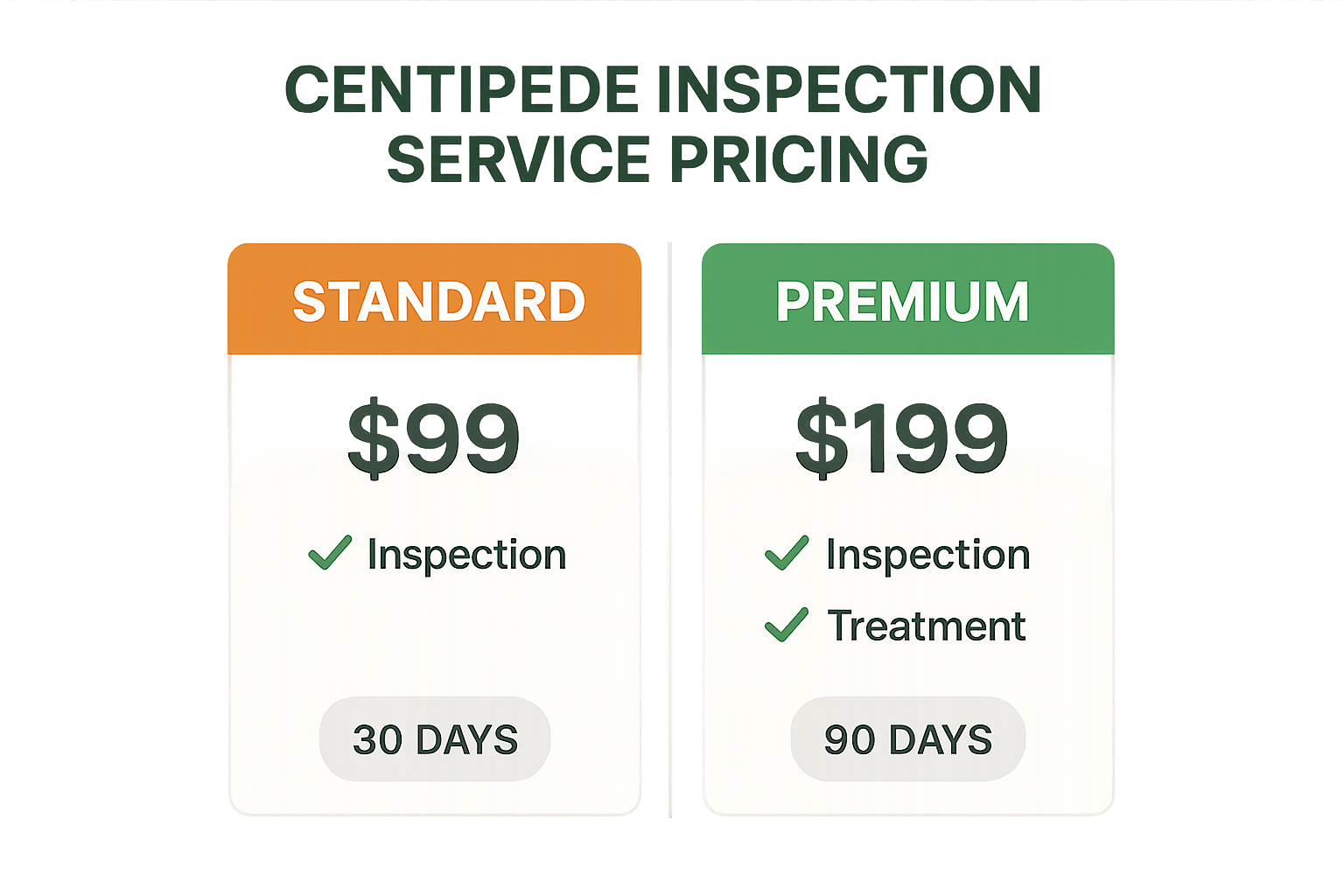
Pricing Comparison
| Package | Key Features | Price (USD) |
|---|---|---|
| Standard Inspection | Visual inspection, moisture assessment, written report | $149 |
| Premium Inspection & Treatment | All Standard features + targeted insecticide, perimeter barrier, 12‑month warranty, follow‑up visit | $299 |
What’s Included in Every Service
- EPA‑approved products: Safe for children and pets when applied according to label directions.
- Safety precautions: Technicians use low‑odor formulations and keep treated areas ventilated.
- Follow‑up visit (Premium only): A post‑treatment inspection to confirm that centipedes are gone and the barrier remains intact.
How Our Treatment Methods Work
Residual sprays leave a thin, long-lasting film on surfaces where centipedes travel—an approach often recommended following a centipede inspection Peachtree City homeowners schedule to identify active pathways. The chemicals stay active for weeks, killing any creature that crosses the line. Dusts are applied in wall voids and under floorboards, reaching places a spray can’t. Dust particles cling to the insects’ legs and are ingested as they move, providing a hidden, continuous kill zone. Finally, structural sealing addresses the root cause: cracks, gaps, and unsealed pipe penetrations. By closing these pathways, we reduce humidity buildup and deny centipedes easy access to your living spaces.
Frequently Asked Questions
- Do I need to vacate my home during treatment?
- No. All products used are low‑odor and safe for occupied homes. We recommend keeping children and pets away from treated zones for 30 minutes to allow the spray to dry.
- How long before I see results?
- Most homeowners notice a dramatic reduction in centipede activity within 24‑48 hours after the Premium treatment. The residual effect continues to suppress new activity for up to three months.
- What if I have a repeat problem?
- With the Premium package’s 12‑month warranty, we’ll return at no extra charge to re‑treat any area where centipedes reappear. For Standard customers, we offer discounted re‑inspection and treatment options.
Protect Your Home with Professional Centipede Control
Recap of centipede risks and warning signs
Centipedes may look fascinating, but in a home they bring more than a few extra legs. Their fast‑moving, venomous bites can cause painful welts, especially for children, seniors, or anyone with an allergic reaction. Beyond the bite, a centipede infestation signals excess moisture, cracks, and clutter—conditions that also attract termites, ants, and rodents. The most common warning signs include:
- Fast, dark‑colored bugs scurrying across floors or walls at night.
- Small, irregular bite marks that itch or swell.
- Increased humidity in basements, crawl spaces, or bathrooms.
- Visible droppings that look like tiny black specks.
- Cracks or gaps around foundations, windows, and doors where they can slip inside.
These indicators are especially important during the warm, humid months of late spring through early fall, when centipedes are most active—making a timely centipede inspection Peachtree City homeowners schedule crucial. Acting promptly—ideally before the first sighting or at the first hint of moisture problems—prevents a minor nuisance from becoming a full-blown infestation.
Benefits of choosing a licensed, local expert
When you call a professional like Anthem Pest Control, you’re not just hiring a service; you’re gaining a partner who understands Peachtree City’s unique climate and building styles. Our licensed technicians deliver:
- Guaranteed results: We use EPA‑approved treatments tailored to the species and severity of the problem, with follow‑up inspections to confirm success.
- Safety compliance: All products are applied according to strict safety standards, protecting your family, pets, and the environment.
- Transparent pricing: Our free, no‑obligation quote outlines every step and cost, so there are no surprise fees later.
- Local knowledge: We know the common entry points and moisture hotspots in Peachtree City homes, allowing us to target the root cause, not just the visible insects.
Ready to take the next step?
If you’ve noticed any of the signs above—or simply want the peace of mind that comes from a pest‑free home—our team is ready to help. We’ll assess your property, recommend a customized action plan, and schedule treatment at a time that works for you.
Call us today at 877‑371‑8196 for a free, no‑obligation quote. Our friendly staff will answer your questions and set up an inspection at your convenience.
Visit Anthem Pest Control to learn more and schedule your centipede inspection Peachtree City homeowners trust today.