Recognizing Earwigs in Peachtree City
Earwigs belong to the order Dermaptera, a group of insects that thrive in the warm, humid climate of Georgia. Their popularity here isn’t because they’re particularly tasty—they simply love the moisture and shade that our summers provide. Understanding what they look like and where they like to hide is the first step to keeping them out of your home, and knowing when to call an earwig exterminator Peachtree City homeowners trust can prevent a minor nuisance from turning into a serious infestation.
Key Visual Characteristics
- Elongated, flattened body: Most earwigs measure ½ to 1½ inches long and have a sleek, paddle‑shaped silhouette.
- Distinctive pincers (cerci): A pair of curved, forceps‑like appendages protrude from the rear end—this is the feature that gives them their name.
- Nocturnal habits: They are most active after dark, which is why you often only notice them when a light is switched on.
- Moist, dark habitats: Damp basements, under kitchen sinks, mulch beds, and wood piles are prime real estate for earwigs.
Spotting Earwigs Inside the House
Inside your home, earwigs tend to gather in places that stay cool and damp. Check the following spots:
- Kitchens: Look behind appliances, under the sink, and along the edges of countertops where crumbs and water accumulate.
- Bathrooms: Tile grout, shower curtains, and the underside of the bathtub are ideal hiding places.
- Basements & crawl spaces: Cracks in foundation walls, stored firewood, and any leaky pipes create a perfect environment.
Spotting Earwigs Outdoors
Outside, earwigs are most commonly found in garden beds and landscaped areas. They love:
- Mulch and compost piles: The decaying organic matter retains moisture.
- Wood piles and debris: These provide shelter and a steady food source.
- Flower beds and vegetable gardens: Young seedlings can be nibbled if earwig numbers get high.
Common Misconceptions
Many homeowners assume earwigs are dangerous, but they are harmless to humans. Their pincers can give a mild pinch if handled, yet they do not transmit disease or cause structural damage. The real issue is their tendency to become a nuisance—large numbers can overwhelm kitchen counters, bathroom floors, or garden plants.
Quick Identification Tip
When you suspect earwig activity, grab a flashlight and a white sheet. Place the sheet on a floor or garden bed at night and shine the light. Earwigs will scurry toward the light and become visible against the white background, making confirmation quick and painless.
Why Earwigs Thrive in Peachtree City
If you’ve ever lifted a garden mulch pile in Peachtree City and felt a sudden scurry of tiny, winged insects, you’ve met the local earwig population. These nocturnal critters aren’t just random visitors; the city’s climate, landscaping habits, and home construction create a perfect nursery for them. Understanding the environmental quirks that favor earwig growth helps you spot the signs early and decide when professional help from Anthem Pest Control is the smartest move.

Climate Overview: Warm, Humid Summers and Mild Winters
Peachtree City sits in a humid subtropical zone, meaning summers regularly push temperatures into the high 80s °F (30 °C) with humidity hovering around 70 %. Those conditions accelerate earwig metabolism and speed up their breeding cycles. Unlike northern regions where frost kills off immature insects, our mild winters rarely dip below freezing, allowing a small but steady population to survive underground year‑round. The result? A head start every spring when the soil thaws and food becomes abundant.
Soil and Mulch Preferences: Damp, Decaying Organic Matter
Earwigs are detritivores—they love feeding on decaying leaves, dead insects, and fungal growth. The popular landscaping trend in Peachtree City—using wood chips, pine bark, and shredded leaves as mulch—creates a moist, insulated blanket that retains water and provides exactly the shelter earwigs crave. When homeowners water these beds, the moisture seeps into the underlying soil, keeping it consistently damp. This environment not only shelters adult earwigs but also offers a safe nursery for their eggs and nymphs.
Seasonal Activity: From Spring Emergence to Winter Lull
Earwigs follow a predictable calendar:
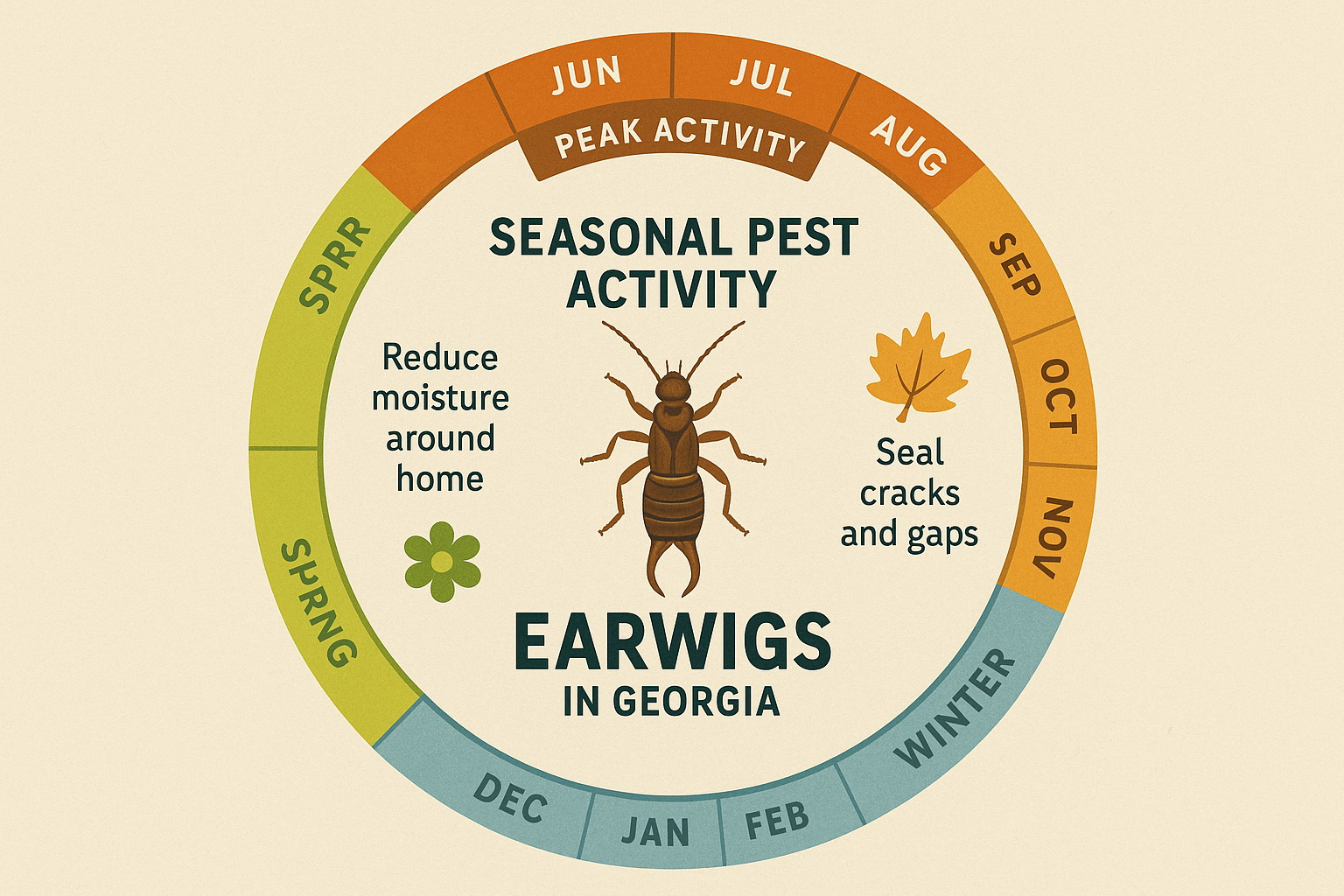
- Early Spring (March‑April): As soil temperatures rise above 55 °F (13 °C), nymphs emerge from overwintering sites and begin feeding on fresh plant growth.
- Late Summer (July‑August): This is the peak period. Warm, humid nights trigger massive breeding swarms, and you’ll notice earwigs inside homes, especially around lights.
- Fall (September‑October): Activity tapers as temperatures drop; adults seek shelter in cracks and crevices to prepare for the cooler months.
- Winter (November‑February): Most earwigs remain dormant underground, but a few hardy individuals may wander inside heated homes searching for food.
Influence of Home Construction: Cracks, Gaps, and Drainage Issues
Even the best‑kept yard can’t stop earwigs if the house itself offers easy entry points. Small cracks in foundations, gaps under siding, and improperly sealed utility openings act like highways straight into your living spaces. Poor drainage compounds the problem; water pooling near the foundation keeps the soil moist, inviting earwigs to set up camp just a few feet from your doors. Once inside, they hide in wall voids, under kitchen cabinets, or behind baseboards, emerging at night to forage.
Local Insight from Anthem Pest Control
According to Anthem Pest Control’s earwig-control guide for Peachtree City, the combination of abundant mulch, consistent summer humidity, and the region’s mild winters makes the area a hotspot for earwig infestations. Their experts recommend regular mulching inspections, sealing foundation cracks, and maintaining proper yard drainage to reduce indoor sightings. When DIY measures fall short, working with an experienced earwig exterminator Peachtree City homeowners rely on can break the life cycle and keep earwigs from returning.
Signs of an Earwig Infestation and Potential Damage
Visual Cues to Watch For
Earwigs are most active at night, but they often leave evidence where they’ve been foraging. Homeowners should keep an eye out for:
- Live earwigs scuttling across sinks, bathtubs, or the floor around plumbing fixtures.
- Dead bodies tucked into the crevices of appliances—especially under refrigerators, dishwashers, and washing machines.
- Small clusters on the undersides of plant leaves, particularly on tender shoots or seedlings.
- Silky, pale‑white egg cases tucked into damp corners or soil‑filled pots.
Typical Damage Earwigs Can Cause
Although earwigs are not the most destructive pests, their chewing habits can be noticeable:
- Garden plants: They nibble on young shoots, flower buds, and soft fruit, leaving ragged edges that can stunt growth.
- Indoor fabrics: On rare occasions, earwigs will graze on upholstery, curtains, or clothing made from natural fibers, creating tiny, irregular holes.
- Seedlings: Newly sprouted seedlings are especially vulnerable; a few bites can kill a whole tray of plants.
These signs are usually confined to the areas where earwigs hide, making the damage easy to locate once you know what to look for.
Indirect Issues You Might Not Expect
Earwigs are opportunistic hitchhikers. They often seek shelter in the same harborage sites used by other pests, such as cockroaches or centipedes. When you notice a surge in earwig activity, it can be a red flag that another, more serious infestation is present. Ignoring the earwigs may allow the primary pest to multiply unchecked, leading to compounded control challenges.
How to Tell Earwig Damage Apart from Other Pests
Distinguishing earwig damage from that of beetles, caterpillars, or rodents is essential for accurate treatment:
- Leaf edges: Earwig feeding creates irregular, chewed margins that look “nibbled.” Beetles, by contrast, leave more defined holes or skeletonized leaves.
- Pattern of loss: Earwigs prefer soft, tender tissue, so the damage is often clustered on new growth. Caterpillars may consume entire leaves, while rodents chew through stems.
- Presence of frass: Earwig droppings are tiny, dark specks near the feeding site. Larger, pellet‑like frass points to rodents.
Seasonal Activity – When to Inspect
Earwigs thrive in warm, moist conditions, which is why their activity peaks in late spring through early fall. However, they can still be found year-round in protected indoor environments. Use the chart below to schedule regular inspections and know when to contact a professional earwig exterminator Peachtree City homeowners trust—helping you catch an infestation early before it spreads.
Effective Earwig Control Methods and Pricing in Peachtree City
Professional Inspection Process
When you call a licensed provider, the first step is a thorough on-site inspection. A technician conducts a visual survey of interior and exterior spaces, looking for the tell-tale signs of earwig activity—silky egg cases, shed skins, and the insects themselves. Moisture assessment follows, because earwigs thrive in damp environments; the inspector checks leaky gutters, soggy mulch, and basement humidity levels. Finally, entry points such as foundation cracks, vent openings, and gaps around utility lines are identified and documented, a process routinely performed by an experienced earwig exterminator Peachtree City homeowners trust.
Treatment Options
Chemical Barriers Around Foundations and Perimeters
Licensed technicians apply EPA‑approved insecticides in a continuous band around your home’s foundation and any exterior walls. This creates an invisible shield that repels or kills earwigs before they can enter. The barrier is typically re‑treated every 3–6 months, depending on soil conditions and weather patterns in Peachtree City.
Bait Stations and Granular Applications in Mulch/Soil
Strategically placed bait stations attract foraging earwigs, delivering a slow‑acting toxin that spreads through the colony. In addition, granular formulations are broadcast into mulch beds, flower borders, and garden soil where earwigs hide during daylight hours. Both methods target the pests at their source without excessive spray on patios or decks.
Integrated Pest Management (IPM) Approaches
IPM blends chemical tactics with cultural controls to keep earwig populations low long‑term. Technicians will recommend habitat reduction—trimming vegetation away from the house, improving drainage, and fixing plumbing leaks. Structural sealing of cracks, screen repairs, and installing door sweeps further block entry. By addressing moisture and shelter, IPM often reduces the need for repeated chemical applications.
DIY Alternatives
- Sticky Traps: Place adhesive pads in dark corners, under decks, and near garden beds to capture wandering earwigs.
- Diatomaceous Earth: Sprinkle food‑grade diatomaceous earth around the perimeter and in mulch; its abrasive particles dehydrate insects on contact.
- Yard Sanitation: Remove rotting wood, excess leaf litter, and standing water to eliminate preferred habitats.
While these methods can lower numbers, they often fall short when infestations are established or when moisture problems persist. Homeowners should consider professional intervention if earwigs reappear after two weeks of consistent DIY effort.
Pricing Breakdown

| Tier | Number of Visits | Included Treatments | Price (USD) |
|---|---|---|---|
| Basic | 1 | Chemical perimeter barrier only | $149 |
| Standard | 2 | Perimeter barrier + 2 bait stations or granular application | $269 |
| Premium | 3 | Full IPM package: barrier, bait/granular, moisture assessment, and 1‑year follow‑up guarantee | $429 |
The Basic tier is ideal for homeowners who suspect a minor intrusion and want a quick protective line. The Standard tier adds active control tools, making it suitable for moderate infestations. The Premium tier delivers comprehensive IPM, ensuring long-term peace of mind and a guarantee that any residual activity will be retreated at no extra cost—an approach commonly recommended by a professional earwig exterminator Peachtree City homeowners rely on for lasting results.
Why Choose Anthem Pest Control
- All technicians are state‑licensed and undergo regular training on the latest earwig control techniques.
- We use only EPA‑approved products that are effective yet safe for children, pets, and the surrounding environment.
- Transparent pricing means you know exactly what’s included in each tier—no hidden fees.
- Local expertise: our teams understand Peachtree City’s climate, soil composition, and common entry points, allowing for targeted solutions.
- Customer support is just a call away at 877‑371‑8196, and you can schedule service online via our website.
Protect Your Home Today with Anthem Pest Control
Earwigs may seem harmless, but a growing population can damage garden plants, chew through mulch, and even infiltrate crawl spaces where moisture is high. Earlier in this guide we showed you how to spot the tell‑tale pincers, recognize the seasonal surge in late summer, and understand why untreated infestations can turn a tidy yard into a noisy, damp problem zone.
Quick Recap
- Identification: elongated bodies, forceps‑like cerci, nocturnal activity.
- Seasonal risk: populations peak after heavy rains and warm nights.
- Damage potential: leaf skeletonization, mulch breakdown, and moisture‑related structural concerns.
- Effective control: habitat reduction, targeted baits, and professional insecticide applications.
Keeping these facts in mind provides a clear roadmap to stop earwigs from turning into a year‑round nuisance.
Why Proactive Steps Matter
Waiting until you hear the unmistakable rustle of earwigs at night gives them weeks to multiply. Simple habits—regular home inspections, fixing leaky gutters, and keeping soil surface dry—cut their breeding sites in half. Pair those habits with a pre‑emptive treatment from a licensed technician, and stop the population before it explodes.
Consistent monitoring also alerts you to other moisture‑loving pests, giving you a head start on broader home protection.
Anthem Pest Control: Your Local Solution
At Anthem Pest Control we specialize in fast, affordable earwig management designed for Peachtree City homes. Our technicians use EPA‑approved products that target earwigs while protecting your family and pets. Every job comes with a satisfaction guarantee, so you know the job is done right—or we’ll return at no extra cost.
Ready to protect your home? Call us now at 877-371-8196 for a free, no-obligation quote, or schedule an inspection online. Visit Anthem Pest Control today and work with a trusted earwig exterminator Peachtree City homeowners rely on to enjoy a pest-free season.