Identifying House Crickets and Recognizing Damage
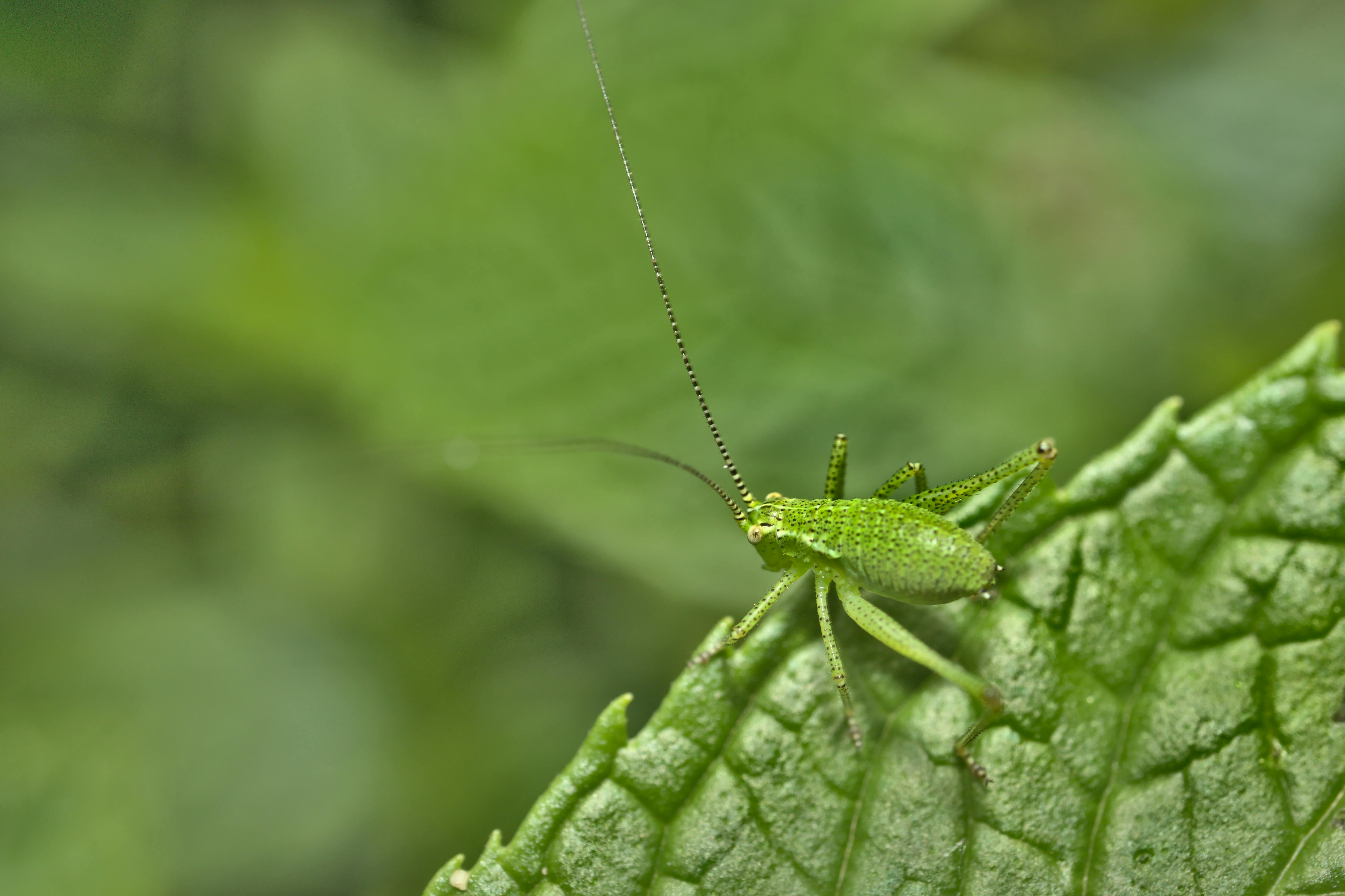
The house cricket (Acheta domesticus) is the most common cricket you’ll encounter inside a Georgia home, making proper identification an important first step in effective cricket control Decatur GA homeowners rely on. Adult crickets measure ½ to ¾ inch long, with a smooth, oval body that tapers toward the rear. Their coloration ranges from light brown to a muted gray, often accented by faint, speckled markings on the wings and abdomen. The forewings (tegmina) are long enough to extend past the abdomen, giving them a slightly “shield-like” appearance when they’re at rest.
Key Identification Tips
- Body shape: A robust, cylindrical torso with long hind legs designed for powerful jumps.
- Chirping behavior: Males produce a characteristic “crick‑crick‑crick” sound by rubbing their forewings together, especially at night.
- Speckled pattern: Look for tiny, irregular dark spots on the wings and leaf surfaces where crickets often hide.
Where They Hide Inside Your Home
House crickets love warm, moist environments. The most frequent indoor hotspots include:
- Kitchen cabinets and pantry shelves—especially near stored grains or dried herbs.
- Basements and crawl spaces where humidity stays high.
- Damp corners of bathrooms, laundry rooms, or under sinks.
- Near exterior doors and windows that receive evening sunlight, which attracts them to the light.
Typical Damage You Might Notice
While crickets aren’t as destructive as termites, they can still cause nuisance damage:
- Fabrics: Small chew marks on curtains, upholstery, or clothing.
- Plants: Irregular bite holes on indoor foliage and garden leaves.
- Food contamination: Crickets may wander onto open food containers, leaving behind droppings or shed skins.
Early Warning Signs for Homeowners
Spotting a cricket problem early can save you from a larger infestation later. Keep an eye out for these clues:
- Persistent nighttime chirping, especially in quiet rooms.
- Fine, black droppings that resemble pepper grains on countertops or near plant pots.
- Increased sightings near outdoor lights or inside light fixtures.
- Unexplained small holes in fabrics or leaf edges.
Quick DIY Steps to Confirm an Infestation
If you suspect crickets, a simple two‑step check can give you confidence before calling a professional:
- Set a sticky trap: Place a small piece of double‑sided tape or a commercially available sticky trap in a dark corner where you’ve heard chirping. Check it after 24 hours for captured crickets.
- Nighttime observation: Turn off interior lights for 10–15 minutes and use a flashlight to scan baseboards, under appliances, and around windows. Active crickets will reveal themselves by jumping or by the faint sound of their wings.
Finding a few crickets on a trap or noticing their activity at night confirms that a breeding population is present. At that point, consider sealing entry points, reducing indoor humidity, and contacting a local pest‑control specialist—like Anthem Pest Control—for a targeted treatment plan that protects your home without compromising safety.
Why Crickets Thrive in Decatur, GA

Decatur’s Humid Subtropical Climate
Decatur sits squarely in the humid subtropical zone, which means long, warm summers and relatively mild winters. Average summer highs hover around 90°F (32°C), while winter lows rarely dip below 30°F (‑1°C). This temperature range keeps the ground warm enough for crickets to remain active for most of the year, unlike northern regions where cold snaps force them into prolonged dormancy.
Temperature and Moisture: A Perfect Breeding Cocktail
Crickets need both heat and moisture to complete their life cycle. Warm soil temperatures accelerate egg development, while consistent humidity prevents the eggs from drying out. In Decatur, summer humidity regularly climbs above 70 %, and occasional evening dew provides the moisture crickets love. The combination of 80‑90°F days and moist nights creates a breeding environment that can support multiple generations within a single season.
Common Outdoor Habitats That Serve as Source Colonies
Homeowners often overlook the everyday spaces that become cricket nurseries. Lawns with thick, well‑watered grass, garden beds rich in organic matter, and vacant lots overgrown with weeds all offer shelter and food. Crickets hide in the thatch of a lawn, burrow beneath mulch, or take refuge in the cracks of a neglected sidewalk. Each of these micro‑habitats can host a “source colony” that later spreads into nearby homes.
The Lure of Outdoor Lighting
Crickets are nocturnal and are strongly attracted to artificial lights. Streetlamps, porch lights, and even the glow from a backyard patio can draw adult males seeking mates. Once they congregate around a light source, they often wander indoors through open doors or tiny gaps in screens. In Decatur, where many homes keep exterior lighting on for safety, this behavior dramatically increases the chance of indoor cricket sightings.
Life Cycle Timeline in Decatur
In this region, a cricket’s life cycle typically follows this pattern:
- Egg stage: Laid in moist soil or leaf litter in late spring; hatches in 2‑3 weeks.
- Nymph stage: Undergoes 6‑8 molts over 4‑6 weeks, gradually resembling an adult.
- Adult stage: Reaches sexual maturity in midsummer, begins calling, and produces a new batch of eggs.
Because the climate stays warm through September, Decatur can support up to three full generations per year. The first generation emerges in May, the second peaks in July, and a smaller third wave can appear in early fall if moisture levels remain favorable.
Rainfall Patterns and Population Spikes
Rainfall is the hidden driver behind cricket booms. A steady series of showers raises soil moisture, prompting females to lay more eggs. Historical data shows that after a week of rain exceeding 1 inch, cricket trap counts in Decatur neighborhoods can jump by 30‑40 %. Conversely, a dry spell in August often leads to a noticeable dip in activity. Homeowners who notice a sudden surge after heavy rain should consider early intervention, as the next generation could appear within weeks.
Treatment Options – DIY Traps vs Professional Services
Common DIY Methods
Many Decatur homeowners start with a do‑it‑yourself approach because the supplies are inexpensive and the steps feel straightforward. The most popular DIY tools include:
- Glue boards – sticky pads placed along baseboards or near entry points to capture wandering crickets.
- Homemade bait traps – containers filled with a sweet attractant (sugar water, fruit) and a drowning medium such as soapy water.
- Ultrasonic devices – plug‑in emitters that claim to repel insects with high‑frequency sound waves.
- Natural repellents – powders like diatomaceous earth or essential‑oil sprays applied around cracks, windows, and outdoor lights.
Effectiveness of DIY Traps
DIY solutions can provide a noticeable drop in cricket activity, especially when the infestation is light and confined to a single room. Glue boards, for instance, give an instant visual cue that crickets are present, allowing you to monitor numbers daily. However, the reach of these methods is limited. A handful of traps won’t cover an entire home, and ultrasonic devices often fail to penetrate walls or furniture. Because crickets hide in dark, damp crevices, you’ll need to check and replace traps every few days to maintain any short‑term reduction.
Risks and Drawbacks of DIY Approaches
While DIY methods are budget‑friendly, they come with several hidden costs:
- Chemical exposure – Some homemade baits use pesticides or strong detergents that can irritate skin, eyes, or pets if mishandled.
- Incomplete coverage – Crickets can enter through tiny gaps around doors, windows, and utility penetrations that a glue board or spray won’t reach.
- Potential damage – Sticky boards left on painted surfaces may peel paint; ultrasonic units can interfere with nearby electronics.
- Time investment – Frequent monitoring, trap replacement, and re‑application of powders can quickly become a full‑time chore.
Professional Treatment Options
When you call a licensed pest‑management firm like Anthem Pest Control, you gain access to a suite of proven treatments designed for the entire property:
- Targeted bait stations – Strategically placed, low‑dose baits that attract crickets and deliver a slow‑acting insecticide, ensuring the colony is eliminated over time.
- Perimeter spraying – Professional‑grade formulations applied around the home’s foundation, doorways, and windows to create a barrier that repels or kills incoming crickets.
- Indoor fogging – A fine mist that reaches hidden cracks and voids, providing rapid knock‑down of active insects inside living spaces.
- Structural sealing – Experts locate and seal entry points, from vent openings to foundation gaps, to prevent future invasions.
Benefits of Hiring Professionals
Choosing a certified provider brings several advantages that DIY cannot match. First, a thorough inspection identifies the exact species, breeding sites, and entry routes—information that’s impossible to gather from a few glue boards. Second, licensed technicians apply EPA‑approved pesticides safely, minimizing health risks for you and your family. Third, most companies, including Anthem Pest Control, offer guaranteed follow‑up visits; if crickets reappear, they’ll re‑treat at no extra charge. Finally, professional plans often incorporate long‑term prevention, such as seasonal barrier applications and ongoing monitoring, turning a one‑time fix into lasting peace of mind.
When to Transition from DIY to Professional Help
DIY methods are a reasonable first step, but certain warning signs indicate it’s time to call in the pros:
- Cricket activity persists after two weeks of consistent trap placement and baiting.
- Visible damage escalates—chewed fabric, shredded wallpaper, or gnawed wooden trim.
- Crickets appear in multiple rooms or throughout the entire house, suggesting a widespread colony.
- You notice a surge in noise at night, indicating a breeding population that could quickly outgrow any DIY control.
At that point, a professional inspection not only stops the current outbreak but also uncovers hidden entry points that DIY measures missed. By partnering with a trusted local provider, you protect your home, your health, and your peace of mind—without the endless cycle of replacing glue boards every few days.
Understanding Costs – Pricing Comparison for Cricket Control
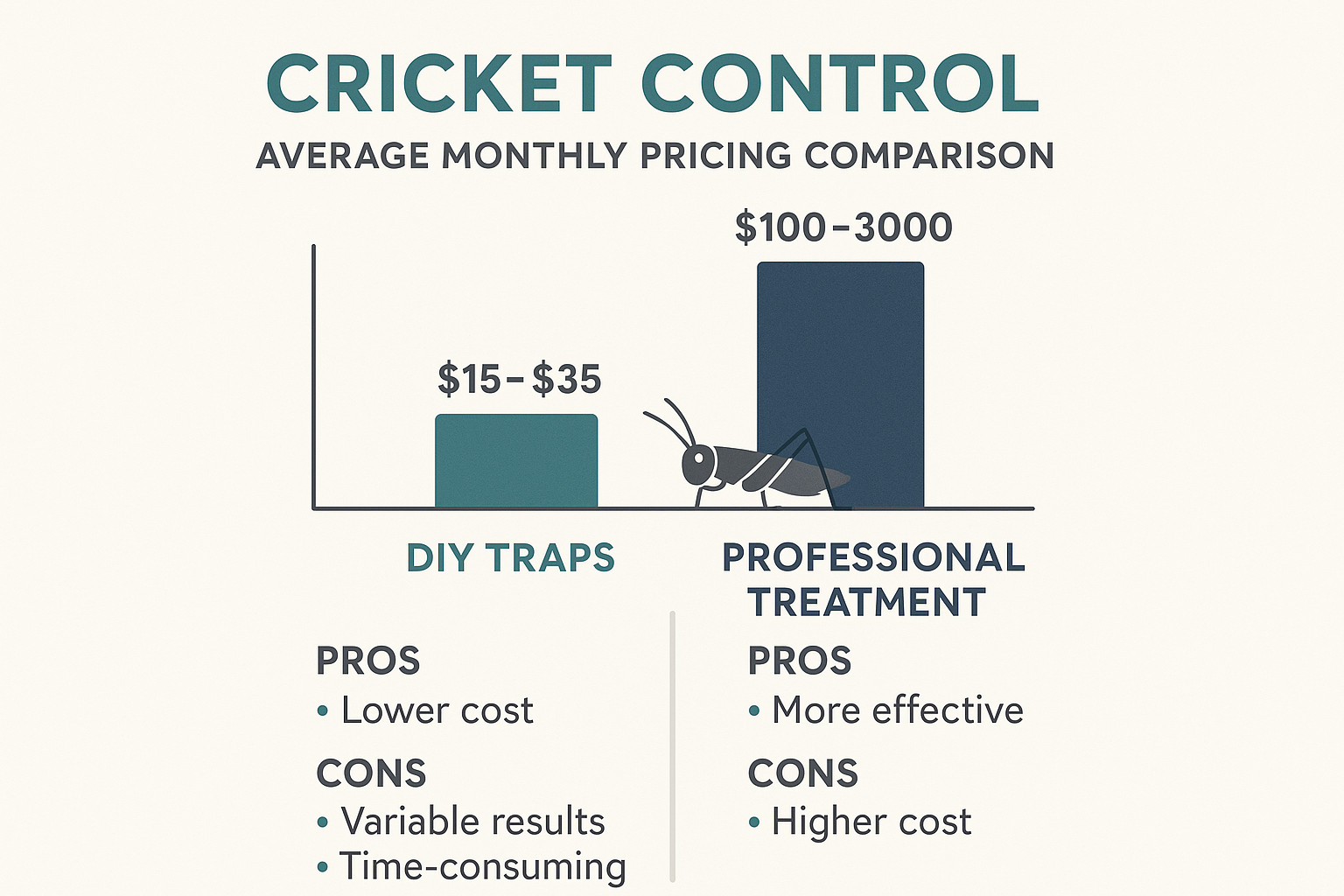
The chart above breaks down the average monthly outlay you can expect for cricket control Decatur GA, whether you choose a do-it-yourself (DIY) trap system or enlist a professional pest-control service. Seeing the numbers side-by-side helps you decide which approach fits your budget and your comfort level.
DIY Costs – What You’ll Spend
- Initial purchase: Cricket traps typically run between $10 and $30 per unit. Most homeowners start with one or two traps to cover high‑traffic areas.
- Recurring expenses: Bait or attractant refills cost roughly $5–$15 per month, depending on the brand and trap density.
- Time investment: Setting up traps takes about 15–30 minutes the first time, then a quick check and bait replacement each month.
DIY solutions give you direct control over where traps are placed, but they require ongoing attention and may not reach hidden nesting sites.
Professional Costs – What to Expect
- Service fee per visit: Most local companies, including Anthem Pest, charge $80–$150 for a single treatment visit.
- Package deals: Quarterly or annual plans can lower the per‑visit cost to around $60–$120 and often include a follow‑up visit.
- All‑in‑one service: Professionals handle inspection, treatment, and post‑treatment monitoring, so you don’t need to purchase separate traps or baits.
While the upfront price is higher, professional treatment typically covers concealed infestations and includes safety guarantees.
Pros & Cons – DIY vs. Professional
| Factor | DIY Traps | Professional Service |
|---|---|---|
| Cost | Low upfront ($10‑$30) + modest monthly bait ($5‑$15) | Higher per‑visit ($80‑$150) or package ($60‑$120 per visit) |
| Effectiveness | Variable; depends on trap placement and maintenance | High; technicians target nests and use EPA‑approved treatments |
| Safety | Generally safe, but bait chemicals are handled by the homeowner | Professionally applied products meet strict safety standards |
| Convenience | Requires monthly checks and bait replacement | One‑time visit with follow‑up; homeowner stays hands‑free |
Why EPA Data Matters
The EPA’s pest‑management cost study confirms that professional treatments, while pricier, often deliver a better return on investment by preventing structural damage and reducing long‑term control expenses. Citing this data adds credibility to the cost comparison and reassures homeowners that the numbers aren’t arbitrary.
Calculating Your ROI
Start by estimating potential damage from a cricket infestation—chewed fabrics, food contamination, and lost peace of mind can easily run $200–$500 in a severe case. Compare that to the annual cost of your chosen control method. For example, a DIY approach might total $150–$250 per year, while a professional package could be $240–$480. If the professional route prevents damage that would exceed its cost, the return on investment is clear.
By weighing the upfront price, ongoing maintenance, and the likelihood of avoiding costly damage, you can make an informed decision that protects both your home and your wallet.
Seasonal Activity and Timing for Effective Cricket Control
Understanding the Year‑Round Activity Curve
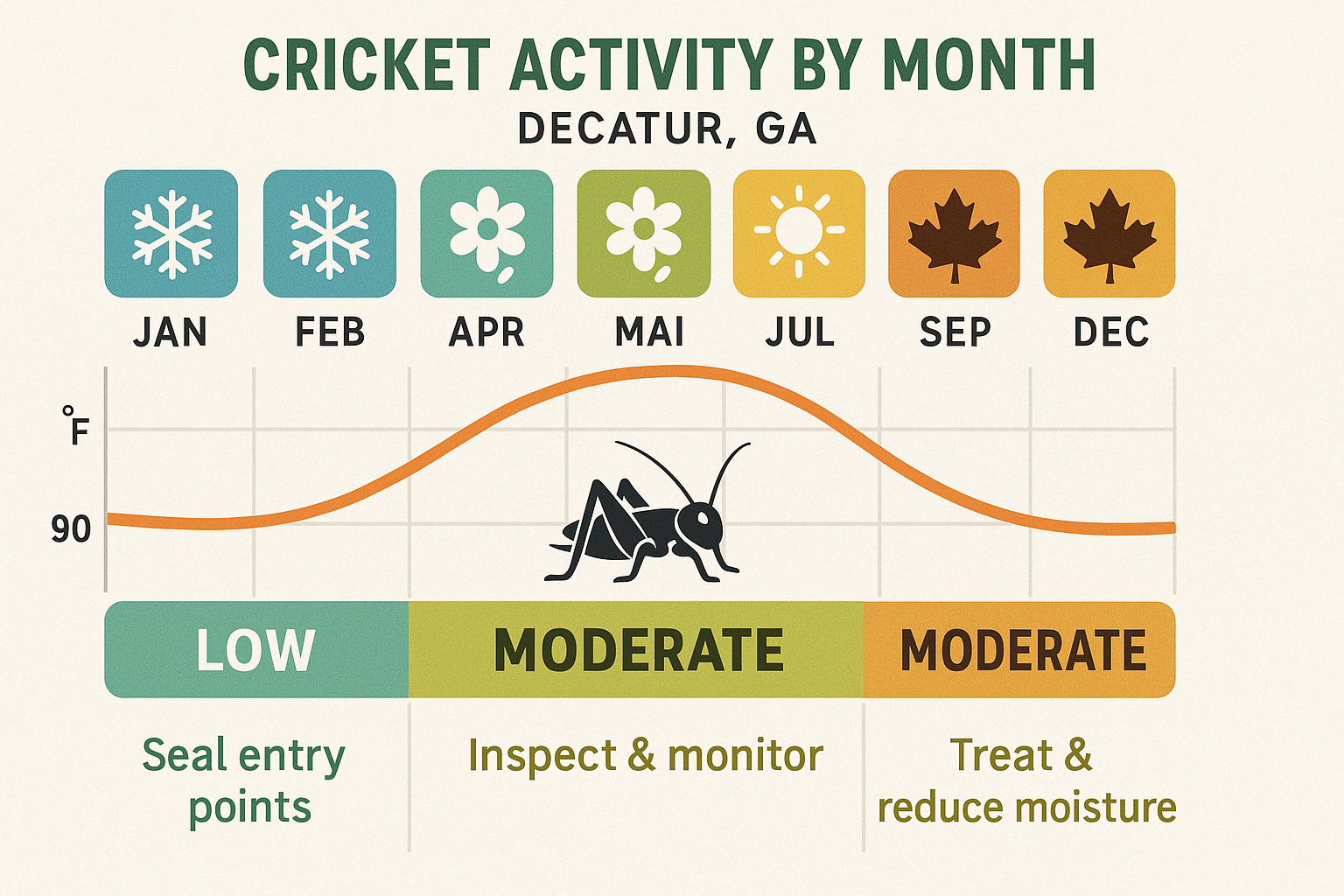
The chart above maps cricket activity in Decatur from January through December, providing valuable insight for planning effective cricket control Decatur GA strategies. Cold winter months (January–February) show barely any movement, while activity begins to climb in March as soil warms. A sharp rise occurs in May, peaks between July and August, then tapers off in September. By November, numbers drop dramatically, and December returns to near-zero levels. Knowing this rhythm lets you target treatments when crickets are most vulnerable and prevent them from establishing a foothold.
Peak Season: May – September
May through September is the window when crickets reproduce fastest and swarm outdoor lights. Female crickets lay dozens of eggs in moist soil, and hatchlings emerge within weeks. Because populations explode during these months, a single missed treatment can lead to a full‑blown infestation. This is the period you should schedule professional interior and perimeter treatments, and it’s also when homeowners need to stay vigilant with traps and moisture control.
Early‑Spring Pre‑Emptive Actions (March‑April)
Before the first adult emerges, inspect the home’s exterior for gaps around windows, doors, and utility penetrations. Seal cracks with caulk or weather‑stripping to block entry. Install a perimeter barrier—such as a granular insecticide or a professional spray line—around the foundation. These steps create a defensive moat that discourages crickets from crossing into your yard or siding.
Summer Maintenance (June‑August)
During the height of activity, keep traps checked weekly and replace lures as needed. Reduce excess moisture by fixing leaky irrigation heads, clearing clogged gutters, and ensuring proper drainage around the foundation. Outdoor lighting attracts crickets; switch to yellow‑tinted bulbs or motion‑sensor fixtures to make your property less inviting. Regularly sweep porch floors and trim vegetation that touches the house, eliminating bridge pathways.
Fall Wrap‑Up (October‑November)
As temperatures dip, give the cricket population one final blow. Apply a interior residual treatment to baseboards, closets, and under appliances where adults may seek shelter for winter. Rake up leaf litter, remove fallen fruit, and compost debris that could harbor eggs. Store any DIY traps, bait stations, and sprayers in a dry garage to protect them from moisture and prolong their effectiveness for next year.
Winter Monitoring (December‑February)
Winter activity is low, but a few hardy adults can overwinter in warm attics or wall voids. Conduct a quick visual sweep of these areas each month. If you spot any crickets, spot‑treat with a labeled indoor spray. Otherwise, maintain a simple monitoring routine—checking traps placed near entry points and keeping exterior lights dimmed—to catch any unexpected late‑season wanderers.
Quick Seasonal Checklist
- Spring (Mar‑Apr):
- Inspect and seal exterior gaps.
- Apply perimeter barrier around foundation.
- Set up early‑season traps near doors.
- Summer (Jun‑Aug):
- Check traps weekly; replace lures.
- Fix leaks and improve drainage.
- Switch to yellow or motion‑sensor outdoor lighting.
- Trim vegetation touching the house.
- Fall (Oct‑Nov):
- Apply interior residual treatment.
- Rake leaf litter and remove fallen fruit.
- Store traps and equipment in a dry area.
- Winter (Dec‑Feb):
- Conduct a visual sweep of attics and wall voids.
- Spot‑treat any overwintering adults.
- Keep exterior lights dimmed and monitor traps.
Let Anthem Pest Control Safeguard Your Home
Early identification of cricket activity, a clear understanding of how Decatur’s warm evenings encourage nightly choruses, and selecting the right control method are the three pillars of an effective defense. Spotting the first chirps, recognizing the tell‑tale signs of moisture‑laden cracks, and knowing whether a perimeter spray or a targeted indoor treatment is needed can stop an infestation before it spreads.
Professional expertise takes that knowledge a step further. Certified technicians can locate hidden colonies that escape a DIY inspection, apply pesticides that are both safe for your family and potent against crickets, and set up a schedule that provides ongoing protection through the peak season. By trusting a trained professional, you eliminate guesswork, reduce the risk of over‑or‑under‑treating, and ensure that every treatment complies with state regulations.
Anthem Pest Control brings three local advantages to every Decatur homeowner:
- Transparent pricing: No hidden fees; you receive a clear estimate before any work begins.
- Safe, EPA‑approved treatments: Our products are chosen for effectiveness while protecting children, pets, and the environment.
- Decatur‑specific knowledge: We understand the micro‑climates, soil types, and building styles that influence cricket behavior in this area.
Beyond a one‑time treatment, Anthem sets up a seasonal monitoring program that checks for new entry points, moisture buildup, and early cricket activity. Our technicians revisit the property after each major weather shift, adjusting the plan to keep your home protected year after year.
If you’ve heard the nightly chorus of crickets or discovered gnawed wood, damaged screens, or unsightly droppings, our certified technicians are ready to assess the situation and design a customized plan that fits your budget. We offer a free, no‑obligation quote and a satisfaction guarantee, so you can enjoy a quiet, cricket‑free home without worry.
Take the next step today. Call us at 877-371-8196 or visit anthempest.com to schedule your free assessment for professional cricket control Decatur GA homeowners trust. Let Anthem Pest Control protect your peace of mind and keep your home silent after sunset.