Why Mouse Infestations Threaten Your Home
What draws mice into your house?
House mice are opportunistic survivors, making effective mouse control Decatur homeowners rely on essential. They thrive on warmth, food crumbs, and hidden shelter—exactly what a typical home offers. When outdoor conditions become harsh or food sources dwindle, the tiny mammals slip through tiny cracks, vents, or gaps around pipes, seeking the safety of walls, attics, and basements. Their ability to squeeze through openings as small as a quarter-inch means even well-sealed homes can become unwitting invitations.
Common entry points
Even the most diligent homeowner can overlook the pathways mice use. Foundation cracks, gaps around utility lines, unsealed vent pipes, and the space behind appliances are prime highways for rodents. A simple ¼‑inch opening around a dishwasher hose or a loose soffit vent can become a permanent doorway for a growing colony. Identifying and sealing these gaps early is the first line of defense against a full‑blown infestation.
Health hazards you can’t ignore
Beyond the nuisance factor, mice pose serious health risks. According to the CDC’s rodent disease overview, mice can carry Hantavirus, salmonellosis, leptospirosis, and even Lymphocytic choriomeningitis virus. Their urine, droppings, and saliva contaminate surfaces, and aerosolized particles become a breathing hazard during cleaning. The CDC estimates that rodent‑borne illnesses account for thousands of emergency‑room visits each year in the United States. A single mouse can spread pathogens that cause fever, respiratory issues, and, in rare cases, severe organ damage.
How to know you have a mouse problem
Early detection saves money and health. Look for these tell‑tale signs:
- Small, dark droppings about ¼ inch long, often found along baseboards or in cabinets.
- Gnaw marks on wood, plastic, or electrical wiring—mice’s teeth grow continuously, so they chew constantly.
- Scratching or scurrying noises, especially at night when they are most active.
- Nests made of shredded paper, fabric, or insulation tucked into hidden corners.
- Faint, oily residue along walls, indicating a mouse has been traveling that route.
Structural damage and its economic impact
Mice are not just carriers of disease; they are also tiny demolition crews. Chewed electrical wiring can short circuits, raise fire risk, and lead to costly repairs. Insulation shredded by nesting activities reduces energy efficiency, driving up heating and cooling bills. In severe infestations, they can breach drywall, compromise foundation seals, and even damage plumbing by gnawing at soft tubing. Damaged appliances and contaminated stored food add further hidden expenses.
Why early professional assessment matters
Spotting a few droppings may seem harmless, but populations multiply quickly—one pair can produce dozens of offspring in a matter of weeks. A prompt, professional inspection from Anthem Pest Control identifies entry points, evaluates damage, and implements a targeted, safe treatment plan before the problem escalates into a health emergency or expensive structural repair.
Spotting Mouse Activity Inside Your Home

Before you call in a professional, a systematic interior inspection can reveal exactly where the mice are entering and nesting. By moving room‑by‑room with a focused checklist, you’ll spot the subtle clues most homeowners miss.
Step‑by‑step interior walk‑through checklist
- Kitchen – Examine countertops, under the sink, behind the refrigerator, and inside cabinet doors.
- Pantry – Pull out boxes, check the back of shelves, and look inside any grain or cereal containers.
- Basement – Scan along walls, around utility pipes, and inside storage bins.
- Attic – Look for insulation damage, open joist spaces, and any stored items that could hide nests.
Finding subtle entry points
Mice can squeeze through openings as small as a quarter‑inch. Pay special attention to gaps that are easy to overlook:
- Spaces behind appliances (dishwasher, stove, washer/dryer).
- Utility openings for water, gas, or electrical lines.
- Vent shafts and dryer exhaust ducts.
- Cracks around window frames or door thresholds.
- Unsealed gaps around baseboards and molding.
Key signs of mouse presence
Even a light infestation leaves a trail of evidence. Look for these tell‑tale markers:
- Fresh droppings—dark, rice‑shaped pellets about ¼ in long.
- Urine stains that appear as tiny, oily spots on countertops or wood.
- Nesting material such as shredded paper, fabric fibers, or dried plant matter.
- Grease or smudge marks along walls where mice travel.
Tools of the trade: flashlight and mirror
A bright, narrow‑beam flashlight lets you peer into tight corners, while a small handheld mirror reflects light into hidden spaces like behind appliances or under cabinets. Move the flashlight slowly and sweep the mirror across seams; any movement or fresh droppings will become immediately apparent.
Safety first
- Wear disposable gloves to avoid direct contact with droppings, which can carry disease.
- Use a headlamp or additional lighting to keep your hands free while you inspect.
- Avoid disturbing potential nests; if you see a large amount of material, stop and note the location for a professional.
When to call a professional
If you confirm any of the signs above—especially multiple droppings, active gnaw marks, or a visible nest—it’s time to reach out to a licensed rodent specialist. Anthem Pest Control can assess the extent of the infestation, seal entry points, and implement a targeted treatment plan that protects your family and pets.
Securing the Exterior to Prevent Future Intrusions
When it comes to keeping mice out of your Decatur home, the most reliable line of defense starts outside the front door. By sealing the building envelope and eliminating hidden pathways, you turn your house into a fortress that rodents simply can’t breach. Below, we walk you through the essential steps every homeowner should take to hard‑en line their property.
1. Inspect the Foundation, Siding, and Landscaping
Begin with a systematic walk‑around. Look for:
- Cracks in the concrete slab or basement walls – even hair‑thin fissures can become a mouse tunnel.
- Gaps where siding meets the foundation or where brickwork has shifted.
- Openings around utility penetrations (water, gas, electric lines) that sit flush with the exterior.
Use a flashlight and a sturdy flashlight to peer into crawl‑space vents and under eaves. Any opening wider than ¼ inch is an invitation for a rodent.
2. Common Exterior Entry Points
Most mice slip inside through a handful of predictable spots:
- Utility penetrations – pipes, cables, and conduit sleeves often lack proper sealing.
- Crawl‑space vents – screened vents can become shredded, leaving a clear path.
- Door sweeps – worn or missing sweeps under front and back doors create a direct runway.
- Garage and shed doors – gaps around hinges or weather‑stripping are frequently overlooked.
3. Recommended Repair Materials
Choosing the right material makes the seal last for years:
- Steel wool – Stuff tightly into small cracks before applying caulk; mice can’t chew through the metal.
- Exterior‑grade caulk – Silicone or polyurethane caulk adheres well to concrete, brick, and wood.
- Hardware cloth – Use ¼‑inch mesh to cover larger openings like vent gaps; secure with stainless‑steel staples.
- Weather‑stripping – Replace brittle strips around doors and windows with durable, vinyl-backed foam.
4. Landscaping Adjustments That Deter Mice
Even the best‑sealed walls can be compromised if the yard provides easy cover. Follow these simple landscaping tips:
- Trim shrubs, vines, and tree branches at least 2 feet away from the house to eliminate ladder‑like pathways.
- Remove leaf piles, wood chips, and other debris where mice love to nest.
- Keep grass mowed to a maximum of 3 inches during summer months.
- Store firewood at least 18 inches off the ground and away from the foundation.
5. Installing Door Sweeps and Weather Stripping
Door sweeps are a quick, cost‑effective upgrade. Choose a heavy‑duty aluminum or rubber sweep, attach it to the bottom of every exterior door, and test for a snug seal when the door closes. For side and top frames, apply self‑adhesive weather‑stripping, overlapping each piece by a half‑inch to avoid gaps.

By methodically inspecting, sealing, and landscaping, you create a multi‑layered barrier that makes it far more difficult—and far less attractive—for mice to set up shop. Pair these DIY measures with a professional inspection from Anthem Pest Control, and you’ll enjoy a mouse‑free home year‑round.
Choosing the Right Mouse Control Service and Pricing
When a mouse makes its way into your Decatur home, the first step in effective mouse control Decatur residents depend on is a systematic approach: a thorough inspection, followed by targeted baiting or trapping, and finally a follow-up visit to confirm the problem is gone. How you bundle these steps determines the tier of service you’ll receive and, ultimately, the price you’ll pay.
Tier 1 – Basic (Inspection Only)
This entry‑level option is perfect for homeowners who suspect a very early‑stage issue or who have caught a mouse in a single spot. Our certified technician conducts a detailed walkthrough, identifies entry points, and provides a written report with DIY recommendations.
- Cost‑effective entry point for low‑severity problems
- Professional insight without the expense of chemicals or traps
- Peace of mind knowing exactly where mice could be entering
Tier 2 – Standard (Inspection + Treatment)
When you see signs of an active infestation—droppings, gnaw marks, or multiple sightings—the Standard tier steps in. After the inspection, we deploy licensed baits and traps strategically throughout your home, then return within a week to assess effectiveness.
- Comprehensive eradication for moderate to severe infestations
- Warranty on all placed baits and traps for 30 days
- Reduced risk of property damage and health concerns
Tier 3 – Premium (Inspection, Treatment, & 3‑Month Follow‑Up)
For high‑risk homes—those with children, pets, or a history of recurring rodent activity—the Premium package delivers the most robust protection. In addition to the full Standard service, we schedule two extra visits over three months to replace baits, reset traps, and fine‑tune exclusion measures.
- All‑inclusive protection with ongoing monitoring
- Extended warranty covering re‑infestation for 90 days
- Priority scheduling and a dedicated account manager
Evaluating ROI: Severity vs. Property Value
Think of mouse control as an investment. A minor sighting in a modest rental may only justify the Basic tier—saving you money while you keep an eye on the situation. Conversely, a luxury home with valuable furnishings and a family’s health at stake can quickly lose value from structural damage or disease risk. In those cases, the Standard or Premium tier often pays for itself by preventing costly repairs and safeguarding health.
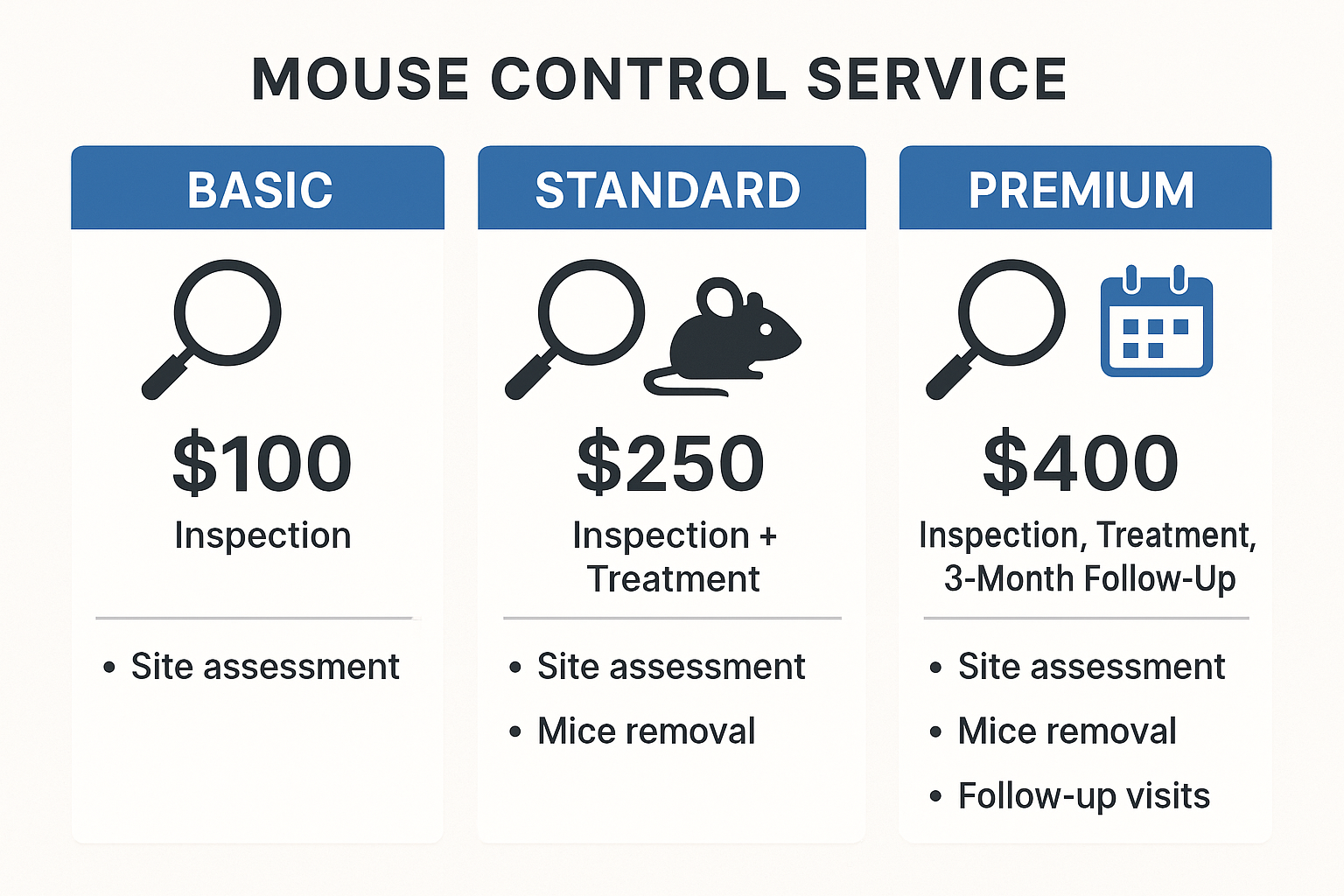
Quick visual comparison: Refer to the infographic above for a side-by-side look at what each tier includes and the associated price range. Match the level of service to your infestation severity, home value, and peace-of-mind preferences, and you’ll have a clear, cost-effective path to reliable mouse control Decatur homeowners can trust.
Timing Your Treatment with Seasonal Mouse Activity
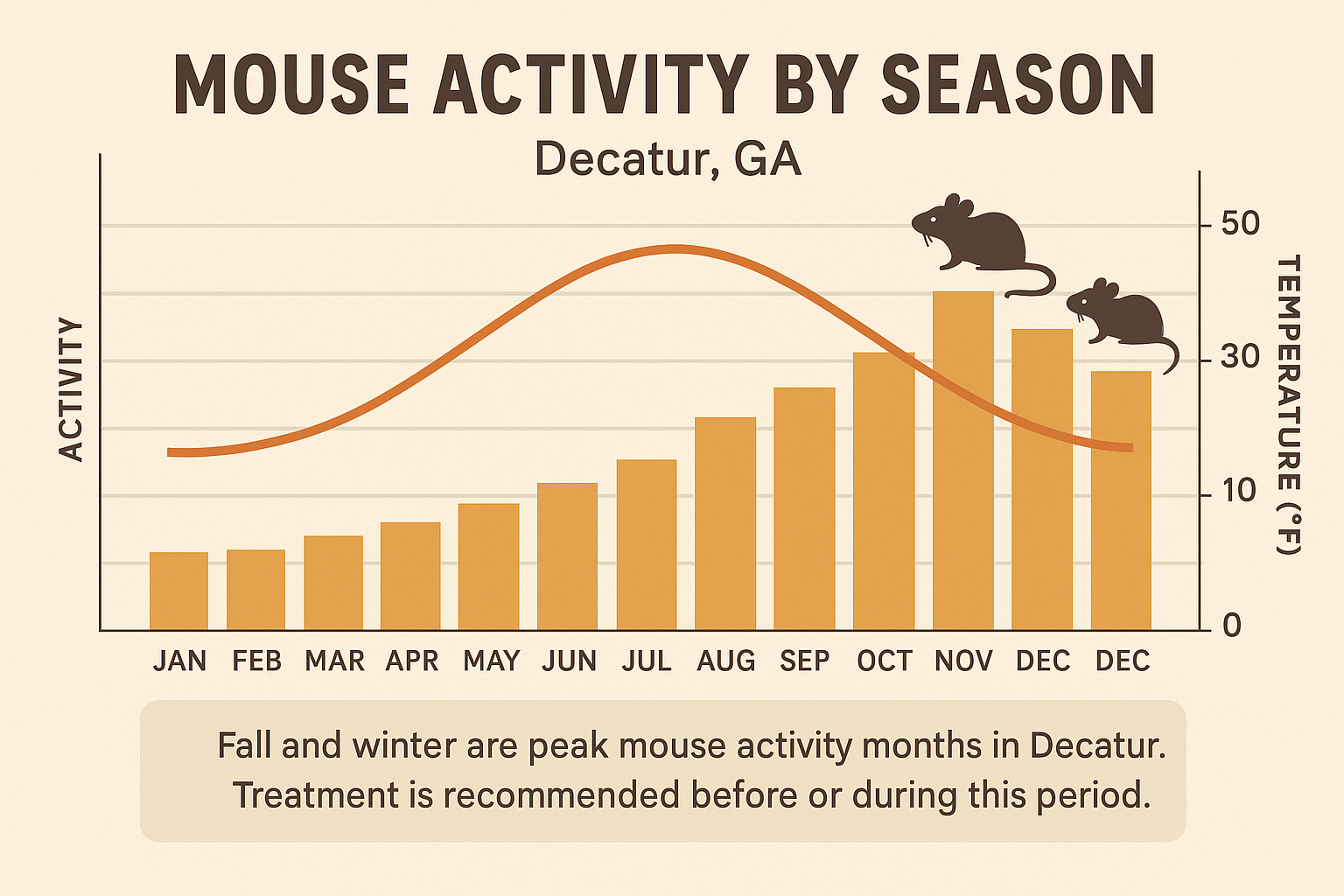
In Decatur, Georgia, mouse movement follows a predictable rhythm that aligns with the region’s climate, making timely mouse control Decatur homeowners plan for especially important. Our seasonal activity chart (see figure below) highlights two clear peaks: October–November and December–February. During these months, you’ll notice a surge in indoor sightings, droppings, and gnaw marks as the local rodent population seeks warmth.
Mice are natural opportunists. As temperatures dip below the comfortable 70‑°F range, they abandon outdoor foraging sites and look for shelter inside homes. The cooler air drives them toward heated basements, attics, and wall voids, where food and nesting material are abundant. This seasonal migration explains why homeowners often report their first indoor mouse problem just after the first frost.
Optimal Treatment Windows
- Early Fall (mid‑September to early October): Conduct a pre‑emptive inspection and apply exclusion measures before mice start their indoor migration.
- Late Winter (late January to early February): Follow up with targeted baiting and trapping to catch any survivors that have settled in during the coldest weeks.
By acting during these windows, you stay one step ahead of the rodents, reducing the chance they’ll establish a permanent nest. Early Fall treatment also gives you a chance to seal entry points while the foliage is still present, making it easier to spot gaps around foundation cracks and utility openings.
Weather Effects on Bait and Traps
Cold, damp weather can slow rodent metabolism, meaning they may be less attracted to high‑fat baits that work well in summer. Opt for protein‑rich, low‑moisture baits during the winter months, and place them closer to interior walls where mice travel. In contrast, during the milder early‑fall period, traditional grain‑based baits remain effective.
Temperature also influences trap placement. Freeze‑sensitive snap traps can become brittle in sub‑zero conditions, so consider using insulated bait stations or mechanical traps that aren’t affected by the cold. Check traps daily—especially after a cold snap—as mice may seek the warmth of a recently handled trap.
Integrating Seasonal Scheduling with Exclusion
Remember the exclusion steps outlined in Part 3: seal cracks, repair screens, and install door sweeps. Schedule these actions during your early‑fall visit, when outdoor work is still manageable and you can observe any new entry points before winter sets in. After sealing, revisit the property in late winter to verify that no new gaps have opened due to settling foundations or storm damage.
Combining timely treatment with rigorous exclusion creates a two‑pronged defense—preventing mice from entering and eliminating any that do. This seasonal strategy not only protects your home but also reduces the number of service visits needed throughout the year.
Protect Your Home Today with Anthem Pest Control
Early detection, solid exclusion, and prompt treatment are the three pillars that keep a mouse problem from turning into costly damage. Spotting droppings, gnaw marks, or nesting material right away lets you act before rodents compromise insulation, wiring, or food supplies.
Anthem Pest Control brings years of field experience to every Decatur home. Our technicians follow a step‑by‑step protocol that starts with a thorough inspection, then moves to a customized exclusion plan and, if needed, a targeted treatment. We offer three service tiers—Basic, Advanced, and Premium—so you can choose the level of protection that matches your budget and risk profile.
All of our solutions are designed with safety and effectiveness in mind. We use EPA‑approved baits and traps that eliminate mice while protecting children, pets, and the environment. Transparent pricing means you’ll know exactly what you’re paying for, with no hidden fees, and our rates are competitive for both one‑time fixes and ongoing maintenance programs.
- Detect early: look for droppings, gnaw marks, and unusual noises.
- Seal entry points: caulking, steel wool, and door sweeps keep rodents out.
- Act fast: professional treatment stops infestations before they spread.
- Choose a plan: Basic, Advanced, or Premium—each includes inspection, exclusion, and monitoring.
Ready to take the next step? Request a free, no‑obligation quote today and let our certified team design a protection plan that fits your home’s unique layout.
Call Anthem Pest Control now at 877-371-8196 or visit Anthem Pest Control to schedule your inspection. Our local technicians are just a phone call away, ready to deliver trusted mouse control Decatur homeowners depend on to protect their family and property.